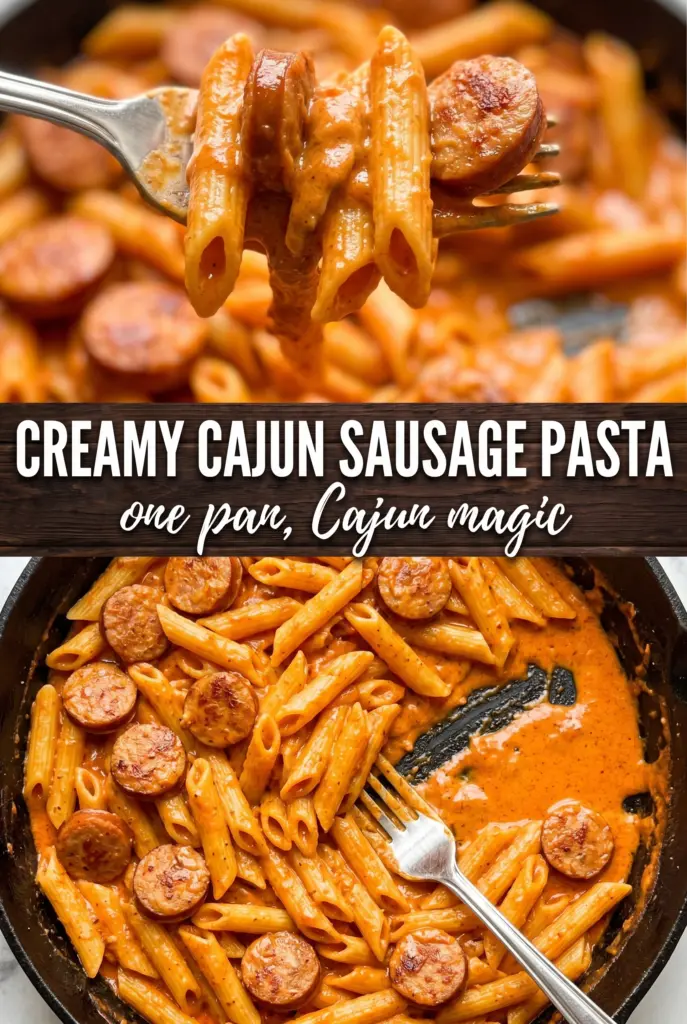
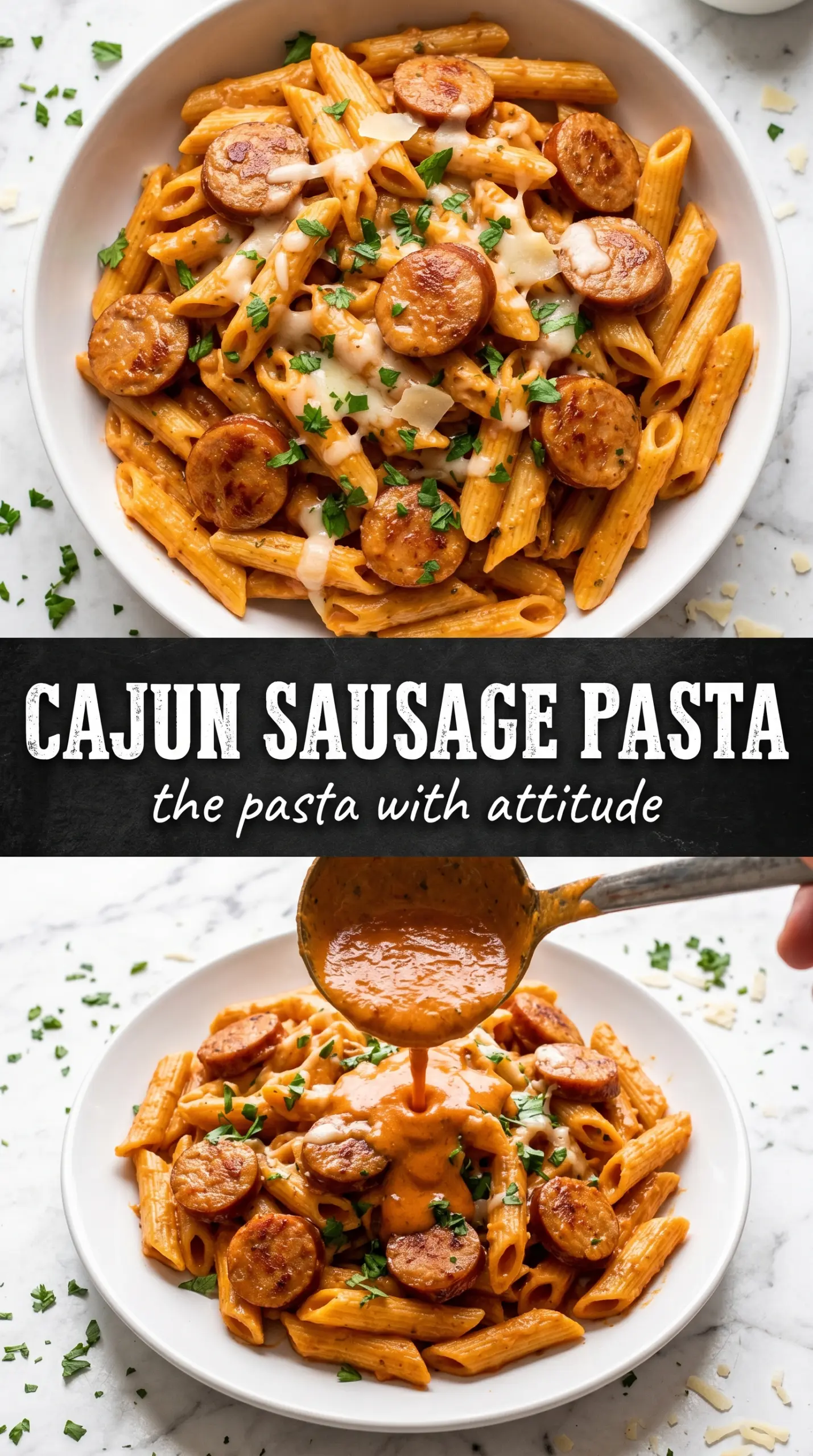
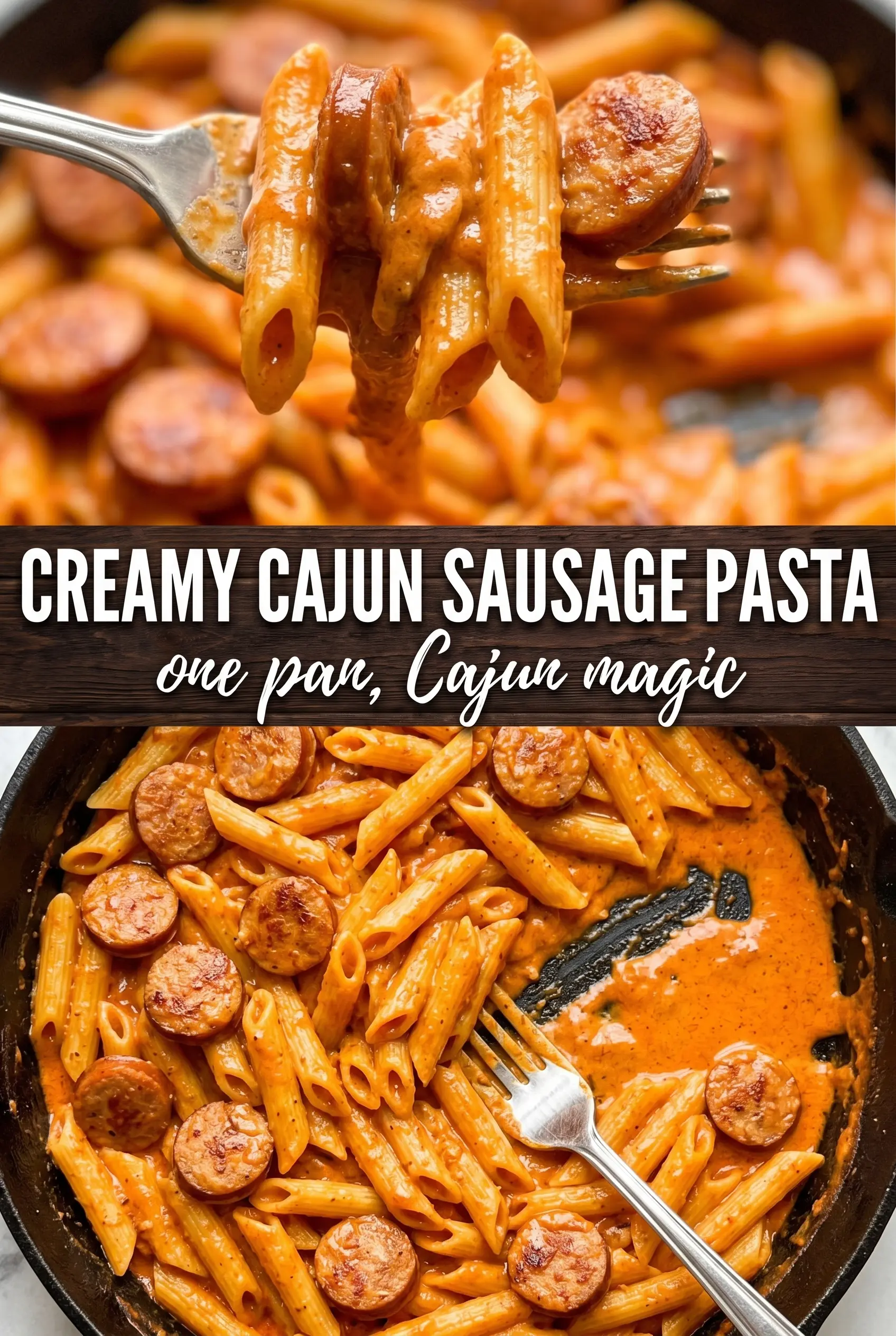
Penne in a smoky Cajun cream sauce is the kind of pasta that disappears fast because it hits every note at once: savory sausage, sweet peppers, a little heat, and a sauce that clings to every ridge of the pasta. The cream turns the Cajun seasoning round and mellow without muting it, and the browned sausage gives the whole dish a deeper, almost smoky backbone that keeps it from tasting flat.
What makes this version work is the order of operations. Browning the sausage first leaves behind flavorful bits for the onions and peppers to pick up, and the broth and cream simmer just long enough to tighten before the parmesan goes in. That short simmer matters. If you rush it, the sauce stays thin; if you crank the heat, the dairy can separate and the cheese turns grainy.
Below, I’ve included the little fixes that matter most, from how to keep the sauce silky to what to do if you want it milder, lighter, or gluten-free. If you’ve had Cajun pasta turn out watery or greasy before, this version will help you avoid both problems.
The sauce came together smoothly and coated the penne instead of pooling in the bottom of the bowl. I used smoked sausage, and the little bit of pasta water at the end made it glossy and perfect.
Save this Cajun sausage pasta for the nights when you want a creamy one-pan dinner with smoky sausage and a sauce that actually stays silky.
The Part Where Cajun Pasta Usually Breaks Down
The mistake most people make with creamy Cajun pasta is treating the sauce like it can take a hard boil. It can’t. Once the broth and cream go in, you want a steady simmer, just enough movement to reduce the liquid and concentrate the seasoning without splitting the dairy. The sauce should look slightly loose in the pan right before the pasta goes in; it tightens as the parmesan melts and the pasta finishes absorbing liquid.
Another common failure point is skipping the browned sausage drippings. Those little browned bits left in the skillet are the difference between a sauce that tastes rounded and one that tastes like cream with spice stirred into it. If the pan looks dry after the sausage comes out, the butter and vegetables will pick up what’s left on the bottom and carry that flavor straight into the sauce.
What Each Ingredient Is Actually Doing Here
- Andouille or smoked sausage — This is the backbone of the dish. Andouille gives the most Cajun character, but a good smoked sausage still brings enough salt, fat, and browning power to build the sauce. Slice it into rounds so more surface area hits the pan and caramelizes.
- Cajun seasoning — This does the heavy lifting for heat, paprika, garlic, and herbs all at once. Brands vary a lot in salt level, so taste the sauce before adding extra salt. If yours is aggressive, start with a little less and add more at the end.
- Heavy cream — This is what keeps the sauce stable and silky. Half-and-half can work in a pinch, but it won’t reduce as luxuriously and is easier to break if the heat gets away from you.
- Parmesan — Use finely grated parmesan so it melts smoothly. Pre-shredded cheese often contains anti-caking agents that make the sauce grainier. Add it off the highest heat so it disappears into the cream instead of clumping.
- Pasta water — Don’t skip the reserved water. The starch helps loosen the sauce without thinning the flavor, which is exactly what you want if the pasta absorbs more than expected.
Building the Sauce So It Stays Creamy
Brown the Sausage First
Set the sausage in a hot skillet and let it sit long enough to take on color before you start moving it around. You’re looking for browned edges and a little rendered fat in the pan, not pale, steamed slices. Pull the sausage out once it’s browned on both sides so it doesn’t dry out while the sauce comes together. Those drippings stay in the pan and become the base of the whole dish.
Soften the Vegetables in the Leftover Flavor
Cook the onion and bell pepper in the same skillet with the butter until the onion turns translucent and the peppers lose their raw crunch. If the pan looks overly dark, a splash of the broth will loosen the fond without washing it away. Add the garlic and Cajun seasoning near the end of this stage and cook just until fragrant. Garlic burns fast, and burnt garlic will turn the sauce bitter before you ever get to the cream.
Simmer, Don’t Boil
Pour in the broth and cream and let the mixture come up to a gentle simmer. Small bubbles around the edges are what you want. A full boil can split the dairy and make the sauce oily. After four or five minutes, it should look slightly thicker and coat a spoon lightly.
Finish With Cheese and Pasta
Stir in the parmesan off the harshest heat so it melts instead of seizing. Then add the drained pasta and sausage, tossing until every piece is coated. If the sauce feels tight, add a splash of reserved pasta water and toss again. That last bit is what gives you the glossy, restaurant-style finish instead of a heavy, stuck-together bowl.
How to Adapt This for a Milder Plate, a Lighter Bowl, or No Gluten
Make It Milder Without Losing the Cajun Character
Use a mild smoked sausage and start with 1 tablespoon of Cajun seasoning instead of 2. You’ll still get paprika, garlic, and herb flavor, but the heat will sit lower in the background. Add more seasoning at the end only after the parmesan is in, since cheese can blunt spice and make the dish taste softer than you expect.
Use Gluten-Free Pasta Without Ending Up Mushy
Swap in a sturdy gluten-free penne and cook it just to al dente, then stop. Gluten-free pasta softens fast once it hits the sauce, so undercooking it by a minute helps it hold its shape. Keep the tossing gentle and add pasta water sparingly, because some gluten-free brands release enough starch on their own.
Make It Lighter Without Turning It Watery
You can replace part of the cream with evaporated milk, but keep at least half of the dairy as heavy cream so the sauce still coats the pasta instead of thinning out. The flavor will be a little less rich and the finish slightly less plush, which is fine if you want something lighter. Keep the simmer gentle and add the parmesan slowly so the texture stays smooth.
Storage and Reheating
- Refrigerator: Store in an airtight container for up to 4 days. The pasta will absorb some sauce, so expect it to tighten up.
- Freezer: It freezes, but the cream sauce can turn a little grainy after thawing. If you do freeze it, cool it completely first and reheat gently with a splash of broth or cream.
- Reheating: Reheat on the stove over low heat with a tablespoon or two of liquid, stirring often. The biggest mistake is blasting it in the microwave or on high heat, which makes the sauce separate and the pasta go soft.
Answers to the Questions Worth Asking
Creamy Cajun Sausage Pasta
Ingredients
Equipment
Method
- Cook the penne in salted boiling water until al dente, about 8–10 minutes, then reserve 1/2 cup pasta water and drain, with the pasta looking tender but still firm in the center.
- Cook the sliced andouille or smoked sausage in a large skillet over medium-high heat until browned on both sides, about 6–8 minutes, then remove and set aside, leaving visible caramelized edges on the rounds.
- Melt the butter in the same pan, then cook the diced onion and diced bell pepper for 4 minutes, stirring until they soften and look glossy.
- Add the minced garlic and Cajun seasoning and cook for 1 more minute, until fragrant with a smoky brick-red tint in the pan.
- Pour in the chicken broth and heavy cream and simmer for 4–5 minutes, stirring until the sauce is slightly thickened and coats the back of a spoon.
- Stir in the grated parmesan until fully melted, producing a smooth, creamy sauce with a brick-red color.
- Toss in the drained pasta and set-aside sausage, adding reserved pasta water a splash at a time to loosen if needed, until the penne is evenly coated and glossy.
- Serve immediately with fresh parsley on top, finishing with cracked black pepper if you want a bit more bite and visual contrast.