
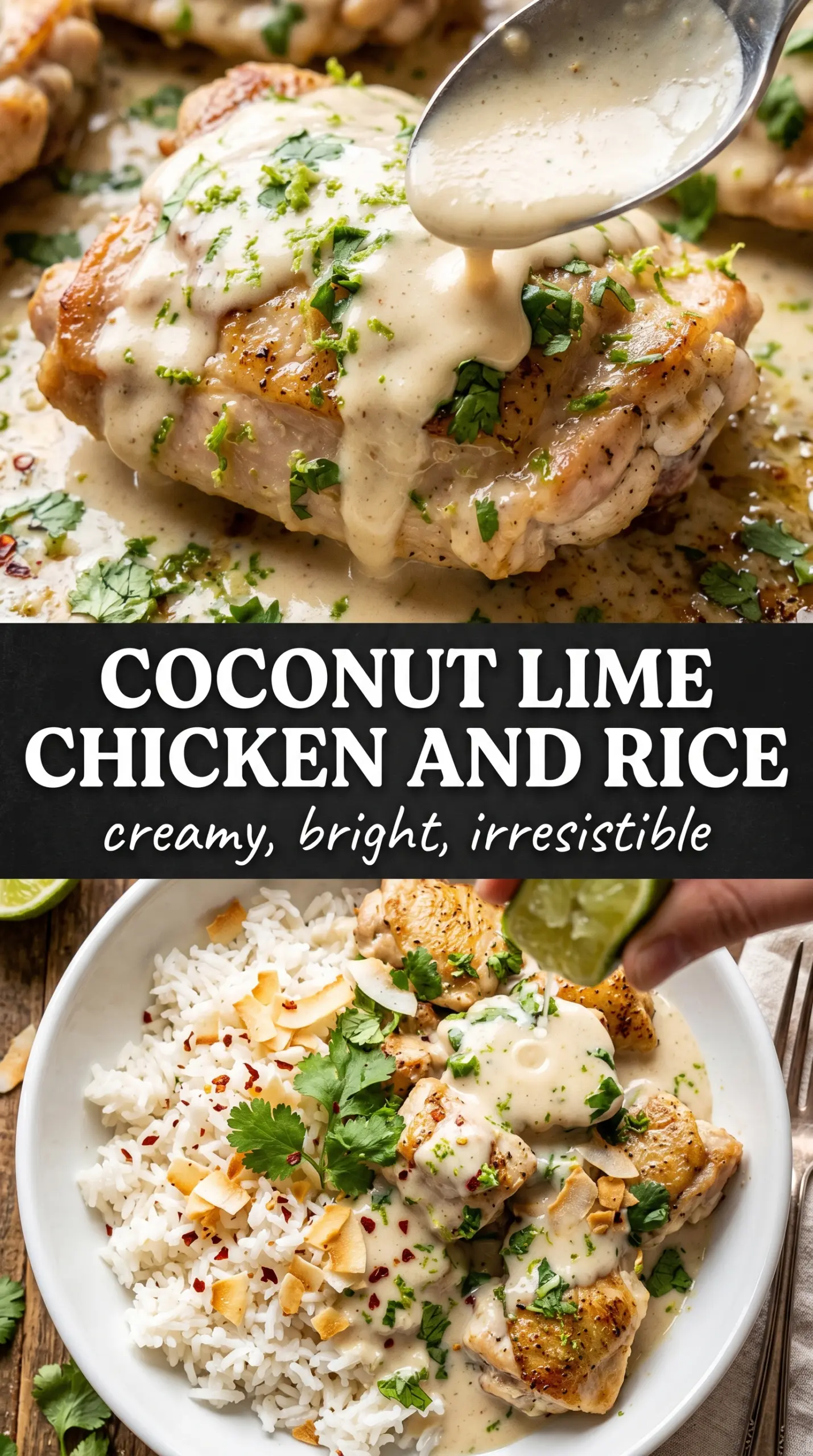
Tender chicken thighs, fragrant coconut rice, and a bright hit of lime make this the kind of one-pan dinner that disappears fast. The rice turns creamy from the coconut milk without getting heavy, and the chicken finishes right in the pot so every bite picks up the garlic, ginger, and savory broth underneath.
What makes this version work is the order. Searing the chicken first builds a browned base, and toasting the rice in the pan keeps the grains from going soft or gummy later. The lime goes in with the cooking liquid, not at the end, so the flavor runs through the whole dish instead of sitting on top like a garnish.
Below, I’ve included the little details that matter here: how to keep the rice fluffy, what to do if your coconut milk looks separated, and the best swap if you only have soy sauce on hand. It’s a simple recipe, but the technique gives it that restaurant-style finish.
The rice came out fluffy instead of mushy, and the coconut-lime sauce soaked into every grain. I was worried the chicken would dry out, but it stayed juicy even after the rest time.
Coconut Lime Chicken and Rice is the kind of one-pan dinner worth keeping close for busy nights and bright, satisfying leftovers.
The Trick to Keeping the Rice Creamy, Not Gluey
The biggest mistake with coconut rice dishes is treating the liquid like plain water. Coconut milk is richer and thicker, so if you keep the heat too high or stir too often, the grains break down before they finish cooking. This version keeps the simmer low and steady, which lets the rice absorb the liquid evenly while the chicken stays on top and steams gently in the same pan.
Another thing that helps is to let the rice toast for a couple of minutes after the garlic and ginger. That quick step coats the grains in fat and builds a little structure, so they don’t collapse once the coconut milk goes in. If your coconut milk has separated in the can, that’s normal. Stir it well before measuring so the fat and liquid are evenly mixed.
- Boneless chicken thighs — Thighs stay juicy through the simmer and give you more forgiveness than breasts, which can dry out before the rice is done. If you use breasts, cut them into large pieces and check them early.
- Long-grain white rice — This is the right choice for distinct, fluffy grains. Jasmine works especially well if that’s what you have. Don’t swap in short-grain rice unless you want a softer, stickier result.
- Coconut milk — Use full-fat canned coconut milk for the best texture. Light coconut milk will cook, but the finished rice tastes thinner and less silky.
- Fish sauce or soy sauce — Either one brings the savory backbone the dish needs. Fish sauce tastes a little rounder and deeper; soy sauce makes the recipe easier to keep pantry-friendly.
- Lime juice and zest — Zest gives you the real lime aroma, while juice brightens the finished dish. Add both in the cooking liquid so the flavor is woven through the rice instead of sitting on top.
What Each Ingredient Is Actually Doing in This Recipe
- Primary ingredient (the star) — Quality matters most. Choose the best you can find.
- Base ingredient or binder (if applicable) — This provides structure or holds everything together.
- Seasonings (salt, pepper, spices, herbs) — Layer flavors so nothing overpowers. Build depth gradually.
- Cooking medium (oil, butter, or other) — This carries flavors and prevents dryness. Don’t skimp.
- Aromatics (garlic, onion, herbs) — These add depth and complexity. They become part of the dish foundation.
- Supporting ingredients — These complement the main ingredient without overpowering it.
- Acid (lemon, vinegar, wine, or other) — This brightens and prevents flat-tasting results.
- Final finish (garnish, glaze, or sauce) — These prevent one-dimensional taste and add visual appeal.
Building the One Pan So Everything Finishes at the Same Time
Searing the Chicken First
Season the thighs with salt and pepper, then get them into a hot skillet with oil. You want a deep golden crust on both sides, not pale cooked-through chicken. That browning is what gives the whole dish its savory base, so don’t crowd the pan. If the chicken sticks at first, leave it alone for another minute; once the crust forms, it will release cleanly.
Toast the Rice Before the Liquid Goes In
Use the same pan and cook the garlic and ginger just until fragrant, about a minute. Add the rice and stir it in the fat until the edges look a little translucent and the grains smell nutty. That step keeps the rice from turning soft and helps each grain stay separate once the coconut milk and broth are added.
Simmering Without Breaking the Coconut Milk
Pour in the coconut milk, broth, lime juice, zest, fish sauce, and sugar, then stir once and bring it to a gentle simmer. The liquid should barely bubble. High heat is the enemy here because it can scorch the bottom of the pan and make the coconut milk look curdled. Nestle the chicken back in, cover, and reduce the heat to low so the rice cooks evenly instead of boiling apart.
The Rest That Finishes the Texture
After 18 to 20 minutes, the rice should be tender and the chicken cooked through. Pull the pan off the heat and let it sit covered for 5 minutes before fluffing. That rest time lets the steam finish the rice without making it wet. Lift the chicken out if you need to fluff more easily, then return it to the pan and finish with cilantro and lime wedges.
How to Change This Without Losing the Balance
Make it dairy-free as written
This recipe is already dairy-free if you use coconut milk and avoid butter in the pan. The only thing to watch is the sauce balance: coconut milk needs enough salt and lime to keep it from tasting flat, so don’t skimp on the seasoning at the end.
Swap the chicken thighs for breasts
Chicken breasts work if that’s what you have, but they need gentler handling. Cut them into large chunks or whole cutlets and check them a few minutes early, because they dry out faster than thighs once the rice reaches doneness.
Use soy sauce for a vegetarian-style pantry swap
If you don’t have fish sauce, soy sauce keeps the dish savory without changing the texture. The flavor gets a touch more familiar and a little less rounded, but it still works well with coconut and lime.
Turn it into a rice bowl with extra vegetables
Stir in thin-sliced bell peppers, snow peas, or spinach near the end if you want more color and a little more volume. Add quick-cooking vegetables after the rice is tender so they stay bright instead of getting cooked down into the rice.
Storage and Reheating
- Refrigerator: Store in an airtight container for up to 4 days. The rice firms up as it chills, but the flavor holds well.
- Freezer: It freezes well for up to 2 months. Cool it completely, pack it flat, and thaw overnight before reheating.
- Reheating: Warm it gently on the stove or in the microwave with a splash of broth or water. The common mistake is blasting it over high heat, which dries out the chicken and turns the rice pasty before it loosens.
Answers to the Questions Worth Asking

Coconut Lime Chicken and Rice
Ingredients
Equipment
Method
- Season the chicken thighs with salt and black pepper, then sear in oil in a large skillet over high heat for 4–5 minutes per side until golden; remove and set aside.
- Keep the skillet hot so the rice can toast quickly immediately after the aromatics step.
- In the same pan, sauté the garlic and grated ginger for 1 minute until fragrant.
- Add the long-grain white rice and toast for 2 minutes, stirring to coat.
- Add coconut milk, chicken broth, lime juice, lime zest, fish sauce or soy sauce, and sugar; stir and bring to a simmer.
- Nestle the seared chicken thighs into the rice, reduce heat to low, cover, and cook for 18–20 minutes until the rice is tender and chicken is cooked through.
- Rest the pot for 5 minutes, then fluff the rice gently so the grains stay airy.
- Serve immediately, garnished with fresh cilantro and lime wedges.