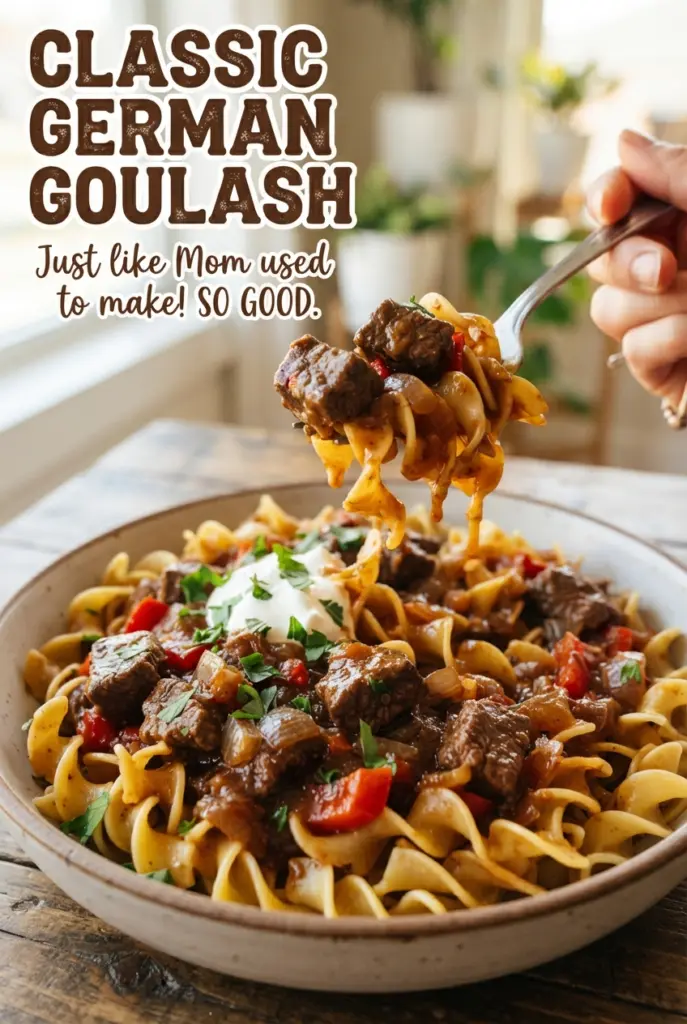
Classic German goulash rewards patience with a deep, paprika-rich gravy and beef that turns spoon-tender without falling apart into shreds. The onions melt down into the sauce, giving it body and sweetness that balances the warmth of the spices, while the vinegar keeps the whole pot from tasting flat or heavy. Served over buttered spaetzle or egg noodles, it lands somewhere between comfort food and a serious cold-weather stew.
The key here is building flavor in layers instead of rushing straight to the simmer. Browning the beef first gives the pot the savory base it needs, but the real backbone comes from taking time with the onions until they turn soft and golden. Paprika is handled carefully too: it’s stirred in after the onions so it blooms in the fat without burning, which would turn the stew bitter. The flour slurry goes in only at the end, once the meat is already tender, so the gravy thickens smoothly instead of turning gluey.
Below, I’ll walk through the part that matters most: how to keep the onions from hurrying, how to keep the paprika from scorching, and how to get that glossy, dark gravy that clings to every bite.
The onions cooked down into this rich, almost silky gravy, and the beef was fork-tender right at the two-hour mark. I served it over spaetzle and my husband went back for seconds before I even sat down.
Save this Classic German Goulash for the night you want tender beef, dark paprika gravy, and spaetzle-worthy comfort.
The Difference Between Tender Beef and Tough Stew Meat
German goulash looks simple, but the texture depends on a few small decisions that matter more than the ingredient list. Chuck is the right cut because it has enough fat and connective tissue to turn silky during a long simmer. Lean stew meat can work in a pinch, but it usually dries out before the sauce has enough time to deepen, and that’s how you end up with beef that tastes cooked but not luscious.
The other mistake is crowding the pan during browning. If the meat steams instead of searing, you lose the dark savory bits that give the gravy its depth. The same idea applies to the onions: they need time to soften and caramelize lightly, not just wilt. That slow cooking is what keeps the finished sauce rich instead of sharp.
What the Onions, Paprika, and Vinegar Are Each Doing
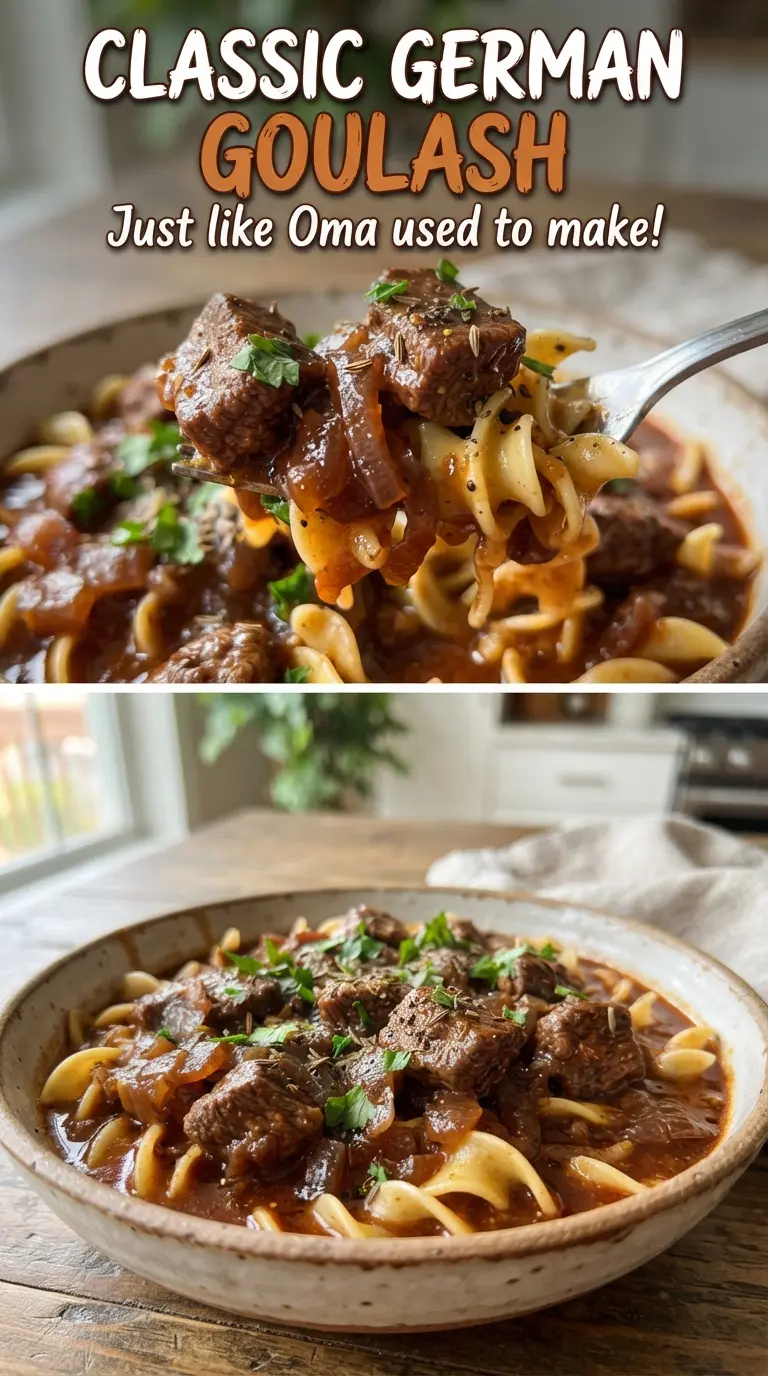
- Beef chuck — This is the cut that earns the long simmer. It softens without falling completely apart, and the marbling keeps the stew from tasting dry. If you swap in leaner beef, shorten the simmer only a little, because the texture will never be as plush.
- Onions — Two pounds sounds like a lot, but they melt down and create the body of the sauce. There isn’t a clean substitute for the way cooked onions thicken and sweeten the pot. Slice them evenly so they break down at the same pace.
- Sweet and hot paprika — Sweet paprika gives the stew its round, mellow base, while hot paprika adds lift. Fresh paprika matters more than usual here because old paprika turns dull fast. If you only have sweet paprika, use it all, then add a pinch of cayenne if you want a little heat.
- Red wine vinegar — This is what keeps the gravy from tasting heavy. It doesn’t make the dish sour; it sharpens the beef and onions. Don’t skip it unless you’re replacing it with another acid like apple cider vinegar in the same amount.
- Flour slurry — This thickens the finished sauce without clumping, but only if you whisk the flour into water first. Adding dry flour directly to the pot almost always leaves specks. Stir it in near the end after the beef is tender.
How to Build the Gravy Without Burning the Paprika
Brown the Beef in Real Batches
Season the beef first, then sear it in hot oil in batches so each piece gets actual color. You want a browned crust, not gray meat sitting in a puddle. If the pan looks crowded, pull some pieces out; a little patience here is what gives the stew its savory base. Keep the browned bits in the pan, because they dissolve into the sauce later.
Cook the Onions Until They Turn Sweet
Once the beef is out, add the onions and let them cook until they’re soft, glossy, and golden at the edges. This can take the full 15 to 20 minutes, and that’s normal. If they start catching before they soften, lower the heat and add a splash of broth to lift the fond. Garlic goes in at the end of this stage so it stays fragrant instead of bitter.
Bloom the Paprika, Then Get Liquid In Fast
Stir in the sweet paprika, hot paprika, caraway, and tomato paste for just about a minute. The mixture should smell warm and fragrant, not dark or smoky. Paprika burns fast, so the broth and vinegar need to follow quickly once the spices hit the fat. That short bloom coats the onions and builds the color you want without turning bitter.
Let the Pot Simmer Until the Beef Yields
Add the broth, marjoram, bay leaves, and browned beef, then cover the pot and let it cook gently for about 2 hours. The simmer should stay lazy, with only the occasional bubble breaking the surface. If it boils hard, the beef tightens up instead of softening. You’re waiting for the cubes to give easily when pressed with a spoon.
Thicken the Sauce at the End
Stir in the flour slurry and simmer for another 10 minutes until the gravy turns glossy and coats the back of a spoon. If the sauce still looks thin, keep it at a low simmer a few minutes longer rather than adding more flour right away. Too much flour can dull the flavor and make the gravy pasty. Remove the bay leaves before serving over buttered spaetzle.
Three Ways to Adjust This Pot to What You Have
Make it gluten-free
Replace the flour slurry with a cornstarch slurry made from 1 tablespoon cornstarch whisked with 2 tablespoons cold water. Stir it in near the end and simmer just until the gravy thickens. The sauce will look slightly shinier and a little lighter than the flour version, but the body will still cling nicely to noodles or spaetzle.
Use all sweet paprika for a milder pot
If you don’t keep hot paprika on hand, use all sweet paprika and add a pinch of cayenne or leave the heat out completely. The stew will be rounder and gentler, with the same deep color and oniony sweetness. This is the best swap when you want the dish to taste classic without bringing much heat.
Make it ahead for better flavor
This goulash tastes even better the next day because the paprika, beef, and onions settle into each other overnight. Cool it completely, refrigerate it, then reheat it gently before serving. The gravy may thicken in the fridge, so loosen it with a splash of broth while warming.
Swap the serving base
Butter noodles, mashed potatoes, or plain boiled potatoes all work if spaetzle isn’t available. Spaetzle catches the gravy best, but mashed potatoes turn the dish into a deeper, softer bowl. Choose a base that can handle a thick sauce, since the whole point is letting that paprika gravy cling to every bite.
Storage and Reheating
- Refrigerator: Store in an airtight container for up to 4 days. The gravy will thicken and the flavor will deepen as it sits.
- Freezer: It freezes well for up to 3 months. Cool it fully first, then freeze in portions so the beef reheats more evenly.
- Reheating: Warm it gently on the stovetop over low heat with a splash of broth if needed. Don’t boil it hard, or the beef can tighten and the sauce can turn dull.
Questions I Get Asked About This Recipe
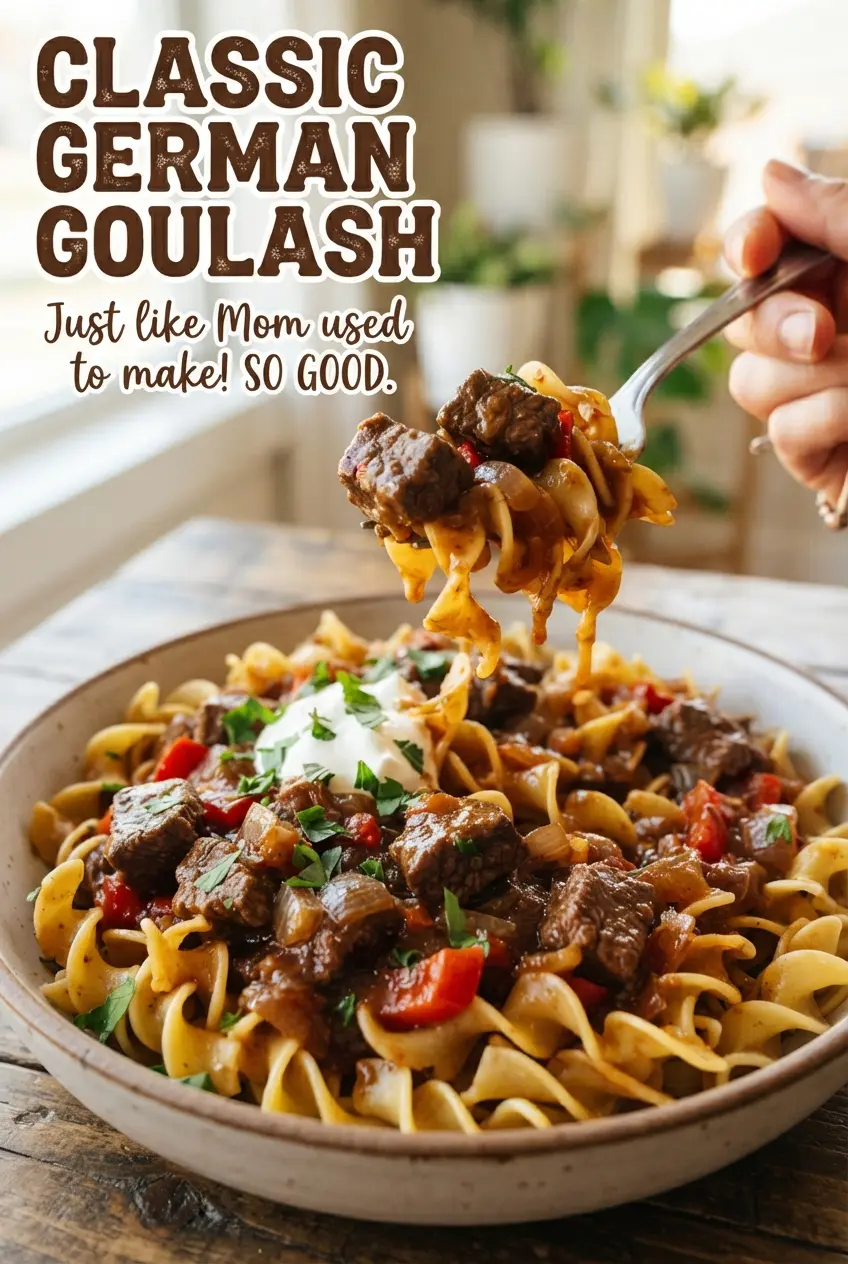
Classic German Goulash
Ingredients
Equipment
Method
- Season the beef chuck cubes with salt and black pepper, then heat the vegetable oil in a Dutch oven and brown the beef in batches.
- Brown the beef until the surfaces are well browned, then transfer to a plate and repeat until all beef is browned.
- Add the sliced onions to the Dutch oven and cook for 15-20 minutes until soft and golden.
- Stir in the minced garlic and cook for 1 minute, just until fragrant.
- Stir in the sweet paprika, hot paprika, caraway seeds, and tomato paste, cooking for 1 minute.
- Pour in the red wine vinegar, then add the beef broth, dried marjoram, bay leaves, and the browned beef.
- Cover and simmer for 2 hours, maintaining a steady simmer until the beef is very tender.
- Remove the bay leaves, then stir in the all-purpose flour slurry (all-purpose flour mixed with water).
- Simmer for 10 minutes, stirring occasionally, until the gravy thickens and coats the beef.
- Serve the goulash over buttered spaetzle or egg noodles.