
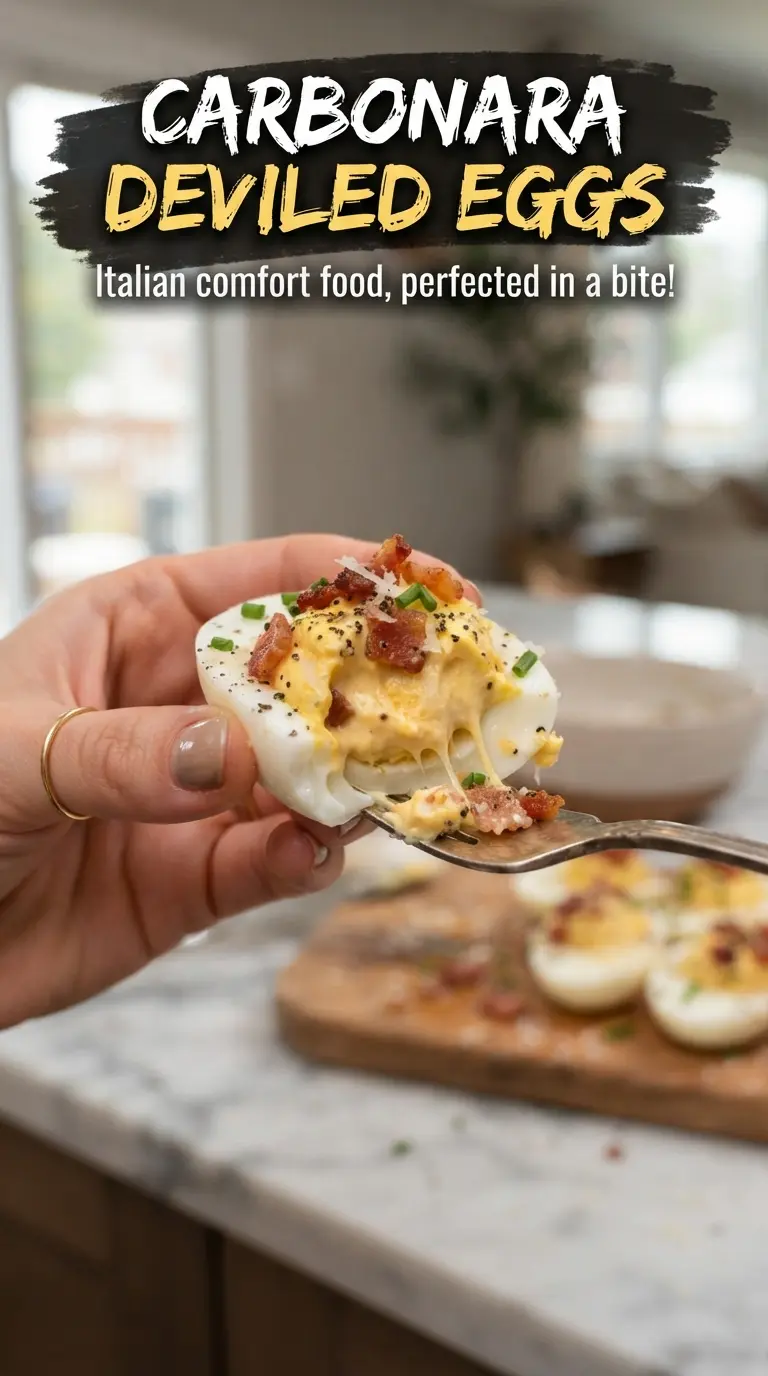
Carbonara deviled eggs take everything people love about the classic pasta—salty pancetta, sharp Pecorino, black pepper, and that rich, creamy finish—and pack it into one bite that disappears fast from a platter. The filling stays silky instead of pasty, and the bacon-like crunch on top gives every egg a little contrast, which is exactly what deviled eggs need to feel worth making.
The trick is using just enough of the pancetta fat to carry the carbonara flavor without turning the filling greasy. Pecorino Romano brings the sharp, salty edge that keeps the yolks from tasting flat, while a small amount of Dijon and garlic round everything out without pulling the dish away from its Italian cue. These aren’t overloaded eggs; they’re balanced eggs with the best parts of carbonara in appetizer form.
Below, I’ve included the detail that matters most for texture, plus a few swaps and troubleshooting notes that help if you’re making these for a party and want them to hold up on the tray.
The filling was silky and held its shape perfectly, and the pancetta stayed crisp even after sitting out on the platter for a while. The Pecorino and black pepper made them taste like carbonara in the best way.
Carbonara deviled eggs bring all the salty, peppery richness of the pasta classic into a party-ready bite.
The Reason the Filling Stays Silky Instead of Grainy
The biggest mistake with deviled eggs is treating the yolks like they need to be whipped into submission. They don’t. If you overwork them, the filling turns dry and chalky, especially once the Pecorino goes in. The goal here is a smooth, spreadable paste that still tastes rich, not a stiff mound that fights the piping bag.
Reserved pancetta fat does a small but important job. It gives the filling a carbonara note and helps the yolk mixture emulsify without needing extra mayo. Use only a teaspoon; more than that and the filling starts to slide around instead of sitting neatly in the egg whites.
What Each Ingredient Is Actually Doing in These Eggs
- Eggs — Older eggs peel more cleanly than very fresh ones, so if you have a choice, use eggs that have been in the fridge for at least a few days.
- Pancetta or guanciale — This is where the carbonara character comes from. Pancetta is easier to find and gives you the same salty, crispy topping; guanciale is a little richer and more traditional if you can get it.
- Pecorino Romano — Parmesan can work in a pinch, but it won’t give you the same sharp, briny bite. Finely grate it so it melts into the yolk mixture instead of leaving little sandy bits.
- Mayonnaise — This keeps the filling creamy and pipeable. Use a full-fat mayo here; light versions can taste flat and make the filling less stable.
- Dijon and garlic — Dijon sharpens the filling without making it taste mustardy, and the grated garlic echoes the bite you’d expect in a pasta version. Don’t use too much garlic or it takes over fast.
- Cracked black pepper — This is not background seasoning. It’s part of the identity of the dish, so use coarsely cracked pepper for a little texture and a clean, spicy finish.
Building the Carbonara Flavor Without Overfilling the Eggs
Boiling and Peeling the Eggs Cleanly
Start the eggs in cold water so they heat gradually and the whites set evenly. Once the water boils, cover the pot and pull it off the heat for the full 12 minutes; that gives you firm whites and yolks that are cooked through without going dry. The ice bath matters here because it stops the cooking and helps the shells release more cleanly. If your eggs are stubborn to peel, it’s usually because they’re too fresh or didn’t chill long enough.
Getting the Pancetta Crisp Without Burning It
Cook the pancetta over medium heat until the fat renders and the pieces turn crisp and deeply golden, not dark brown. You want the fat to melt out slowly so the pieces stay snappy. Drain it well, then reserve just a teaspoon of the fat for the filling. If you skip the draining step, the topping turns greasy and the filling can slide around on the whites.
Mashing the Yolks Into a Pipeable Filling
Mash the yolks with mayonnaise, Pecorino, Dijon, garlic, black pepper, and the reserved fat until the mixture looks smooth and glossy. A fork works, but a small food processor will give you an even silkier finish if you want sharp edges from a piping bag. Taste before you fill the eggs, because the salt level depends on how salty your pancetta and cheese are. The filling should taste a little more seasoned than you think, since the egg whites will mellow it out.
Finishing the Tray So It Holds Up
Pipe or spoon the filling into the whites, then top at the last minute with pancetta, shaved Pecorino, more pepper, and parsley. If you add the crispy topping too early, the pancetta loses its crunch and the cheese can start to sweat. For the cleanest look, fill the eggs first and chill them, then finish with the garnish right before serving. That keeps the texture right where it should be.
Three Ways to Make These Eggs Fit the Table
Swap in Parmesan for a milder finish
If Pecorino feels too sharp for your crowd, use finely grated Parmesan in the filling and shave a little on top. The eggs will taste rounder and less salty, but they’ll lose some of the classic carbonara bite. Add a little extra black pepper to keep the flavor from going soft.
Make them gluten-free and naturally low-carb
These are already a good fit for gluten-free and low-carb eating as written, as long as your Dijon and cured pork are certified or labeled accordingly. Nothing needs to be replaced, which is part of what makes them such a useful appetizer. The only thing to watch is the pancetta, since some brands use added ingredients you may want to avoid.
Use bacon when pancetta isn’t available
Thick-cut bacon works in place of pancetta, though the flavor becomes smokier and a little less delicate. Cook it until crisp, then drain it well so the topping doesn’t taste heavy. If the bacon is very smoky, cut back slightly on the black pepper so the filling stays balanced.
Make the filling ahead without losing texture
You can mix the filling a day ahead and keep it covered in the refrigerator, then pipe it into the whites when you’re ready to serve. The texture stays better if you wait to add the pancetta and parsley until the end. If the filling thickens overnight, stir in a small spoonful of mayonnaise before piping.
Storage and Reheating
- Refrigerator: Store assembled deviled eggs for up to 2 days. The topping stays best if added just before serving, but the filled whites hold up well.
- Freezer: Don’t freeze these. The egg whites turn rubbery and the filling separates after thawing.
- Reheating: These are meant to be served cold. If they’ve been chilled hard, let them sit at room temperature for 10 to 15 minutes before serving so the filling tastes creamy again.
Answers to the Questions Worth Asking

Carbonara Deviled Eggs
Ingredients
Equipment
Method
- Place 12 large eggs in a pot, cover with cold water, and bring to a boil; once boiling, cover and remove from heat, then let stand 12 minutes. You should see the water come to a full boil before removing the pot.
- Chill the boiled eggs in an ice bath for 10 minutes, then peel and halve lengthwise. The whites should feel cold and firm when ready to handle.
- Cook the finely diced pancetta or guanciale in a cast iron skillet for 6-8 minutes until crispy, then drain and reserve 1 teaspoon of the fat. Look for deep golden-brown bits and a clear sizzle.
- Mash the yolks with mayonnaise, Pecorino Romano, Dijon mustard, grated garlic, coarsely cracked black pepper, and the reserved pancetta fat until smooth. The mixture should be thick, cohesive, and glossy with no large lumps.
- Pipe the filling into the egg white halves, creating a neat mound in each well. The filling should hold its shape when piped.
- Top with crispy pancetta, shaved Pecorino Romano, cracked pepper, and fresh parsley for garnish. Finish with a visible peppery speckle on top and a few parsley leaves for contrast.


