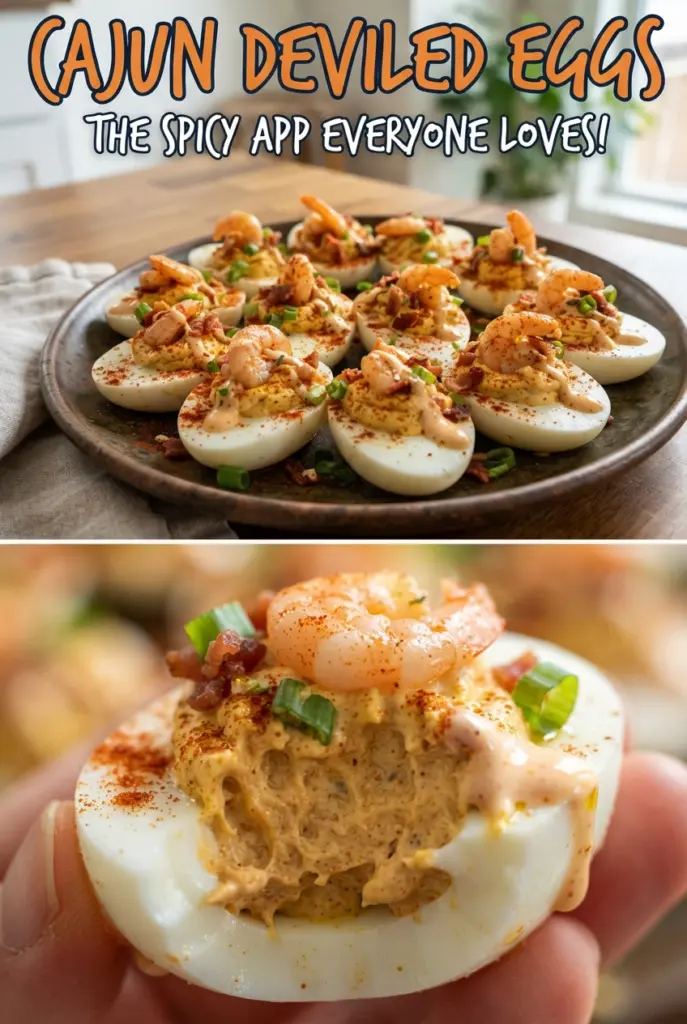
These Cajun deviled eggs bring the kind of heat, creaminess, and salty bite that makes people hover around the platter until every last one is gone. The filling stays smooth and tangy, the Cajun seasoning wakes everything up, and the seared shrimp on top turns a familiar appetizer into something that feels a little more special without asking for much extra work.
The trick is keeping the yolk mixture balanced. Mayonnaise gives it body, Creole mustard adds sharpness, and a little relish keeps the filling from tasting flat. The shrimp only need a quick sear in butter, just enough to turn pink and pick up a little crust from the seasoning. If they cook too long, they go rubbery fast, so the pan should already be hot before they hit it.
Below, you’ll find the small details that matter most: how to boil eggs that peel cleanly, how to keep the filling silky, and how to time the shrimp so everything lands on the plate at the same moment.
The yolk filling was super smooth and the little shrimp on top made these feel fancy. I loved that the Cajun seasoning hit in both the filling and the shrimp without tasting too salty.
Save these Cajun deviled eggs for the appetizer spread that needs a creamy filling, a little heat, and shrimp on top.
The Trick to Keeping Cajun Deviled Eggs Creamy Instead of Watery
Deviled eggs go wrong fast when the filling gets loose from too much moisture or the yolks turn grainy from overmixing. In this version, the relish is there for brightness, but it needs to be measured carefully because a heavy hand will thin the filling and blur the Cajun seasoning. The yolks should be mashed until smooth, then stirred just enough to become pipeable, not whipped into paste.
The shrimp change the texture game too. Since they sit on top instead of getting folded in, the filling stays thick and stable. That matters because warm shrimp can soften the surface if they’re piled on before they cool for a minute or two after searing.
What Each Ingredient Is Doing in These Deviled Eggs
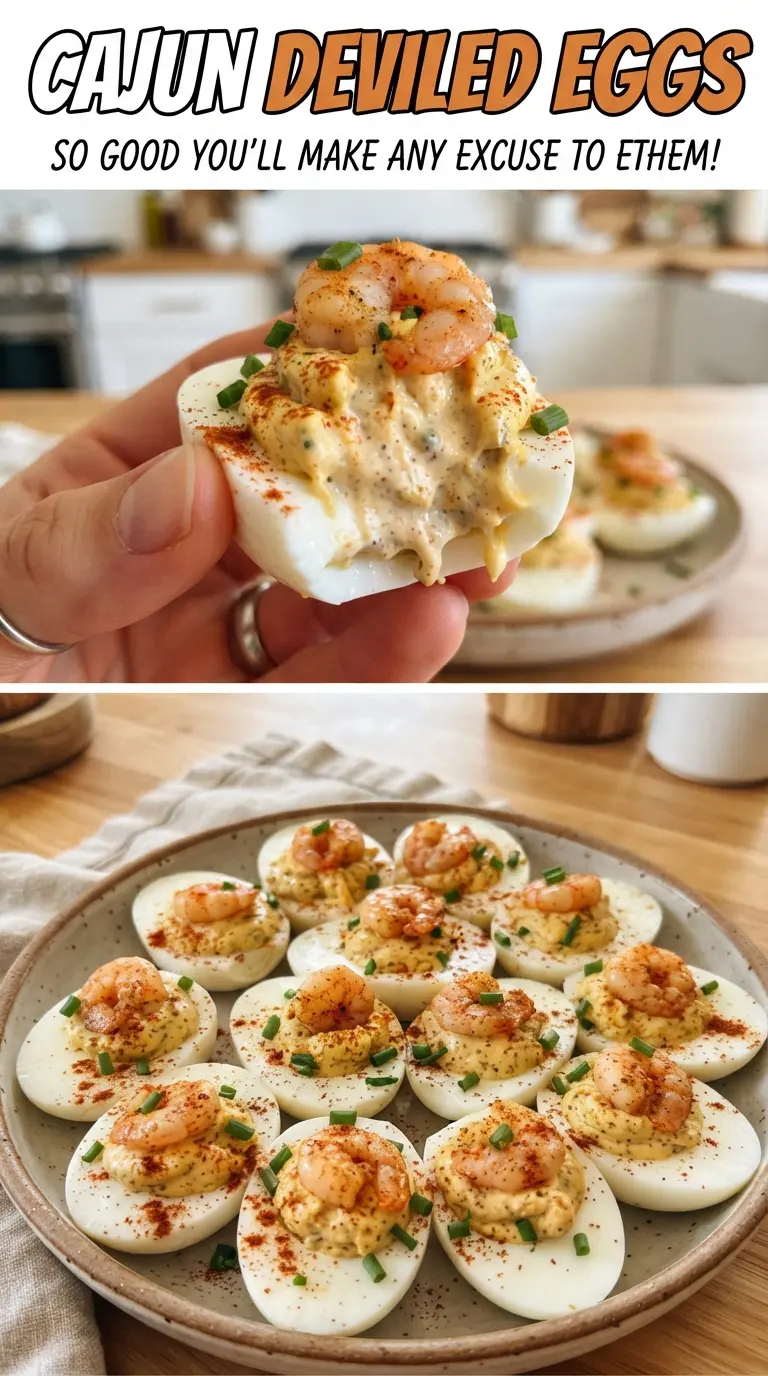
- Eggs — The fresher the eggs, the harder they usually are to peel, so eggs that have been in the fridge for a few days tend to give cleaner results. The goal is a set white that slices neatly and a yolk that stays tender, not chalky.
- Mayonnaise — This is what makes the filling lush and spreadable. Use a mayo you like the taste of straight from the jar, because it carries the whole filling.
- Creole mustard — It brings sharpness and a little texture that plain yellow mustard won’t match. If you need a swap, Dijon works, but the flavor shifts a bit cleaner and less peppery.
- Hot sauce — This adds acidity and a small kick without turning the filling into a spicy appetizer. Use enough to brighten the yolks, not enough to overpower the shrimp.
- Cajun seasoning — Dividing it between the filling and the shrimp keeps the flavor layered. If your blend is very salty, back off a little and taste before adding more.
- Sweet pickle relish — This is the ingredient that keeps the filling from tasting one-note. Finely chopped pickles can stand in if needed, but relish disperses more evenly.
- Shrimp — Halving them lengthwise gives each egg a neat, delicate topper and keeps them from feeling bulky. Medium shrimp work best here because they cook quickly and sit nicely on the egg.
- Butter — It helps the seasoning cling to the shrimp and gives you a better sear than oil alone for this small batch. Don’t overcrowd the pan, or the shrimp will steam and lose that lightly browned edge.
How to Build the Filling and Shrimp So Everything Tastes Fresh
Boiling and Peeling Without Damaging the Whites
Start the eggs in cold water, bring them to a boil, then cover the pot and pull it off the heat. That gentle finish helps the whites set without becoming rubbery. The ice bath matters because it stops the cooking and helps the shells release more cleanly. If the eggs crack while boiling, the water was moving too hard; keep the heat at a lively boil, not a rolling one.
Mixing the Yolks Until Smooth and Pipeable
Mash the yolks first before anything else goes in. Once they’re broken down, add the mayonnaise, mustard, hot sauce, relish, and seasoning, then stir until the mixture turns creamy and holds its shape. If it looks stiff, add a teaspoon of mayonnaise rather than more relish, which can make it watery. The filling should mound on a spoon and settle slowly, not run.
Searing the Shrimp for a Quick Cajun Topper
Toss the shrimp with the remaining seasoning before they hit the skillet so the spice clings to the surface. The butter should be hot enough to sizzle the shrimp immediately, and each side only needs 1 to 2 minutes. Pull them as soon as they turn pink and opaque; if they curl into tight little rings, they’ve gone a little too far. Let them cool just enough to handle before topping the eggs so they don’t melt the filling.
Filling and Finishing the Platter
Pipe or spoon the filling into the egg whites with a steady hand so the tops look clean, not dragged. Place one shrimp half on each egg, then finish with sliced green onions for color and a fresh bite. If you’re making them ahead, wait to garnish until just before serving so the onions stay crisp and the shrimp keep their shine.
How to Adjust These Cajun Deviled Eggs for Different Tables
Milder Cajun Deviled Eggs
Cut the Cajun seasoning back to 1 teaspoon total and use a mild hot sauce, then let the Creole mustard carry the flavor. You’ll still get the savory, seasoned profile, but the heat stays lower and more crowd-friendly.
Dairy-Free Deviled Eggs
This recipe is already naturally dairy-free if you use a mayonnaise made without milk ingredients. Swap the butter for a neutral oil or dairy-free butter when searing the shrimp, and the texture stays just as crisp on top.
No-Shrimp Version
Leave off the shrimp and finish with extra green onions and a pinch of Cajun seasoning. You lose the sweet, seared seafood contrast, but the eggs still taste complete and hold up well for a buffet.
Storage and Reheating
- Refrigerator: Store assembled deviled eggs for up to 2 days, but the shrimp is best the day they’re made. The filling may firm up a little, which actually helps the eggs hold their shape.
- Freezer: Don’t freeze deviled eggs. The whites turn rubbery and the yolk filling separates after thawing.
- Reheating: These are meant to be served chilled or at cool room temperature. If the shrimp were made ahead, bring them to room temperature briefly before assembling; microwaving will toughen both the shrimp and the eggs.
Answers to the Questions Worth Asking
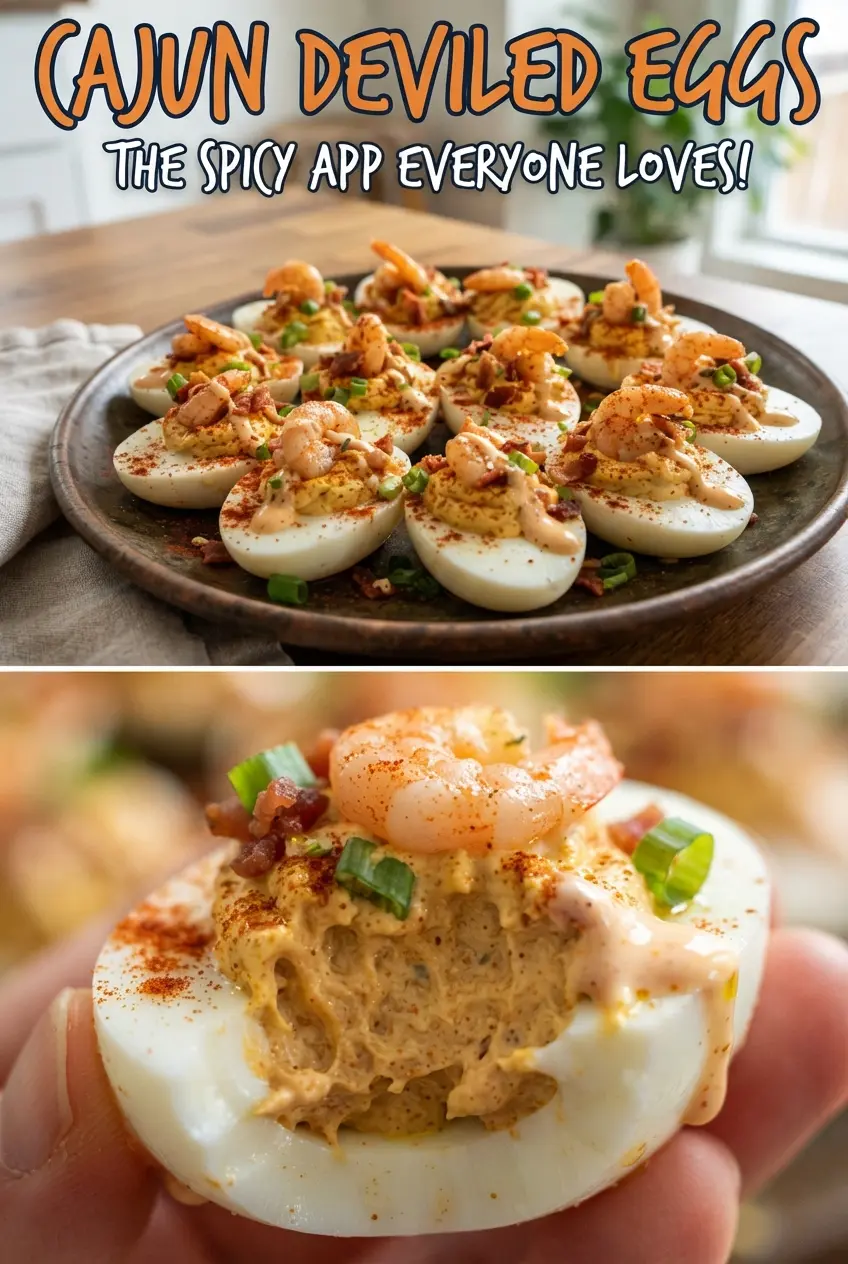
Cajun Deviled Eggs
Ingredients
Equipment
Method
- Place large eggs in a pot, cover with cold water, and bring to a boil over high heat; once boiling, cover and remove from heat.
- Let the covered eggs stand for 12 minutes, then transfer to an ice bath and chill for 10 minutes to stop cooking and help peeling.
- Peel the eggs and halve them lengthwise, keeping the yolks for filling.
- Mash the yolks with mayonnaise, Creole mustard, hot sauce, sweet pickle relish, and 1 teaspoon Cajun seasoning until smooth and creamy.
- Toss the halved shrimp with the remaining Cajun seasoning until evenly coated.
- Melt butter in a hot pan and sear shrimp for 1-2 minutes per side until they turn pink and just cooked through.
- Pipe the deviled filling into the egg white halves for neat, consistent portions.
- Top each deviled egg with a shrimp half and finish with sliced green onions for garnish.