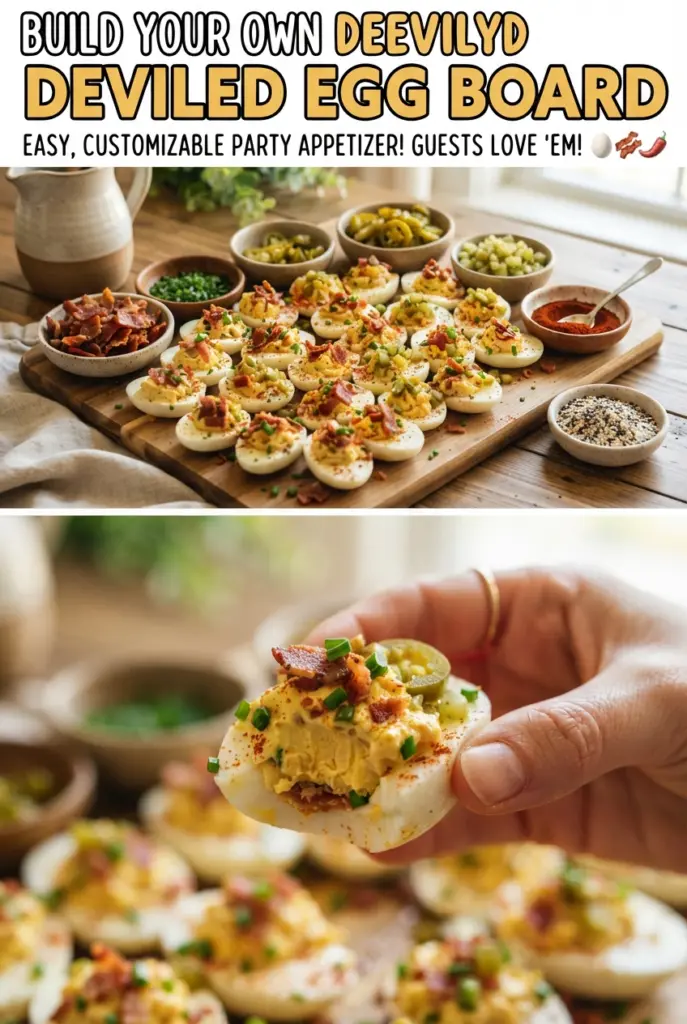
Deviled eggs disappear fast, but a deviled egg board turns the same familiar bite into the thing people hover around first. The filling stays classic and smooth, then the toppings bring the crunch, smoke, heat, and briny punch that keep every bite a little different from the last. It feels generous without being fussy, and it works just as well for a casual get-together as it does for a holiday table.
The key is keeping the egg filling clean and balanced so it can handle bold toppings without turning muddy. Mayo gives the yolks body, Dijon sharpens the flavor, and the splash of vinegar keeps everything from tasting flat. Once the eggs are filled, the board does the rest of the work: bacon for salt and crunch, smoked salmon for richness, jalapeños for heat, and herbs for freshness. Nothing here needs a complicated technique. It just needs a little care in the boiling, peeling, and seasoning.
Below you’ll find the small details that make the board easier to assemble and nicer to eat, plus a few ways to change it based on what you’ve got on hand.
The filling was smooth and held its shape, and the toppings made it feel like three different appetizers on one board. The jalapeños with the smoky salmon were the first thing gone.
Save this build-your-own deviled egg board for a crowd-pleasing appetizer with smoky, briny, and spicy toppings.
The Filling Falls Flat If You Skip the Acid
Deviled egg filling can taste heavy fast, especially when it leans on mayo alone. The vinegar and Dijon keep the yolks bright and cut through the richness, which matters even more once the toppings start piling on. If the base tastes bland before it hits the whites, the board will only amplify that flatness.
The other mistake is overmixing the yolks into glue. Mash them first, then stir in the mayo and seasonings until the mixture looks smooth but still light. If it seems stiff, add a teaspoon of mayo at a time instead of dumping in more liquid, because a loose filling won’t pipe cleanly and will slump under the toppings.
What Each Topping Is Doing on the Board
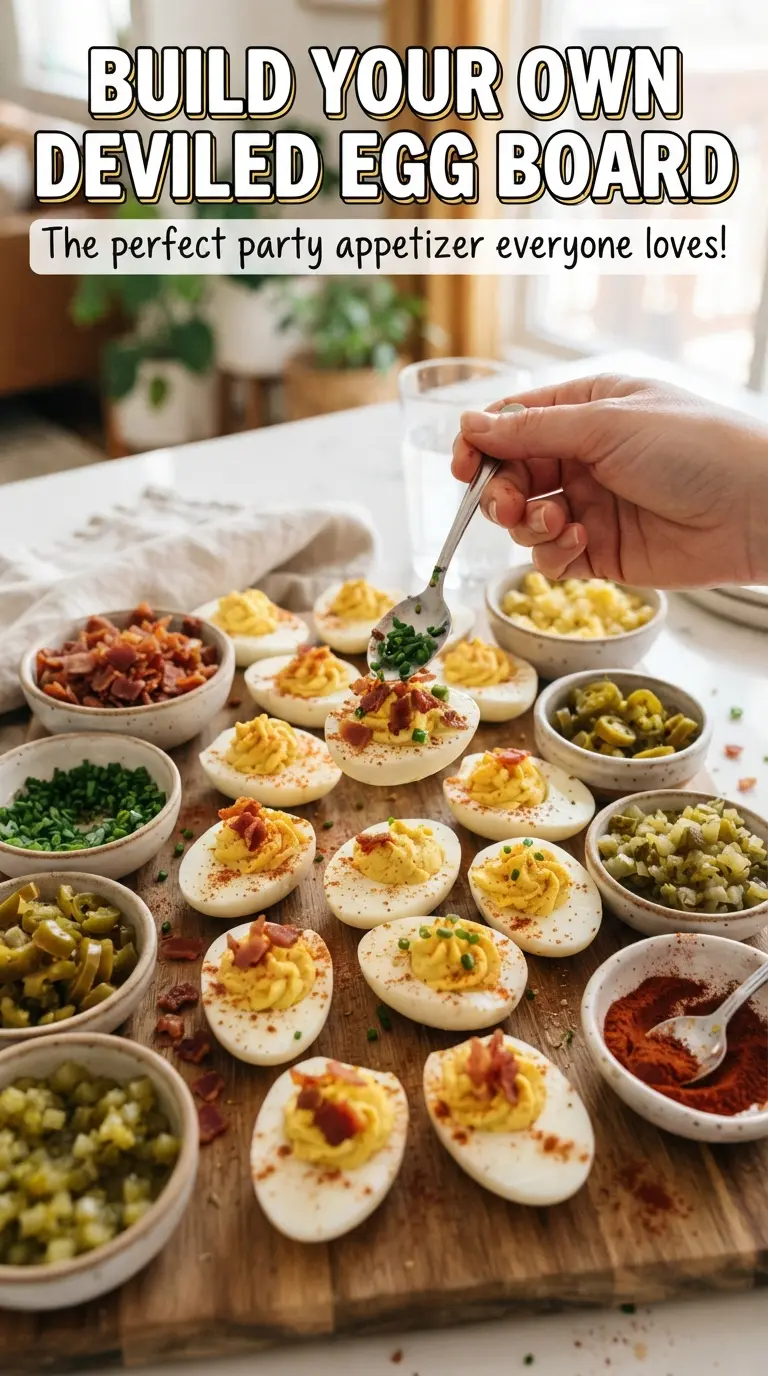
Each topping brings a different job to the board, and that’s what keeps the platter from feeling repetitive. Bacon adds crunch and salt, smoked salmon brings a silky, savory note, and pickled jalapeños wake up each bite with acid and heat. Everything bagel seasoning and capers both lean briny, but they read differently on the tongue: one gives crunch and sesame, the other gives sharp little pops of salt.
- Eggs — Older eggs peel more cleanly than very fresh ones, which makes a real difference here because neat whites are the whole canvas. If you’re stuck with fresher eggs, the ice bath matters even more.
- Mayonnaise — This is the texture builder. Full-fat mayo gives the filling the smoothest body; light mayo can work, but the filling won’t pipe as cleanly or taste as rich.
- Dijon mustard — Dijon adds sharpness without making the filling taste aggressively mustardy. Yellow mustard will work in a pinch, but it tastes flatter and less polished.
- Smoked salmon, bacon, and jalapeños — These are the strongest toppings, so use them in smaller bowls and let guests build from there. Too much of all three on one egg can bury the filling instead of complementing it.
- Chives, paprika, and capers — These finish the board with freshness, color, and little bursts of salt. Chives should be added right before serving so they stay perky.
Getting the Eggs, Filling, and Board in the Right Order
Boiling the Eggs Without Overcooking the Yolks
Start the eggs in cold water, bring them just to a boil, then cover the pot and pull it off the heat. That gentle finish gives you yolks that are set all the way through but still tender, not chalky at the edges. If the yolks get gray or dry, they stayed in the heat too long, so keep the 12-minute rest timed and move them straight to the ice bath.
Peeling and Halving Cleanly
Cool the eggs fully before peeling, because warm eggs tend to tear and leave pitted whites. Crack them all over in the ice bath, then peel under a trickle of cold water if the shells cling. Slice each egg lengthwise with a sharp knife wiped clean between cuts so the halves stay neat and the board looks intentional instead of messy.
Mixing the Filling Until It Pipes Smoothly
Mash the yolks first until no dry crumbs remain, then work in the mayo, Dijon, vinegar, salt, and pepper. The filling should be creamy and thick enough to hold ridges from a spoon or piping tip. If it feels grainy, the yolks weren’t mashed enough at the start; if it feels loose, add a little more yolk, not more liquid.
Building the Board for Maximum Variety
Put the filled eggs in the center first so they become the anchor of the platter, then arrange the toppings in small bowls around them. Keep the boldest items separated so the board feels abundant, not crowded. Paprika and hot sauce belong at the end, right before serving, so they don’t stain the whites or make the toppings look tired.
How to Change the Board for Different Guests
Make It Gluten-Free Without Changing the Flavor
This board is naturally gluten-free as written, so the only thing to watch is your toppings and condiments. Check the hot sauce, bacon, and everything bagel seasoning if you’re serving someone with celiac disease, because sneaky additives and cross-contact are the real issues here.
Swap in a Lighter Dairy-Free Style Filling
The classic filling is already dairy-free because it relies on mayo, not cream cheese or sour cream. If you want to lighten it, use avocado mayo for a softer, greener note, but expect a slightly looser texture and a more delicate flavor.
Turn It Into a Vegetarian Board
Skip the bacon and smoked salmon, then lean harder on the jalapeños, chives, cheddar, capers, and everything seasoning. The board still feels complete because the eggs carry the richness and the toppings still cover salty, crunchy, and tangy territory.
Make the Filling Ahead for Faster Assembly
You can boil, peel, and mix the eggs a day ahead, then store the filling separately from the whites. The whites stay cleaner that way, and the board looks fresher if you pipe and top everything just before serving.
Storage and Reheating
- Refrigerator: Store filled eggs in an airtight container for up to 2 days. The toppings are best kept separate so the board doesn’t turn watery or soggy.
- Freezer: Don’t freeze deviled eggs. The whites turn rubbery and the filling separates once thawed.
- Reheating: No reheating needed. Serve them cold, straight from the fridge after a short rest at room temperature so the filling isn’t icy.
Answers to the Questions Worth Asking
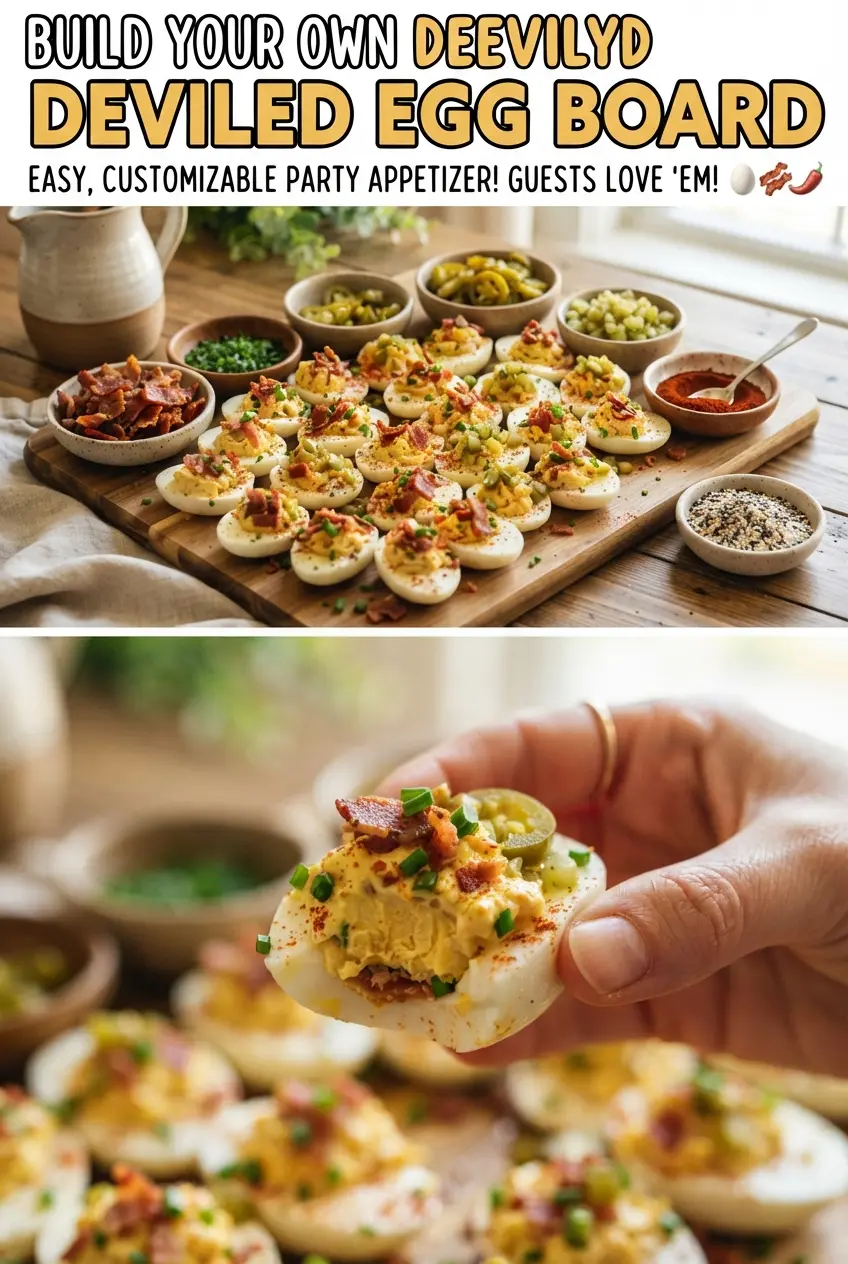
Build Your Own Deviled Egg Board
Ingredients
Equipment
Method
- Place the large eggs in a Dutch oven, cover with cold water, and bring to a boil; cover, remove from heat, and let stand 12 minutes.
- Chill the eggs in an ice bath for 10 minutes, then peel and halve lengthwise.
- Mash the yolks with mayonnaise, Dijon mustard, white vinegar, salt, and black pepper until smooth.
- Pipe the filling into the egg whites and arrange them in the center of a large board.
- Fill small bowls with bacon, smoked salmon, pickled jalapenos, everything bagel seasoning, shredded cheddar, fresh chives, and capers.
- Arrange the bowls around the eggs, then sprinkle with paprika and drizzle with hot sauce so guests can top their own.