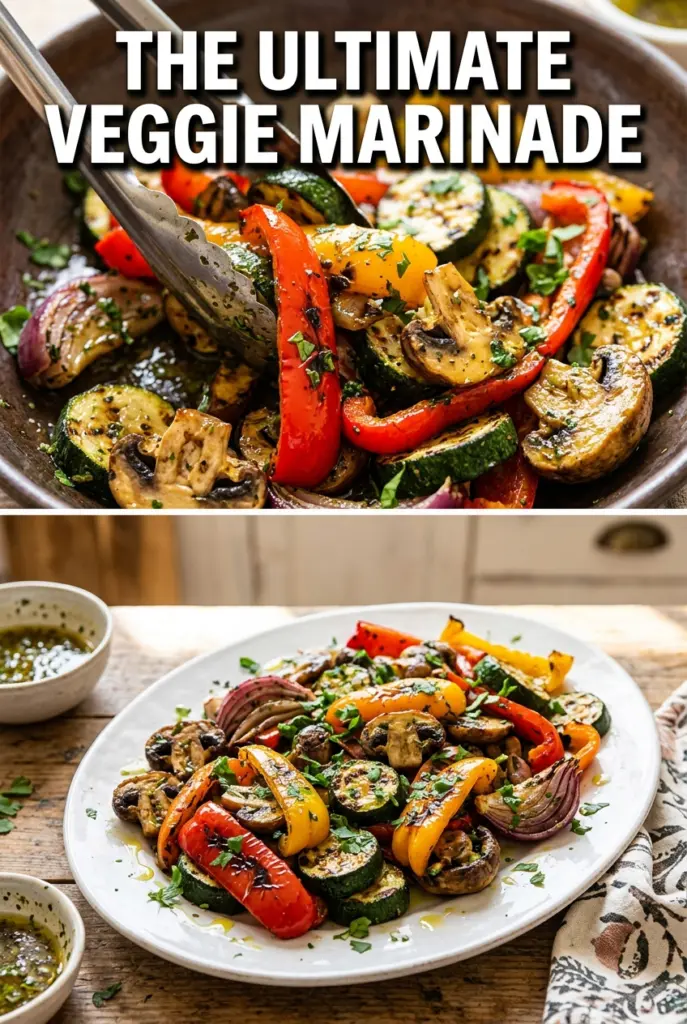
Colorful vegetables turn into the kind of side dish people reach for first when they hit the table, and that usually comes down to the marinade. This one clings well, brightens the vegetables instead of burying them, and gives you those glossy, charred edges that make grilled zucchini, peppers, mushrooms, and onions taste like they were built for the grill.
The balance matters here: olive oil carries the herbs and helps the vegetables brown, while balsamic and lemon keep the flavor sharp enough to cut through the natural sweetness of grilled produce. Dijon pulls the marinade together, honey rounds out the acid, and garlic plus oregano give it that classic savory backbone. I tested it with both sturdy vegetables and softer ones, and the timing is what keeps everything from turning watery or dull.
Below you’ll find the exact marinating window I use, the vegetables that hold up best, and the one small grilling habit that keeps this from tasting flat. If you’ve ever had grilled vegetables that looked good but tasted underseasoned, this version fixes that.
The vegetables came off the grill glossy and full of flavor, and the marinade didn’t burn or turn bitter. I let them sit for about 45 minutes and the balsamic-lemon mix was perfect with the charred edges.
Save this veggie marinade for grilled zucchini, peppers, and mushrooms that stay bright, smoky, and full of flavor.
The Trick That Keeps Grilled Vegetables From Going Flat
The biggest mistake with vegetable marinades is treating them like meat marinades. Vegetables don’t need hours to absorb flavor, and if they sit too long in a heavy acid mixture, they lose their structure and start tasting soggy before they even hit the grill. Thirty minutes is the sweet spot here for most vegetables, with two hours as the outer limit for firmer ones like mushrooms, peppers, and onions.
Another thing that matters is balance on the grill. A marinade that tastes perfect in the bowl can still fall flat once it meets high heat, which is why this one leans on balsamic, mustard, garlic, and dried herbs instead of relying on sweetness alone. The oil protects the vegetables, and the honey helps them caramelize without turning sticky or scorched.
- Olive oil — This is what helps the marinade coat the vegetables evenly and gives you browning instead of dry, bitter edges. Use a good everyday oil here; extra-virgin is worth it for flavor.
- Balsamic vinegar — It brings depth and a little sweetness, which matters once the vegetables hit high heat. Red wine vinegar works in a pinch, but the final flavor will be sharper and less rounded.
- Lemon juice — This keeps the marinade bright so the vegetables taste seasoned, not just oily. Fresh lemon makes a real difference because bottled juice can taste dull in a simple marinade like this.
- Dijon mustard — Dijon acts like the emulsifier that keeps the oil and vinegar from separating immediately. It also adds a subtle savory bite that helps the marinade cling to every piece.
What Each Ingredient Is Actually Doing in This Veggie Marinade
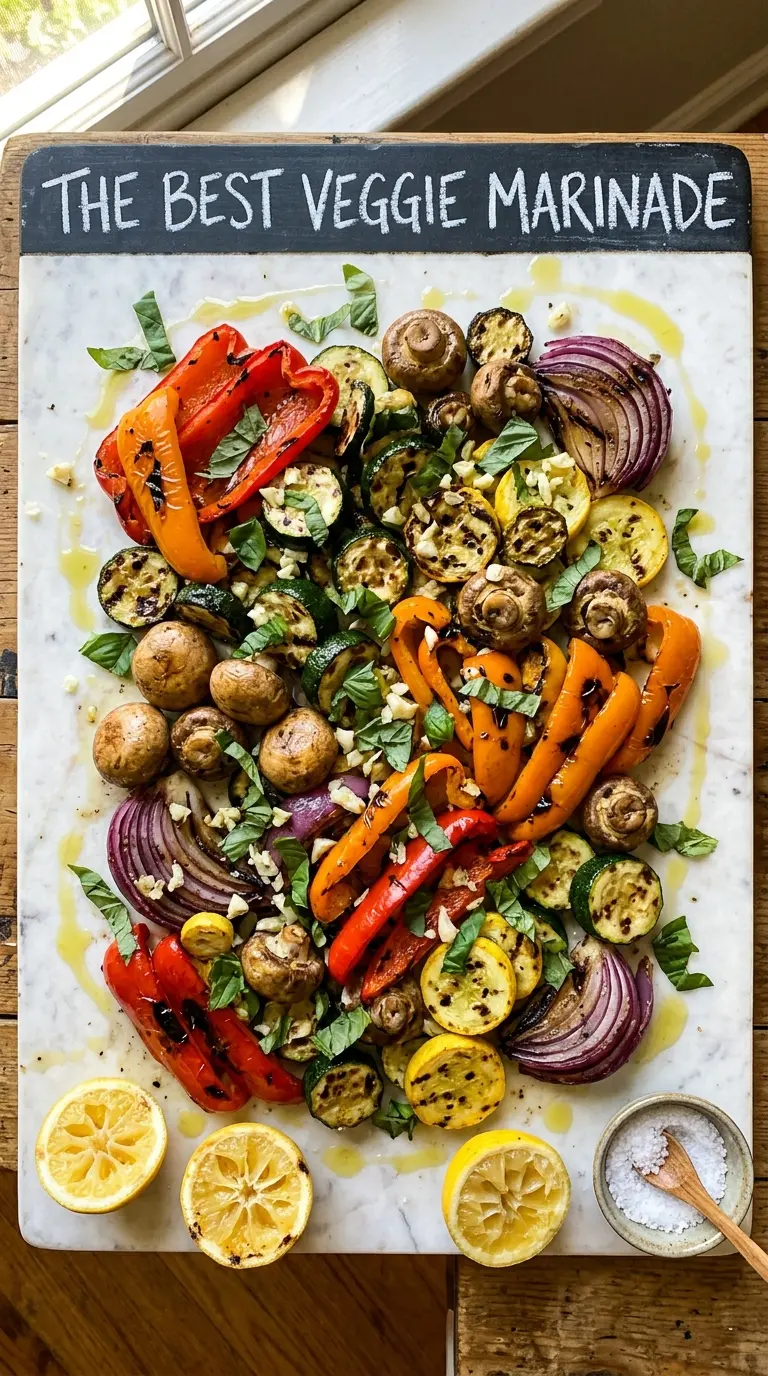
- Olive oil (the carrier and browning agent) — Good olive oil is essential because it coats the vegetables evenly and helps them brown instead of steam. The oil also carries all the flavors throughout so every piece tastes seasoned.
- Balsamic vinegar (the depth and sweetness) — Balsamic adds complexity and a subtle sweetness that balances the acid. It also helps caramelize the vegetables on high heat without tasting sharp or harsh.
- Lemon juice (the brightness) — Fresh lemon juice keeps the marinade from tasting one-dimensional and oily. It should taste bright and assertive when you taste it alone, then mellow slightly once on the hot grill.
- Dijon mustard (the emulsifier and anchor) — Mustard holds the oil and vinegar together so the marinade coats instead of separating. It also adds savory depth that prevents the marinade from tasting too sweet.
- Garlic (raw, minced fine) — Raw garlic adds punch and complexity. The heat of the grill mellows it slightly, so you can start with what tastes bold in the marinade.
- Fresh or dried oregano (the backbone herb) — Oregano is what gives this Mediterranean character. Dried oregano works in marinades better than fresh because it infuses without wilting.
- Honey (the caramelization helper) — A small amount of honey helps the vegetables brown and glaze without burning. Too much turns sticky or scorches, so restraint matters here.
- Salt and pepper (proper seasoning throughout) — The marinade should taste bold and well-seasoned. Don’t undersalt thinking the grill will concentrate it; apply enough in the marinade so every piece tastes flavorful.
Whisking, Marinating, and Grilling Without Losing the Char
Building the Marinade
Whisk the oil, balsamic, lemon juice, garlic, Dijon, honey, oregano, basil, red pepper flakes, salt, and pepper until the mixture looks slightly thickened and cohesive. If it still looks broken and slippery, keep whisking; the mustard needs a few seconds to pull everything together. This matters because an emulsified marinade coats the vegetables instead of pooling at the bottom of the bowl.
Coating the Vegetables
Add the cut vegetables to a large bowl or zip-top bag and toss until every surface has a light shine. You want them coated, not drowned. Too much marinade on the vegetables turns into steaming liquid on the grill, and that’s what steals the char.
Letting the Flavor Set
Let the vegetables sit for at least 30 minutes so the salt and acid can season the surface. Firmer vegetables can go up to 2 hours, but don’t push it much longer or the texture starts to soften too much. If you’re marinating in a bag, turn it once halfway through so the vegetables on top get the same coverage as the ones underneath.
Grilling to Finish
Cook over medium-high heat until the vegetables are tender and the edges have dark grill marks. If the grill is too hot, the honey and balsamic can scorch before the vegetables soften, so keep the heat controlled and move quicker with thinner pieces. Brush on a little reserved marinade during grilling only if it hasn’t touched raw vegetables.
How to Change This Marinade for Different Vegetables and Diets
For extra-busy weeknights
Use the marinade in a zip-top bag and prep the vegetables earlier in the day. The bag helps coat everything quickly, and it also means less cleanup. Just don’t leave softer vegetables soaking all afternoon or they’ll lose their bite.
Dairy-free and naturally vegetarian
This recipe already fits both, which makes it easy to serve with almost anything. The flavor comes from oil, acid, mustard, garlic, and herbs, so you don’t lose anything by skipping dairy. That’s part of why it works so well on mixed vegetable platters.
For a sweeter, more caramelized finish
Add the full tablespoon of honey and lean into vegetables that brown well, like onions, peppers, and zucchini. You’ll get a glaze-like finish, but the tradeoff is that the marinade can darken faster on the grill, so watch for hot spots.
For a lower-sugar version
Cut the honey in half and use a little more balsamic for depth. You’ll lose some browning speed, but the vegetables will still taste balanced and savory. This version is especially good if you’re serving them alongside rich mains and want the marinade to stay lighter.
Storage and Reheating
- Refrigerator: Store leftover grilled vegetables in an airtight container for up to 4 days. They’ll soften a little, but the flavor holds well.
- Freezer: Freezing isn’t the best option here. The vegetables turn watery after thawing and lose the texture that makes them good.
- Reheating: Reheat in a hot skillet or a 400°F oven until warmed through. The common mistake is microwaving them too long, which makes them limp instead of bringing back any caramelized edges.
Answers to the Questions Worth Asking
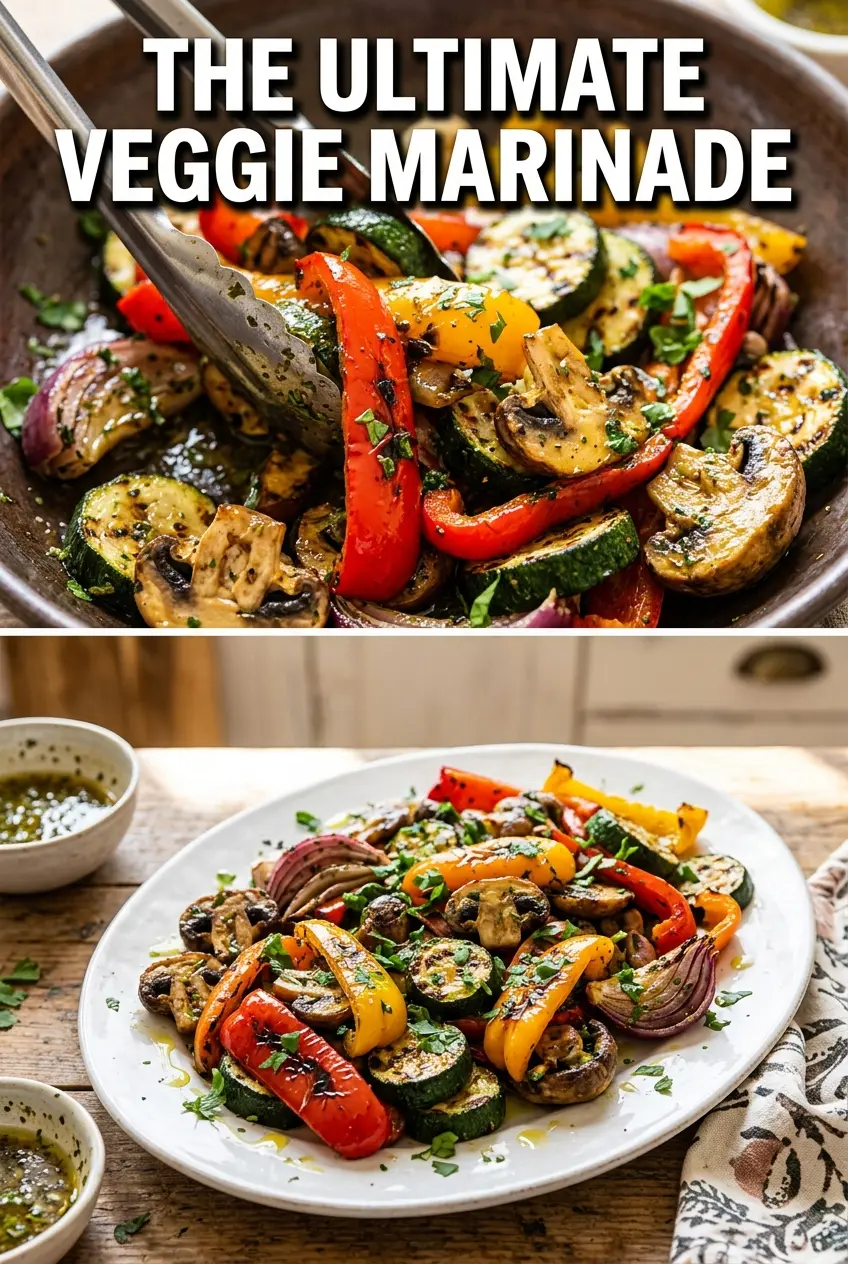
Best Veggie Marinade
Ingredients
Method
- Whisk olive oil, balsamic vinegar, lemon juice, minced garlic, Dijon mustard, honey, dried oregano, dried basil, and red pepper flakes together until emulsified and glossy.
- Season the marinade with salt and pepper to taste, then whisk again briefly to evenly distribute the seasoning.
- Pour the marinade over prepared mixed vegetables in a large bowl or zip-top bag and toss until every surface looks coated.
- Cover and marinate at least 30 minutes or up to 2 hours, so the vegetables look glistening and slightly darker.
- Grill the vegetables over medium-high heat until tender and charred, turning as needed for grill marks.
- Brush with any remaining marinade during grilling for extra flavor, watching for light sizzling without burning.