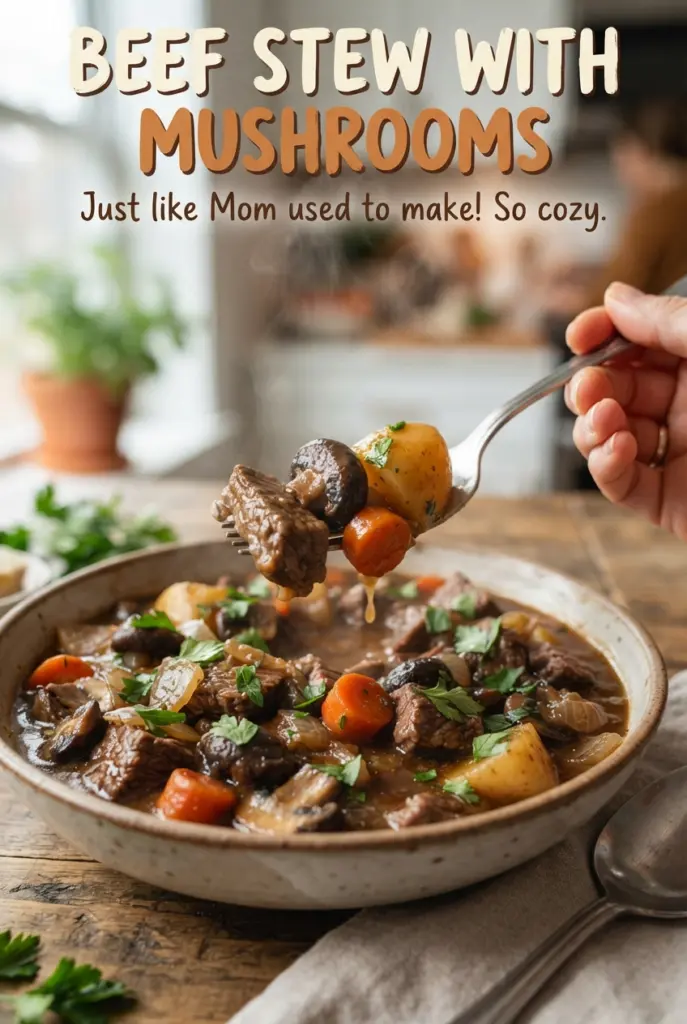
Beef stew with mushrooms is the kind of bowl that tastes like it took all day, because in a way it did. The beef turns spoon-tender, the mushrooms soak up the gravy instead of disappearing into it, and the potatoes and carrots hold their shape just enough to give every bite some contrast. What you get at the end is rich, glossy, and deeply savory without tasting heavy.
The detail that makes this version stand out is the way the mushrooms are browned first and added back later. That keeps them meaty instead of rubbery, and it gives the stew a deeper mushroom flavor from the start. A dusting of flour on the beef helps thicken the broth as it simmers, while a splash of red wine and a little soy sauce build the kind of background savoriness that makes people keep going back for another spoonful.
Below, I’ve included the parts that matter most: how to get real browning on the beef, which ingredient does the most work in the broth, and what to do if you want to make it ahead. The recipe card gives you the straight path, but these notes will help you understand why it comes out right.
The mushrooms stayed meaty and the gravy thickened up beautifully. I served it over mashed potatoes, and my husband asked if there was enough left for lunch the next day.
Save this mushroom-packed beef stew for a night when you want a rich gravy, tender beef, and a pot that tastes even better tomorrow.
The Mushrooms Need Their Own Browning Time
Most beef stew recipes tell you to throw the mushrooms in with everything else, but that’s how they end up soft and faded instead of savory and distinct. Browning them first drives off surface moisture and gives you actual color, which means actual flavor. If you skip that part, the mushrooms spend the whole stew sitting in liquid and never really recover.
The other thing that matters here is batch browning the beef. Crowding the pan steams the meat, and steamed beef makes cloudy broth instead of a deep, brown one. You want a dark crust on the outside and plenty of browned bits left in the pot when you move on to the onions. That fond is the base of the gravy.
What Each Ingredient Is Actually Doing in This Stew
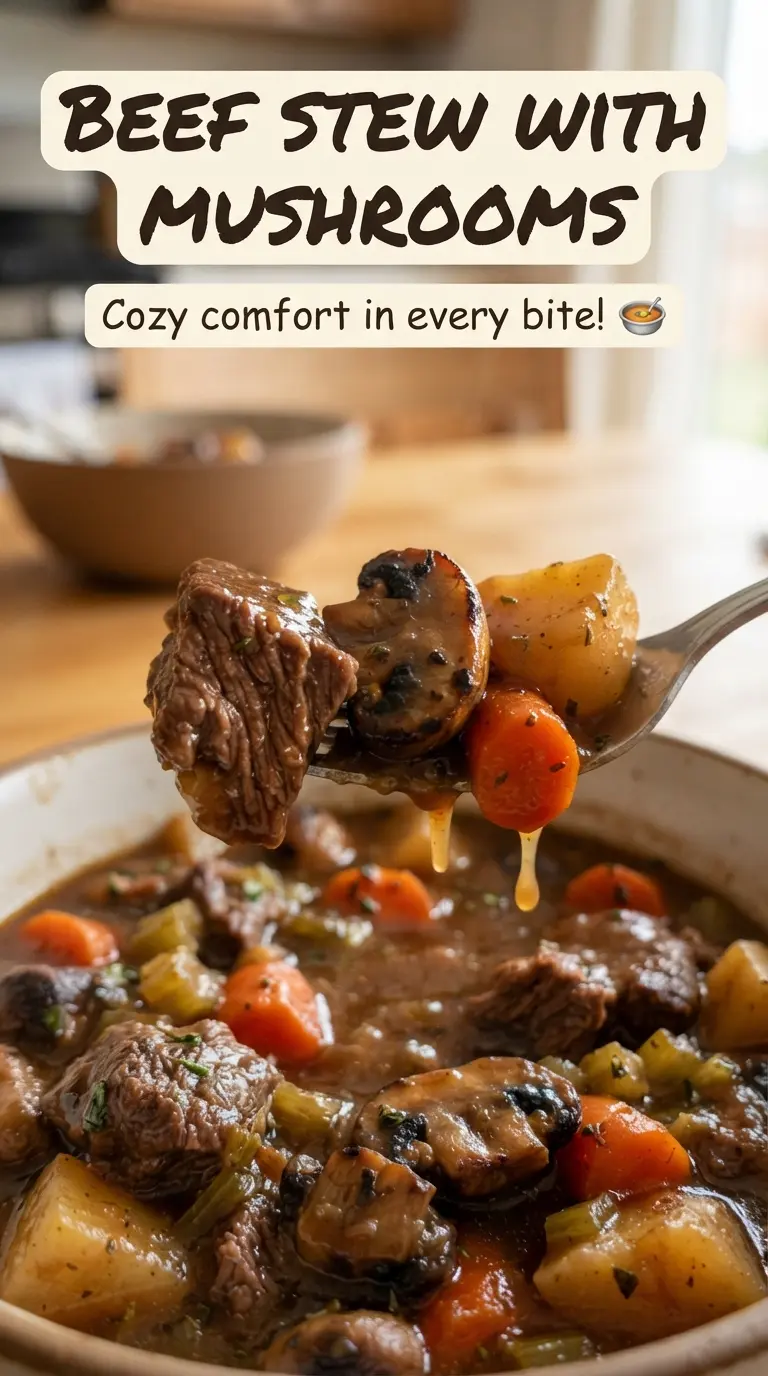
- Beef chuck — This cut has enough connective tissue to turn tender during a long simmer. Leaner beef goes dry before the stew is finished.
- Cremini mushrooms — They have more flavor than white buttons and hold onto their shape better. Brown them until the edges look deeply golden, not pale.
- Tomato paste — It adds depth and a little sweetness once it cooks in the pot for a minute. If it goes in too early and burns, the stew turns bitter, so let the onion soften first.
- Dry red wine — This loosens the browned bits from the pan and gives the gravy a darker, rounder flavor. Use something you’d actually drink; harsh wine stays harsh after simmering.
- Soy sauce — It doesn’t make the stew taste like soy sauce. It quietly boosts the savory backbone and helps the broth taste more finished.
- Flour — Tossing the beef in flour before browning gives the gravy body without needing a separate slurry at the end. It also helps the sauce cling to the meat and vegetables.
Building the Stew in the Right Order
Getting Color on the Mushrooms First
Heat the butter with part of the oil and let the mushrooms sit long enough to release their moisture and then brown. Stir too soon and they’ll steam; wait for the pan to quiet down and the edges to deepen in color. When they’re ready, they should look glossy and have a nutty smell. Set them aside so they can go back in near the end without turning soggy.
Seasoning and Browning the Beef
Pat the beef dry, season it, and toss it with the flour before it hits the hot oil. Brown it in batches and don’t move it around until the crust forms, or you’ll lose the fond that thickens and flavors the stew. The meat doesn’t need to cook through at this stage; it just needs a dark exterior and a good layer of flavor on the bottom of the pot.
Deglazing Into the Gravy
Once the onions soften and the garlic and tomato paste have cooked briefly, pour in the wine and scrape the pot clean. That’s where the flavor lives, and if the pan still looks dry, you haven’t scraped enough. Let the wine simmer for a minute so the sharp alcohol smell cooks off before adding the broth, soy sauce, thyme, and bay leaves.
Finishing the Simmer
The stew needs time for the chuck to relax and become tender, so keep it at a gentle simmer with the lid on. A hard boil will tighten the meat and make the broth greasy-looking instead of silky. Add the potatoes, carrots, and browned mushrooms only after the beef has started to soften, then cook until the vegetables are tender and the gravy coats a spoon. Pull the bay leaves before serving.
How to Change This Stew Without Losing What Makes It Good
Make It Gluten-Free
Swap the all-purpose flour for a gluten-free all-purpose blend that includes a binder, or dust the beef lightly with cornstarch instead. The stew will still thicken, but the gravy may look a little more glossy than rustic. Check that your beef broth and soy sauce are gluten-free too.
Skip the Wine
Use an equal amount of extra beef broth plus 1 tablespoon red wine vinegar or balsamic vinegar. You’ll lose a little of the rounded, winey depth, but the vinegar keeps the stew from tasting flat and helps lift the browned bits from the pan.
Add More Vegetables
Parsnips, celery root, or pearl onions all fit here. Add anything dense with the potatoes and carrots so it has time to soften without falling apart. Tender vegetables like peas should go in at the very end.
Storage and Reheating
- Refrigerator: Store covered for up to 4 days. The gravy thickens as it chills, so it may look even richer the next day.
- Freezer: It freezes well for up to 3 months. Cool it completely first, then freeze in portions so the potatoes don’t break down from repeated thawing.
- Reheating: Warm it gently on the stove over low heat with a splash of broth or water if needed. A hard boil can make the beef tighten back up and can turn the potatoes grainy.
Answers to the Questions Worth Asking
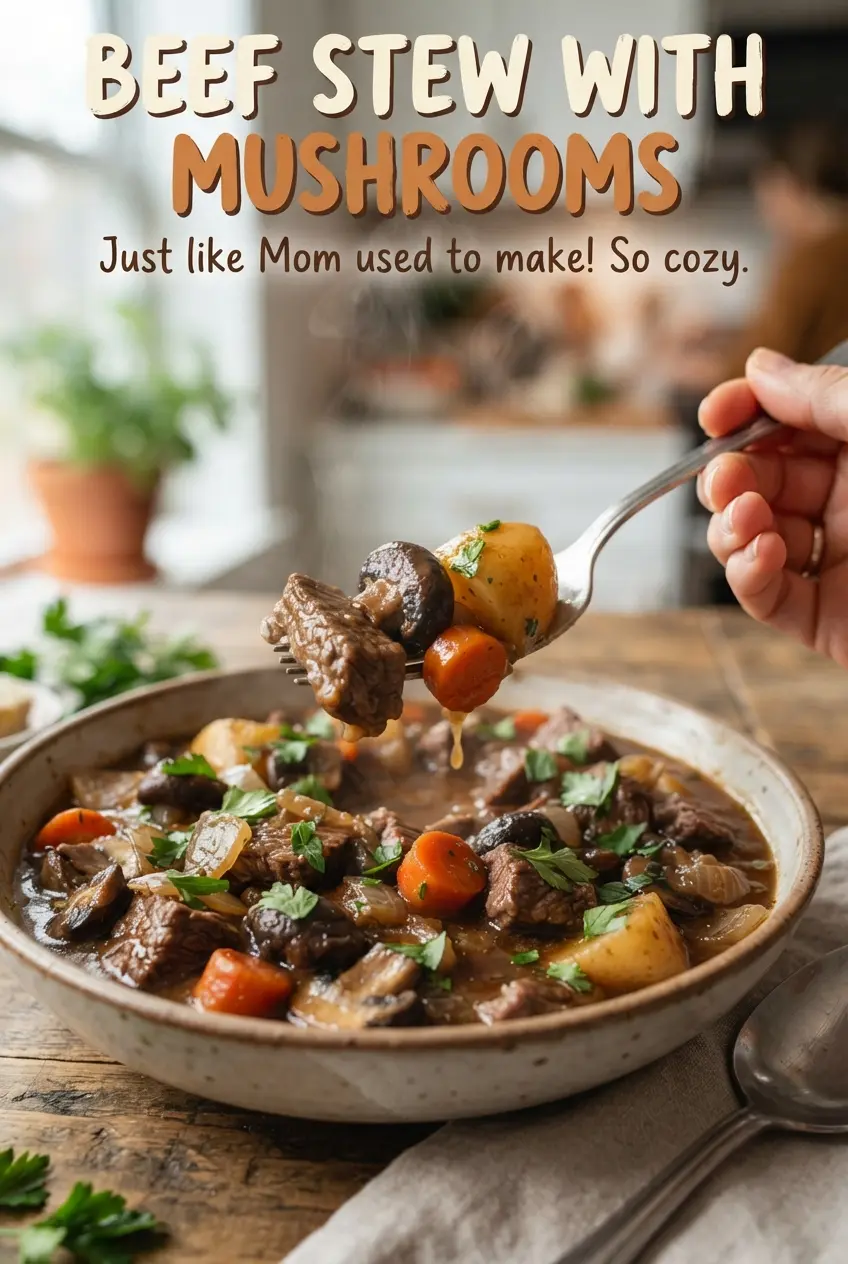
Beef Stew with Mushrooms
Ingredients
Equipment
Method
- In a Dutch oven, melt the butter with 1 tablespoon olive oil, then add the quartered cremini mushrooms. Cook for 8 minutes over medium-high heat until golden, then set aside (visual cue: browned edges and deep mushroom color).
- Season the beef chuck cubes with salt and black pepper, then toss with the all-purpose flour. Add remaining olive oil to the Dutch oven and brown the beef in batches, searing until well browned on the outside (visual cue: dark crust on most sides).
- In the same Dutch oven, cook the diced onion for 4 minutes. Add the minced garlic and tomato paste and cook for 1 minute, then deglaze with the dry red wine (visual cue: browned bits loosen from the bottom).
- Stir in the beef broth, soy sauce, dried thyme, and bay leaves, then add the browned beef. Cover and simmer for 1 3/4 hours (about 105 minutes) until the meat is becoming tender (visual cue: gentle bubbling, not a hard boil).
- Add the cubed potatoes, sliced carrots, and set-aside mushrooms to the stew. Simmer for 45-60 minutes until the potatoes and carrots are tender (visual cue: vegetables yield easily with a fork).
- Remove the bay leaves from the stew. Serve hot (visual cue: thickened gravy coating the meat and vegetables).