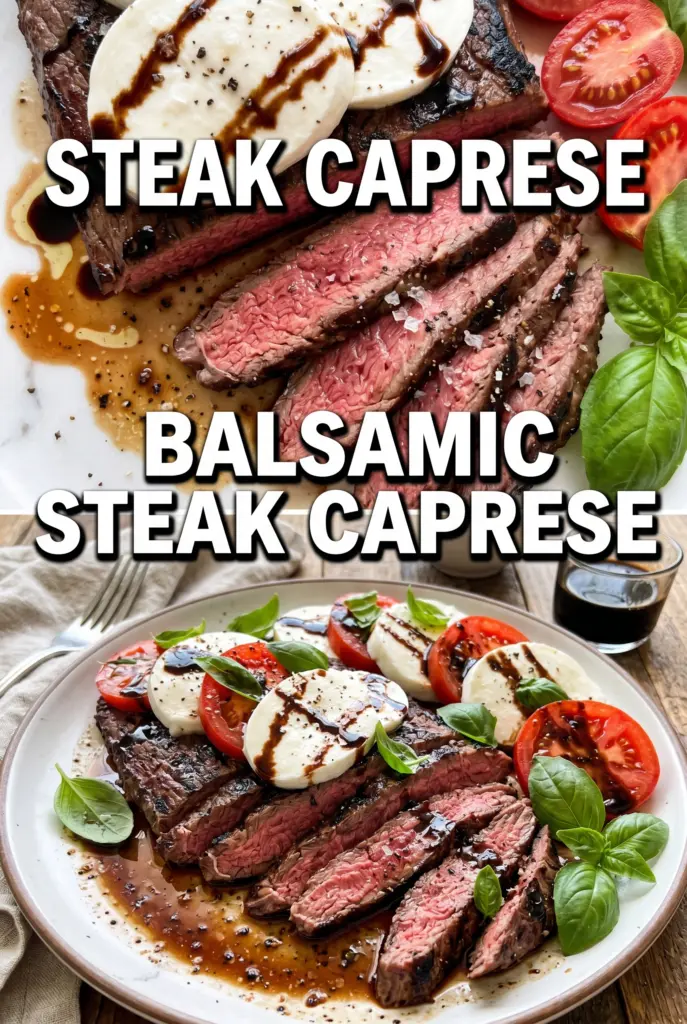
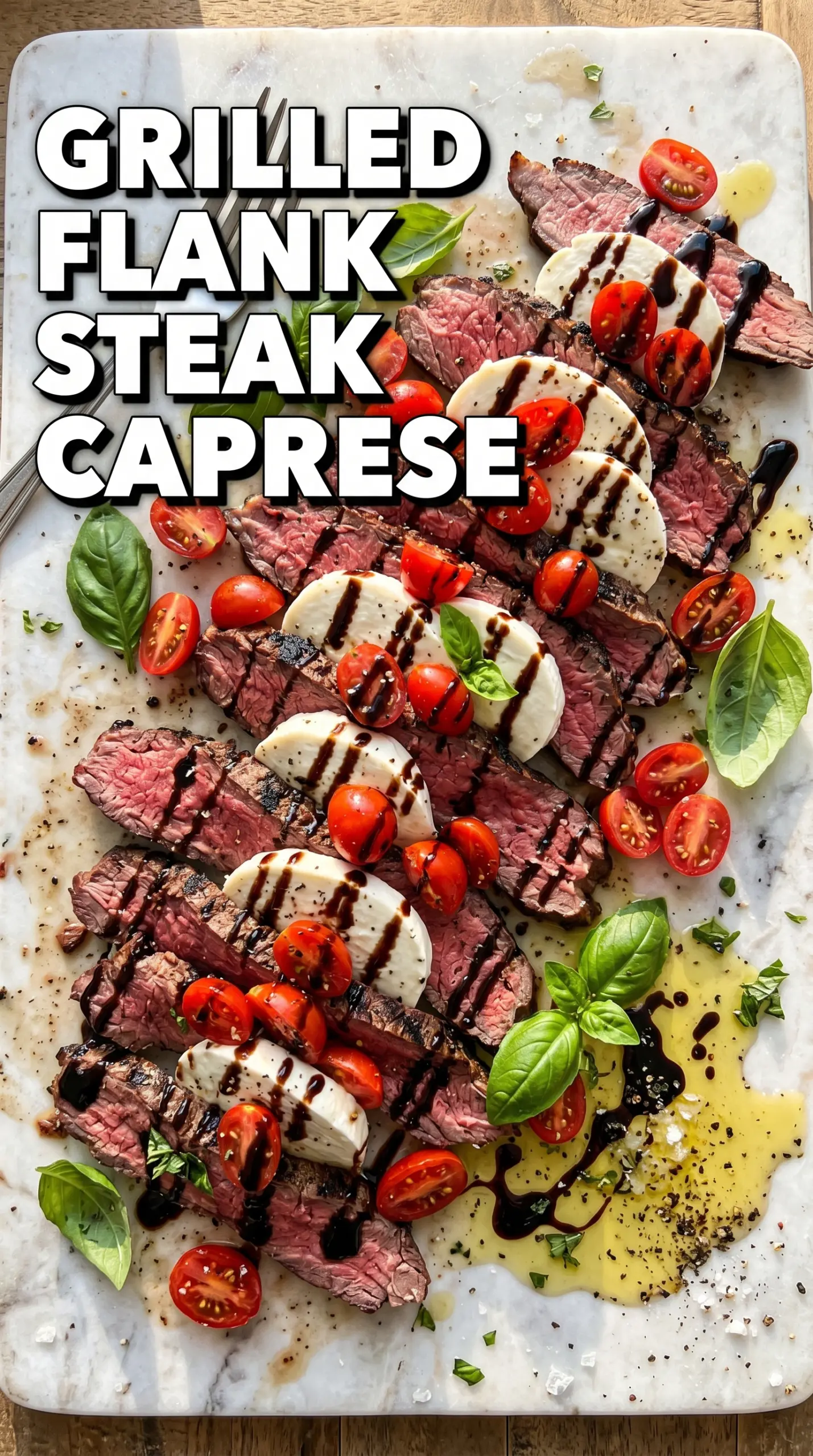
Sliced steak piled with fresh mozzarella, juicy tomatoes, and basil has a way of feeling restaurant-worthy without asking much from the cook. The char on the flank steak gives the whole platter depth, while the balsamic glaze pulls the tomatoes and cheese into the same bite instead of letting them sit there looking separate and pretty. What you get is a main dish that lands between steak dinner and caprese salad, which is exactly why it disappears fast.
The part that makes this work is balance. Flank steak needs a strong marinade and a hot grill, then a proper rest so the juices stay where they belong. Slice it thinly against the grain and the meat stays tender instead of stringy. From there, the toppings do their job best when they’re simple: good mozzarella, ripe tomatoes, and basil added at the end so they stay fresh against the warm steak.
Below, I’m walking through the one part people usually rush — the slice — plus a few practical swaps and make-ahead notes that help this platter come out clean and confident.
I was worried the mozzarella would slide off and turn the steak soggy, but it held up beautifully. Slicing the flank steak against the grain made every bite tender, and the balsamic glaze tied everything together without drowning the tomatoes.
Balsamic grilled flank steak caprese is the kind of platter that looks fancy and still comes together fast — juicy steak, fresh mozzarella, tomatoes, basil, and that glossy balsamic finish.
The Slice That Decides Whether Flank Steak Feels Tender or Tough
Flank steak is forgiving on the grill and unforgiving on the cutting board. If you slice it with the grain, every bite turns chewy no matter how well you cooked it. The fix is simple, but it matters: rest the steak first, then slice thinly across the grain at a slight angle so each piece breaks into short, tender fibers.
The other place people lose this dish is by stacking the toppings on before the steak has rested. Hot steak straight from the grill pushes moisture into the cheese and softens the tomatoes faster than you want. Give it those 10 minutes, then build the platter while the surface is still warm enough to take the edge off the mozzarella without melting everything into a puddle.
What Each Ingredient Is Actually Doing in This Dish
- Flank steak — This cut has a bold beefy flavor and loves high heat. It needs to be sliced thinly against the grain, which is what turns it from slightly firm to pleasantly tender. Skirt steak works in the same style, but it cooks a little faster and can dry out if you walk away from the grill.
- Balsamic vinegar — The marinade adds sharpness and a little sweetness, which helps the steak taste brighter and keeps the caprese toppings from feeling flat. If your balsamic is harsh, a shorter marinade still works; the goal is flavor, not a long soak that turns the meat mushy.
- Fresh mozzarella — Use the real stuff here if you can. It gives you a cool, milky contrast against the hot steak and doesn’t fight the balsamic glaze. Pre-sliced low-moisture mozzarella will melt more, but it won’t give the same soft, fresh finish.
- Tomatoes — Ripe tomatoes matter more than almost anything else on the platter. They bring juice and sweetness, and if they’re bland, the whole dish leans salty. Slice them just before serving so they stay firm and don’t water down the cheese.
- Fresh basil — Add it at the end so the leaves stay bright and fragrant. If you tear the basil too early, it bruises and darkens; whole leaves or a gentle tear right before serving keeps the flavor clean.
Grilling the Steak So the Outside Charms the Inside Stays Juicy
Mixing the Marinade
Whisk the balsamic vinegar, olive oil, garlic, oregano, salt, and pepper until the garlic is distributed and the oil looks emulsified, even if only for a moment. That coating helps the steak pick up flavor evenly instead of tasting sharp in one spot and flat in another. If you have time, let the steak sit in the marinade for at least an hour; longer helps, but don’t leave it for half a day or the vinegar starts to dominate the texture.
Drying and Heating the Grill
Pat the steak dry before it hits the grill. Wet surface equals weak browning, and this dish needs that charred edge to stand up to the fresh toppings. Get the grill hot enough that the steak sizzles right away; if it sticks badly, the grate usually isn’t hot enough yet.
Cooking to Medium-Rare
Grill the steak for about 5 to 6 minutes per side for medium-rare, depending on thickness and heat. You’re looking for a firm exterior with a springy center, not a hard crust with gray meat underneath. Pull it off when it’s a little earlier than you think; flank steak keeps cooking during the rest, and that extra carryover matters.
Resting and Slicing
Rest the steak for a full 10 minutes before cutting. If you slice too soon, the juices run onto the board instead of staying in the meat. Cut thin slices against the grain, fan them on a platter, and layer the mozzarella, tomatoes, and basil over the top while the steak is still warm enough to soften the cheese at the edges.
Make it dairy-free without losing the caprese feel
Skip the mozzarella and add extra tomatoes plus a handful of torn basil, then finish with a little more balsamic glaze and olive oil. You lose the creamy contrast, but the steak still carries the dish, and the flavor lands cleanly instead of feeling like a half-finished salad.
Turn it into an oven-friendly dinner
If grilling isn’t an option, sear the steak in a very hot cast-iron skillet for a couple of minutes per side, then finish in the oven if needed. You’ll still get good browning, though you’ll miss a little of the smoky edge that makes the grill version stand out.
Use skirt steak if that’s what you have
Skirt steak works well with the same marinade and toppings, but it cooks faster and can go from juicy to overdone in a hurry. Watch it closely and pull it a little earlier than flank steak, then slice it across the grain the same way.
Storage and Reheating
- Refrigerator: Store leftover steak separately from the tomatoes and basil for up to 3 days. The meat stays usable, but the toppings lose their fresh look quickly once dressed.
- Freezer: Freeze the cooked steak only, tightly wrapped and sliced or whole, for up to 2 months. Don’t freeze the assembled caprese topping; mozzarella and tomatoes turn watery after thawing.
- Reheating: Warm the steak gently in a skillet over low heat or in short bursts in the microwave. High heat dries flank steak out fast, so stop as soon as it’s just warmed through and add fresh toppings after reheating.
Answers to the Questions Worth Asking
Balsamic Grilled Flank Steak Caprese
Ingredients
Equipment
Method
- Whisk together balsamic vinegar, olive oil, garlic, dried oregano, salt, and pepper until evenly combined. Mix in a way that fully disperses the garlic and oregano so every bite is seasoned.
- Marinate the flank steak for at least 1 hour. Keep it covered and refrigerated while it marinates.
- Preheat the grill to high heat, then pat the steak dry with paper towels. Drying helps the surface brown quickly on the grill.
- Grill the steak for 5-6 minutes per side for medium-rare, or until desired doneness is reached. Use the visual cue of browned edges and a pink center for medium-rare.
- Remove the steak from the grill and let it rest for 10 minutes, then slice thinly against the grain. Resting keeps the juices from running out when you cut.
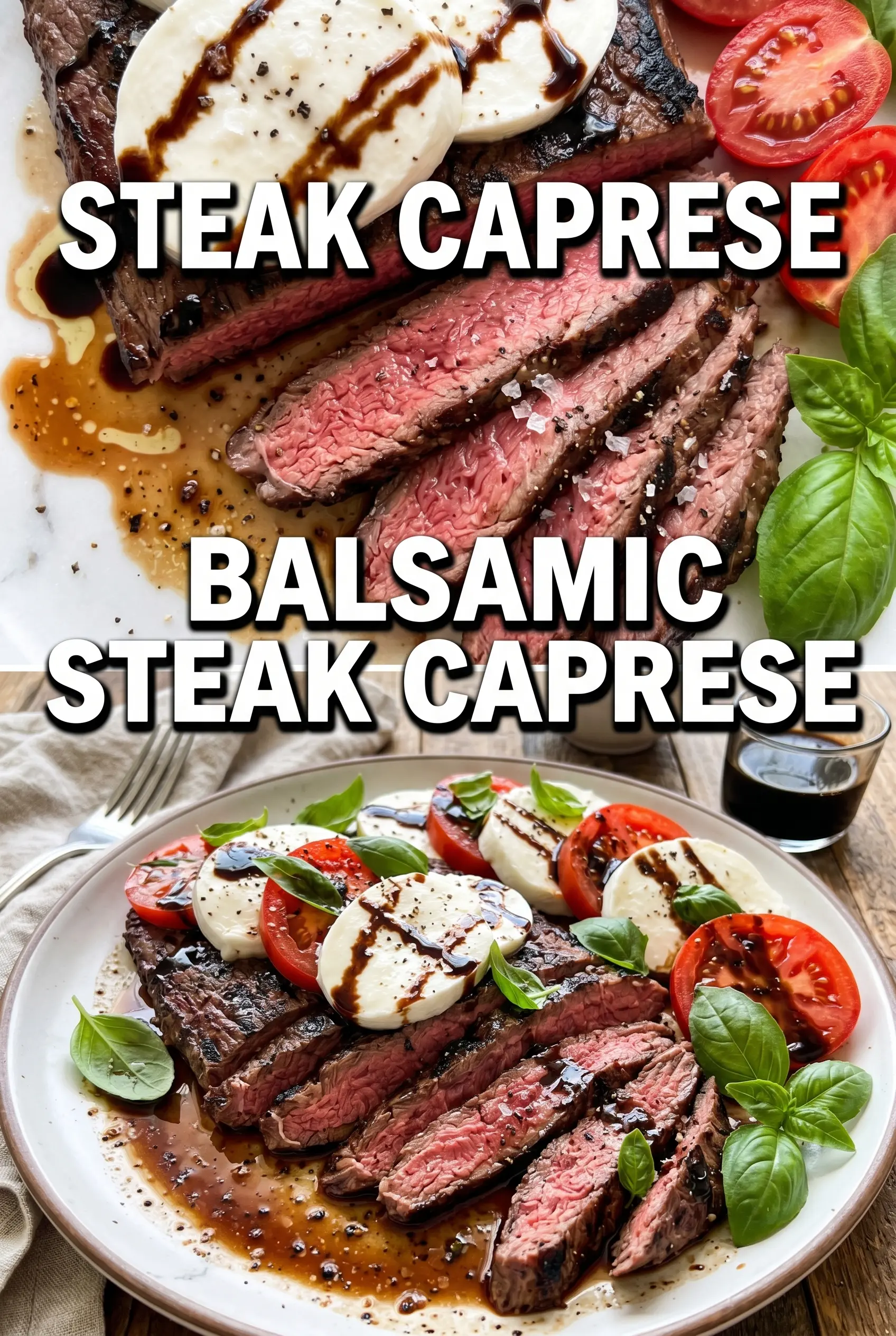
- Arrange the sliced steak on a platter and top with fresh mozzarella slices, tomato slices, and fresh basil leaves. Let the toppings cover the surface so they melt and freshen evenly.
- Drizzle with balsamic glaze and extra virgin olive oil before serving. Finish with the glaze last so it looks glossy and clings to the steak and tomatoes.