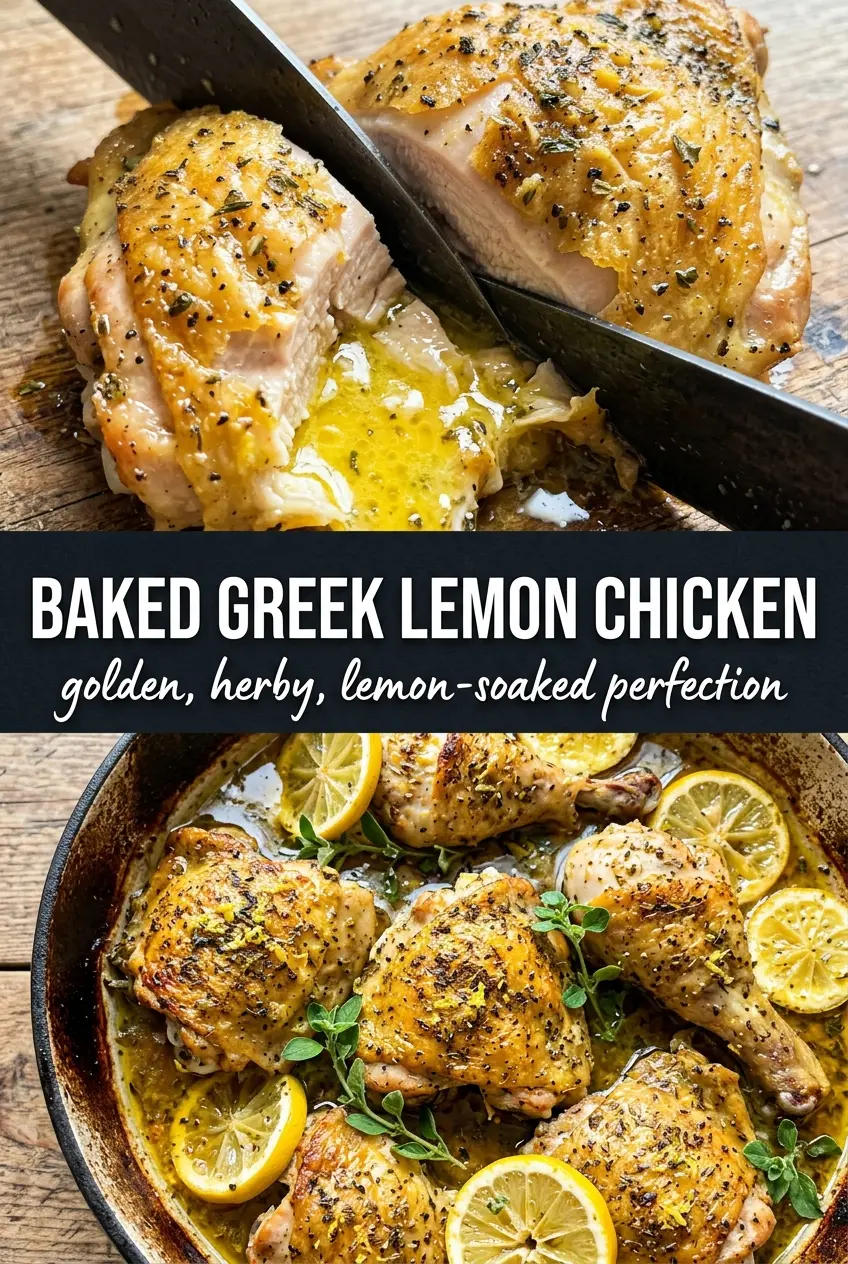

Golden roasted chicken with lemon and oregano is the kind of dinner that earns its place on repeat. The skin turns deeply bronzed in the oven, the lemon slices caramelize at the edges, and the pan juices reduce into a bright, garlicky glaze that clings to every piece. It tastes like the kind of meal that took all afternoon, even though most of the work is done while the oven handles everything.
What makes this version work is the balance between acid, fat, and heat. The lemon juice and zest wake up the chicken, but the olive oil keeps the marinade from tasting sharp or drying out the meat. Roasting at a higher temperature also matters here: it helps the skin brown properly instead of steaming in the pan juices, and those juices pick up the garlic and oregano instead of disappearing into the chicken.
Below, I’ll walk through the part that matters most: how to keep the chicken juicy while still getting that caramelized finish, plus the swaps that still make sense if you need to work with what’s in the kitchen.
The lemon juice, garlic, and oregano soaked in beautifully, and the skin came out crisp instead of soggy. I basted once like the instructions said, and the pan drippings were perfect spooned over the potatoes.
Like this Baked Greek Lemon Chicken? Save it for the night you want crisp skin, caramelized lemon, and a pan sauce that tastes bright and garlicky without extra effort.
The Step That Stops the Chicken From Steaming
The biggest mistake with baked lemon chicken is crowding the pan and expecting the oven to brown the skin anyway. If the pieces are packed too tightly, the chicken sits in its own moisture and the lemons give off too much steam, which softens the skin before it has a chance to crisp. Use a roasting pan or a wide baking dish and leave space around each piece so the hot air can circulate.
The other part that matters is where the broth goes. It belongs around the chicken, not over the top. That keeps the pan from drying out and gives you enough liquid for basting, but it still leaves the skin exposed so it can roast instead of poach.
- Bone-in chicken pieces — These hold up to the high oven temperature and stay juicy while the skin browns. If you use boneless pieces, the timing drops a lot and you’ll lose some of the deep roasted flavor.
- Lemon juice and zest — Juice brings the brightness, but zest carries the citrus aroma that survives the oven. Skip the zest and the dish tastes flatter, even if the chicken is still acidic.
- Olive oil — This rounds out the marinade and helps the skin brown. A good everyday olive oil is enough here; save the expensive finishing oil for the table.
- Chicken broth — A little broth in the pan keeps the drippings spoonable and prevents the garlic from scorching. Water works in a pinch, but the sauce won’t taste as full.
What Each Ingredient Is Doing in the Pan

The garlic, oregano, and thyme are the backbone of the dish, but they work differently. Oregano gives that unmistakable Greek profile, thyme adds a woodsy note that keeps the lemon from tasting one-dimensional, and garlic turns sweet and mellow in the oven. Smoked paprika doesn’t make the chicken taste smoky in a loud way; it deepens the color and gives the surface a little warmth.
Fresh lemon slices are not decoration here. They roast in the drippings and turn jammy at the edges, which gives you little bursts of concentrated citrus when you spoon the sauce over the chicken. If your lemons are very thick, slice them thin enough that they soften fully before the chicken is done.
Fresh oregano at the end is worth tracking down if you can. It lifts the whole dish after roasting and keeps the final plate from tasting heavy. If you only have dried oregano, add a pinch more to the marinade and skip the garnish rather than using sad, wilted herbs at the end.
Getting the Roast Deeply Golden Without Drying It Out
Building the Marinade
Whisk the olive oil, lemon juice, zest, garlic, oregano, thyme, smoked paprika, salt, and pepper until the mixture looks evenly blended and a little cloudy. That tells you the oil and lemon have emulsified enough to coat the chicken instead of sliding off. The chicken needs at least 30 minutes in this marinade, and a little longer is fine, but don’t leave it all day or the lemon can start to toughen the surface.
Setting Up the Pan
Arrange the chicken skin-side up in a wide roasting pan or baking dish, then pour the broth around the pieces. Tuck the lemon slices around and under the chicken so they have direct contact with the hot pan. If the pieces overlap, the skin in the middle won’t brown properly, and the finished dish will look pale even if the meat is cooked through.
Roasting and Basting
Roast at 425°F until the skin is deeply golden and the internal temperature reaches 165°F, usually 40 to 45 minutes depending on the size of the pieces. Halfway through, spoon some of the pan juices over the chicken to keep the surface glossy and to help the garlic and herbs caramelize without burning. If the juices start to disappear before the chicken is done, add a splash more broth; if the tops are browning too fast, lay a loose piece of foil over the pan for the last stretch.
Finishing With the Drippings
Let the chicken rest briefly, then spoon the caramelized pan drippings over the top before serving. That final step pulls the whole dish together, because the sauce has picked up roasted garlic, lemon, and chicken flavor from the bottom of the pan. If the drippings look thin, give them a minute to settle and spoon from the edge where the oil and juices naturally separate into a richer sauce.
How to Adapt This for a Different Table or a Different Pantry
Make It Dairy-Free Without Changing the Flavor
This recipe is naturally dairy-free as written, which is part of why it works so well. The richness comes from olive oil and pan drippings instead of butter or cream, so you don’t lose anything by keeping it simple.
Use Boneless Chicken Thighs for Faster Cooking
Boneless thighs will cook faster and stay juicy, but they won’t give you the same dramatic roasted skin or long-braised pan sauce. Start checking early and pull them as soon as they hit temperature, since they dry out sooner than bone-in pieces.
Swap in Dried Herbs if Fresh Oregano Isn’t Available
If you don’t have fresh oregano for garnish, use a little extra dried oregano in the marinade and lean on the lemon zest for brightness. You’ll lose the fresh herbal finish, but the chicken still reads clearly as Greek-style and the roasted flavor stays intact.
Storage and Reheating
- Refrigerator: Store leftovers in an airtight container for up to 4 days. The skin softens, but the flavor holds up well.
- Freezer: Freeze the chicken and pan juices for up to 2 months. Wrap tightly and thaw in the refrigerator so the texture stays as close to the original as possible.
- Reheating: Warm covered in a 325°F oven until heated through, then uncover for the last few minutes to bring back a little texture. Microwaving works, but it makes the skin rubbery and pushes the juices out of the meat.