Baked crack chicken breasts come out with exactly the kind of contrast that keeps people coming back for seconds: juicy chicken underneath, then a hot blanket of ranch cream cheese, crisp bacon, and melted cheddar that browns at the edges as it bakes. The topping doesn’t just sit there. It bubbles, settles into the chicken a little, and turns into a salty, savory crust that tastes like you worked harder than you did.
The key is softening the cream cheese fully before you mix it with the ranch seasoning. If it’s even a little cold, you’ll end up fighting lumps instead of spreading a smooth layer over the chicken. I also like to keep the bacon crisp before it goes on top, because it holds its texture better in the oven and gives you those little crunchy bits against the creamy topping.
Below, I’ll show you the small details that keep the chicken tender and the topping browned without drying anything out, plus the substitutions that still give you that rich, ranchy finish.
The chicken stayed juicy and the ranch cream cheese melted into the bacon and cheddar without getting greasy. I baked it right at 30 minutes and the topping came out golden and bubbly just like the photo.
Save these baked crack chicken breasts for the night you want a bubbling bacon-ranch dinner with almost no cleanup.
The Trick to Keeping the Topping Creamy Instead of Greasy
What separates this dish from a heavy, oily chicken bake is the way the cream cheese is treated before it goes on the chicken. Ranch seasoning needs fat to spread evenly, but it also needs enough air and warmth to stay plush instead of turning gluey. When the cream cheese is softened properly, it blankets the chicken in an even layer and bakes into something rich without separating into puddles of oil.
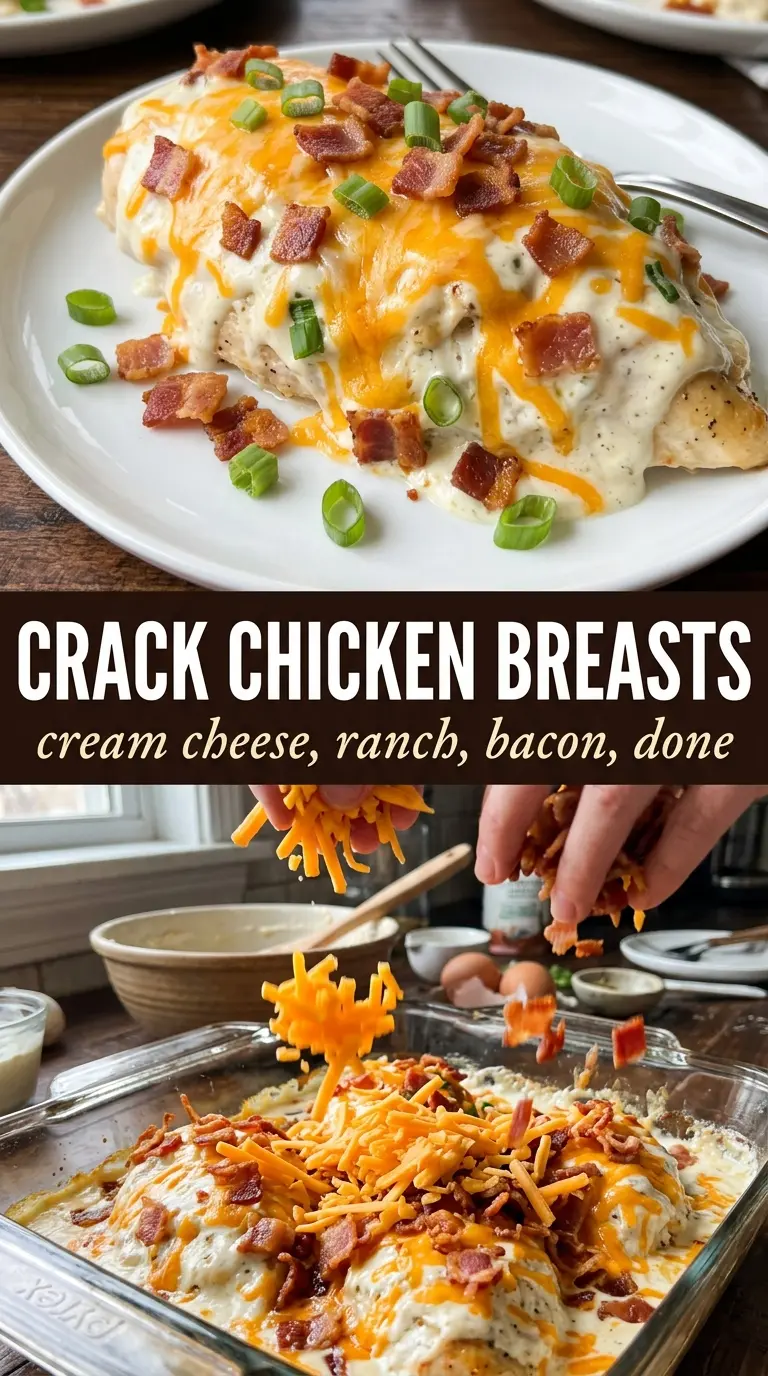
The other thing people miss is topping order. Bacon goes on before the cheddar, so the cheese can pin the bacon in place as it melts. That keeps the bacon from drying out too much and helps the whole surface brown in a more even way. If the chicken breasts are wildly uneven in thickness, pound the thick end just a little so they finish together.
What Each Ingredient Is Actually Doing in This Dish
- Cream cheese — This is the base of the topping, and it needs to be fully softened so it can spread instead of tearing the chicken apart. Full-fat cream cheese gives the cleanest, richest melt; reduced-fat versions can work, but they’re more likely to loosen up and look a little thin.
- Ranch seasoning — The packet does the heavy lifting for salt, herbs, and that unmistakable ranch flavor. If you want to use homemade seasoning, keep it dry and measured; too much herb powder or garlic can throw the balance off fast.
- Bacon — Crisp bacon gives you salt, smoke, and texture. Under-cooked bacon softens too much in the oven, so cook it until it’s properly crisp before crumbling it over the top.
- Cheddar cheese — Sharp cheddar works best because it cuts through the richness. Pre-shredded cheese is fine here, but freshly shredded cheese melts a little cleaner and browns more evenly.
- Chicken breasts — Boneless, skinless chicken breasts are the structure of the dish, but they need even thickness to cook in the same window. If one side is much thicker, give it a light pound so the topping doesn’t overbake while you wait on the center.
- Chives — Fresh chives brighten the final bite and keep the whole dish from tasting flat. The extra sprinkle at the end matters more than the small amount mixed in.
Building the Bake So the Chicken Stays Juicy
Season the Chicken First
Lay the chicken breasts in the greased baking dish and season them lightly with salt and pepper before anything else goes on top. That small step matters because the topping is rich and salty; the chicken still needs its own seasoning underneath. If the breasts are very thick, give them a gentler start by flattening the thickest portion slightly so the centers don’t lag behind the topping.
Mix the Topping Until It Spreads
Beat the softened cream cheese with the ranch seasoning until it looks smooth and uniform, with no hard lumps. You want a spreadable mixture, not a stiff paste. If the cream cheese is cold, stop and let it sit longer instead of forcing it; cold cream cheese tears the chicken when you try to spread it and bakes unevenly.
Watch for Bubbling Edges, Not a Dry Top
Bake at 375°F until the topping is bubbling and the chicken reaches 165°F in the center. The top should look lightly browned in spots, and the juices around the edges may sizzle a little. If the cheese is browning too fast before the chicken is done, tent the dish loosely with foil for the last few minutes so the topping doesn’t overcook.
Finish With Fresh Chives
Let the dish rest just long enough for the topping to settle, then add the remaining chives and a little extra bacon. That last sprinkle wakes up the whole pan and keeps the finish from feeling too heavy. Serve it right away while the cheddar is still soft and the topping holds its creamy shape.
How to Adapt This When You Want a Different Finish
Make it lower carb without changing the texture
This dish is already naturally low in carbs, so the main adjustment is what you serve with it. Keep the chicken, bacon, cheddar, and cream cheese exactly the same, then pair it with roasted broccoli, cauliflower mash, or a simple salad. That way you keep the creamy topping intact without stretching the meal with starch.
Swap in chicken thighs for a richer bite
Boneless, skinless thighs work well if you want darker meat and a little more forgiveness in the oven. They usually stay juicier if you cook a minute or two past the breast’s sweet spot, but they may release a bit more fat into the pan. The topping still browns the same way.
Use turkey bacon when that’s what you have
Turkey bacon will give you the smoky note, but it won’t bring the same crisp, salty fat that regular bacon does. Cook it until it’s as crisp as it can get, then crumble it fine so the topping still feels balanced. The result is a little leaner and a little less smoky, but it still works.
Storage and Reheating
- Refrigerator: Store leftovers in an airtight container for up to 3 days. The topping firms up as it chills, but the flavor stays strong.
- Freezer: It freezes, but the cream cheese topping can separate a little after thawing. If you freeze it, wrap portions well and thaw overnight in the fridge before reheating.
- Reheating: Warm covered in a 325°F oven until hot, or reheat gently in the microwave at medium power. High heat is the mistake here; it pushes the cheese topping into an oily layer and dries the chicken before the center warms through.
The Questions Worth Asking Before You Bake It

Baked Crack Chicken Breasts
Ingredients
Equipment
Method
- Preheat the oven to 375°F and grease a 9x13 baking dish. Keep the dish ready so the chicken goes in as soon as it’s seasoned.
- Season the chicken breasts lightly with salt and pepper, then place them in the prepared dish. Arrange them in a single layer with space between pieces.
- Beat the cream cheese with the ranch seasoning mix until smooth. Spread the mixture thickly over each chicken breast.
- Top each breast with crumbled bacon and shredded cheddar cheese. Cover the surface so the topping bakes into a cohesive layer.
- Bake for 25-30 minutes until the topping is golden and bubbly, with an internal temperature of 165°F. Watch for bubbling at the edges and a lightly caramelized cheese surface.
- Garnish with extra fresh chives and crumbled bacon, then serve immediately. The topping is hottest and most melty right out of the oven.