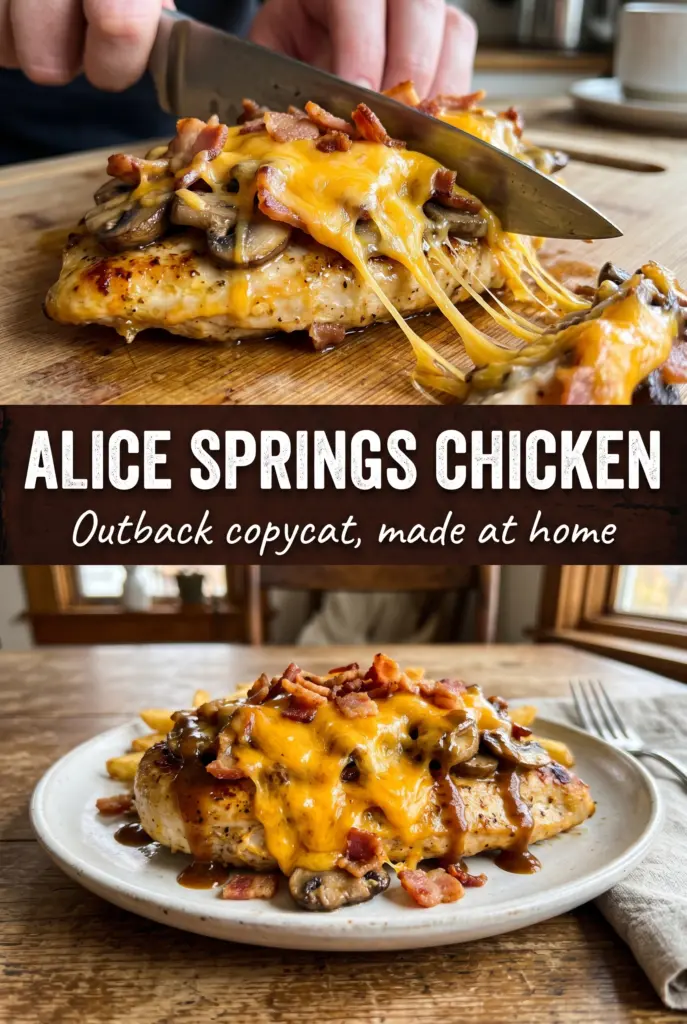
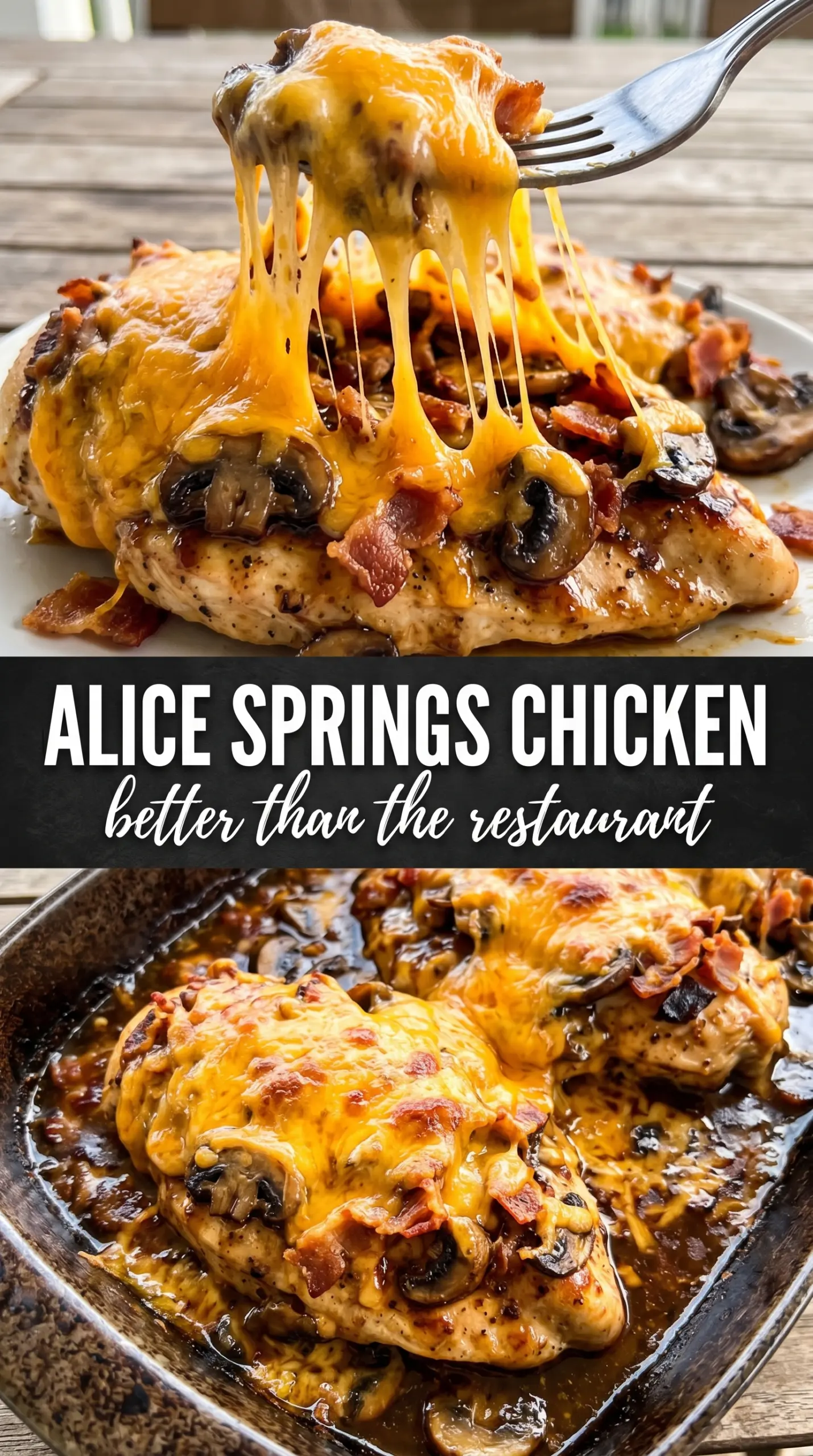
Golden seared chicken breasts piled high with honey mustard, mushrooms, bacon, and melted Colby Jack always land in that sweet spot between comforting and a little bit restaurant-special. The chicken stays juicy under all that topping, the bacon brings salt and crunch, and the cheese melts into a bubbling cap that pulls everything together in one forkful.
What makes this version work is the balance in the sauce and the order you build it. The honey mustard does double duty as both marinade and finishing sauce, but it’s held back in part so the final plate doesn’t taste flattened or overly sweet. Searing the chicken first gives you color and flavor, then the mushrooms cook separately so they actually brown instead of steaming in the skillet.
Below, I’ve included the timing that keeps the chicken tender, the topping order that helps everything stay put, and a few swaps if you need to work with what’s already in your fridge.
The honey mustard stayed creamy after baking, and the mushrooms actually browned instead of turning watery. I used thick bacon and the whole thing tasted just like the restaurant version my husband keeps ordering.
Save this Alice Springs Chicken for the nights when you want juicy chicken, smoky bacon, and bubbling cheese in one skillet dinner.
The trick to keeping the honey mustard from turning flat under the cheese
The most common problem with copycat Alice Springs Chicken is a sauce that tastes fine before it bakes and dull after it comes out of the oven. That happens when all of the honey mustard gets buried under heat and fat from the bacon and cheese. The fix is simple: reserve part of the sauce and serve it on the side. That keeps the plate bright and gives each bite a fresh hit of mustard and honey instead of one-note richness.
The other thing that matters is not rushing the sear. You want the chicken to pick up color in the skillet before it goes into the oven, because that browned surface gives the finished dish its depth. If the pan is crowded or the chicken is too wet, it steams instead of browns, and the whole recipe loses that steakhouse feel.
- Chicken breasts — Boneless, skinless breasts work best here because they hold the toppings without falling apart. If one end is much thicker than the other, pound them to an even thickness so the center cooks at the same pace as the edges.
- Dijon mustard — This is the backbone of the sauce. Yellow mustard won’t give the same sharpness or body, and the grainy texture of Dijon helps the sauce cling to the chicken instead of sliding off.
- Honey — It softens the mustard and gives the sauce its glossy finish. Maple syrup can work in a pinch, but it changes the flavor toward woodsy and less like the classic version.
- Mayonnaise — A small amount makes the sauce creamy and keeps it from breaking when it bakes. Plain Greek yogurt can stand in, but it adds tang and can curdle a little more easily, so keep the heat gentle.
- Cremini mushrooms — These give the dish its savory, almost steakhouse-style depth. White mushrooms work too, but cremini bring a deeper color and a better browned flavor once the moisture cooks off.
What Each Ingredient Is Actually Doing in This Chicken Dish
- Chicken (bone-in or boneless, skin-on or skinless) — Each cut has different cooking times and flavor profiles. Let thighs reach 165°F; breasts dry out if overcooked past that.
- Sauce or braising liquid (the moisture keeper) — This prevents the chicken from drying out and adds flavor. Don’t skip it even if the recipe seems moist.
- Aromatics (garlic, onion, herbs) — These add depth and complexity. Cook them with fat so they soften and sweeten instead of staying sharp.
- Cream or butter (optional richness) — These make the dish luxurious. Add to the sauce off the boil so it stays smooth instead of breaking.
- Cheese (if using) — This adds umami and richness. Mix into the sauce or sprinkle on top; either works depending on the dish.
- Acid (lemon, vinegar, wine, or tomato) — This prevents heavy sauces from tasting flat. Add at the end so the brightness doesn’t cook off.
- Proper temperature (165°F is perfect) — Use a thermometer to avoid guessing. Pull slightly early if the chicken will rest or finish in residual heat.
- Resting time (at least 5 minutes) — This lets juices redistribute so the meat stays moist when you cut into it instead of running dry.
Building the skillet so the chicken stays juicy and the toppings stay put
Mixing the sauce and starting the marinade
Whisk the Dijon, honey, mayonnaise, and lemon juice until the sauce looks smooth and glossy. Reserve half before the chicken goes in, because the untouched portion is what keeps the final plate lively. The marinade only needs 30 minutes; any longer and the lemon starts pushing the texture of the chicken in the wrong direction. Pat the chicken dry before it hits the skillet so the surface browns instead of sputtering.
Searing the chicken without crowding the pan
Heat the oven-safe skillet until it’s hot enough that the chicken sizzles the second it lands. Cook it for 3 to 4 minutes per side, just until you get a golden crust; it does not need to be cooked through at this stage. If the chicken sticks, leave it alone for another minute. When it’s ready, it will release on its own. A pale surface means the pan wasn’t hot enough or the chicken was damp.
Cooking the mushrooms until they brown instead of sweat
Use a separate pan for the mushrooms and let the butter foam before they go in. Stir only after they’ve had time to take on color, because constant moving keeps them from browning. They’re done when the pan is mostly dry and the edges look deep golden. If liquid pools in the pan, keep cooking it off; watery mushrooms make the whole topping slide around under the cheese.
Finishing under the broiler
Spoon on the reserved sauce, then layer the mushrooms, bacon, and cheese in that order. The sauce under the mushrooms helps everything cling, and the bacon keeps the cheese from settling into a heavy blanket. Bake until the chicken reaches 165°F and the cheese is melted through, then broil briefly if you want a deeper golden top. Watch closely during the broil; cheese can go from bubbling to scorched in a minute.
How to adapt Alice Springs Chicken when you need a different cheese, a lighter finish, or leftovers that still work
Swap the Colby Jack for cheddar if that’s what you have
Sharp cheddar gives you a stronger, saltier finish and a slightly less stretchy melt. Monterey Jack stays closest to the original texture, but cheddar works well if you want a bolder bite under the bacon.
Make it gluten-free without changing the method
The recipe is naturally gluten-free as written as long as your mustard and bacon are labeled gluten-free. The texture and bake time stay the same, so there’s nothing special to adjust.
Use chicken thighs for a richer, juicier version
Boneless thighs stay tender and bring a little more richness, but they need a few extra minutes in the oven. Use a thermometer and pull them when they hit 165°F in the thickest part so the bacon and cheese don’t overcook while you wait.
Store the components separately if you want the best leftovers
Refrigerator: Store leftovers in an airtight container for up to 3 days. The cheese will set and the bacon will soften, but the flavor stays good. Freezer: Freeze the cooked chicken without the toppings for up to 2 months; the sauce and mushrooms don’t hold their best texture after freezing. Reheating: Warm covered in a 325°F oven until hot, then uncover for the last few minutes. Microwaving works, but it softens the bacon and can make the cheese greasy.
Answers to the questions worth asking
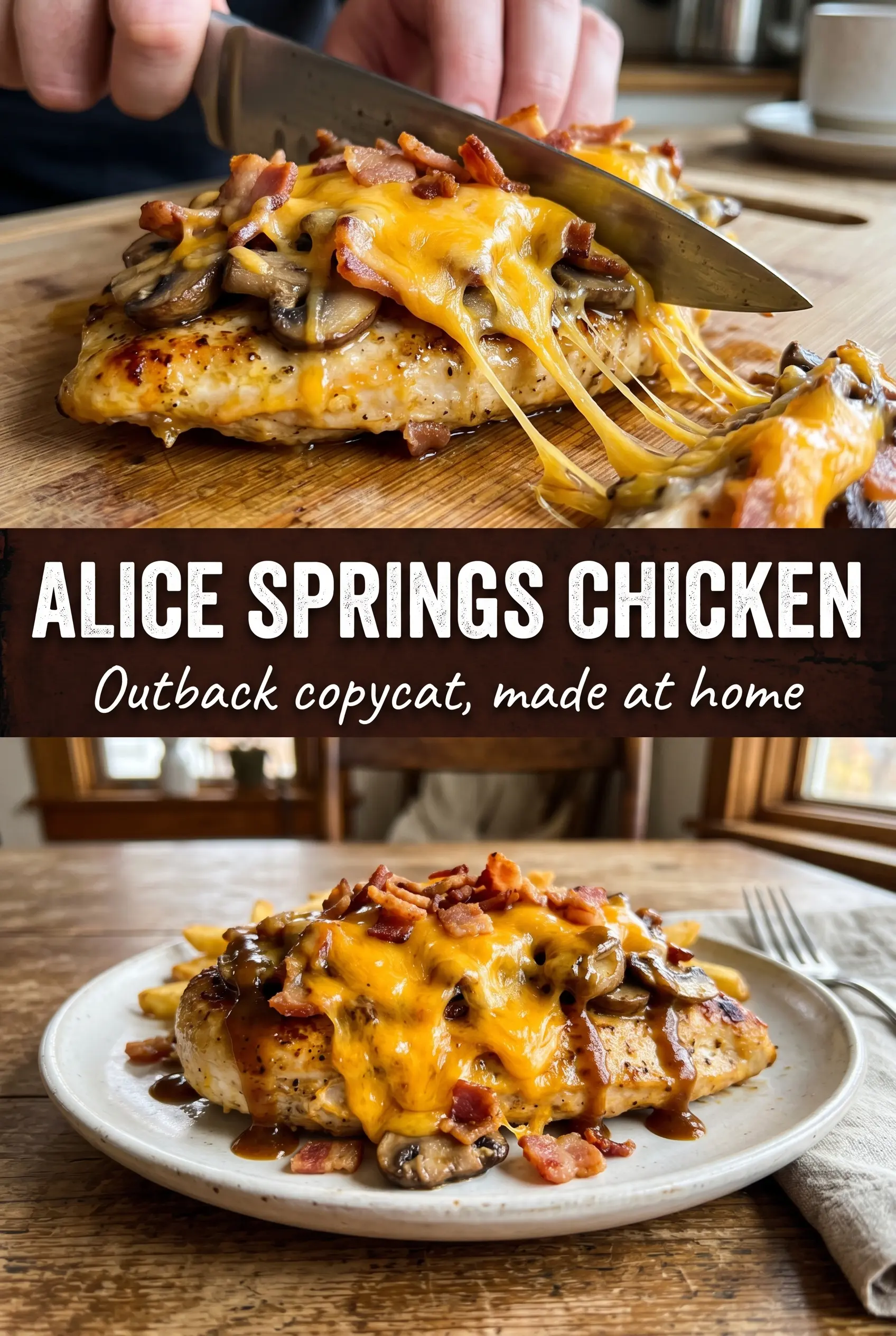
Alice Springs Chicken
Ingredients
Equipment
Method
- Whisk together Dijon mustard, honey, mayonnaise, and fresh lemon juice; reserve half for serving and marinate the chicken in the other half for at least 30 minutes.
- Let the marinated chicken rest until ready to cook, so the sauce clings to the surface.
- Preheat the oven to 400°F, and place an oven-safe skillet over medium-high heat.
- Sear the marinated chicken in the skillet for 3-4 minutes per side until golden.
- Melt the butter and sauté the sliced cremini mushrooms until golden and the moisture has evaporated; season with salt and pepper.
- Top each seared chicken breast with a spoonful of honey mustard, then mushrooms, then crumbled bacon, then shredded cheese.
- Transfer the skillet to the oven and bake for 15-18 minutes until the chicken reaches 165°F and the cheese is melted and golden.
- Garnish with fresh parsley and serve with the reserved honey mustard on the side.