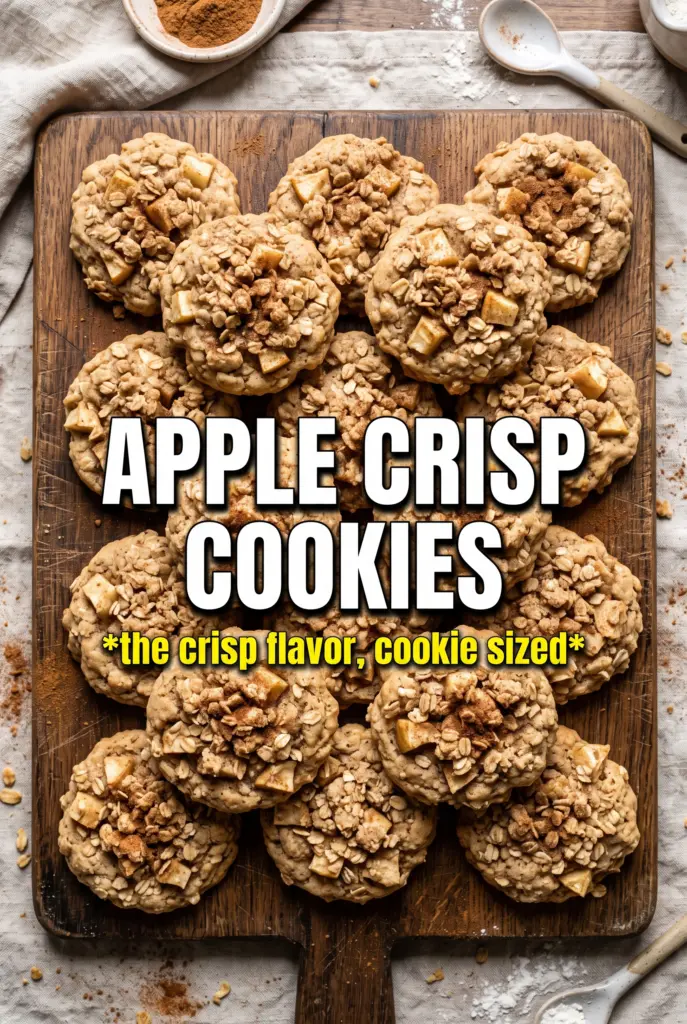
Apple crisp cookies bake up with the same cozy, oat-studded character you expect from the dessert in a pan, but in a form you can grab with one hand. The edges turn golden and lightly crisp while the centers stay soft and chewy, with little bursts of dried apple and caramel in every bite. They taste like a cross between an oatmeal cookie and apple crisp, which is exactly why they disappear fast.
The trick is keeping the apple flavor concentrated without adding fresh fruit that can dump moisture into the dough. Finely chopped dried apple pieces give you chew and tang without turning the cookies cakey, and the oats bring that classic crisp texture. A short chill isn’t necessary here, but the butter should be soft enough to cream properly so the cookies bake up thick instead of spreading too much.
Below, I’m breaking down the small details that matter most: how to keep the centers soft, why the oat ratio works, and the best swaps if you need to adjust the mix-ins or make them a little more pantry-friendly.
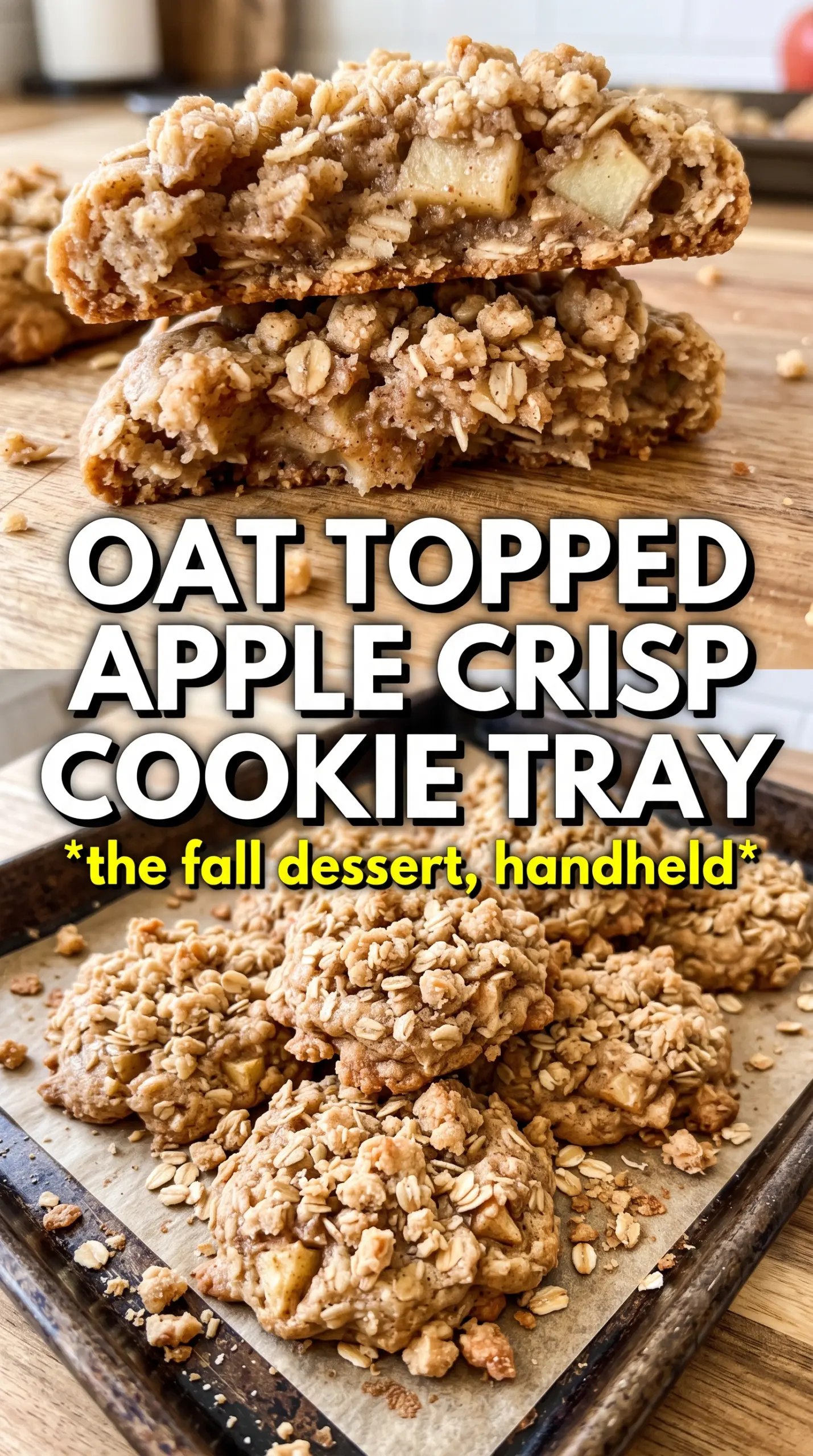
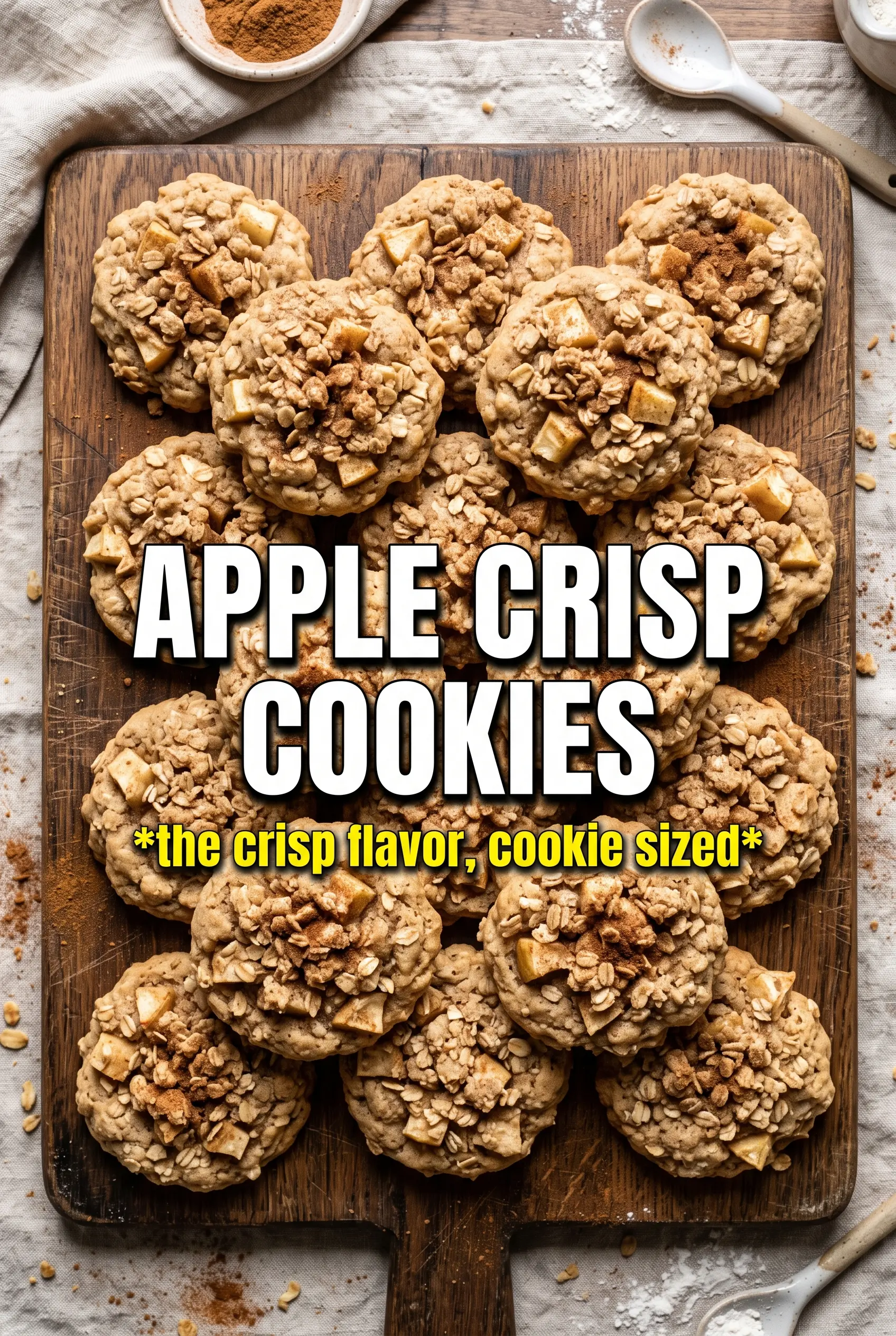
The cookies came out thick with crisp edges and a soft center, and the little bits of apple stayed chewy instead of disappearing into the dough. I loved the caramel chips with the cinnamon sugar topping.
Save these apple crisp cookies for the day you want chewy centers, golden oat edges, and a caramel-apple cookie that tastes like fall in one bite.
The Part That Keeps These Cookies Soft Instead of Dry
The biggest mistake with apple crisp cookies is treating them like plain oatmeal cookies and overbaking them until they lose the chewy middle. These need to come out when the edges are set and the centers still look a little soft in the middle. That carryover heat on the baking sheet finishes the job without drying them out.
The other thing that matters is the dried apple. Fresh apple might sound like the obvious choice, but it brings extra water that can make the dough spread and the texture go bready. Finely chopped dried apple pieces give you concentrated apple flavor and enough chew to stand up to the oats and caramel chips.
- Butter — Softened butter traps air when you beat it with the sugars, which helps the cookies bake up thicker. If the butter is melted or greasy, the dough spreads fast.
- Rolled oats — Old-fashioned rolled oats give the right chew and a crisp-edged bite. Quick oats can work in a pinch, but the texture gets tighter and less substantial.
- Dried apple pieces — Chop them finely so they scatter through the dough instead of clumping. That keeps each cookie balanced and prevents heavy pockets of fruit.
- Caramel or butterscotch chips — These melt just enough to give little pockets of sweetness, which is what makes the cookies taste like apple crisp instead of a standard oatmeal cookie.
What Each Ingredient Is Doing in the Dough
- All-purpose flour — This gives the cookies structure without making them dense. If you swap in whole wheat flour, expect a nuttier flavor and a drier crumb.
- Baking soda and baking powder — The combination gives lift and spread control, so the cookies puff slightly and then settle into a soft center.
- Cinnamon, nutmeg, and allspice — This is the warm spice backbone. Cinnamon leads, while nutmeg and allspice keep the flavor from tasting flat.
- Brown sugar and granulated sugar — Brown sugar adds moisture and a deeper caramel note, while granulated sugar helps the edges set and gives the tops a light crunch.
- Eggs and vanilla — The eggs bind everything and help the cookies stay chewy. Vanilla rounds out the apple-caramel flavor and keeps the spice from tasting sharp.
- Cinnamon sugar topping — Rolling the dough in this mix gives the tops that crisp, bakery-style finish. It also adds a little sparkle and extra spice right where your teeth hit first.
Building the Dough So the Oats Don’t Take Over
Cream the Butter and Sugars Until the Mixture Lightens
Beat the butter with both sugars until the mixture looks fluffy and a shade lighter, not just mixed. That step builds the structure that keeps these cookies from becoming flat and greasy. If the butter is too cold, you’ll get streaks and a dense cookie; if it’s too soft, the dough turns loose and spreads. Stop when the mixture looks smooth and slightly airy.
Fold in the Oats and Fruit Without Overworking the Dough
Once the flour mixture goes in, stir only until the dry streaks disappear, then fold in the oats, dried apples, and caramel chips. Overmixing after the flour is added makes the cookies tough, and overworking once the oats are in can break the fruit into tiny fragments that disappear. The dough should look thick and scoopable, with the mix-ins evenly scattered.
Bake Until the Edges Set and the Centers Still Look Soft
Scoop the dough into 2-tablespoon rounds and roll the tops in cinnamon sugar before baking. The cookies are done when the edges are golden and the centers still look slightly underdone; they should not look wet, just soft. Let them sit on the pan for 5 minutes so they firm up enough to move without falling apart. That short rest is what gives you the chewy center instead of a crumbly cookie.
Three Smart Ways to Adjust These Cookies
Make Them Dairy-Free
Use a dairy-free butter stick that behaves like regular butter, not a soft tub spread. The cookies will still hold their shape and chew, though the flavor loses a little of the classic buttery depth. Skip the butterscotch chips if they contain dairy and use dairy-free caramel-style baking chips instead.
Swap the Mix-Ins for a Pantry Version
If you don’t have caramel chips, use chopped soft caramels or butterscotch chips. The flavor will be a little richer and sweeter, and chopped caramels melt into gooier pockets while chips hold their shape more cleanly. Either way, keep the pieces small so they distribute evenly.
Make Them More Oat-Forward
For a heartier cookie, add an extra 1/4 cup oats and reduce the flour by 2 tablespoons. The cookies will bake up a little more rustic and chewy, with a looser crumb and a stronger oatmeal-cookie texture. Don’t push the oats much further than that or the dough starts to dry out.
Storage and Reheating
- Refrigerator: Store in an airtight container for up to 5 days. They stay chewy, but the edges soften a bit after the first day.
- Freezer: These freeze well. Freeze baked cookies in a single layer, then transfer to a container for up to 2 months, or freeze scooped dough balls and bake from frozen with 1 to 2 extra minutes.
- Reheating: Warm baked cookies at 300F for 3 to 5 minutes, just until the centers soften again. Don’t microwave them too long or the caramel spots turn sticky and the cookies go rubbery.
Questions I Get Asked About This Recipe
Apple Crisp Cookies
Ingredients
Equipment
Method
- Preheat oven to 375F and line sheet pans with parchment. Set up a baking station so the scooped dough can go in right away.
- Whisk all-purpose flour, baking soda, baking powder, cinnamon, nutmeg, allspice, and salt until evenly combined. The mixture should look uniform in color with no streaks of spice.
- Beat unsalted butter with brown sugar and granulated sugar until fluffy, then beat in eggs and vanilla extract. Stop when the mixture looks lighter and smoother.
- Stir the flour mixture into the wet ingredients until just combined, then fold in rolled oats, dried apple pieces, and caramel chips. The dough should be thick with visible apple bits and chips throughout.
- Scoop dough into 2-tbsp rounds and roll the tops in the cinnamon sugar (sugar plus cinnamon). Press lightly so the coating sticks.
- Bake at 375F for 10-12 minutes, until edges are golden and centers are just set. Look for a slightly puffy top with caramelized edges.
- Cool cookies for 5 minutes on the pan before transferring. They should firm up but still feel tender in the center.