Sticky, glossy Bourbon Maple BBQ Chicken Skewers hit that sweet-savory line in a way that keeps people reaching for “just one more.” The glaze clings to the chicken instead of running off the grill, and the edges pick up a little char that makes the maple and bourbon taste deeper, not heavier. Served hot off the grates, they’ve got the kind of caramelized finish that makes them disappear fast at cookouts and casual dinners alike.
The trick is in the balance. BBQ sauce gives the base, bourbon brings warmth, maple syrup rounds the edges, and apple cider vinegar keeps the glaze from turning flat or candy-sweet. I also like a short marinade window here — long enough to season the chicken, not so long that the acid starts working against the texture. The reserved basting sauce is what builds that sticky finish during grilling, and it matters that it never touches raw chicken after it’s set aside.
Below, I’ve included the small details that keep the glaze from burning before the chicken cooks through, plus the substitutions that still give you a good result if you need to adjust for what’s in the pantry.
The glaze got sticky and lacquered on the grill instead of burning, and the chicken stayed juicy even after basting a few times. My husband kept sneaking pieces off the platter before dinner was even served.
Save these bourbon maple BBQ chicken skewers for the next time you want glossy grilled chicken with a sticky finish and almost no cleanup.
The Reason This Glaze Sticks Instead of Sliding Off
The difference between a shiny glaze and a muddy, burnt mess comes down to when the sugars hit the heat. Bourbon, maple syrup, and BBQ sauce all bring sweetness, and that sweetness needs time to reduce slowly so it can coat the chicken instead of scorching on contact. If the grill runs too hot, the outside darkens before the chicken cooks through, and the glaze turns bitter at the edges.
That’s why medium heat matters here. You want enough heat to caramelize the surface, not blast it. Basting works best in thin layers once the chicken has started to set, because each pass builds that glossy finish without flooding the grill and washing away the flavor you already developed.
What Each Ingredient Is Actually Doing in These Skewers
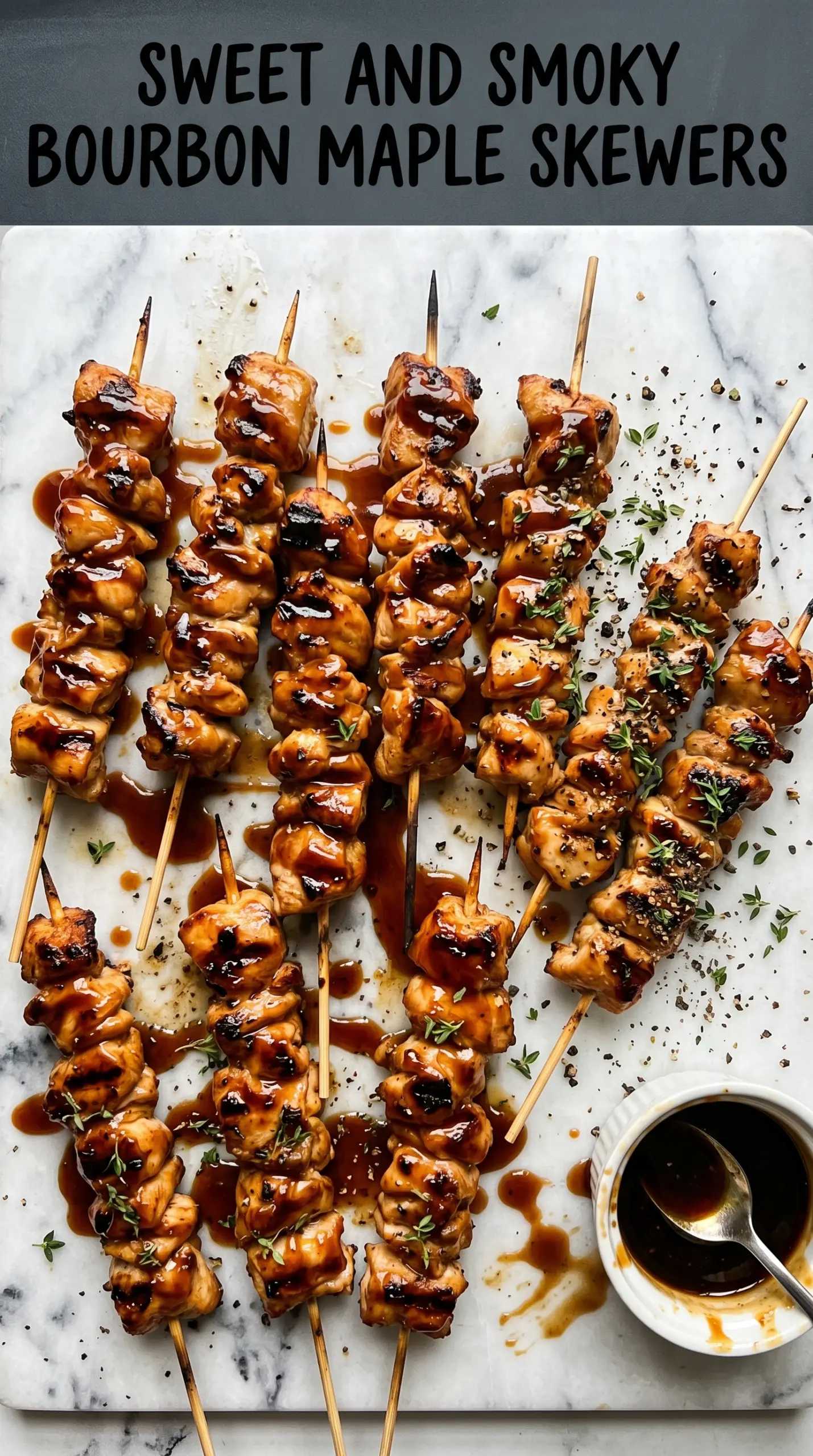
- Chicken breasts — Cubed chicken breast cooks quickly and stays tender as long as you don’t overmarinate it. Thighs will work if that’s what you have, and they’ll give you a juicier, richer result, but the cook time may stretch by a minute or two.
- BBQ sauce — This gives the glaze body and that familiar smoky-sweet backbone. Use a sauce you’d happily eat on its own, because there’s nowhere for a bland one to hide once it’s reduced on the grill.
- Bourbon — Bourbon adds warmth and a little edge that keeps the maple from tasting flat. You don’t need an expensive bottle, but you do want something you’d drink, since the flavor concentrates as it cooks.
- Maple syrup — Real maple syrup gives the glaze its glossy finish and a deeper sweetness than pancake syrup can match. If you swap in pancake syrup, the sauce will still work, but it’ll taste thinner and more one-note.
- Apple cider vinegar — The vinegar sharpens everything and keeps the glaze from becoming cloying. It also helps the sauce cling better once it starts reducing.
- Dijon mustard — Dijon pulls the glaze together and adds a little bite underneath the sweetness. It’s not there to taste like mustard; it’s there to make the whole sauce taste more balanced.
Building the Skewers Without Burning the Glaze
Mixing the Glaze First
Whisk the BBQ sauce, bourbon, maple syrup, apple cider vinegar, and Dijon mustard until the mixture looks smooth and unified. The sauce should be loose enough to coat the chicken but thick enough to cling to a spoon. Reserve part of it before the chicken goes in so you have a clean basting sauce later; once raw chicken touches a marinade, that portion is done.
Letting the Chicken Take on Flavor
Toss the cubed chicken with the remaining sauce and let it sit for 1 to 4 hours in the fridge. Less than an hour doesn’t give the glaze much time to penetrate, while much longer than 4 hours can start to soften the surface of the meat from the acid. If you’re short on time, even a 30-minute rest gives you better flavor than grilling it plain.
Threading and Grilling
Soak wooden skewers before you start, then thread the chicken on without packing the pieces so tightly that the heat can’t circulate. Grill over medium heat and turn the skewers every 5 to 6 minutes so the glaze caramelizes on all sides instead of scorching on one. Brush on the reserved sauce during the last few minutes of cooking, not at the beginning, because sugar burns faster than chicken cooks.
Checking for the Right Finish
The chicken is done when it reaches 165°F at the thickest piece and the glaze looks sticky, darkened, and set. If the outside looks perfect but the center is still under, move the skewers to a slightly cooler part of the grill and give them a few more minutes. Pulling them early is the best way to keep the chicken juicy; the carryover heat finishes the job while the sauce stays glossy.
How to Adjust These Skewers for Different Grills and Diets
Make It with Chicken Thighs for a Juicier Bite
Boneless, skinless thighs work well here if you want a richer, more forgiving skewer. They take a little longer to cook than breast meat and stay juicy even if the grill runs a touch hot, but the glaze can look darker faster because of the higher fat content.
Skip the Bourbon for an Alcohol-Free Version
Replace the bourbon with an equal amount of chicken broth plus a splash of vanilla extract if you still want some warmth in the background. You’ll lose the faint oakiness that bourbon brings, but the glaze will still be sticky, balanced, and grill-friendly.
Use Gluten-Free BBQ Sauce
This recipe adapts well with a gluten-free BBQ sauce as long as you check the label on the bourbon and Dijon too. The texture and caramelization stay the same, so this is an easy swap if you’re cooking for someone avoiding gluten.
Storage and Reheating
- Refrigerator: Store leftover skewers in an airtight container for up to 4 days. The glaze will firm up as it cools, and the chicken may lose a little of its fresh-off-the-grill shine.
- Freezer: Freeze the cooked chicken pieces off the skewers for up to 2 months. The texture softens slightly after thawing, but it still works well for salads, rice bowls, or wraps.
- Reheating: Reheat gently in a covered skillet over low heat or in a 300°F oven until warmed through. High heat dries out the chicken and can burn the sugary glaze before the center is hot.
Questions I Get Asked About This Recipe
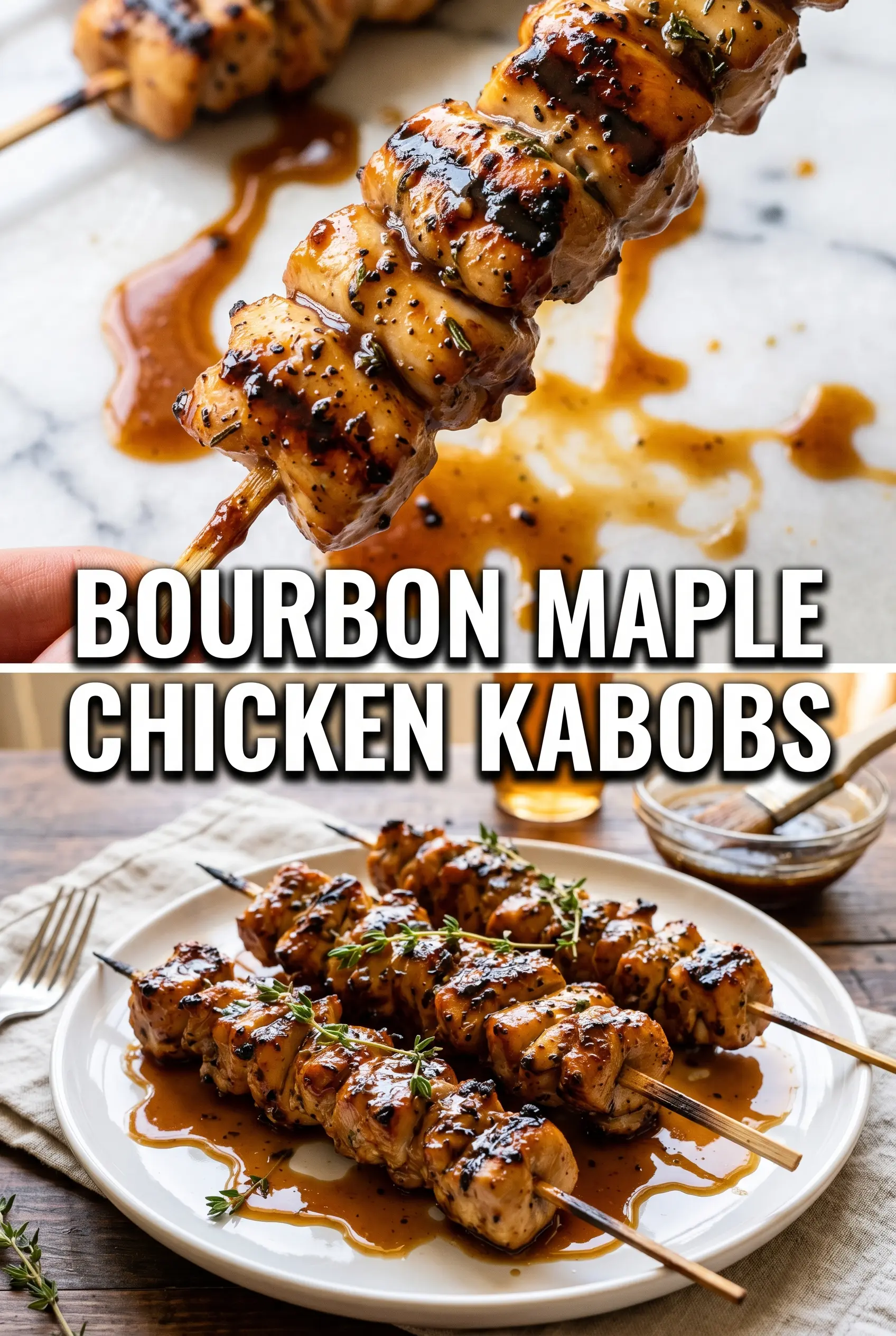
Bourbon Maple BBQ Chicken Skewers
Ingredients
Equipment
Method
- In a bowl, mix BBQ sauce, bourbon, maple syrup, apple cider vinegar, and Dijon mustard until smooth and glossy.
- Reserve 1/4 cup of the sauce for basting and set aside.
- Marinate the cubed chicken in the remaining sauce for 1-4 hours in the refrigerator, covered.
- Thread the marinated chicken onto the soaked wooden skewers.
- Grill the skewers over medium heat for 5-6 minutes per side, basting frequently with the reserved sauce so the glaze clings.
- Continue grilling until the chicken reaches 165°F and the glaze is sticky and caramelized, with darker spots from the sauce.