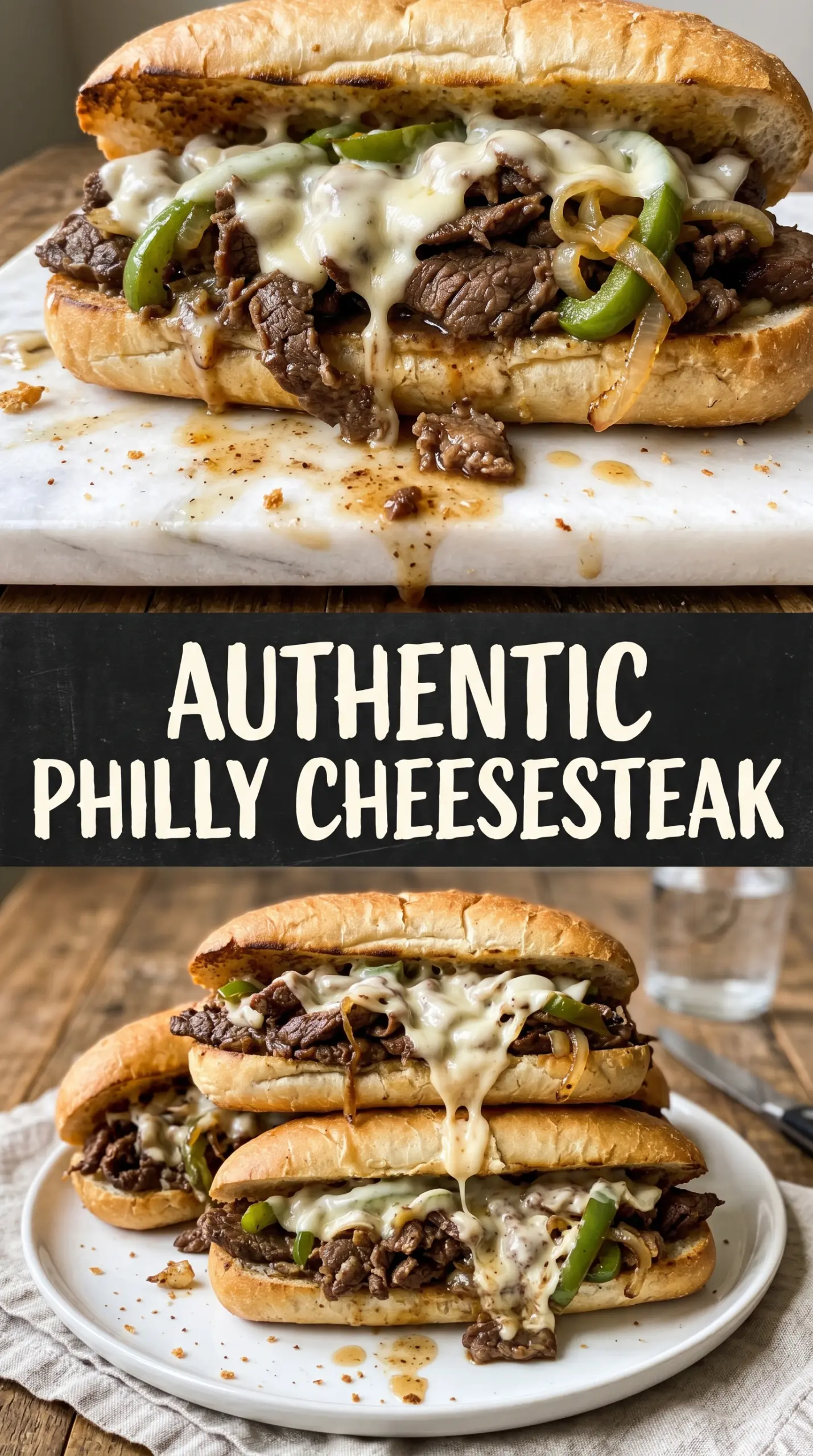
Thinly sliced ribeye, caramelized onions, melty cheese, and a toasted hoagie roll are the whole point here. When a cheesesteak is done right, the meat stays juicy, the onions bring sweetness, and the roll gets just enough butter and heat to hold everything together without going soft in your hands.
The Blackstone earns its keep because it gives you space. The onions and peppers can cook off to the side while the steak sears in the hottest part of the griddle, which means nothing crowds the pan and nothing steams. Ribeye matters here because it brings tenderness and enough fat to stay flavorful even after a hard, fast cook. I tested this with both provolone and Cheese Whiz, and both work for different reasons: provolone gives you that classic stretch, while Whiz melts into the meat in the most old-school way.
Below, I’ll walk you through the one griddle habit that keeps the steak from turning dry, plus a few useful swaps if you want to keep the sandwich authentic but adjust it to what’s in your kitchen.
The steak stayed tender, the onions got nicely browned, and the cheese melted right over the meat instead of sliding off the sandwich. I used provolone and the hoagies toasted up perfectly on the griddle.
Love the caramelized onions, melted cheese, and griddle-toasted roll in this authentic Blackstone Philly cheesesteak? Save it to Pinterest for the next time you want a hot, messy sandwich that eats like a win.
The Part Most Cheesesteaks Get Wrong on a Griddle
The biggest mistake is letting the steak sit too long before it’s chopped and portioned. Ribeye cooks fast, and on a hot Blackstone it can go from juicy to dry if you treat it like a slow-braised filling. The chop matters because it creates more surface area for the cheese to cling to, which keeps every bite cohesive instead of loose and greasy.
Another common problem is crowding the griddle. If the onions, peppers, and steak all pile together from the start, they steam instead of caramelize and sear. Cooking them in separate zones gives you actual browning, which is where most of the flavor comes from in a sandwich like this.
- Keep the griddle hot. Medium-high heat gives the steak enough contact to sear before its juices run out.
- Move the vegetables aside. They can finish gently while the steak cooks in a hotter spot.
- Chop while cooking. That fine texture is what makes the filling easy to load into the roll and keeps the cheese melting through the meat.
Why Ribeye and Provolone Do the Heavy Lifting Here
- Ribeye steak — This is the cut that gives you tenderness and enough fat to stay juicy on a hot griddle. If you swap in sirloin, slice it extra thin and don’t overcook it, because it won’t forgive a long sear the way ribeye does.
- Onions — They bring sweetness and moisture, and they need that full 8 to 10 minutes to turn golden. If they’re pale, they’ll taste sharp instead of mellow.
- Green bell peppers — They add the classic cheesesteak bite and a little bitterness that balances the richness of the beef and cheese. Slice them evenly so they soften at the same pace as the onions.
- Provolone or Cheese Whiz — Provolone melts into clean ribbons with a more classic sandwich feel. Cheese Whiz gives you the salty, creamy, Philly-diner style finish, and it works best when you want the filling extra saucy.
- Hoagie rolls — A soft roll with enough structure is key. Too crusty and it fights the filling; too soft and it collapses under the steak.
- Butter for toasting — This is what gives the roll its golden edges and keeps the bread from tasting flat against the rich filling.
Building the Fillings So the Sandwich Eats Cleanly
Getting the Onions and Peppers Caramelized
Start the onions and peppers in oil over medium-high heat and let them sit long enough to pick up color before stirring. You want soft edges, browned spots, and a sweet aroma, not limp vegetables in a puddle of liquid. If the pan looks wet, the heat is too low or the pan is overcrowded. Move them to the side once they’re tender and golden so they stay warm without overcooking.
Searing and Chopping the Steak
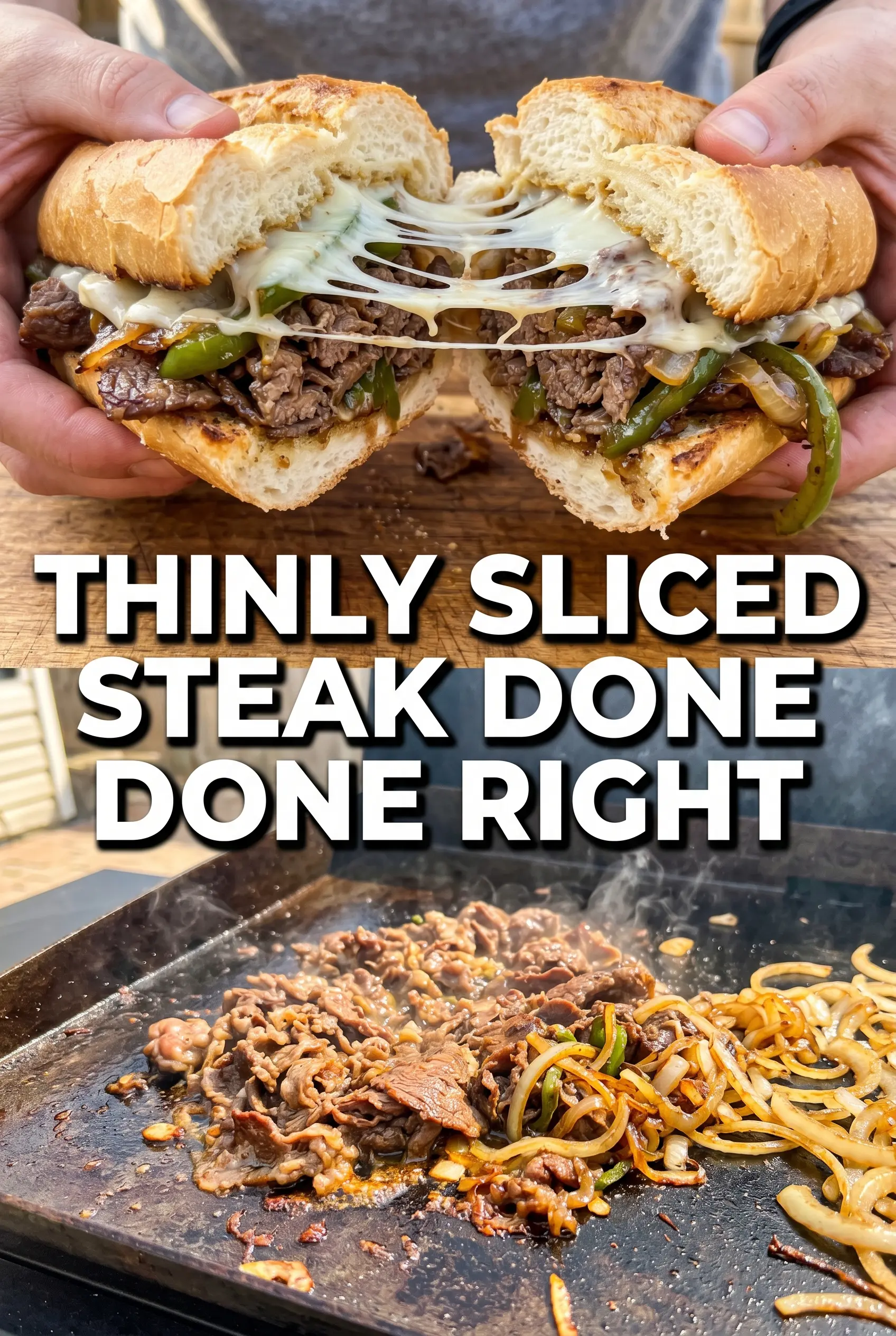
Add the sliced ribeye to the hottest part of the griddle and season it right away with salt and pepper. The meat should sizzle hard when it hits the surface, and you should start chopping it with spatulas almost immediately so it cooks in small pieces. If you leave the slices in long strips, they’ll get chewy before the center finishes. Cook just 3 to 4 minutes; ribeye only needs a short run to stay tender.
Melting the Cheese and Toasting the Rolls
Divide the steak into four portions, then lay the cheese directly over each pile while the meat is still hot. That heat is what melts the cheese evenly without needing extra liquid. Butter the cut sides of the hoagie rolls and toast them on the griddle until they’re deeply golden at the edges. If the bread is cold or untoasted, it softens too fast once the filling goes in.
How to Adapt This for Different Cheese, Bread, or Diet Needs
Provolone for a classic melt
Use provolone if you want the filling to stay clean and stretchy. It melts into the steak without making the sandwich overly heavy, and it lets the browned beef and onions stay front and center.
Cheese Whiz for a diner-style cheesesteak
Use Cheese Whiz if you want that softer, saucier finish. It coats the chopped steak more evenly than sliced cheese, but it does change the sandwich from neat and stretchy to rich and loose.
Gluten-free version without losing the griddle flavor
Swap in sturdy gluten-free rolls that can handle heat and buttering. Toast them well, because softer gluten-free bread can go gummy faster once the filling is added.
Skipping the peppers for a more traditional Philly-style sandwich
Leave out the green peppers if you want the more stripped-down cheesesteak version. You’ll get a beef-forward sandwich with deeper onion sweetness and a little less vegetable crunch.
Storage and Reheating
- Refrigerator: Store the steak, vegetables, and rolls separately for up to 3 days. The filling stays best when it isn’t trapped inside the bread.
- Freezer: The steak mixture freezes well for about 2 months, but the rolls don’t. Freeze the filling flat in a sealed bag, then thaw before reheating.
- Reheating: Warm the filling in a skillet over medium heat until hot. Don’t microwave it if you can avoid it; that’s the fastest way to make the steak rubbery and the bread soggy.
Questions I Get Asked About This Recipe
Authentic Blackstone Philly Cheesesteak
Ingredients
Equipment
Method
- Heat the Blackstone griddle to medium-high heat and add the oil.
- Cook the onions and peppers until caramelized, about 8-10 minutes, then move them to the side with a spatula.
- Season the thinly sliced ribeye with salt and pepper to taste.
- Cook the steak on the hot griddle for 3-4 minutes, chopping with spatulas as it cooks until browned and hot.
- Divide the cooked steak into 4 portions and top each portion with provolone cheese, allowing it to melt.
- Butter and toast the hoagie rolls on the griddle until golden.
- Scoop each steak portion with the onions and peppers into the toasted hoagie rolls and serve immediately.