Crispy-skinned chicken thighs and sticky honey-buffalo glaze are a hard combination to beat, especially when the grill does the heavy lifting. The skin turns crackly over medium heat, the sauce tightens into a shiny coating, and every bite lands in that sweet-heat zone that keeps people reaching for one more piece. This is the kind of chicken that works for dinner, game day, or any night when plain grilled chicken would feel like a missed opportunity.
The trick here is starting with bone-in, skin-on thighs and giving the skin enough direct heat to render before the glaze goes on. Honey can burn fast, so the reserved sauce gets brushed on during the second half of cooking when the chicken is already mostly done and the surface can handle it. A little butter rounds out the buffalo sauce, while apple cider vinegar keeps the glaze from tasting heavy or one-note.
Below, you’ll find the timing that keeps the skin crisp, the glaze sticky instead of scorched, and a few useful swaps if you want to adjust the heat or make it work without dairy.
The skin got crispy on the grill and the honey buffalo glaze stayed sticky instead of burning. I served it with blue cheese and celery, and my husband asked if we could make it again the next night.
Save these grilled honey buffalo chicken thighs for the nights when you want crispy skin, sticky glaze, and almost no cleanup.
The Part Most Grilled Chicken Gets Wrong: The Glaze Comes After the Skin
With honey-based chicken, the biggest mistake is coating it too early and then wondering why the sugars darken before the thighs are cooked through. Bone-in thighs need enough time over direct heat to render the skin and build color first; once that skin is crisp, the sauce can go on without turning bitter. That order matters here more than in leaner cuts because thighs have enough fat to protect themselves while the surface gets properly browned.
The other detail that saves this recipe is the reserved sauce. You need one portion for marinating and a separate portion for basting, because once raw chicken touches a brush or bowl, it shouldn’t go back into the serving sauce. Keeping that divide clean also gives you a fresh, glossy finish at the end instead of a muted sauce that tastes cooked down and muddy.
What Each Ingredient Is Doing in the Sticky Buffalo Finish
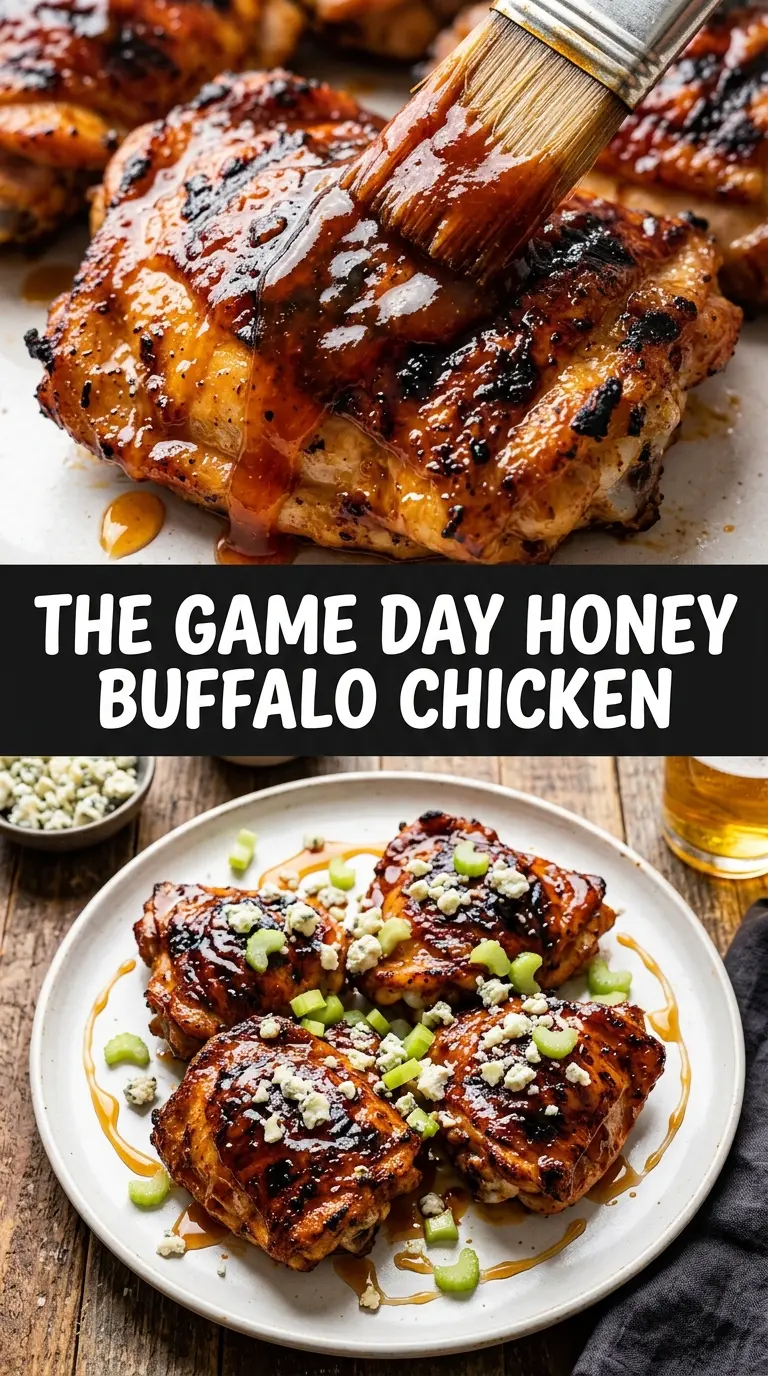
- Chicken thighs — Bone-in, skin-on thighs stay juicy on the grill and give you enough fat for crisping. Boneless thighs work in a pinch, but you lose some of that built-in protection and the skin-on finish that makes this dish memorable.
- Buffalo sauce — This brings the heat and tang, so use a brand you already like the taste of straight from the bottle. If yours is very salty, dial back the added salt on the chicken.
- Honey — Honey is what makes the sauce cling and gloss over the skin instead of sliding off. Maple syrup can work, but it tastes deeper and less sharp, so the result is less classic buffalo and more sweet-smoky glaze.
- Butter — Melted butter softens the heat and helps the sauce brush on smoothly. If you need a dairy-free version, use olive oil or a neutral oil, but the finish will be a little thinner and less rich.
- Apple cider vinegar — This keeps the glaze lively and prevents the honey from tasting heavy. Lemon juice works too, but it reads brighter and a little less rounded.
How to Get Crispy Skin and a Sticky Glaze on the Grill
Mixing the Sauce Without Losing Balance
Stir the buffalo sauce, honey, melted butter, and vinegar until the mixture looks smooth and unified. The sauce should taste punchy, sweet, and a little sharp before it ever hits the grill, because that contrast is what makes the finished chicken taste layered instead of flat. Pull off 1/3 cup right away for basting so you always have a clean portion at the end.
Marinating for Surface Flavor, Not a Wet Soak
Brush the chicken with some of the sauce and let it sit for 30 minutes. That short marinade is enough to season the surface without making the skin soggy, which is the mistake that keeps chicken skin from crisping. If you go much longer, the honey starts working against you and the exterior can turn tacky before it even reaches the grill.
Rendering the Skin First
Set the thighs skin-side down over medium heat and leave them alone long enough to color properly, about 8 to 10 minutes. You want to hear a steady sizzle and see the fat rendering out from under the skin, not violent flare-ups. If the flames jump, move the thighs to a cooler part of the grill for a moment; burning the sugars too early is the fastest way to lose the sticky finish.
Finishing With the Reserved Baste
Flip the chicken and grill for another 8 to 10 minutes, brushing on the reserved sauce several times as it cooks. The glaze should tighten and look shiny, and the thighs should reach 165°F at the thickest part near the bone. Let them rest briefly before serving so the juices settle and the coating stays on the chicken instead of running onto the plate.
How to Adapt the Heat, the Sauce, or the Grill Setup
Milder Buffalo Chicken Thighs
Use a mild buffalo sauce and add a little extra honey. You still get the sticky glaze and tangy backbone, but the heat lands softer, which works well if you’re serving kids or anyone who likes buffalo flavor without the burn.
Dairy-Free Version
Swap the butter for olive oil or avocado oil. The sauce will still cling and caramelize, but it won’t have quite the same rounded richness, so the vinegar becomes a little more noticeable in the finished bite.
Oven Finish Instead of Grilling
Start the thighs skin-side up on a rack in a hot oven, then broil briefly at the end to tighten the glaze. You won’t get the same smoky edge from the grill, but you will still get crisp skin and a sticky coating if the chicken isn’t crowded.
Storage and Reheating
- Refrigerator: Store leftovers in an airtight container for up to 4 days. The skin softens as it sits, but the flavor holds up well.
- Freezer: Freeze cooked thighs for up to 2 months, wrapped tightly and packed with a little sauce. Thaw overnight in the refrigerator before reheating.
- Reheating: Warm in a 350°F oven until hot, then finish under the broiler for a minute or two to wake the skin back up. The common mistake is microwaving them straight through, which turns the glaze loose and the skin rubbery.
Answers to the Questions Worth Asking
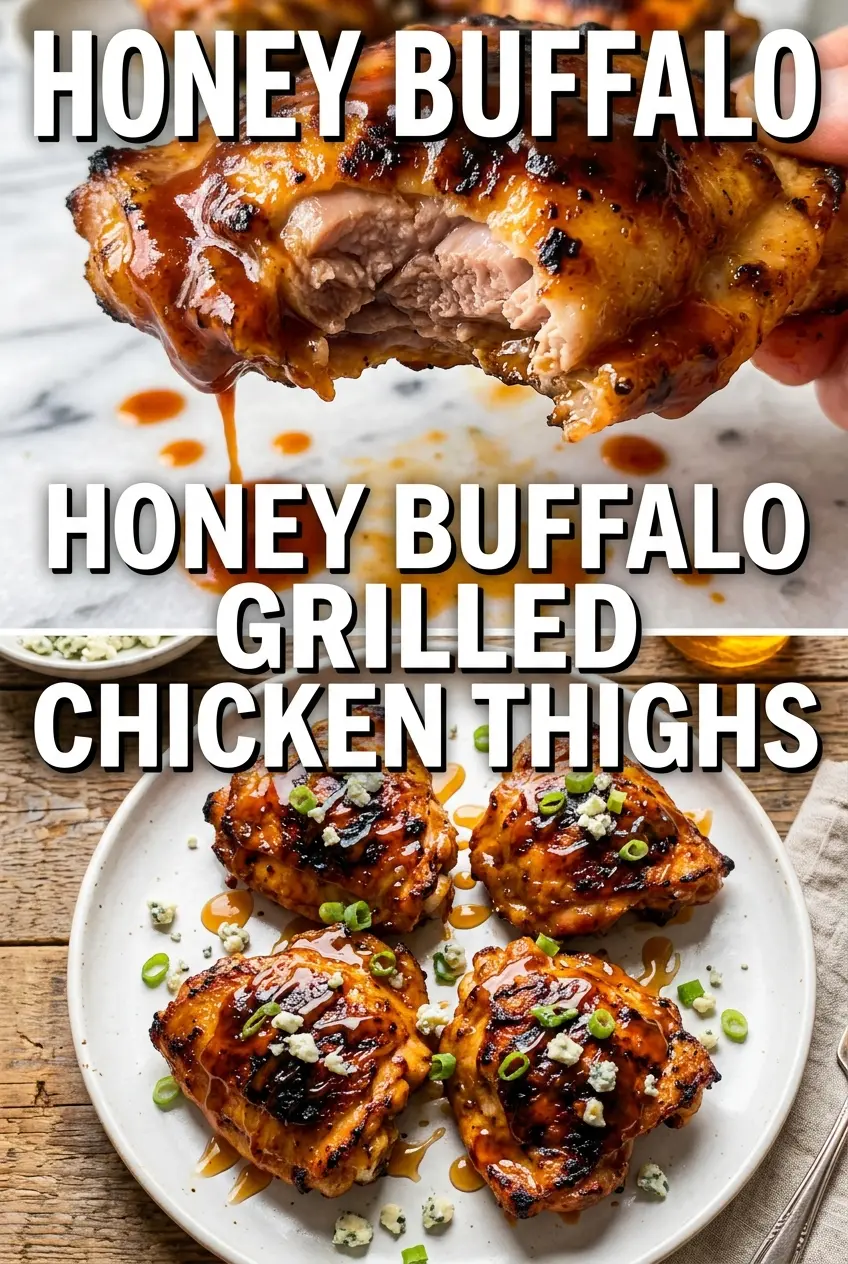
Grilled Honey Buffalo Chicken Thighs
Ingredients
Equipment
Method
- Mix buffalo sauce, honey, melted butter, and apple cider vinegar in a bowl until smooth and glossy. The mixture should look cohesive, not separated.
- Reserve 1/3 cup of the sauce for basting and set it aside. Keep it within reach of the grill.
- Season the chicken thighs with salt and pepper. Aim for even coverage over both skin and exposed areas.
- Brush the chicken thighs with some of the sauce. Coat the skin lightly so it can cling during grilling.
- Marinate for 30 minutes. Refrigerate while marinating for best flavor.
- Grill the chicken skin-side down over medium heat for 8-10 minutes until the skin is crisp. You should see browning and a tightened, crackly surface.
- Flip the chicken and grill for 8-10 more minutes, basting frequently with the reserved sauce. Brush often so the glaze turns sticky and lacquered.
- Cook until the internal temperature reaches 165°F and the glaze is sticky. The surface should look glossy and set, not watery.
- Serve the chicken with blue cheese dressing and celery sticks. The cool, tangy topping balances the spicy sweet glaze.