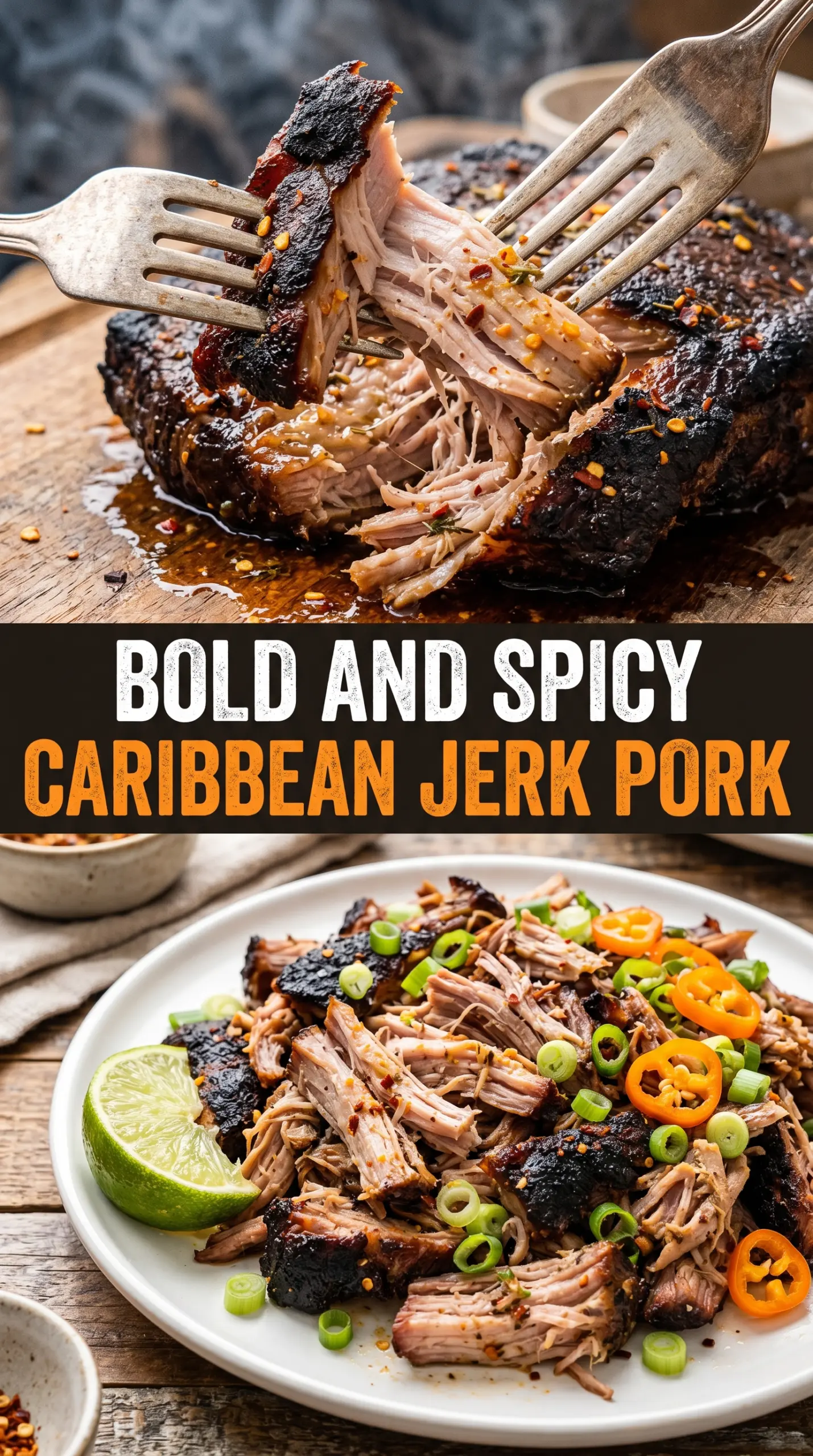
Caribbean jerk smoked pork comes off the smoker with a dark, spiced bark, a deep smoke ring, and meat that pulls apart in long, juicy strands. The first bite is all heat, thyme, and allspice, then the smoke settles in and rounds everything out. It’s the kind of pork shoulder that disappears fast, whether you pile it onto rice, tuck it into buns, or serve it alongside bright island sides.
The overnight marinade does the heavy lifting here. Scotch bonnet, garlic, green onion, thyme, and allspice need time to work into the meat, and the pork shoulder needs that full overnight rest to pick up real flavor, not just surface seasoning. The smoker temperature matters too: keep it steady in the 225-250°F range so the fat renders slowly and the bark has time to set without burning the sugar in the marinade.
Below, I’ll walk through the part that matters most with jerk pork — getting the spice paste to cling and smoke properly without turning bitter. I’ve also included a few smart swaps and storage notes, because once you’ve got a pork shoulder this good, you’ll want to know exactly how to make it work again.
The marinade smelled incredible overnight, and the pork came off with a crackly bark and a perfect smoke ring. I pulled it at 198°F and it shredded like a dream without drying out.
Jerk smoked pork with a bold spice crust and that slow-cooked pull-apart texture is worth saving for your next backyard BBQ.
The Bark Comes from Patience, Not More Heat
The biggest mistake with jerk pork is treating the marinade like a sauce that needs to glaze the meat right away. It doesn’t. You want a paste that clings to the shoulder, then dries and tightens as the pork smokes. That’s what builds the dark bark people are after, not a high blast of heat that scorches the sugar before the interior has a chance to cook.
Score the pork deeply enough for the jerk paste to get into the seams. Those cuts matter because pork shoulder is thick and uneven, and the seasoning needs help reaching beyond the surface. If the bark looks too wet in the smoker, give it time. The first couple hours are about drying the outside and rendering fat, not rushing color.
What the Marinade Is Actually Doing Here
- Pork shoulder — This cut has the fat and connective tissue that turn silky after a long smoke. Lean cuts won’t give you the same pull-apart texture, and they dry out before the bark has time to develop.
- Scotch bonnet peppers — These bring the heat that defines jerk. Seed them if you want a sharper, cleaner burn; leave some seeds in if you want more intensity. Habaneros are the closest swap if scotch bonnets aren’t available, though the fruitiness is a little different.
- Allspice, thyme, cinnamon, and nutmeg — This is the backbone of the flavor. Allspice is non-negotiable if you want jerk to taste like jerk, and fresh thyme makes the whole marinade smell alive rather than dusty. Dried thyme works in a pinch, but use less and crush it well.
- Brown sugar, soy sauce, and lime juice — Brown sugar helps with bark, soy sauce deepens the savory edge, and lime juice keeps the marinade bright enough to cut through the richness. If you skip the acid, the seasoning tastes flatter and the pork reads heavy instead of balanced.
- Vegetable oil — The oil helps the marinade spread evenly and stick to the meat. Don’t overdo it; too much oil can keep the surface from drying properly in the smoker.
Turning the Pork Shoulder into Jerk-Smoked BBQ
Building the Marinade
Blend the green onions, Scotch bonnet peppers, garlic, thyme, brown sugar, allspice, black pepper, cinnamon, nutmeg, soy sauce, lime juice, and vegetable oil until the mixture turns into a thick paste. You want it smooth enough to coat the pork, but still coarse enough to cling in a visible layer. If the blender struggles, stop and scrape the sides instead of adding more liquid, which can thin the marinade and make it slide off the meat.
Coating and Overnight Resting
Score the pork shoulder across the surface, then rub the marinade into every cut and crevice. Set it in a covered dish or bag and refrigerate overnight. That resting time matters more than almost anything else in the recipe, because the shoulder needs hours for the salt, acid, and spices to work past the surface. If you rush this step, the pork still tastes good, but it won’t taste like jerk all the way through.
Smoking Low and Slow
Preheat the smoker to 225-250°F and use fruit wood for a gentle, sweet smoke that plays well with the spices. Put the pork on once the smoker is stable, then let it ride without opening the lid constantly. The bark should darken gradually and the internal temperature should climb steadily toward 195-203°F. If the smoker runs hot, the sugar can darken too fast and the outside may taste bitter before the center is tender.
Resting Before the Pull
Pull the pork only when it has reached that fall-apart stage and a thermometer slides in with almost no resistance. Rest it for at least 30 minutes before shredding so the juices settle back into the meat instead of running straight onto the cutting board. If the shoulder seems a little firm when it comes off the smoker, give it more time covered loosely with foil; pork shoulder gets tender in waves, and patience usually fixes what heat alone cannot.
How to Adapt This for a Different Heat Level or Cooking Setup
Milder Jerk Pork
Seed the Scotch bonnets and use just two peppers instead of four. You’ll still get the sharp, floral heat that makes jerk taste authentic, but the burn will sit in the background instead of taking over the plate.
Gluten-Free Version
Swap the soy sauce for tamari or coconut aminos. Tamari keeps the savory depth almost identical, while coconut aminos taste a touch sweeter, so you may want to reduce the brown sugar slightly.
No-Smoker Oven Finish
If you don’t have a smoker, roast the marinated pork low and slow in the oven at 300°F until tender, then finish it under the broiler for a few minutes to deepen the surface. You won’t get the same smoke ring, but you’ll still get a richly spiced, pull-apart shoulder with a dark crust.
Storage and Reheating
- Refrigerator: Store leftovers in an airtight container for 4 days. The bark softens a little, but the flavor gets even deeper by day two.
- Freezer: Freeze pulled pork in flat, portioned bags for up to 3 months. Press out as much air as possible so the spice paste doesn’t pick up freezer burn.
- Reheating: Reheat gently in a covered pan with a splash of broth or water over low heat, or warm it in the oven covered at 300°F. High heat dries out the shredded meat fast and makes the bark turn tough instead of tender.
Answers to the Questions Worth Asking

Caribbean Jerk Smoked Pork
Ingredients
Equipment
Method
- Add green onions, scotch bonnet peppers, garlic, fresh thyme, brown sugar, allspice, black pepper, cinnamon, nutmeg, soy sauce, lime juice, and vegetable oil to a blender and blend until smooth, with no large chunks visible.
- Pat the pork shoulder dry, then score the surface deeply in a crosshatch pattern so the marinade can get into the cuts.
- Rub the jerk marinade all over the scored pork shoulder, pressing into every cut for full coverage and a thick, speckled coating.
- Refrigerate the pork shoulder overnight to let the flavors penetrate; keep it covered so the surface stays moist.
- Preheat the smoker to 225-250°F using fruit wood so the smoke stays steady for a smoky bark.
- Smoke the jerk-coated pork shoulder for 6-8 hours until the internal temperature reaches 195-203°F, with a dark charred bark forming on the outside.
- Rest the smoked pork for 30 minutes, then pull and serve while the bark stays intact and the smoke ring is visible.