Jamaican jerk chicken earns its place in the rotation because the outside turns dark and smoky while the meat stays juicy under all that spice. The marinade doesn’t just season the surface; it works its way into the chicken, so every bite tastes like something that’s been cared for, not rushed. When the grill is hot and the chicken is turned often, the sugar in the marinade caramelizes into those charred edges people always chase.
What makes this version work is the balance. Scotch bonnet peppers bring heat with real character, thyme and allspice give it that unmistakable jerk backbone, and a little brown sugar helps the glaze darken without tasting candy-sweet. The lime juice and soy sauce pull the whole marinade into something that clings instead of sliding off, and scoring the chicken gives the seasoning a path inward.
Below, I’ve included the details that matter most: how to keep the marinade from tasting flat, what to watch for on the grill, and the best ways to adapt the heat level without losing the jerk flavor that makes this dish sing.
The marinade soaked in beautifully and the chicken came off the grill with those crispy charred edges without drying out. I used habaneros and it had just the right kick with rice and peas.
Save this Jamaican jerk chicken for the nights you want smoky char, Scotch bonnet heat, and a marinade that clings to every bite.
The Char You Want Starts Before the Grill Gets Hot
A lot of jerk chicken goes wrong because the marinade sits on the chicken instead of getting into it. Scoring the pieces changes that. It gives the spices a place to settle, which matters when you’re working with bone-in chicken and a marinade built on strong aromatics rather than a heavy sauce. The other mistake is cooking it over flame that’s too hot from the start. You want char, not burnt sugar and raw chicken underneath.
The grill should be medium, steady, and forgiving enough that you can turn the chicken often. Jerk chicken likes movement. If one side is left alone too long, the sugar and spice darken too fast and the outside tastes bitter before the inside is ready. Turning it frequently builds that lacquered crust in layers instead of one scorched hit.
What the Marinade Is Really Doing Here
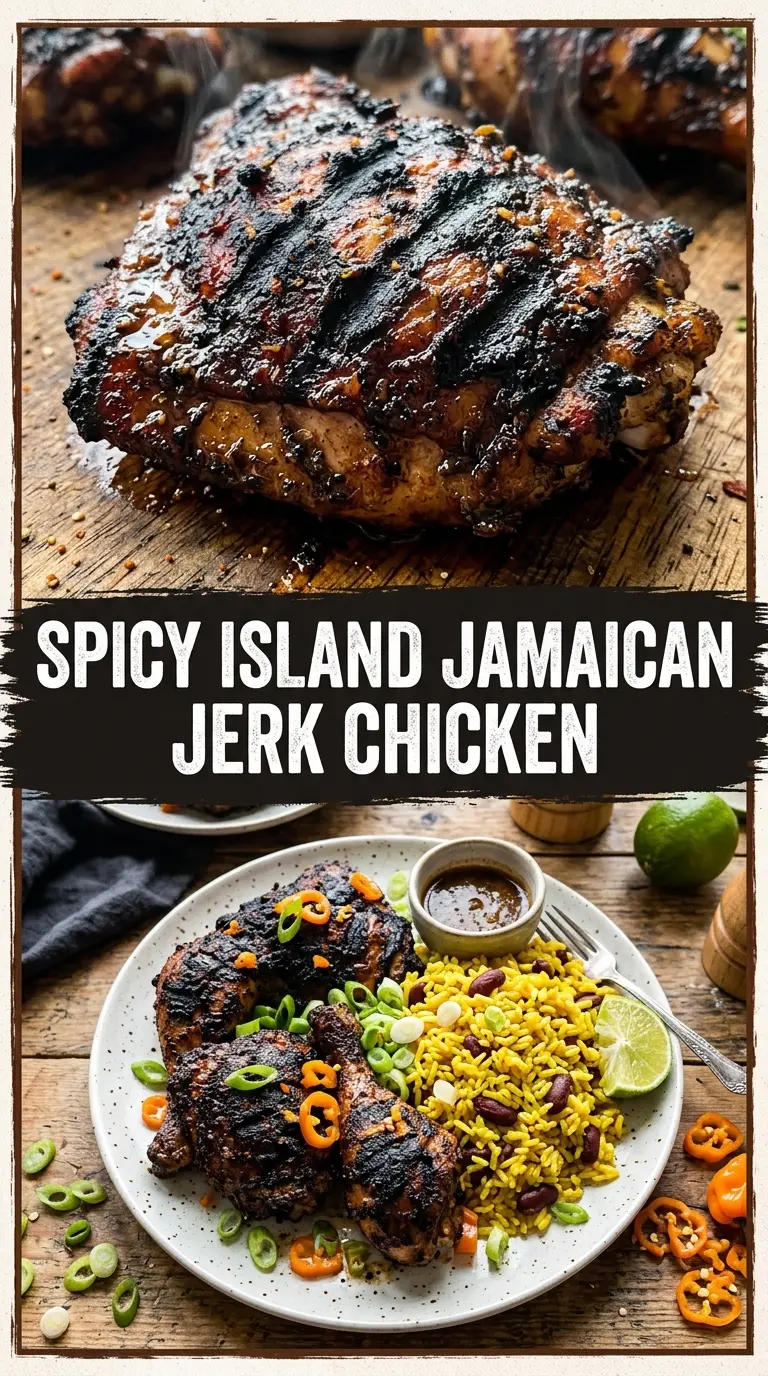
- Scotch bonnet peppers — These bring the heat and the fruity bite that make jerk taste like jerk. Habaneros work if that’s what you can find, and they’ll get you close, but don’t skip the pepper altogether unless you want a milder spiced chicken instead of true jerk character.
- Fresh thyme — Dried thyme can work in a pinch, but fresh thyme gives the marinade a greener, more alive flavor that stands up better to the grill. If you use dried, cut the amount in half because it reads louder once it hydrates in the blender.
- Allspice, cinnamon, and nutmeg — This is the warm backbone of the dish. Allspice carries most of the load, and the cinnamon and nutmeg round it out so the chicken tastes layered instead of flat and peppery.
- Brown sugar, soy sauce, and lime juice — Sugar helps the chicken char, soy sauce adds salt and depth, and lime keeps the marinade from tasting heavy. If you use a sweeter soy sauce, reduce the brown sugar a little so the coating doesn’t scorch before the meat cooks through.
- Green onions and garlic — These soften the heat and give the marinade body. Blend them until smooth enough to cling to the chicken; any big chunks can burn on the grill before the meat has time to cook.
Building Jerk Flavor Without Burning the Chicken
Blending the Marinade Smooth
Blend everything until the mixture turns into a thick, spoonable paste with no visible chunks of onion or garlic. That texture matters because a smoother marinade coats the chicken more evenly and won’t fall into the grill grates as easily. If the blender stalls, add just enough lime juice or a splash of water to get it moving, but keep it thick. A watery marinade won’t cling well and won’t give you the same crust.
Scoring and Coating the Chicken
Cut shallow slashes into the meatiest parts of the chicken, then work the marinade into every crevice with your hands. The cuts help the seasoning reach beyond the surface, especially on thicker pieces like thighs and drumsticks. Four hours is the minimum for real flavor, but overnight gives you a deeper, more integrated taste. Don’t leave it in much longer than 24 hours or the lime can start to make the texture a little mushy.
Grilling to a Dark, Even Finish
Set the grill to medium heat and lay the chicken on with the skin side down first if your pieces have skin. Turn frequently and watch the color, not the clock alone. You want deep brown patches and crisp edges, but if the outside is going black before the center is cooked, the heat is too high. The chicken is done when the juices run clear and the thickest part reads 165°F at the bone.
Make It Milder Without Losing the Jerk Backbone
Use one scotch bonnet or swap both for seeded habaneros if you want heat that still shows up but doesn’t take over the plate. Keep the thyme, allspice, and lime exactly as written so the chicken still tastes like jerk instead of just spicy grilled chicken. The flavor gets softer, but the shape of the dish stays the same.
Oven-Baked Jerk Chicken
If you don’t have a grill, roast the marinated chicken on a rack over a sheet pan at 425°F until browned and cooked through, then finish under the broiler for a minute or two to bring back some of that char. You won’t get the same smoky edge, but you’ll still get a deeply seasoned, sticky crust.
Dairy-Free and Gluten-Free as Written
This recipe already skips dairy, and it’s gluten-free if you use a gluten-free soy sauce or tamari. That swap keeps the marinade salty and balanced without changing the way it caramelizes on the grill.
Storage and Reheating
- Refrigerator: Store cooked jerk chicken in an airtight container for up to 4 days. The spice gets a little deeper by day two, and the skin won’t stay crisp.
- Freezer: It freezes well for up to 2 months. Freeze the chicken pieces on a tray first, then pack them into a bag so they hold their shape and reheat more evenly.
- Reheating: Warm it covered in a 325°F oven until heated through, then uncover for the last few minutes to dry the surface slightly. The common mistake is blasting it in the microwave, which tightens the meat and turns the charred spots rubbery.
Answers to the Questions Worth Asking
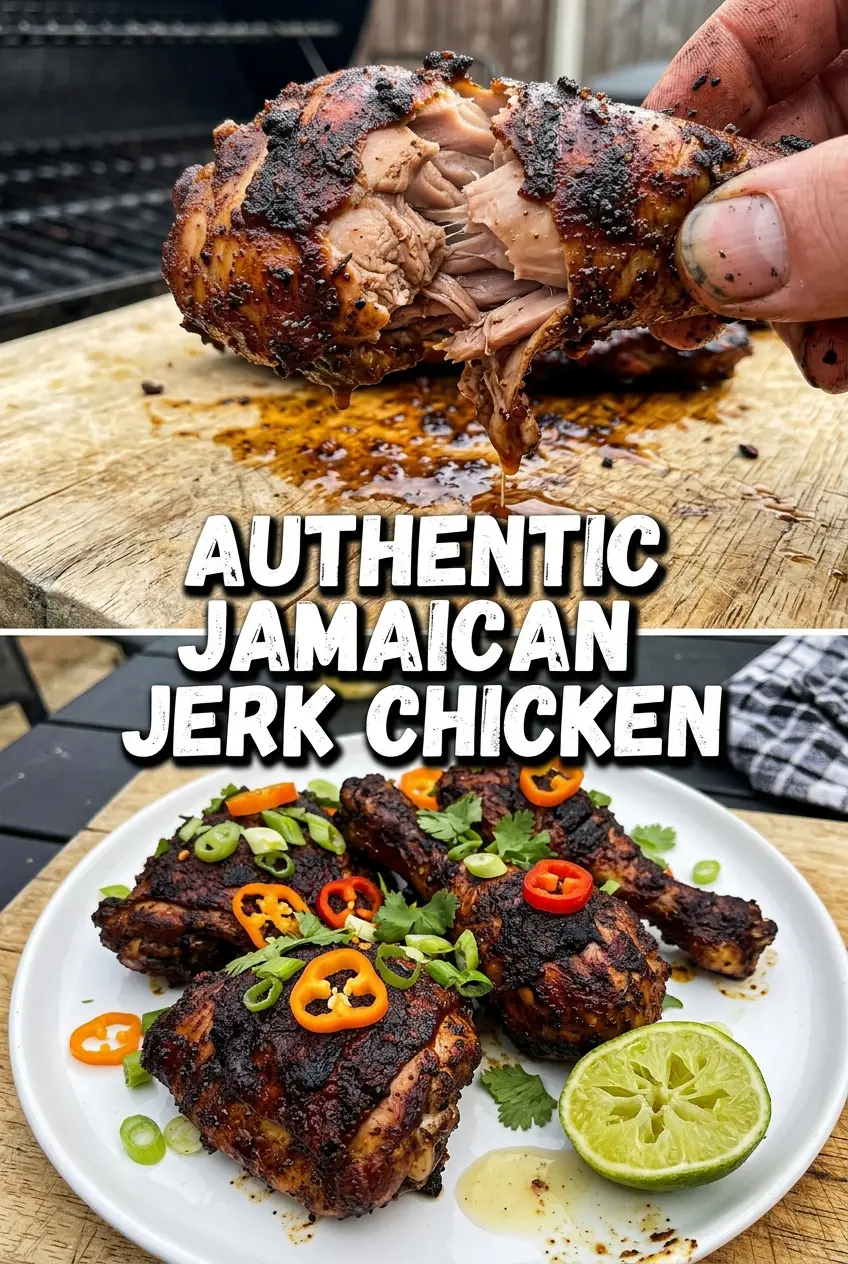
Jamaican Jerk Chicken
Ingredients
Equipment
Method
- Blend the green onions, scotch bonnet peppers, garlic cloves, fresh thyme, brown sugar, soy sauce, lime juice, allspice, black pepper, cinnamon, nutmeg, and salt until smooth, scraping down as needed. Stop when the mixture looks uniform and speckled.
- Score the chicken pieces with shallow cuts and rub the marinade all over, pressing some into the scored areas. Ensure the surface is fully coated, especially the nooks and ridges.
- Marinate the chicken in the refrigerator for 4-24 hours. Cover tightly so the chicken stays moist and the marinade aroma intensifies.
- Preheat your grill to medium heat. Wait until the grates are hot enough that chicken sizzles on contact.
- Grill the chicken, turning frequently, for 30-40 minutes. Look for charred edges and juices running clear with no pink at the thickest parts.
- Serve the grilled jerk chicken with rice and peas and lime wedges. Plate so the charred jerk spices are visible on the surface.