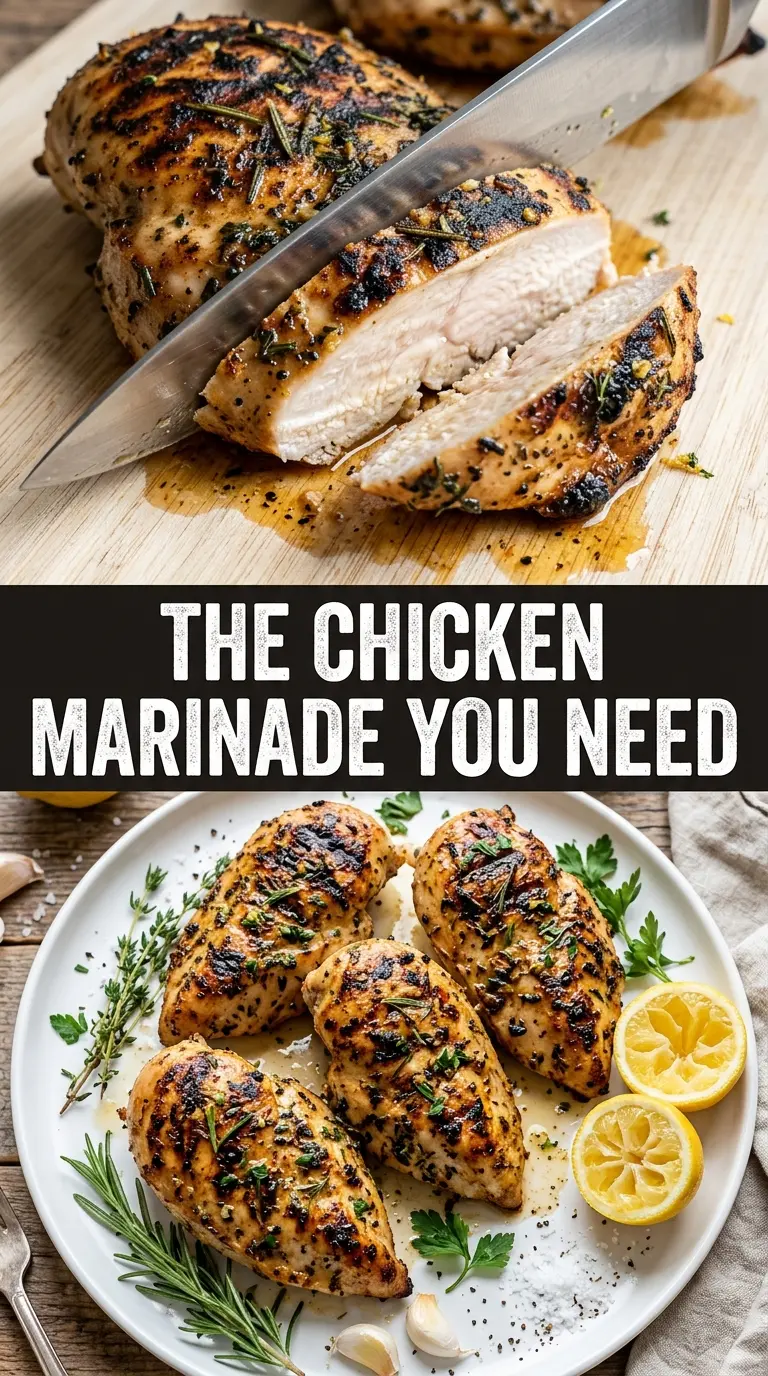
Juicy grilled chicken with deep seasoning and clean grill marks earns its place in the regular rotation fast. The marinade walks a careful line: salty from soy sauce, bright from lemon, rounded out with Dijon, garlic, and just enough brown sugar to help the outside caramelize without turning sticky or burnt. What comes off the grill tastes balanced, not muddled, and the meat stays tender instead of drying out while it cooks.
The trick is giving the marinade enough time to season the chicken all the way through, then cooking over medium-high heat so the outside browns before the juices run out. Lemon juice and Worcestershire do the heavy lifting on flavor, but the oil matters too because it keeps the garlic and paprika from scorching before the chicken is cooked through. If you’ve ever had grilled chicken that looked good but tasted flat, this version fixes that.
Below you’ll find the small details that make a big difference: how long to marinate, what to watch for on the grill, and the easiest way to keep the chicken juicy after it comes off the heat.
The marinade gave the chicken that classic BBQ flavor, and the grill marks came out clean without drying the meat. I let it rest the full 5 minutes and the juices stayed right where they should.
Save this all-star grilled chicken for the nights when you want bold marinade flavor, juicy meat, and clean grill marks without fuss.
The Marinade Window That Stops Grilled Chicken From Tasting Flat
Most grilled chicken goes wrong before it ever hits the grill. If the marinade is too light, the meat tastes seasoned only on the surface. If it sits too long in a strong acidic mixture, the texture can turn a little mealy around the edges. This recipe stays in the sweet spot: enough lemon juice and Worcestershire to season deeply, enough oil to protect the chicken, and enough sugar to help the outside brown without glazing over into burnt spots.
The second mistake is rushing the grill. Medium-high heat gives you color fast, but not so fast that the outside chars before the inside reaches temperature. That balance is what keeps the chicken juicy and lets the seasoning stay clean and sharp instead of bitter.
What Each Part of the Marinade Is Doing
- Olive oil — Carries the seasoning, helps the chicken brown, and keeps the garlic and paprika from scorching. A standard olive oil is fine here; you don’t need anything fancy.
- Soy sauce — Brings salt and depth in one move. This is one of the ingredients I wouldn’t skip, because it seasons the chicken more evenly than salt alone in a quick marinade.
- Lemon juice — Adds brightness and helps the marinade soak into the surface. Fresh juice tastes cleaner than bottled, and that matters because the flavor is front and center.
- Worcestershire sauce — Gives the marinade its savory backbone. There isn’t a perfect substitute, but a little extra soy sauce plus a splash of vinegar will get you partway there if needed.
- Dijon mustard — Helps the marinade emulsify, so it clings instead of sliding off. Use real Dijon, not yellow mustard, or you’ll lose that sharp, mellow heat.
- Brown sugar — Balances the acid and helps the chicken caramelize. Keep it measured; too much can burn on a hot grill before the center is done.
- Garlic and paprika — Garlic gives the chicken its familiar BBQ edge, while paprika adds color and a gentle smoky note. Mince the garlic finely so it doesn’t burn in little bitter clumps.
Grilling the Chicken Without Losing the Juices
Mix the Marinade Until It Looks Unified
Whisk the olive oil, soy sauce, lemon juice, Worcestershire, Dijon, garlic, brown sugar, black pepper, and paprika until the sugar dissolves and the mixture looks glossy. If the Dijon is left in streaks, it won’t coat the chicken evenly. The marinade should smell bright, savory, and a little sharp, not oily and separated.
Let the Chicken Soak, But Don’t Overdo It
Cover the chicken and refrigerate it for 2 to 8 hours. Two hours gives you good surface flavor; overnight starts to push the lemon and soy further into the meat, which can be great as long as you stay under that 8-hour mark. If your chicken pieces are small, lean toward the shorter end so the texture stays tender.
Cook Over Medium-High Heat Until the Skin or Surface Browns
Preheat the grill before the chicken goes on. A properly heated grill sears the outside quickly and gives you those clean marks that lift away without tearing. If the chicken sticks when you try to turn it, it needs another minute; once it releases naturally, it’s ready to move.
Pull It at 165°F and Give It a Short Rest
Use a thermometer and take the chicken off when the thickest part reaches 165°F. That’s the line that keeps the meat safe without guessing. Let it rest for 5 minutes before serving so the juices settle back into the chicken instead of running onto the cutting board.
How to Adapt It When You Want a Different Finish
Bone-in chicken pieces
Bone-in thighs, drumsticks, or split breasts work well here, but they need more time on the grill. Keep the heat at medium-high, then move pieces to a cooler spot if the outside browns before the center is done. The bone adds flavor and helps protect the meat from drying out.
Dairy-free and naturally gluten-free
As written, the marinade is already dairy-free. For gluten-free cooking, use a certified gluten-free soy sauce or tamari and you’re set. The flavor stays just as bold, with no texture change.
A smokier BBQ-style version
Add an extra half teaspoon of paprika or a pinch of smoked paprika. That gives the chicken a deeper grilled flavor without changing the balance of the marinade. Too much smoked paprika can take over, so keep the hand light.
Storage and Reheating
- Refrigerator: Store leftover chicken in an airtight container for up to 4 days. It stays juicy if you keep the pieces whole instead of slicing them early.
- Freezer: Freeze cooked chicken for up to 2 months. Wrap it well or use freezer bags, then thaw in the refrigerator so the texture doesn’t turn stringy.
- Reheating: Reheat gently in a covered skillet over low heat with a splash of water, or warm it in a 300°F oven until just heated through. High heat is the fastest way to dry out grilled chicken.
Questions I Get Asked About This Recipe

All-Star Grilled Chicken
Ingredients
Equipment
Method
- Whisk together olive oil, soy sauce, lemon juice, Worcestershire sauce, Dijon mustard, minced garlic, brown sugar, black pepper, and paprika until the mixture looks evenly combined and glossy.
- Transfer the marinade to a container large enough to fit the chicken so each piece can be coated.
- Add chicken pieces to the marinade and turn to coat; cover and refrigerate for 2-8 hours so the surface looks well stained and fragrant.
- Preheat your grill to medium-high heat, then lightly oil the grates so you get defined grill marks without sticking.
- Place chicken on the grill and grill, turning occasionally, until the thickest piece reaches an internal temperature of 165°F with clear juices and cooked-through centers.
- Remove chicken from the grill and let it rest for 5 minutes, during which the juices redistribute and the surface stays tender instead of steaming dry.