Sticky, glossy honey garlic chicken skewers come off the grill with caramelized edges, juicy centers, and just enough char to keep every bite interesting. The glaze clings instead of sliding off, and the sweet-salty balance makes these skewers the kind of dinner people reach for before they even hit the platter.
What makes this version work is the marinade structure. Honey brings the shine and caramelization, soy sauce gives the salt and color, and lemon juice keeps the sweetness from going flat. Reserving a portion of the marinade for basting builds layers of flavor as the chicken cooks, and soaking the skewers keeps the edges from scorching before the meat is done.
Below, I’ll walk through the one detail that keeps the glaze from burning, the ingredient swap that still gives you good results if you’re out of one component, and the small timing cue that tells you when the chicken is done without drying it out.
The chicken stayed juicy and the glaze thickened on the grill instead of turning watery. I used the reserved marinade for basting exactly like the directions said, and it gave the skewers that sticky finish I was hoping for.
Love these sticky honey garlic chicken skewers? Save them to Pinterest for a fast grill-night dinner with caramelized edges and an easy marinade.
The Marinade Needs a Head Start, Not a Long Bath
Honey garlic chicken skewers can turn bland fast if the marinade only sits on the surface. The chicken needs enough time to take on flavor, but not so much that the lemon starts tightening the meat. One to four hours is the sweet spot here. Less than that and the flavor stays on the outside; much longer and the texture can get a little stiff, especially with chicken breast.
The other detail people miss is the reserved marinade. Once raw chicken has touched it, that portion should never go straight onto finished food unless it gets boiled first. In this recipe, reserving some of the mixture before adding the chicken lets you baste safely and build a sticky glaze that actually sets on the grill instead of tasting thin and raw.
What Each Ingredient Is Actually Doing in the Glaze

- Honey — This is what gives the skewers their lacquered finish. It caramelizes on the grill and turns the outside sticky and golden, which you can’t fully fake with plain sugar because honey also brings body and a rounder sweetness.
- Soy sauce — This handles salt and color at the same time. A regular grocery-store soy sauce works fine here, and it’s worth using something standard rather than low-sodium unless you know you want a lighter salt level, because the glaze depends on that savory backbone.
- Olive oil — Oil helps the marinade coat the chicken evenly and keeps the garlic from clumping into wet spots. It also gives the glaze a little more movement when you baste, which helps it spread instead of burning in one place.
- Garlic and lemon juice — Garlic gives the recipe its sharp edge, while lemon keeps the honey from tasting one-note. Fresh garlic matters more than jarred here because the marinade is short and the flavor needs to be bold from the start.
- Chicken breast — Breast meat cooks quickly and picks up the glaze well, but it dries out if the pieces are cut unevenly. Keep the chunks close to the same size so the skewers finish at the same time and the edges don’t go from caramelized to dry before the centers are done.
Grilling the Chicken So the Glaze Stays Sticky, Not Burnt
Mixing the Marinade
Whisk the honey, soy sauce, olive oil, garlic, lemon juice, and black pepper until the honey loosens and the mixture looks smooth. If the honey sits in a thick ribbon at the bottom, it hasn’t blended enough and won’t coat the chicken evenly. Reserve one-quarter cup before the chicken goes in so you have a clean basting sauce later.
Marinating the Chicken
Add the chicken chunks to the remaining marinade and turn them until every piece is coated. Let them sit in the fridge for at least an hour. If you’re pushing for four hours, keep an eye on the texture; the acid in the lemon is doing its job, and too much time can make the surface feel a little tight.
Threading and Prepping the Grill
Thread the chicken onto soaked skewers with a little space between each piece. That small gap matters because crowded skewers steam instead of sear. Preheat the grill to medium-high and clean the grates well, since sticky honey glaze grabs onto dirty grates and tears before it has a chance to caramelize.
Cooking and Basting
Grill the skewers for about 5 to 6 minutes per side, brushing on the reserved marinade as they cook. Watch for the edges to darken into a deep golden brown and for the chicken to release more easily when it’s ready to turn. If the heat is too aggressive, move the skewers to a cooler spot on the grill; honey burns fast, and the difference between glossy and bitter happens quickly.
The Final Check
Pull the skewers when the chicken is cooked through and the juices run clear. The safest and easiest check is an instant-read thermometer, but even without one, the meat should feel firm and spring back when pressed lightly. Let them rest for a minute or two, then garnish with parsley so the glaze sets instead of running off the moment it leaves the grill.
How to Adapt These Skewers for Different Grills and Different Eaters
Make It Gluten-Free with Tamari
Swap the soy sauce for tamari in the same amount. You’ll keep the salty umami flavor without changing the way the glaze browns, and the texture stays the same because the liquid ratio doesn’t need to change.
Use Chicken Thighs for a Richer Bite
Boneless thighs work well if you want a juicier, more forgiving skewer. They can take a minute or two longer than breast meat, and they won’t dry out as quickly if the grill runs hot, but they also pick up a slightly richer finish from the fat.
Oven-Broiled Version
If you can’t grill, broil the skewers on a lined sheet pan and turn them once halfway through. They won’t get the same smoke, but the honey still caramelizes nicely, and the close heat gives you good color fast.
Storage and Reheating
- Refrigerator: Store cooked chicken off the skewers in an airtight container for up to 4 days. The glaze will set more firmly in the fridge.
- Freezer: Freeze the cooked chicken pieces for up to 2 months. Freeze them in a single layer first so they don’t clump together.
- Reheating: Reheat gently in a covered skillet over low heat or in the oven at 325°F until warmed through. High heat dries out the breast meat and can turn the glaze sticky in the wrong way.
Questions I Get Asked About This Recipe
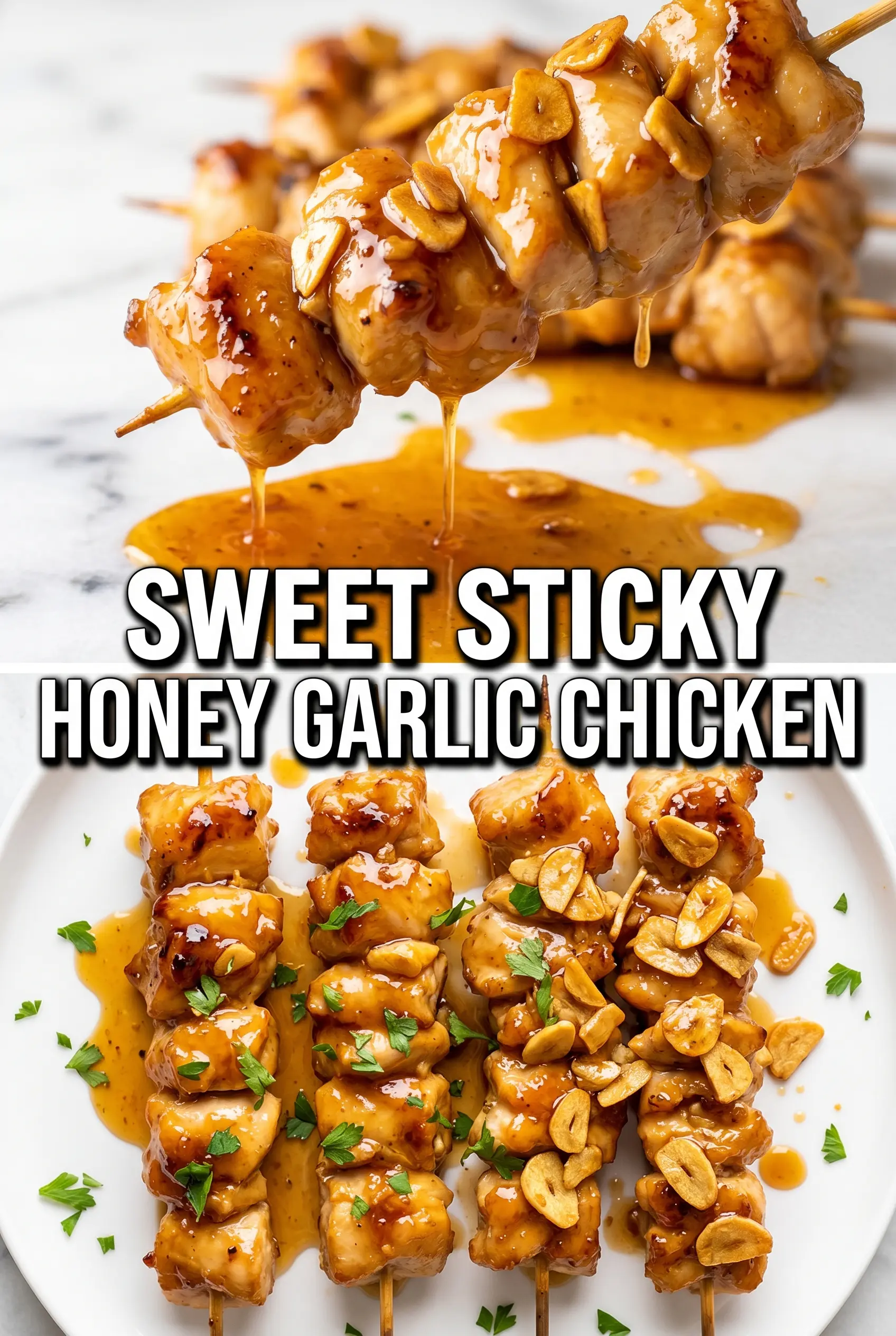
Honey Garlic Chicken Skewers
Ingredients
Equipment
Method
- Whisk honey, soy sauce, olive oil, garlic, lemon juice, and black pepper until smooth and glossy. Visual cue: you should see garlic evenly dispersed with no streaks.
- Reserve 1/4 cup of the marinade for basting. Visual cue: set the reserved portion aside in a separate container so it won’t mix with raw chicken.
- Marinate the chicken in the remaining marinade for 1-4 hours. Visual cue: chunks should look evenly coated and slightly darker from the marinade.
- Thread chicken onto soaked wooden skewers. Visual cue: pack pieces snugly so they cook evenly.
- Grill over medium-high heat for 5-6 minutes per side, basting with the reserved marinade as you cook. Visual cue: the honey-garlic glaze should caramelize, turning golden with sticky edges.
- Garnish with fresh parsley and serve hot. Visual cue: finish with a bright green sprinkle right before eating.