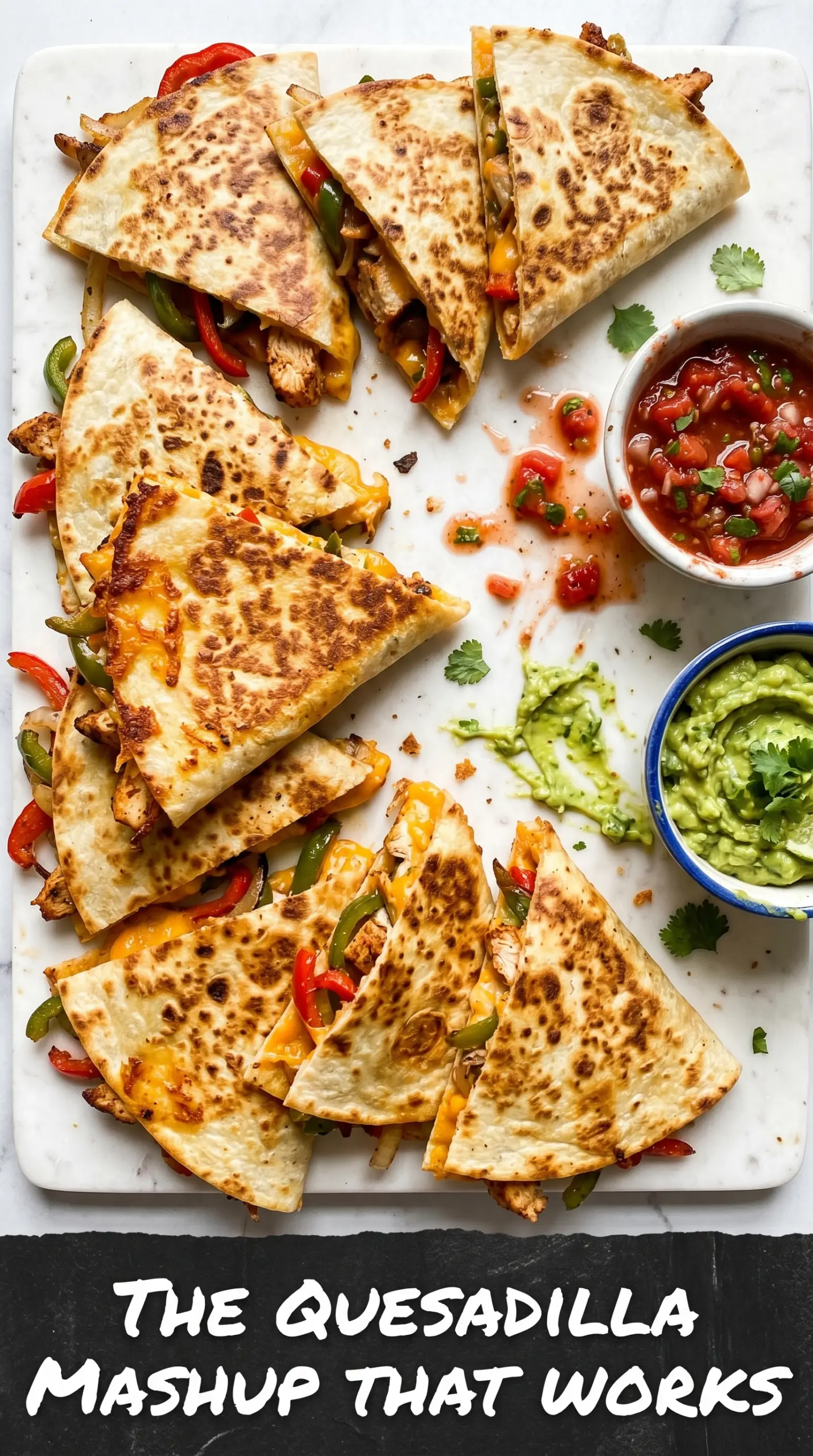
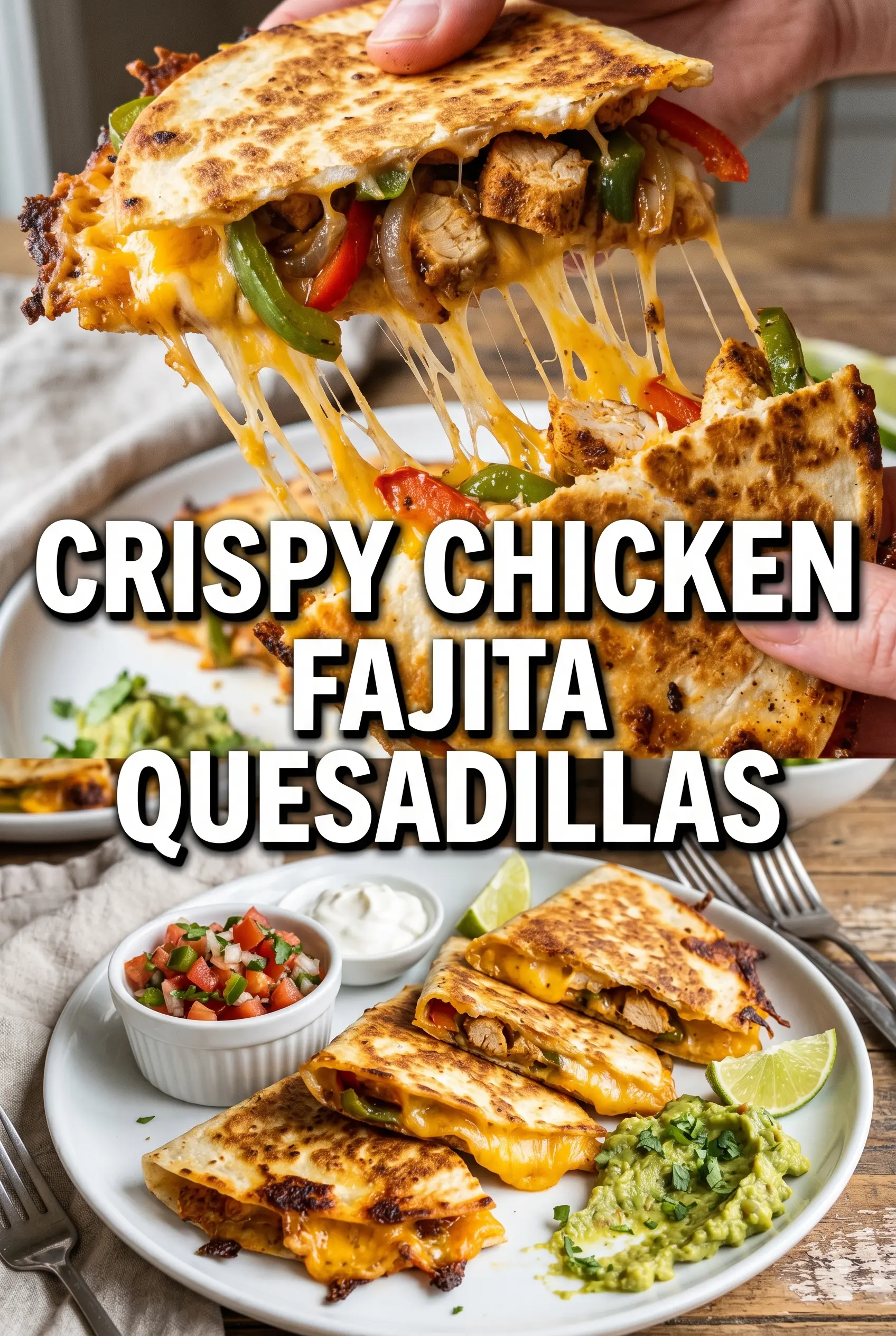
These Blackstone chicken fajita quesadillas come off the griddle with crisp, bronzed tortillas, juicy seasoned chicken, and peppers that still have a little bite. The cheese melts into the gaps between the chicken and vegetables, so every wedge holds together instead of sliding apart the second you cut it. That’s the difference between a quesadilla that looks good and one that disappears fast.
The trick is cooking the filling hot and fast enough to get color without drying out the chicken. Thin-sliced breast cooks quickly on the Blackstone, and the peppers and onions pick up just enough char to taste like fajitas instead of soft skillet vegetables. Using the seasoning in two stages keeps the chicken and vegetables balanced, so the whole quesadilla tastes seasoned from edge to edge.
Below, I’ve included the griddle timing that keeps the tortillas crisp, plus a few smart swaps if you want to change the cheese or make these work with what’s already in the fridge.
The tortillas got perfectly crisp on the griddle, and the cheese actually stayed inside the wedges instead of oozing everywhere. I loved how the peppers still had a little texture and the chicken stayed juicy.
Love these Blackstone chicken fajita quesadillas? Save them to Pinterest for a fast griddle dinner with crisp tortillas and melty cheese.
The Griddle Trick That Keeps the Tortillas Crisp Instead of Soggy
The mistake most people make with griddle quesadillas is overloading the center with hot filling that’s still steaming. That moisture has nowhere to go, so the tortilla softens before the cheese has a chance to glue everything together. On a Blackstone, you want the filling hot but not wet, and you want the quesadilla to hit the griddle as an assembly job, not a holding pattern.
Cooking the chicken and vegetables separately from the tortilla layer gives you better control. The chicken finishes first, the peppers and onions soften just enough to bend, and the cheese melts from both sides so it acts like a seal. If your quesadilla tears when you flip it, the filling was too loose or the first side didn’t get enough color to set.
What the Cheese, Tortillas, and Seasoning Are Really Doing
- Flour tortillas — Large flour tortillas hold up best on the griddle because they crisp without cracking. Smaller tortillas work, but you’ll lose some of the neat wedge shape and need to adjust the filling so the edges can seal.
- Shredded cheddar and Monterey Jack — This blend gives you both flavor and a clean melt. Monterey Jack stays stretchy, while cheddar brings the sharper fajita-diner taste. Pre-shredded cheese works, but freshly shredded melts a little smoother because it doesn’t carry as much anti-caking starch.
- Fajita seasoning — The seasoning does more than flavor the chicken. It also seasons the peppers and onions in the pan, so each bite tastes complete instead of like plain vegetables stuffed inside seasoned meat. If your seasoning blend is salty, use a lighter hand and taste the filling before adding more.
- Bell peppers and onion — Slice them evenly so they soften at the same rate. If the strips are too thick, they stay crunchy and pull out of the quesadilla; if they’re sliced too thin, they collapse into a wet layer that weakens the tortilla.
- Lime wedges and the cool toppings — Sour cream, salsa, guacamole, and lime cut through the richness and keep each bite from tasting heavy. The squeeze of lime matters more than it looks on paper; it wakes up the chicken and makes the cheese taste less flat.
Getting the Filling Hot, the Tortillas Golden, and the Cheese Fully Melted
Seasoning the Chicken First
Start with thin-sliced chicken breast so it cooks quickly and stays tender. Toss it with half the fajita seasoning before it hits the griddle; that gives the meat a head start on flavor and helps the surface brown instead of steaming. If the slices are uneven, pull the thicker pieces to the hotter part of the griddle and keep everything moving until the chicken is opaque with light browning at the edges.
Softening the Peppers and Onions Without Turning Them Limp
Add the peppers and onions after the chicken is cooked through, then sprinkle on the remaining seasoning. They should pick up color and soften enough to fold easily, but they still need a little structure for the quesadilla to hold texture. If the pan looks crowded, spread the vegetables out; a packed griddle traps steam and turns fajita vegetables watery.
Building and Flipping the Quesadilla
Lay the tortillas on the griddle and start with cheese on the bottom layer, then the chicken mixture, then more cheese before topping with the second tortilla. That top-and-bottom cheese layer helps lock the filling in place. Cook until the underside is deep golden and the tortilla releases cleanly, then flip with a wide spatula. If you flip too early, the filling shifts and the quesadilla can split down the middle.
Finishing for a Clean Cut
Give the second side a few minutes until the cheese is fully melted and the tortilla feels crisp all the way across. Transfer the quesadillas to a board and let them sit for a minute before slicing; that short rest keeps the cheese from spilling out in a lava flow. Cut into wedges with a sharp knife or pizza cutter and serve right away with cold toppings on the side.
How to Adapt These Quesadillas When You’re Short on Time or Working Around Dietary Needs
Make Them Gluten-Free
Use certified gluten-free tortillas and check your fajita seasoning for hidden flour or maltodextrin derived from wheat. Corn tortillas can work in a pinch, but they’re much more fragile on a griddle, so the flour-style gluten-free version gives you a better chance at a clean flip and a neat wedge.
Swap In Steak or Shrimp
Thin-sliced steak gives you a deeper, smokier fajita flavor, while shrimp makes the quesadillas lighter and faster. Steak needs a hard sear and a shorter rest before slicing; shrimp cooks fast enough that it should go in last so it doesn’t turn rubbery before the tortillas are ready.
Make Them Vegetarian
Skip the chicken and use extra peppers and onions, or add sautéed mushrooms and black beans for more substance. Mushrooms bring a meaty bite and help the quesadilla feel filling, but they need to cook off their moisture first or they’ll make the tortillas soft.
Storage and Reheating
- Refrigerator: Store leftovers in an airtight container for up to 3 days. The tortillas soften a bit, but the flavor stays good.
- Freezer: These freeze better before the final griddle crisp if you want make-ahead quesadillas. Wrap tightly, freeze flat, and cook from thawed for the best texture.
- Reheating: Rewarm in a dry skillet or back on the griddle over medium heat until the outside crisps again and the cheese melts. The microwave works only if you don’t mind a soft tortilla; it’s the fastest way to lose the texture that makes these worth making.
Answers to the Questions Worth Asking
Blackstone Chicken Fajita Quesadillas
Ingredients
Equipment
Method
- Heat Blackstone griddle to medium-high and add oil, spreading it into a thin layer. When it shimmers, add the sliced chicken.
- Season the chicken with half the fajita seasoning and cook for 6-7 minutes until the pieces are fully cooked through. Keep them in an even layer so they brown instead of steaming.
- Add peppers and onions to the griddle and season with the remaining fajita seasoning. Cook for 5-6 minutes, stirring occasionally, until softened and lightly charred.
- Place 4 tortillas on the griddle and layer each with cheese, the chicken mixture, and more cheese. Use a generous top layer so the filling is sealed inside.
- Top with the remaining tortillas and cook for 3-4 minutes per side until golden and the cheese is melted. Press lightly with a spatula for closer contact and a cleaner melt.
- Cut the quesadillas into wedges and serve immediately with sour cream, salsa, guacamole, and lime wedges. Finish with a squeeze of lime over each plate for bright flavor.