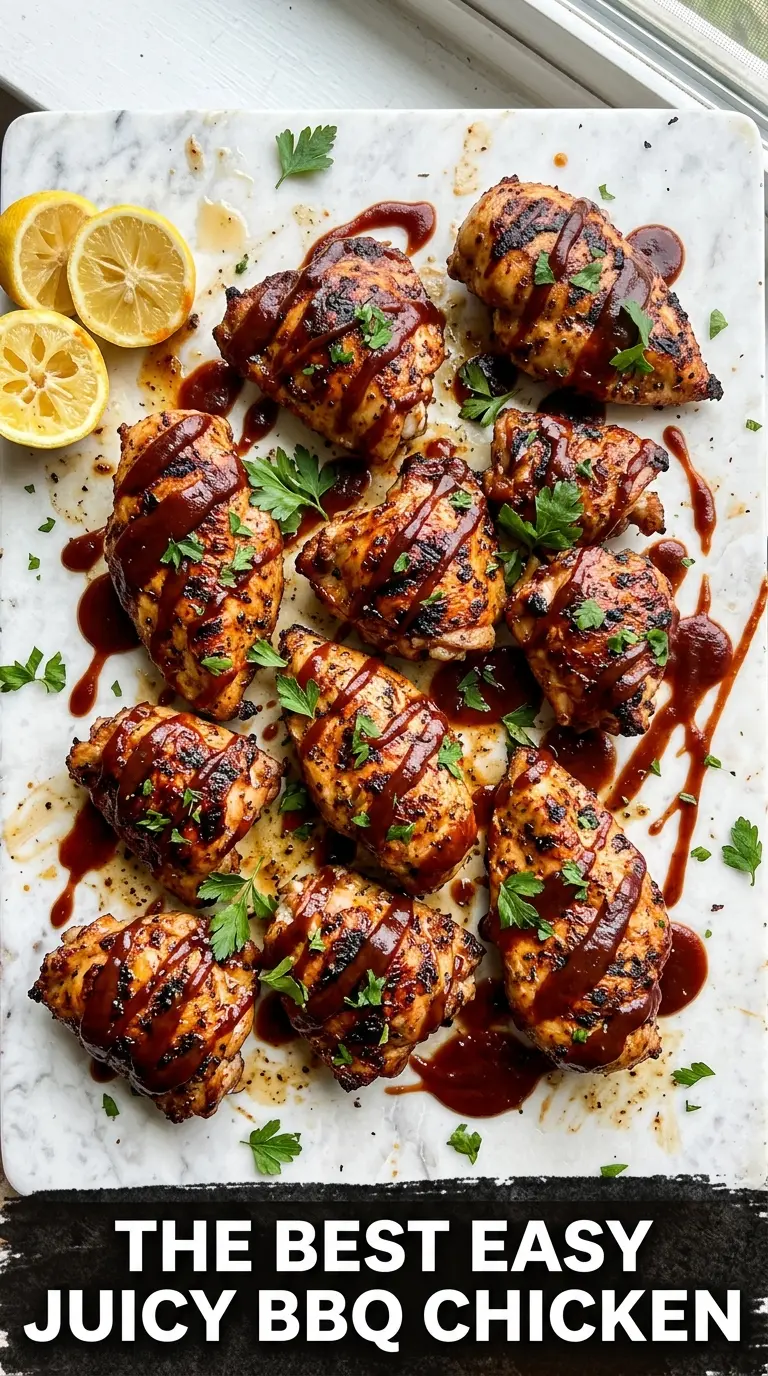
Juicy BBQ chicken needs two things most home grills miss: steady heat and a sauce that caramelizes instead of burning. When the skin or surface takes on a deep smoky color and the meat stays tender all the way to the bone, you get the kind of chicken people keep reaching for until the platter is empty.
This version keeps the method simple, but the details matter. Starting the chicken over indirect heat lets the inside cook through before the sauce goes on, which keeps the sugars in the BBQ sauce from scorching. A little apple cider vinegar loosens the sauce just enough to brush on cleanly, and smoked paprika adds a subtle backbone that tastes like the grill worked harder than it did.
Below, I’ll walk through the exact point where the sauce should go on, why the last few minutes matter most, and how to adjust the method if you’re using bone-in pieces, boneless chicken, or the oven instead of a grill.
The chicken stayed crazy juicy, and the BBQ sauce thickened into that sticky glaze I’ve been trying to get for years. I loved that it didn’t char before the inside was done.
Like this juicy BBQ chicken? Save it for the nights when you want sticky, smoky grilled chicken with almost no cleanup.
The Part That Stops BBQ Chicken From Burning Before It’s Done
Most BBQ chicken goes wrong because the sauce is added too early. Sugar-heavy sauce over direct heat burns before the meat cooks through, leaving you with blackened edges and dry chicken underneath. The fix is simple: cook the chicken over indirect heat first, then move it closer to the flame only when it’s nearly done and ready to take on color.
That last stretch is where the finish happens. You’re not trying to “cook it in the sauce” from the beginning. You’re building heat inside the chicken first, then glazing it at the end so the sauce tightens into a sticky coating instead of turning bitter on the grill grates.
- Indirect heat keeps the outside from scorching while the inside catches up.
- Frequent turning helps the chicken cook evenly without one side drying out.
- Final direct heat is only for caramelizing the sauce and deepening the color.
- Internal temperature matters more than timing if your chicken pieces vary in size.
What the Vinegar and Smoked Paprika Are Doing in the Sauce
- BBQ sauce is the main flavor and the glaze, so use one you already like on its own. If the bottle tastes flat in the spoon, it’ll taste flat on the chicken.
- Apple cider vinegar loosens a thick sauce just enough to brush it on in a thin, even layer. It also keeps the glaze tasting sharp instead of candy-sweet once it hits the grill.
- Smoked paprika adds a quiet smoky note that helps the chicken taste like it came off a live fire, even if your grill heat is mild. If you don’t have it, regular paprika works, but the result is a little less layered.
- Chicken pieces matter here because thighs and legs stay juicier than breasts. If you use breasts, watch them closely and pull them the moment they hit 165°F, since they go dry faster than dark meat.
The Timing That Gives You Juicy Chicken and a Sticky Glaze
Drying and Seasoning the Chicken
Pat the chicken dry first so the skin and surface can brown instead of steaming on the grate. Coat it with olive oil, then season with salt and pepper so the chicken starts with flavor before the sauce goes on. If the pieces look slick or wet, the grill will fight you and the seasoning won’t cling as well.
Mixing the Sauce for Brushing
Stir the BBQ sauce with the vinegar and smoked paprika until it’s smooth and brushable. You want it thick enough to coat the chicken, but loose enough to spread in a thin layer. If it’s too thick, it clumps on the skin and burns in spots instead of glazing evenly.
Cooking Over Indirect Heat First
Set the chicken over indirect heat and close the lid if you’re using one. Turn the pieces every 10 minutes so they cook evenly and the rendered fat doesn’t flare up. The chicken is ready for the saucing stage when it’s mostly cooked through and just needs its final push to temperature.
Glazing at the End
Brush on the sauce during the last 10 minutes, then move the chicken over direct heat long enough for the glaze to caramelize. This is where you watch closely: the sauce should bubble, darken, and turn glossy, not black. Pull the chicken as soon as the internal temperature reaches 165°F, then let it rest for 5 minutes so the juices settle back into the meat.
Bone-in thighs instead of mixed chicken pieces
Thighs handle the grill more forgivingly than breasts and stay juicier if they go a few minutes long. If you use all thighs, keep the same method but expect a slightly longer cook time and more rendered fat, which can cause flare-ups if you crowd the grate.
Boneless chicken for faster grilling
Boneless thighs or breasts cook faster and take on the sauce quickly, but they dry out sooner if you leave them over the heat too long. Reduce the indirect cooking time and start checking early, because the difference between juicy and dry can be just a few minutes.
Oven version for rainy-day BBQ
Bake the chicken on a rack at 400°F until almost done, then brush with sauce and broil briefly to caramelize the glaze. Broilers move fast, so stay close; the sauce can go from glossy to burned in a minute if you walk away.
Storage and Reheating
- Refrigerator: Store leftovers in an airtight container for up to 4 days. The sauce will thicken as it chills, which is normal.
- Freezer: It freezes well for about 2 months, especially with thighs. Wrap portions tightly and thaw in the refrigerator before reheating.
- Reheating: Warm it covered in a 325°F oven until hot, or heat gently in a skillet with a spoonful of water to loosen the glaze. High heat dries out the meat and can make the sauce stick and scorch.
Answers to the Questions Worth Asking
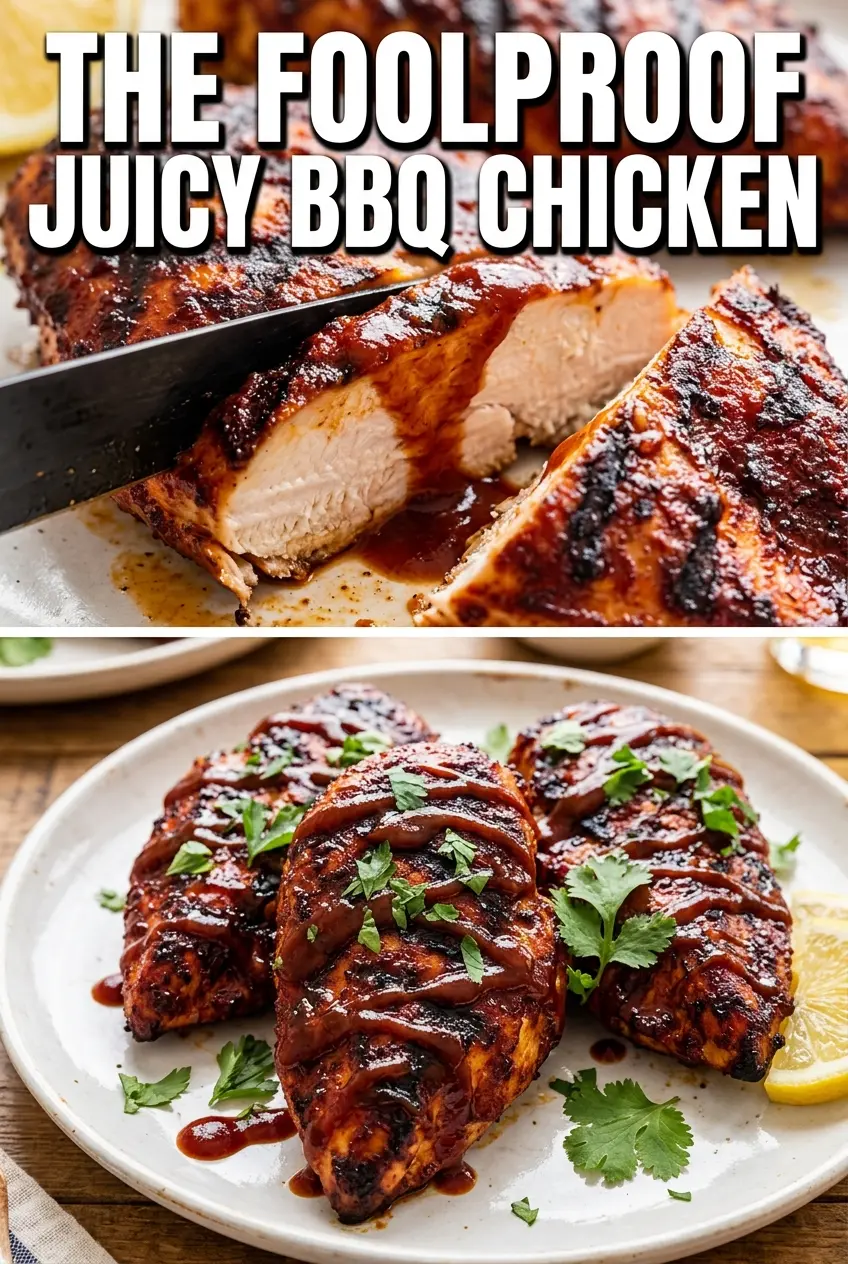
Easy Juicy BBQ Chicken
Ingredients
Equipment
Method
- Pat the chicken dry, then rub with olive oil and season evenly with salt and pepper.
- Place the seasoned chicken aside while you prepare the BBQ glaze.
- Mix BBQ sauce with apple cider vinegar and smoked paprika until smooth and evenly combined.
- Preheat the grill to medium heat (350-400°F).
- Grill the chicken over indirect heat for 30-35 minutes, turning every 10 minutes for even cooking.
- During the last 10 minutes, brush the chicken generously with BBQ sauce and move it to direct heat.
- Continue grilling and basting until the internal temperature reaches 165°F and the sauce is caramelized.
- Let the chicken rest for 5 minutes before serving to keep it juicy.