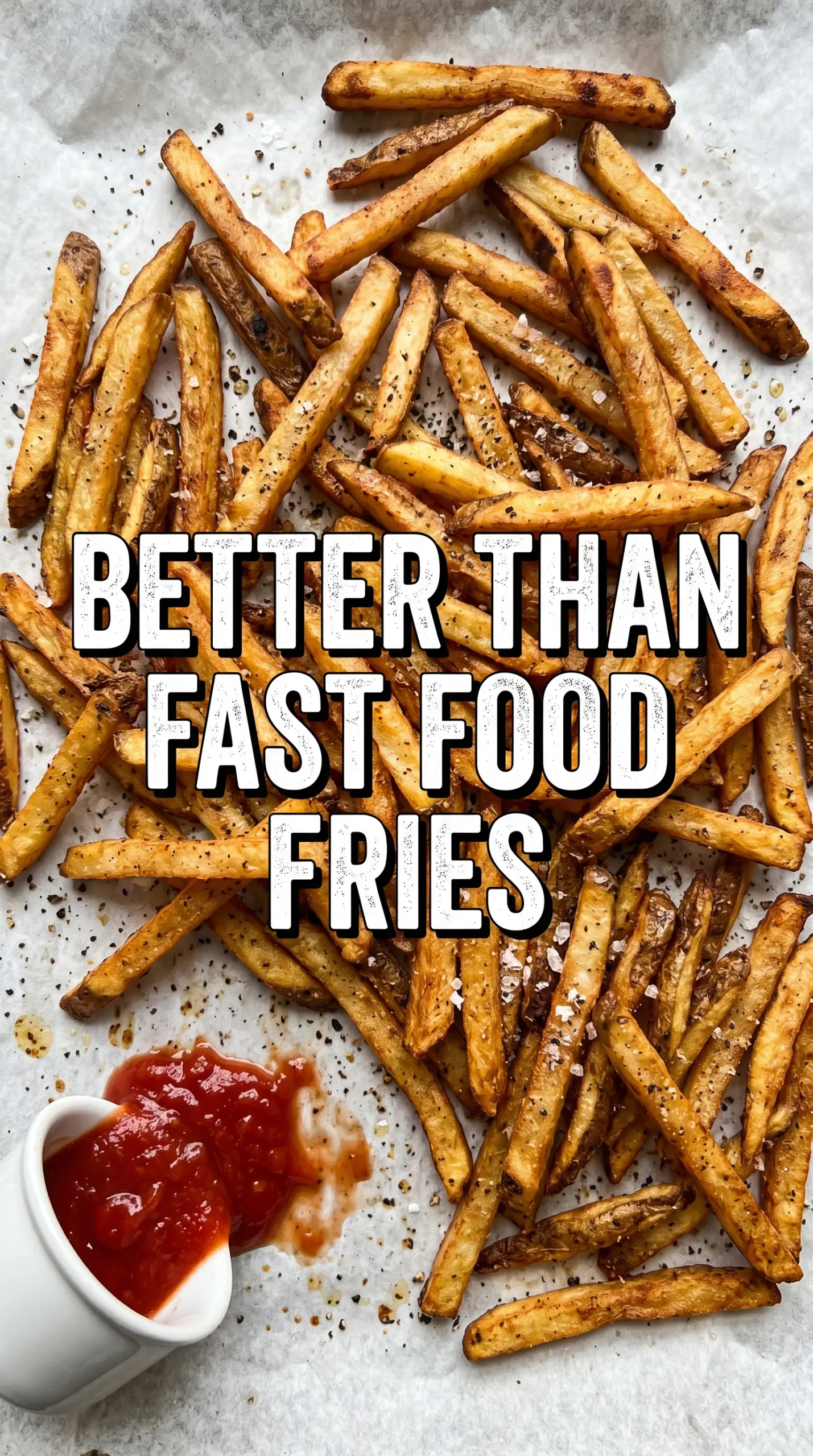
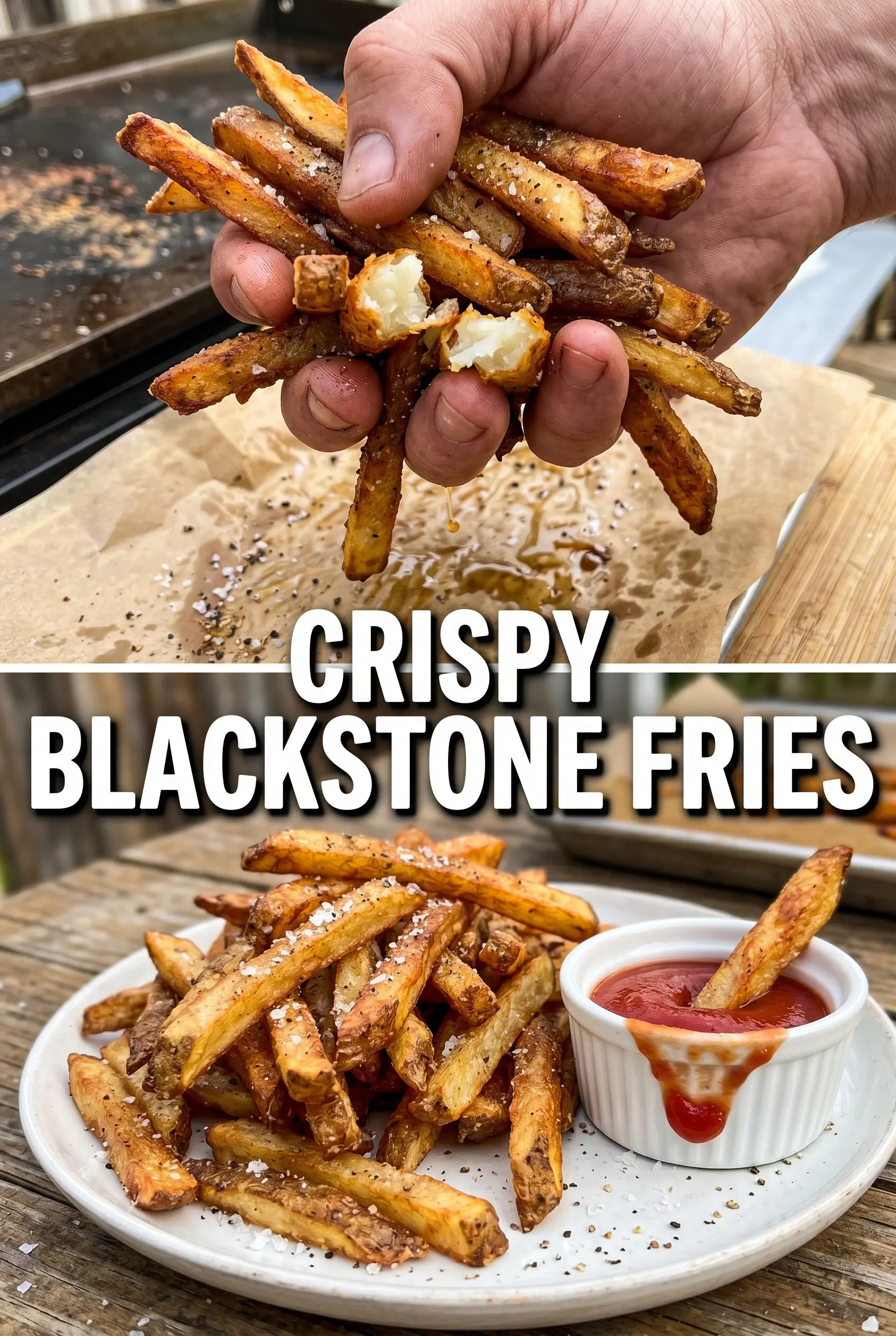
Blackstone fries come off the griddle with the kind of crisp edges and soft, fluffy centers that make a basket disappear fast. The butter and oil combo gives them a deeper, almost steakhouse-style finish than oven fries, and the flat-top surface lets every side make full contact with the heat. When they’re cooked right, they don’t just taste salty and seasoned — they crackle a little when you bite in.
The trick is starting with potatoes that have been soaked, then dried until they’re completely free of surface moisture. That step matters more than people think, because wet potatoes steam before they crisp. Medium-high heat and a single layer on the griddle do the rest. Let them sit long enough to build a crust before flipping, and season them the moment they come off so the spices cling to the hot fries instead of falling to the pan.
Below, I’ll show you how to get the timing right on the Blackstone, what kind of potatoes work best, and how to keep the fries crisp from the first batch to the last. There’s also a simple way to change the seasoning without losing that golden, crunchy finish.
The fries got those crisp, browned edges without sticking, and the garlic paprika seasoning clung to every piece. I liked that the middle stayed fluffy instead of greasy.
Golden Blackstone fries with garlic butter seasoning are made for the nights when you want a crispy side fast and don’t want to lose one bit of crunch.
The Reason These Fries Crisp Instead of Going Soft on the Griddle
Fries on a flat-top fail for one of two reasons: they’re wet, or they’re crowded. If the potatoes still have surface moisture after soaking, that water hits the hot metal and turns to steam before the cut sides can brown. If the fries overlap, they steam each other from the sides. A dry potato and a single layer give the griddle a chance to do what the oven can’t do as quickly — sear every exposed surface at once.
Butter adds flavor, but it also needs help from the oil. Straight butter would brown too fast and risk burning before the potatoes are cooked through. The oil raises the smoke point and keeps the butter from scorching, which is why this combination works so well on a Blackstone. The other mistake is flipping too soon. Let the first side develop a crust, then turn them once they release easily.
What Each Ingredient Is Actually Doing in These Fries
- Russet potatoes — These are the right potato for crisp fries because they’re starchy and low in moisture. That starchy interior turns fluffy while the outside browns into a sturdy shell. Yukon Golds will work in a pinch, but they give you a creamier, less shattery finish.
- Vegetable oil — This keeps the fries moving toward crisp instead of scorched. You want a neutral oil with a high smoke point here, because the Blackstone runs hot and the potatoes need enough fat to sear evenly.
- Butter — Butter gives the fries that rich, savory finish you notice right away. It browns beautifully, but it can burn if used alone, which is why it’s paired with oil. If you need a dairy-free version, use all oil and add a little extra salt at the end.
- Garlic powder, paprika, and onion powder — This trio clings better than fresh garlic on a hot griddle, and it seasons every fry without scorching. Paprika adds color and a gentle sweetness, while garlic and onion powder bring the savory backbone. If you want more heat, smoked paprika is the easiest swap.
- Fresh parsley — Parsley isn’t there for decoration only. It adds a fresh finish that cuts through the butter and keeps the fries from tasting heavy. Chop it finely so it sticks.
How to Keep the Fries Moving Toward Crisp, Not Steam
Soak, Dry, and Strip Off the Surface Moisture
Cut the potatoes into even 1/4-inch fries so they cook at the same rate. The soak pulls off excess starch, which helps the fries brown instead of turning gluey on the outside. After soaking, pat them dry thoroughly; if they still look shiny or feel damp, they’re not ready for the griddle. Wet fries are the fastest path to soft, pale potatoes.
Let the First Side Set Before You Touch It
Heat the Blackstone to medium-high, then add the oil and butter together. When the fat shimmers, spread the fries in a single layer and leave them alone for 8 to 10 minutes. They should start to color at the edges and release more easily from the griddle when the crust is ready. If they stick hard, they need another minute; forcing the flip tears off the crust you just built.
Finish With Seasoning While the Surface Is Hot
Flip the fries and cook until both sides are golden and crisp, then season immediately. Hot fries grab the spices better than warm ones, and the butter helps the seasoning cling. Toss them gently on the griddle or in a bowl with the parsley at the end. If you wait too long to season, the fries taste flat and the spice ends up uneven.
How to Change These Fries Without Losing the Crunch
Dairy-Free Griddle Fries
Swap the butter for an extra 2 tablespoons of oil and finish with a little more salt. You lose some of the buttery depth, but the fries stay crisp and still pick up the garlic-paprika seasoning well.
Smoky Paprika Fries
Use smoked paprika instead of regular paprika for a deeper, barbecue-style finish. It gives the fries a more savory edge without changing the texture, which makes this an easy upgrade for serving with burgers or grilled meat.
Cheesy Loaded Fries
Scatter shredded cheddar over the fries during the last minute on the griddle so it melts without burning. This adds richness, but it also softens the top layer a little, so serve them right away if you want the crispiest finish.
Storage and Reheating
- Refrigerator: Store leftovers in an airtight container for up to 3 days. The fries soften as they sit, especially once they cool.
- Freezer: They don’t freeze well after cooking. The texture turns mealy and the crisp edges disappear once thawed.
- Reheating: Reheat on a hot skillet, griddle, or in a 425°F oven until the edges crisp back up. Don’t use the microwave unless you’re fine with soft fries, because it traps steam and wipes out the crust.
Answers to the Questions Worth Asking
Blackstone Fries
Ingredients
Equipment
Method
- Cut the russet potatoes into 1/4-inch thick fries, then soak them in cold water for 10 minutes.
- Pat the fries completely dry until no water sheen remains.
- Heat the griddle to medium-high, then add the vegetable oil and butter until the butter melts and looks glossy.
- Spread the fries in a single layer and cook for 8-10 minutes without moving, until you see steady steam and the bottoms start to bronze.
- Flip the fries and cook another 8-10 minutes until golden and crispy on all sides.
- Immediately season the hot fries with garlic powder, paprika, onion powder, salt, and pepper so the coating sticks.
- Garnish with chopped fresh parsley and serve right away with ketchup and other dipping sauces.