Deeply caramelized onions, tender chicken, and orzo baked under a bubbling Gruyère crust make this casserole the kind of dinner that gets scraped clean. The onions turn sweet and jammy in the pan, then the broth and orzo pick up every bit of that flavor before the whole thing goes into the oven. What comes out is creamy without being heavy, with a golden top that cracks just enough when you spoon into it.
The slow onion stage matters here. If you rush it, you get softened onions, not the rich base that makes this dish taste like French onion soup in casserole form. A good sear on the chicken adds another layer of savoriness, and the two broths give the orzo enough depth without making the dish taste flat. Gruyère is the right cheese for the job because it melts smooth and brings that nutty finish you want on top.
Below, I’ll walk you through the part that matters most: how to build the onion base without burning it, how to keep the orzo tender instead of dry, and what to change if you need a substitution that still keeps the casserole grounded and cozy.
The onions turned out sweet and deep, not burnt, and the orzo soaked up the broth without getting mushy. The Gruyère on top browned beautifully, and even my picky eater went back for seconds.
Save this French Onion Chicken Orzo Casserole for a bubbling, cheesy one-pan dinner with caramelized onions and tender chicken.
The Onion Stage That Gives This Casserole Its Depth
French onion flavor doesn’t happen by accident. The onions need time over medium-low heat so their moisture can cook off before they start to brown. If the heat is too high, they’ll scorch at the edges and taste sharp instead of sweet, and that thin, bitter note will carry through the whole dish.
Once the onions are deep amber and soft enough to collapse on the spoon, you’ve got the backbone of the casserole. Those browned bits on the skillet are a gift, not a mess. The broth loosens them into the orzo, which is why this dish tastes layered instead of one-note.
- Yellow onions — These are the right choice because they get sweet and silky when cooked slowly. Red onions work, but they bring a sharper edge and a darker color.
- Beef broth — This gives the casserole that classic French onion depth. If you only have chicken broth, the dish still works, but the flavor will be lighter.
- Worcestershire sauce — It adds savory backbone without tasting saucy. Don’t skip it unless you have to; even a small amount makes the whole pan taste more developed.
- Gruyère — This is the cheese that melts into a smooth, browned lid instead of turning greasy. Swiss cheese is the closest substitute if Gruyère isn’t available.
Building the Orzo So It Stays Creamy, Not Mushy
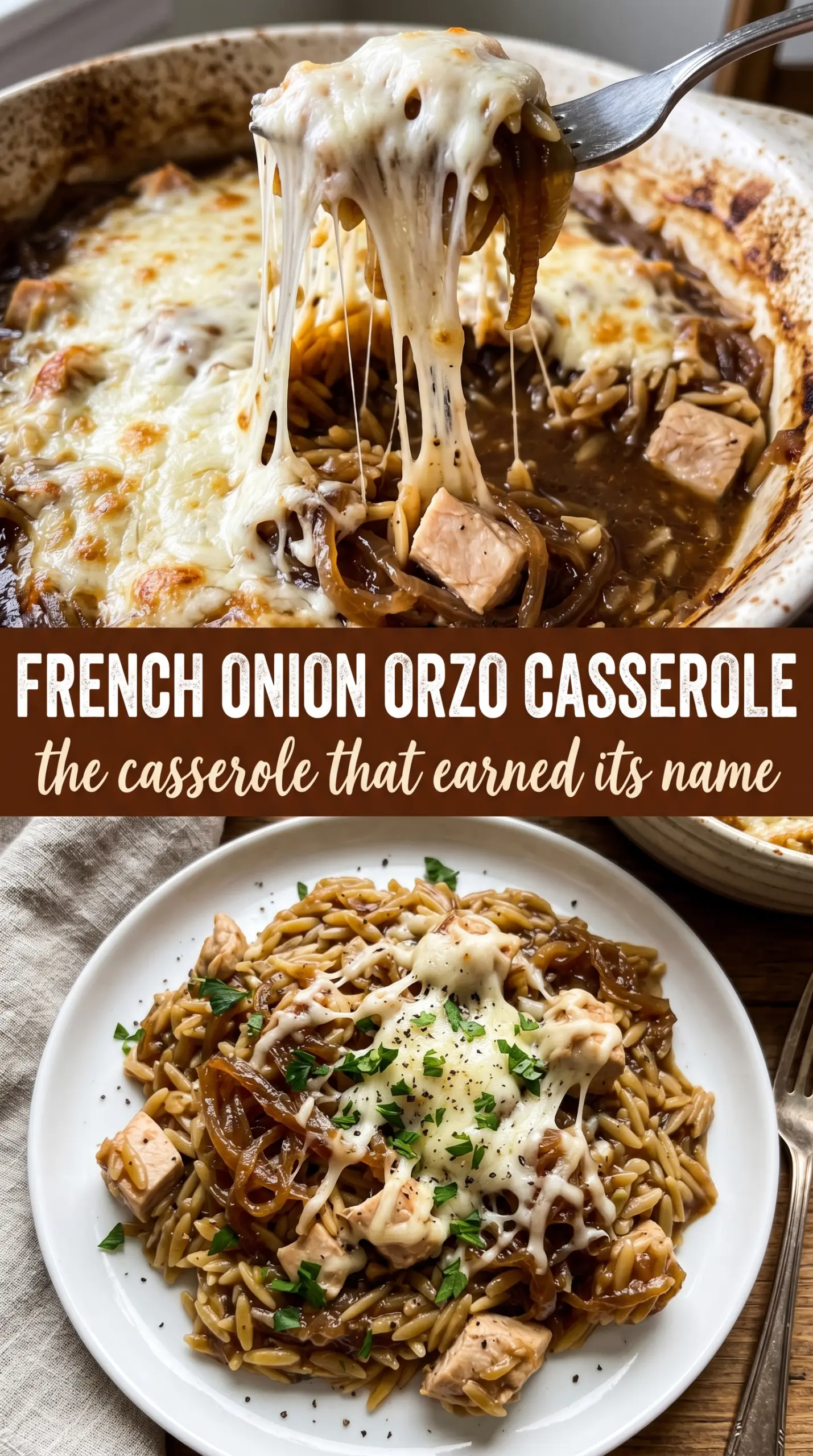
The orzo cooks right in the skillet, which is what makes this feel like a true one-pan casserole. It absorbs the broth as it bakes, so the liquid ratio matters more here than in a standard pasta bake. If the pan looks dry before it goes into the oven, the pasta will finish chalky; if it looks soupy, the cheese top won’t brown properly and the final texture will be loose.
- Chicken breasts — Bite-sized pieces cook quickly and stay tender as long as you only sear them briefly before baking. Chicken thighs are a good substitute if you want a richer, juicier result.
- Orzo — This pasta behaves more like risotto than baked ziti. Dry orzo is what you want; don’t pre-cook it or it’ll turn soft and bloated in the oven.
- Fresh thyme — It brings a clean, woodsy note that keeps the dish from tasting heavy. Dried thyme can work in a pinch, but use less because the flavor is more concentrated.
- Gruyère — Shred it yourself if you can. Pre-shredded cheese often has anti-caking starch that can dull the melt and make the top less silky.
How to Cook the Chicken and Finish the Bake Without Breaking the Texture
Slowly Browning the Onions
Melt the butter with olive oil in an oven-safe skillet, then add the onions with a pinch of salt and keep the heat at medium-low. Stir them every so often, but don’t fuss over them constantly; they need contact with the pan to brown. After 25 to 30 minutes, they should be soft, jammy, and a deep golden brown, not pale and wet.
Searing the Chicken in the Same Pan
Push the onions aside and add the chicken pieces in a single layer so they can pick up color instead of steaming. Two to three minutes per side is enough because the chicken will finish in the oven. If the pan is overcrowded, the chicken turns gray and releases liquid, and that liquid works against the rich, concentrated base you just built.
Turning the Pan Sauce Into a Bake
Add the garlic, orzo, broths, Worcestershire, and thyme, then stir until everything looks evenly combined and the browned bits come off the bottom. The liquid should come to a gentle simmer before the pan goes into the oven. Top with Gruyère, bake uncovered, and pull it when the orzo is tender and the cheese is browned in spots, bubbling at the edges, and the pan still has a little movement in the center.
Make It Gluten-Free With the Right Pasta Swap
Use a gluten-free orzo-style pasta that’s designed to hold up in baked dishes. Cook time may shift a little, so start checking early; gluten-free pasta can go from tender to soft faster than regular orzo. The dish still tastes rich and satisfying, but the texture is a touch more delicate.
Make It Dairy-Free Without Losing the Savory Base
Swap the butter for olive oil or a dairy-free butter, then finish with a dairy-free melting cheese if you have one that browns well. You’ll lose some of Gruyère’s nutty richness, but the caramelized onions, broth, and Worcestershire still carry the dish. Keep the heat moderate so the substitute fat doesn’t taste greasy.
Use Chicken Thighs for a Richer Casserole
Boneless, skinless thighs give you a juicier result and hold up well to the oven. They also bring a little more richness to the pan, which works beautifully with the onions and Gruyère. Cut them into the same bite-sized pieces so they cook at the same pace as the orzo.
Storage and Reheating
- Refrigerator: Store in an airtight container for up to 4 days. The orzo will continue to absorb a little liquid, so expect it to set up more firmly.
- Freezer: It freezes well, though the pasta softens slightly after thawing. Cool completely, portion into airtight containers, and freeze for up to 2 months.
- Reheating: Reheat covered in a 325°F oven with a splash of broth to loosen the sauce. The common mistake is blasting it in the microwave until the cheese separates and the chicken dries out.
Questions I Get Asked About This Recipe
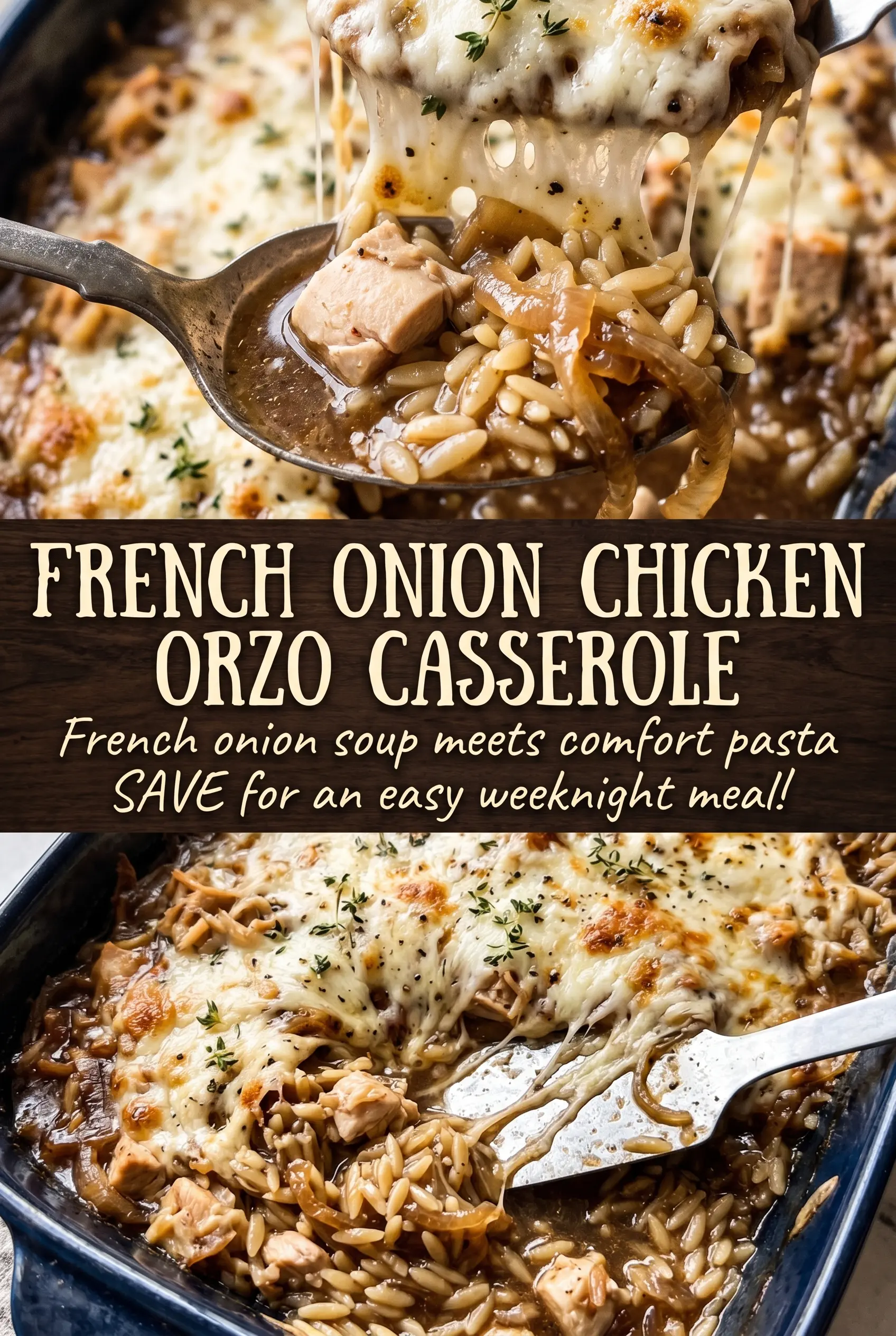
French Onion Chicken Orzo Casserole
Ingredients
Equipment
Method
- Melt butter with olive oil in a large oven-safe skillet over medium-low heat, then add sliced onions with a pinch of salt and cook slowly for 25–30 minutes, stirring occasionally, until deeply caramelized and dark golden.
- Push the onions to the side in the skillet so you create space for the chicken.
- Add chicken pieces to the cleared space and sear for 2–3 minutes per side until golden, without fully cooking through.
- Add garlic, dry orzo, both broths, Worcestershire sauce, and thyme, then stir everything together and bring to a simmer.
- Evenly top the casserole with shredded Gruyère, then transfer the skillet to the oven and bake uncovered for 20–25 minutes at 375°F, until orzo is cooked through and the cheese is golden and bubbly.
- Let the casserole rest for 5 minutes before serving so the orzo firms up slightly.