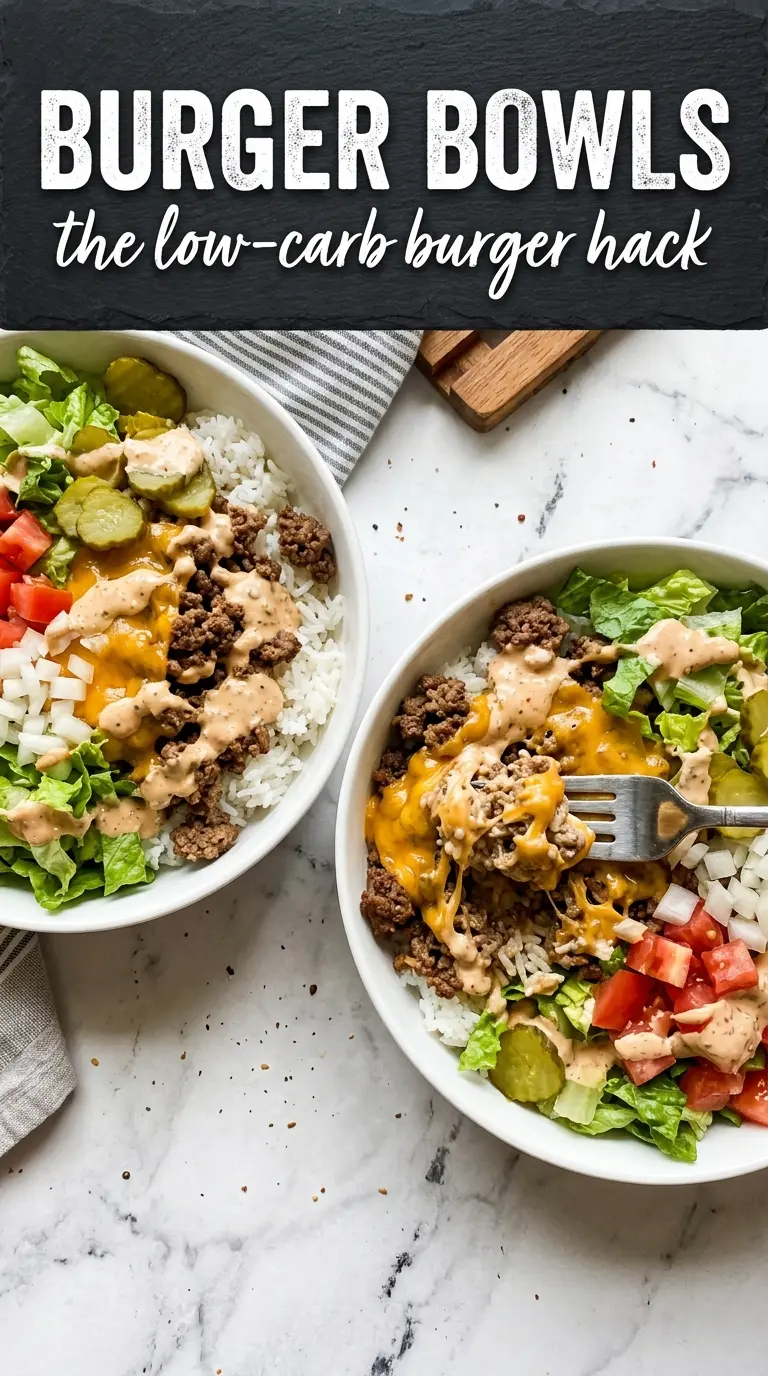
Burger bowls hit the same cravings as a classic cheeseburger, but without the bun getting in the way of the texture. You get hot, seasoned beef over crisp lettuce, cool tomatoes, sharp cheddar, tangy pickles, and that creamy burger sauce pulling everything together. It’s the kind of dinner that feels fast but still tastes like someone paid attention.
The trick is keeping the beef juicy and the toppings cold and crisp. I season the meat before it hits the skillet so every bite tastes like a burger, not just browned ground beef, and I drain off excess fat so the lettuce stays fresh instead of soggy. The sauce leans on mayo for body, ketchup for sweetness, mustard for bite, and relish for that unmistakable burger-joint finish.
Below, you’ll find the one detail that keeps the bowl from turning watery, plus a few easy ways to adapt it for different diets and whatever’s in your fridge.
The sauce was spot on and the beef stayed juicy even after I drained it. I used iceberg lettuce and it held up great without getting limp under the warm meat.
Save these burger bowls for nights when you want all the burger fixings, no bun, and dinner on the table in 15 minutes.
The Reason Burger Bowls Stay Crisp Instead of Turning Watery
The fastest way to ruin a burger bowl is to pile hot, greasy beef straight onto lettuce and then wonder why everything tastes flat. The fix is simple: cook the beef until browned, drain the fat, and let the lettuce do the cold, crunchy work it was meant to do. That contrast is what makes this bowl feel like a burger instead of a bowl of leftovers.
Pickles and red onion matter more here than they might in a regular burger, because they bring the sharp edge that keeps the bowl from tasting one-note. The sauce also needs to be punchy enough to stand up to the beef. If it tastes a little too bold by itself, that’s the right place to be.
- 80/20 ground beef — This gives you enough fat for flavor without ending up dry. Leaner beef works, but it needs closer attention and usually a little more sauce to feel satisfying.
- Romaine or iceberg lettuce — Iceberg gives the cleanest crunch, while romaine adds a slightly greener bite. Either one should be fully dry before you build the bowls, or the sauce will slide right off.
- Sharp cheddar — Sharp cheddar gives the bowl the burger-shop taste you want. Pre-shredded is fine, but freshly shredded melts a little softer over the warm beef.
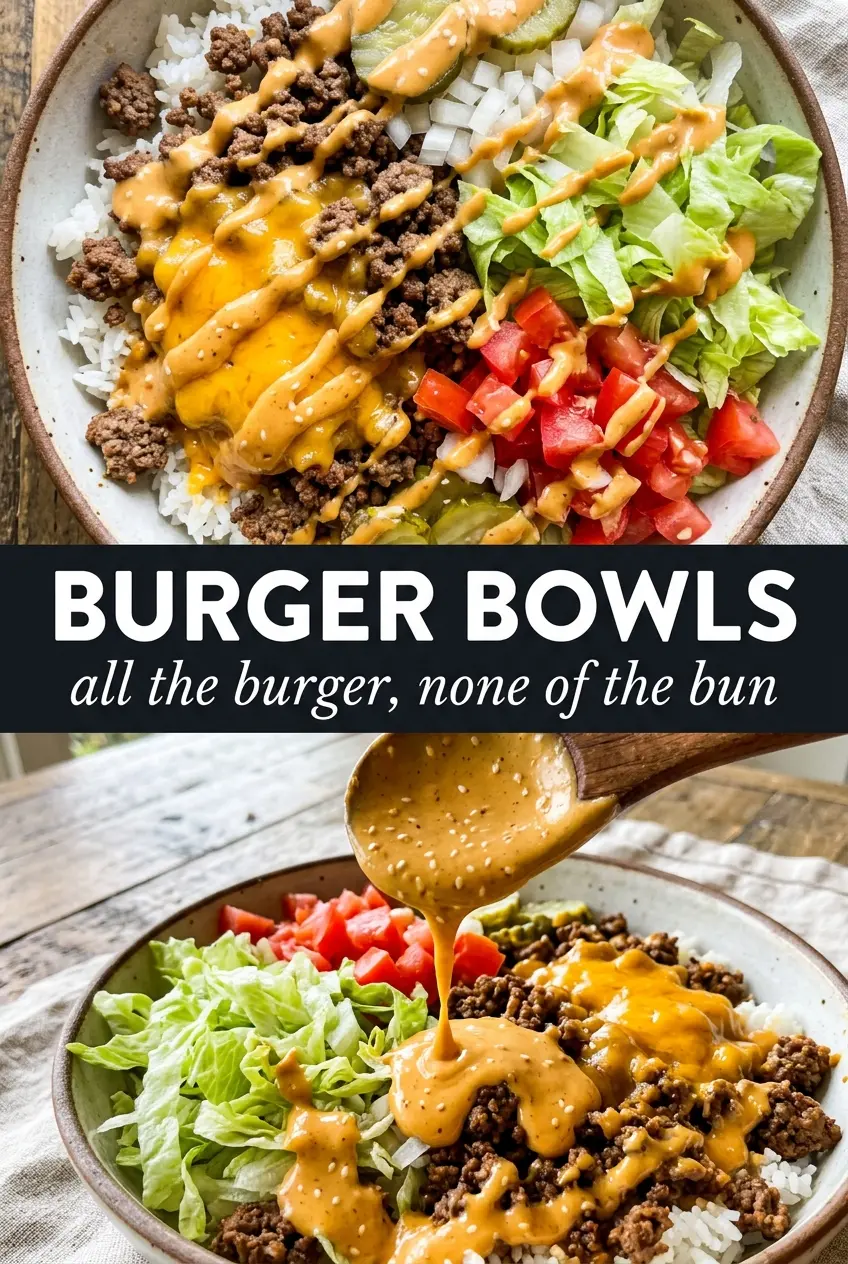
- Burger sauce — The mayo base gives it body, while ketchup, mustard, and relish build the classic cheeseburger flavor. Don’t swap in a thin dressing here; you need something clingy enough to coat the toppings.
What Each Ingredient Is Actually Doing in This Recipe
- Primary ingredient (the star) — This carries the main flavor. Quality matters here more than anywhere else in the dish.
- Cooking medium (oil, butter, broth, or sauce) — This carries flavors and prevents the dish from tasting dry or one-dimensional.
- Aromatics (onion, garlic, ginger, herbs) — These add depth and complexity. They sweeten and mellow as they cook.
- Seasonings (salt, spices, dried herbs) — These define the personality and keep the dish from tasting flat.
- Vegetables (texture, nutrition, color) — Choose ones that complement the protein. Cut to size so they cook evenly.
- Acid (lemon, vinegar, tomato, wine) — This brightens and prevents the dish from tasting heavy or one-dimensional.
- Optional richness (cream, cheese, butter) — These make the dish luxurious. Balance with acid so it stays bright instead of heavy.
- Proper technique (heat, time, stirring) — Follow the method to get the best results. Even great ingredients need proper technique.
Building the Beef and Sauce Without Losing the Burger Feel
Seasoning the Meat Before It Hits the Pan
Mix the garlic powder, onion powder, salt, and pepper into the ground beef before cooking so the seasoning gets distributed all the way through the crumbles. That’s what makes every bite taste finished instead of salted on the surface. Once the beef goes into the skillet, leave it alone for a minute or two so it can brown before you start breaking it up too much. If you stir constantly, it steams and loses that burger-like edge.
Cooking Until Browning Shows Up
Use medium-high heat and keep cooking until the beef is deeply browned in spots and no pink remains. You want some crisp edges, not just gray crumbles. If there’s a lot of liquid in the pan, keep going until it cooks off before you drain the fat. That little bit of extra browning is what gives the bowl its burger flavor.
Whisking the Sauce to the Right Thickness
Stir the mayonnaise, ketchup, mustard, relish, and garlic powder until smooth and glossy. It should spoon easily but still cling to the back of a spoon. If it feels too thick, a tiny splash of pickle juice loosens it without watering down the flavor. If it tastes flat, it usually needs a pinch more salt or a touch more mustard, not more mayonnaise.
Assembling for the Best Bite
Start with the lettuce, then add the warm beef, then pile on tomatoes, pickles, onion, and cheddar. Drizzle the sauce over the top right before serving so the lettuce keeps its crunch. If you want the toppings to stay neatly separated, build them in sections around the bowl instead of tossing everything together. That makes every forkful a little different, which is half the fun.
How to Adapt Burger Bowls for Different Cravings and Diets
Low-Carb Burger Bowls
This recipe is already naturally low in carbs as written. Keep the ketchup and relish in the sauce, because they’re used in small amounts and carry most of the burger-joint flavor; just don’t add extra sweet pickles or croutons if you’re keeping carbs tight.
Dairy-Free Version
Skip the cheddar or use your favorite dairy-free shredded cheese. The bowl still works because the sauce and pickles carry the biggest punch; the cheese adds richness, but it’s not doing the heavy lifting.
Turkey Burger Bowls
Ground turkey works if you want a lighter bowl, but it needs a little extra salt and a careful hand so it doesn’t dry out. Cook it just until done, then lean on the sauce and toppings for richness.
Make It Spicier
Add diced jalapeños, a few dashes of hot sauce, or a pinch of cayenne to the beef seasoning. You’ll get a sharper finish without changing the structure of the bowl, which matters more here than adding heat just for the sake of it.
Storage and Reheating
- Refrigerator: Store the beef and toppings separately for up to 4 days. The lettuce stays crisp much longer when it’s not mixed with the sauce.
- Freezer: The cooked beef freezes well for up to 2 months. Freeze it without the fresh toppings or sauce, since both lose texture after thawing.
- Reheating: Warm the beef in a skillet over medium heat or in the microwave in short bursts until just hot. Don’t overcook it again or it’ll dry out before it ever reaches the bowl.
Answers to the Questions Worth Asking
Burger Bowls
Ingredients
Equipment
Method
- Season the ground beef with garlic powder, onion powder, salt, and black pepper, then cook in a cast iron skillet over medium-high heat while you break it into crumbles; brown until cooked through, about 12-15 minutes. Visual cue: the beef should look evenly browned and the pan will release fat.
- Drain the excess fat from the skillet so the crumbles stay juicy but not greasy. Visual cue: liquid fat visibly reduces in the pan before you stop cooking.
- Whisk together mayonnaise, ketchup, yellow mustard, pickle relish, and garlic powder until smooth. Visual cue: the sauce becomes thick and uniform with no streaks.
- Divide the shredded romaine or iceberg lettuce among four bowls as the base. Visual cue: you should see a bed of lettuce in each bowl.
- Top each bowl with browned beef crumbles. Visual cue: the beef forms a mound layer over the lettuce.
- Add the cherry tomatoes, dill pickles, diced red onion, and shredded cheddar to each bowl. Visual cue: toppings are visible in sections—bright tomatoes, green pickles, and golden cheese.
- Drizzle generously with burger sauce and serve immediately. Visual cue: sauce creates a glossy spiral over the toppings.