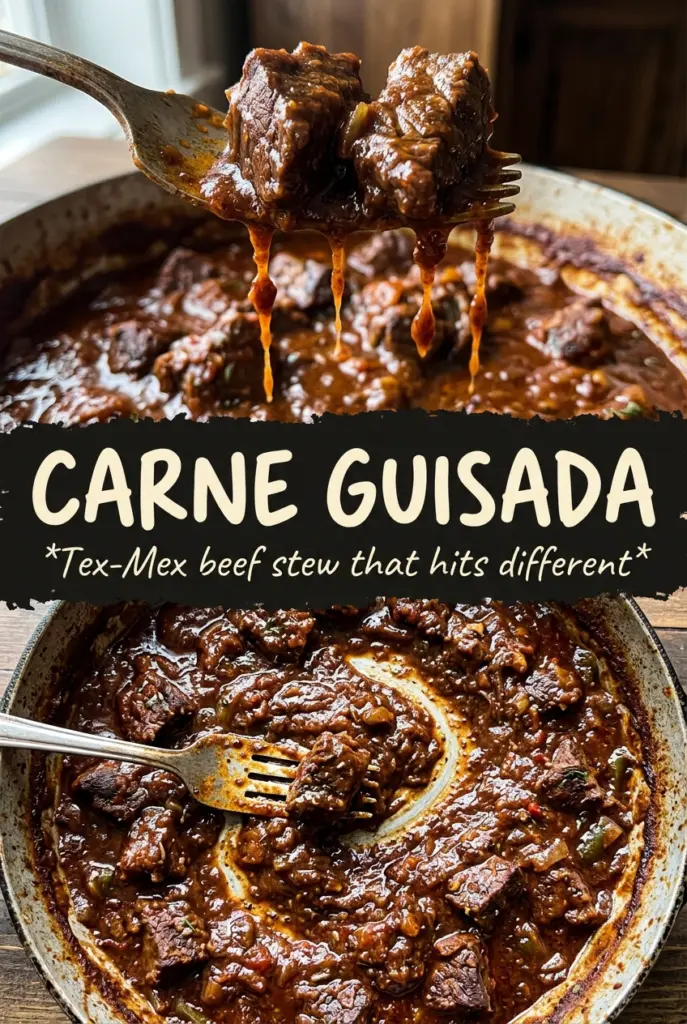
Carne guisada earns its place in the regular dinner rotation when the beef turns spoon-tender and the gravy gets dark, glossy, and built for scooping with warm flour tortillas. The best bowls don’t taste like plain stew that wandered into Tex-Mex territory; they taste like browned beef, softened onions, and chile-spiced gravy that’s thick enough to cling to every bite.
This version leans on a good sear, then lets the pot do the slow work. Browning the beef in batches builds the foundation for that deep color, and sprinkling the flour over the vegetables before the broth goes in keeps the gravy from tasting raw or thin. The diced tomatoes melt into the background and round out the sauce without making it taste tomato-forward.
Below, I’ll walk through the small decisions that matter here — from getting the right crust on the beef to knowing exactly when the gravy has thickened enough. There’s also a simple guide for adjusting the texture if you want it a little looser for tortillas or a little thicker for spooning over rice.
The beef got melt-in-your-mouth tender and the gravy thickened up into that rich, spoon-coating texture by the end. I served it in flour tortillas with lime like you suggested and my husband asked for seconds before I even sat down.
Save this carne guisada for the nights when you want tender beef, rich chile gravy, and warm flour tortillas without a lot of fuss.
The Browning Step That Gives Carne Guisada Its Depth
A lot of carne guisada turns flat because the beef never gets a real crust. If the pot is crowded, the meat steams in its own moisture and you miss the browned bits that give the gravy its backbone. Work in batches and leave the cubes alone until they release cleanly from the pot; that’s when the surface has actually browned.
The other place people lose flavor is in the flour stage. Letting the flour cook with the onions and peppers for a minute takes away that dusty taste and helps the gravy thicken evenly once the broth goes in. That little step matters more than adding extra spice.
What Each Ingredient Is Doing in the Pot

- Beef chuck — This is the cut that turns rich and tender with a long simmer. It has enough connective tissue to soften into the gravy instead of drying out. Leaner beef won’t give you the same silky texture.
- Vegetable oil — Use a neutral oil that can handle high heat for browning. This isn’t the place for butter, which can scorch before the meat develops color.
- Onion and green bell pepper — These build the base of the gravy and add the classic Tex-Mex savoriness. Dice them small so they soften down and disappear into the sauce instead of staying chunky and raw-tasting.
- Flour — This is what turns the braising liquid into a proper gravy. Cook it with the vegetables for a minute before adding liquid, or the sauce can taste chalky.
- Diced tomatoes — They add body and a little acidity without making the dish taste like tomato stew. If you want a smoother gravy, crush them lightly with your spoon as they simmer.
- Beef broth — This gives the dish its savory depth. A low-sodium broth is best if you want control over the salt level, since the beef and seasonings both bring plenty of flavor.
- Cumin, chili powder, garlic powder, and oregano — These are the seasoning core. Cumin and chili powder give the stew its Tex-Mex identity, while oregano keeps the gravy from tasting one-note.
Building the Gravy So It Turns Rich, Not Gluey
Season and Sear the Beef
Season the beef before it hits the pot, then brown it in hot oil without stirring too soon. You want a dark crust on a few sides, not gray cubes cooked all the way through. If the heat is too low, the beef will leak liquid and never color properly; if it’s too high and the pot is crowded, the outside will burn before the inside browns.
Cook the Vegetables and Flour Together
After the beef comes out, the onion and bell pepper go into the same pot so they soak up the browned fond left behind. Once they soften, add the garlic and flour and stir for about a minute. That short cook time is enough to remove the raw flour taste and start building the gravy base.
Simmer Until the Beef Folds Apart
When the broth and tomatoes go in, scrape the bottom well so every browned bit ends up in the sauce. Return the beef, cover the pot, and let it bubble gently on low heat. A hard boil tightens the meat and can make the sauce greasy, while a gentle simmer slowly turns the chuck tender and lets the gravy thicken naturally.
Finish and Adjust the Texture
When the beef is soft enough to cut with the edge of a spoon, taste the gravy and adjust the salt and pepper. If it seems thin, uncover the pot for the last 10 to 15 minutes so some steam can escape. If it’s too thick, splash in a little broth until it sits the way you want it for tortillas.
Three Ways to Make This Carne Guisada Fit Your Table
For thicker tortilla filling
Let the pot simmer uncovered for the last 15 to 20 minutes. That reduces the gravy and gives you a spoonable filling that stays put inside flour tortillas instead of running off the plate.
For a gluten-free version
Swap the flour for a gluten-free all-purpose blend that includes xanthan gum, then cook it with the vegetables the same way. The gravy won’t taste different, but you may need a few extra minutes of simmering to reach the same body.
For a little more heat
Add a pinch of cayenne or a chopped jalapeño with the onion and bell pepper. That gives the gravy a sharper edge without covering up the beefy flavor.
Storage and Reheating
- Refrigerator: Store for up to 4 days. The gravy thickens as it chills, which helps the flavor but can make it look tighter the next day.
- Freezer: It freezes well for up to 3 months. Cool it completely, pack it in airtight containers, and leave a little headspace so the gravy can expand.
- Reheating: Warm it slowly on the stove over low heat with a splash of broth if needed. High heat can make the beef tighten up and can cause the gravy to separate before it loosens again.
Answers to the Questions Worth Asking
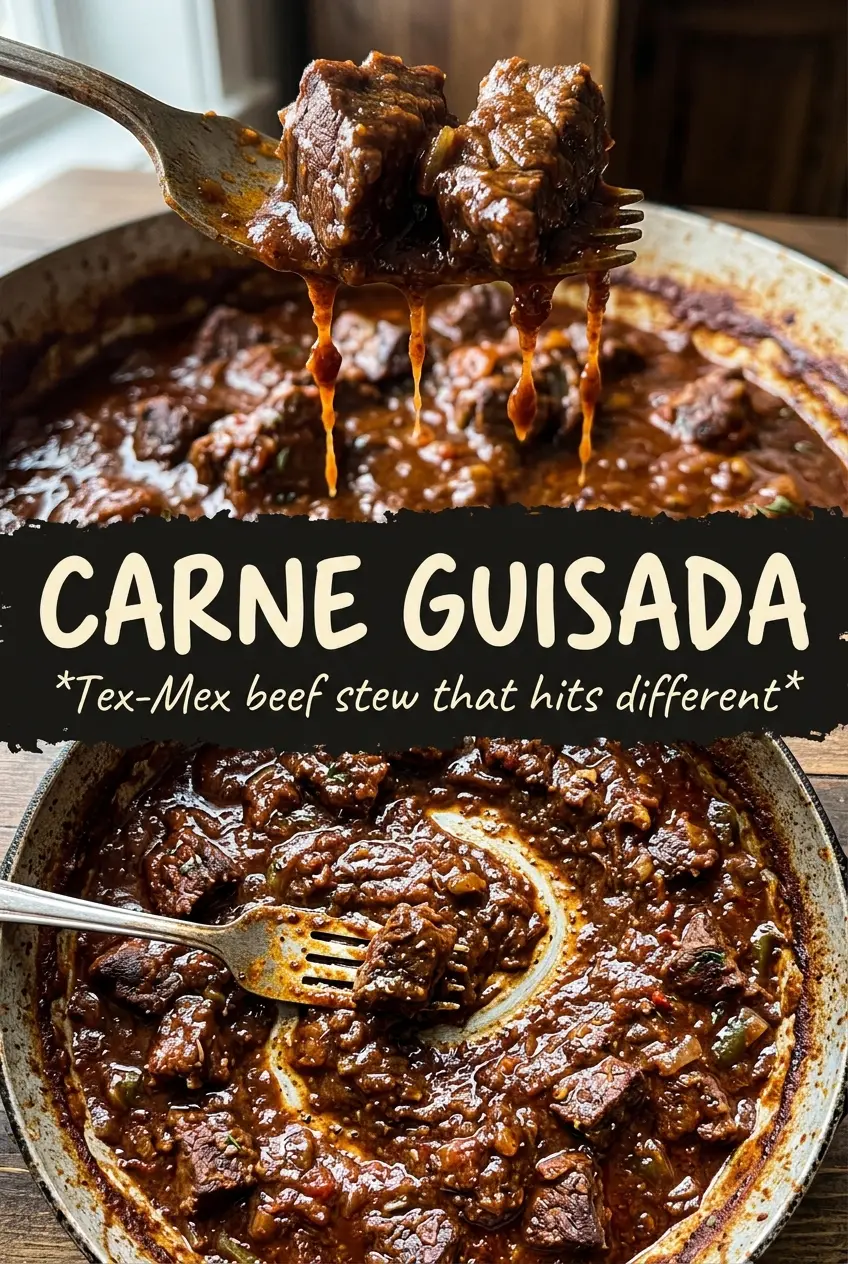
Carne Guisada (Tex-Mex Beef Stew)
Ingredients
Equipment
Method
- Season beef cubes generously with salt, black pepper, cumin, chili powder, and garlic powder.
- Brown beef in batches in hot vegetable oil in a heavy Dutch oven over high heat, avoiding crowding, then remove and set aside.
- In the same Dutch oven, sauté diced onion and green bell pepper for 5 minutes.
- Add minced garlic and cook 1 more minute.
- Sprinkle flour over the vegetables and stir for 1 minute to coat.
- Add beef broth and diced tomatoes, scraping up the browned bits from the bottom of the pot.
- Return the browned beef to the pot, add oregano, cover, and simmer on low for 1.5–2 hours until the beef is extremely tender and the gravy thickens.
- Ladle the carne guisada into serving bowls and serve with warm flour tortillas, cilantro, and fresh lime.