
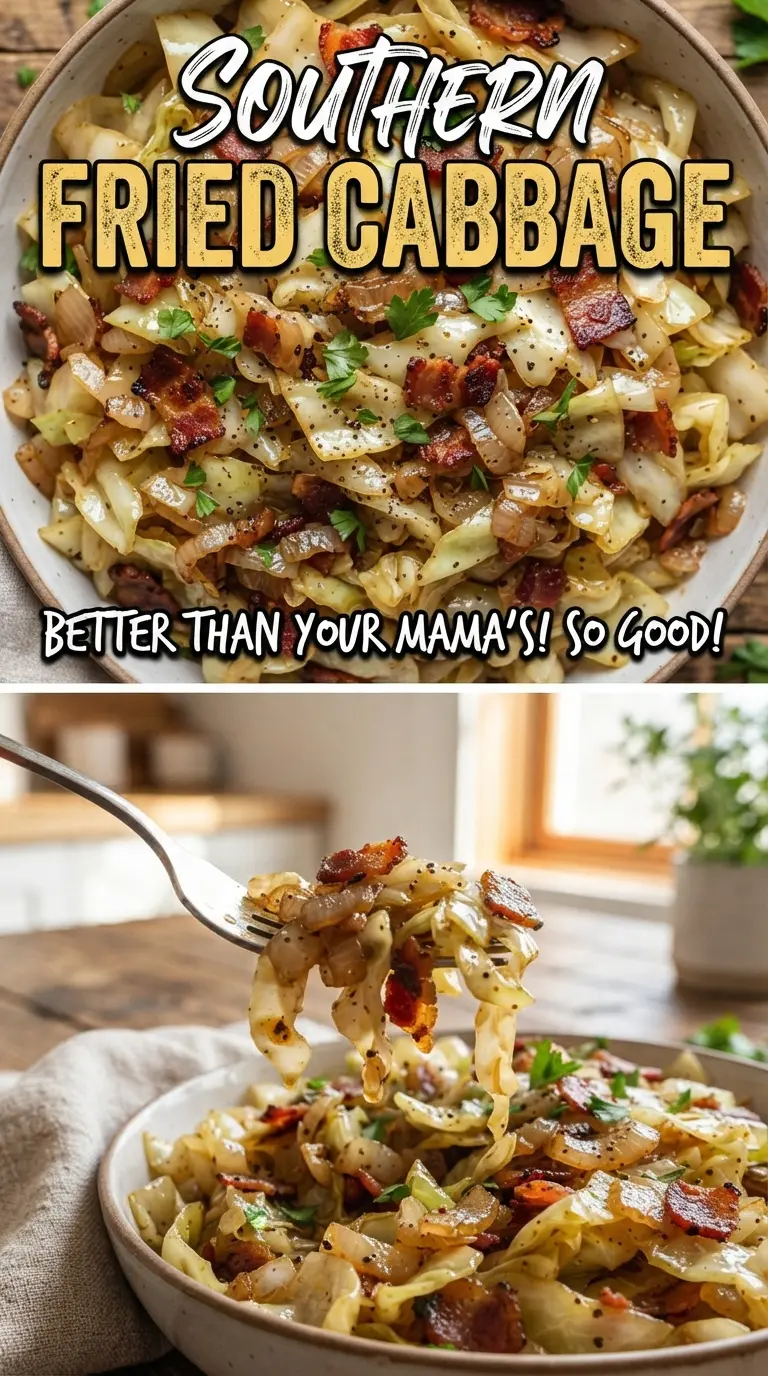
Southern fried cabbage lands in that sweet spot between humble and hard to stop eating. The cabbage turns tender at the center, takes on those caramelized edges in the pan, and picks up smoky bacon, sweet onion, and a little sharp bite from vinegar at the end. It’s the kind of side dish that disappears first, even when it’s sitting next to the main event.
What makes this version work is the layering. Bacon goes first, so the skillet starts with a built-in fat and smoky base. Onion softens in the drippings before the cabbage goes in, which gives the whole pan a sweeter backbone instead of a raw vegetable edge. The vinegar at the end matters more than it looks on paper; it wakes everything up and keeps the cabbage from tasting flat after cooking.
Below, I’ll walk through the small details that keep the cabbage from steaming and the seasonings from getting muddy. If you’ve ever made fried cabbage that came out watery or bland, the fix is usually in the pan, not the ingredient list.
The cabbage got those golden edges I never seem to get at home, and the vinegar at the end kept it from tasting greasy. My husband kept going back for “just one more spoonful.”
Save this Southern Fried Cabbage for a smoky, buttery skillet side with crisp bacon and caramelized edges.
The Trick to Fried Cabbage That Browns Instead of Steams
The difference between cabbage that turns silky and cabbage that turns soggy is heat control and pan space. If the skillet is crowded or the heat is too low, the cabbage releases its water faster than it can brown, and you end up with a gray, soft pile instead of those sweet, bronzed edges. A wide skillet gives the moisture somewhere to evaporate, and the bacon drippings help the cabbage fry instead of boil.
The other mistake happens at the end. Vinegar added too early can dull the browning and make the cabbage taste more cooked than finished. Stir it in after the cabbage is tender and the edges have color, and it brightens everything without washing out the work you just did.
What Each Ingredient Is Actually Doing in This Skillet
- Bacon — This gives you the fat, smoke, and salty backbone of the dish. The chopped pieces also stay in the pan as little crisp bites, so don’t swap in thick slabs if you want the same texture. Turkey bacon won’t render enough drippings for the cabbage to fry properly.
- Yellow onion — Onion softens in the bacon fat and brings sweetness that balances the cabbage’s sharp edge. Slice it thin enough to melt into the pan, not so thin that it disappears before the cabbage goes in.
- Green cabbage — Fresh, firm cabbage cooks down into something tender and almost buttery. Pre-shredded cabbage works in a pinch, but it tends to cook faster and soften sooner, so watch the pan closely and pull it once the edges color.
- Butter — Bacon drippings alone carry the flavor, but butter helps the cabbage turn glossy and rich. If you need a dairy-free version, use a little extra bacon fat or a neutral oil, knowing the finish will be less plush.
- Apple cider vinegar — This is the finishing move. It cuts through the richness and wakes up the whole skillet, especially after the butter and bacon have done their work. White vinegar can stand in, but cider vinegar gives a rounder, sweeter tang.
Getting the Pan Hot Enough for Real Caramelization
Rendering the Bacon First
Start the bacon in a cold skillet over medium heat and let it slowly release its fat. If you rush this step with high heat, the bacon can brown before the fat has time to melt, which leaves you with less drippings and a less flavorful pan. Pull the bacon when it’s crisp, but leave enough fat behind to coat the bottom of the skillet.
Softening the Onion Without Burning the Garlic
Add the onion to the hot drippings and cook until it turns soft and translucent with a few golden spots. Garlic only needs about 30 seconds in the pan; if it goes in too soon, it can scorch and turn bitter before the cabbage even hits the skillet. The onion should smell sweet before you add the cabbage, not sharp.
Cooking the Cabbage Until the Edges Turn Gold
Add the cabbage, butter, salt, pepper, red pepper flakes, and sugar, then stir just often enough to keep it moving. You want contact with the pan, because that’s what gives you the browned edges. If the cabbage starts to look watery, keep cooking and let the liquid evaporate; lifting the lid would only trap steam and work against you.
Finishing with Vinegar and Bacon
Once the cabbage is tender and the edges are browned, stir in the vinegar and crispy bacon. The vinegar should smell bright when it hits the hot pan, not harsh. Taste right away and adjust the black pepper if needed, because the final balance should be smoky, sweet, and just sharp enough to cut the richness.
Three Smart Ways to Change the Skillet Without Losing the Point
Make It Without Pork
Skip the bacon and use olive oil or butter with a pinch of smoked paprika for depth. You’ll lose the crisp bacon bites and some of the drippings-based flavor, but you’ll still get a sturdy cabbage side with a savory, slightly smoky finish. Add a little extra salt at the end, since bacon normally carries part of that work.
Make It a Little Spicier
Increase the red pepper flakes to 1/2 teaspoon or add a few dashes of hot sauce with the vinegar at the end. That gives the dish a sharper finish without changing the texture of the cabbage. Keep the heat modest if you want the sweetness from the onion to stay in the foreground.
Use Savoy or Napa Cabbage
These softer cabbages cook faster and turn tender with less time in the skillet. That means you’ll get a gentler, silkier texture, but you’ll also need to watch closely so they don’t collapse before any color develops. Start checking a few minutes early and cook just until the leaves are wilted and lightly caramelized.
Storage and Reheating
- Refrigerator: Store in an airtight container for up to 4 days. The cabbage will soften a bit more as it sits, but the flavor holds well.
- Freezer: It freezes, but the texture gets softer after thawing. Freeze only if you don’t mind a more tender cabbage later, and use a freezer-safe container for up to 2 months.
- Reheating: Reheat in a skillet over medium-low heat with a small splash of water or broth. The common mistake is blasting it in the microwave until it turns mushy; gentle heat keeps the cabbage from collapsing.
Answers to the Questions Worth Asking

Southern Fried Cabbage
Ingredients
Equipment
Method
- Cook chopped bacon in a large cast iron skillet over medium heat for 8 minutes until crisp, then remove to a plate and leave the drippings behind.
- Add sliced onion to the drippings and cook for 5 minutes, stirring, until softened; stir in minced garlic for 30 seconds until fragrant.
- Add chopped cabbage, butter, salt, black pepper, red pepper flakes, and sugar to the skillet, then stir to coat.
- Cook for 12-15 minutes, stirring occasionally, until the cabbage is tender and caramelized at the edges (pause to scrape browned bits into the cabbage).
- Stir in apple cider vinegar and the crispy bacon, then serve warm right away.