
Smothered chicken and rice is the kind of skillet dinner that earns its keep fast: crisp, seasoned chicken thighs, a deep onion gravy, and rice that cooks right in the pot until it soaks up every bit of the drippings. The end result is hearty without feeling heavy, with tender chicken on top and fluffy rice underneath that carries all the savory flavor.
What makes this version work is the order of operations. The chicken gets a hard sear first, which leaves browned bits in the pot for the gravy to pick up later. The onions cook long enough to turn sweet and jammy, and the flour is stirred in before the broth so the sauce thickens evenly instead of turning pasty. Once the rice goes in, the pot stays covered and low, which gives the grains time to cook through without scorching the bottom.
Below, you’ll find the small details that matter here, including how to keep the gravy smooth, when the rice is actually done, and the substitutions that still keep the dish in that cozy, old-school lane.
The gravy turned out silky and the rice cooked through without getting mushy. My husband kept going back for “just one more spoonful” because the onions and chicken drippings made everything taste like it had simmered all afternoon.
Save this smothered chicken and rice for a one-pot dinner with tender thighs, caramelized onions, and rice that cooks right in the gravy.
The Sear and Simmer Order That Keeps the Rice Creamy, Not Mushy
If the chicken goes in before the onions have had time to soften and the broth gets dumped in too fast, the whole pot turns muddy and the rice has a harder time cooking evenly. The sear builds the browned base you need for the gravy, and the onions need a full stretch in the pot to turn sweet enough to carry the dish.
The other mistake is boiling the rice hard under a loose lid. That pushes the grains around too much and lets too much steam escape. A tight cover and a low simmer give you tender rice that still has definition, with chicken that stays juicy instead of drying out while the grains finish.
- Bone-in, skin-on chicken thighs — These give you the best payoff because the skin renders for flavor and the bones keep the meat tender during the covered simmer. Boneless thighs work in a pinch, but they cook faster and won’t add quite as much richness to the pot.
- Long-grain white rice — This is the right rice for the job because it stays fluffy and separate. Short-grain rice turns stickier, and brown rice needs a different liquid ratio and a much longer cook time.
- Heavy cream — It rounds out the gravy without thinning out the flavor. Half-and-half can work, but it won’t give you the same body, and milk is more likely to split if the heat is too high.
- Worcestershire sauce — A small amount deepens the gravy and makes the broth taste like it simmered longer than it did. If you skip it, the dish still works, but the sauce loses a little of that dark, savory edge.
What Each Ingredient Is Actually Doing in This Chicken Dish
- Chicken (bone-in or boneless, skin-on or skinless) — Each cut has different cooking times and flavor profiles. Let thighs reach 165°F; breasts dry out if overcooked past that.
- Sauce or braising liquid (the moisture keeper) — This prevents the chicken from drying out and adds flavor. Don’t skip it even if the recipe seems moist.
- Aromatics (garlic, onion, herbs) — These add depth and complexity. Cook them with fat so they soften and sweeten instead of staying sharp.
- Cream or butter (optional richness) — These make the dish luxurious. Add to the sauce off the boil so it stays smooth instead of breaking.
- Cheese (if using) — This adds umami and richness. Mix into the sauce or sprinkle on top; either works depending on the dish.
- Acid (lemon, vinegar, wine, or tomato) — This prevents heavy sauces from tasting flat. Add at the end so the brightness doesn’t cook off.
- Proper temperature (165°F is perfect) — Use a thermometer to avoid guessing. Pull slightly early if the chicken will rest or finish in residual heat.
- Resting time (at least 5 minutes) — This lets juices redistribute so the meat stays moist when you cut into it instead of running dry.
Building the Gravy and Letting the Rice Cook in the Same Pot
Seasoning and Searing the Chicken
Season the thighs all over, then lay them skin-side down in the hot oil and leave them alone until the skin turns deep golden and releases from the pot easily. That first sear renders fat and creates the browned bits that give the gravy its backbone. If the chicken sticks, it needs another minute; forcing it early tears the skin and leaves flavor behind in the pan.
Caramelizing the Onions
After the chicken comes out, the onions go into the same pot and need enough time to soften, then turn amber and sweet around the edges. Stir them often enough to keep the bottom from scorching, but don’t rush this part. If they still look pale, the gravy will taste flat.
Thickening the Base
Sprinkle the flour over the onions and stir until it disappears into the fat. That brief cooking time takes away the raw flour taste and helps the gravy thicken smoothly once the broth goes in. Add the broth gradually while scraping the bottom so the browned bits dissolve into the sauce instead of staying stuck to the pan.
Finishing the Pot
Stir the rice into the broth, nestle the chicken back on top skin-side up, and keep the liquid at a gentle simmer before covering. The rice needs steady steam, not a rolling boil, to cook through without collapsing. When the rice is tender and the chicken hits 165°F, take the pot off the heat and let it sit covered for a few minutes so the grains settle and the sauce clings instead of running thin.
How to Adapt This Smothered Chicken and Rice Without Losing the Point
Make It Dairy-Free
Swap the heavy cream for unsweetened full-fat coconut milk or an unflavored dairy-free cooking cream. Coconut milk will add a faint sweetness, while a plain dairy-free cream keeps the gravy closer to the original. Avoid thin milk alternatives here because they don’t give the sauce the same body.
Use Boneless Chicken Thighs or Breasts
Boneless thighs keep the dish close to the original and still stay juicy, but they cook faster, so start checking them a few minutes early. Chicken breasts work too, though they need a lighter hand or they’ll dry out before the rice finishes. If you use breasts, pull them as soon as they reach temperature and let the rice finish covered.
Turn It Into a Gluten-Free Dinner
Use a gluten-free all-purpose flour blend for the gravy, or thicken the onion base with cornstarch slurry at the end instead. The texture will be a little lighter than the flour version, but the flavor stays the same if you keep the broth and drippings in the pan. Check your Worcestershire sauce too, since some brands contain gluten.
Storage and Reheating
- Refrigerator: Store in an airtight container for up to 4 days. The rice will absorb more gravy as it sits, so expect a thicker, softer texture the next day.
- Freezer: It freezes well for up to 2 months, though the rice softens a bit after thawing. Cool it completely first and pack it in portions for easier reheating.
- Reheating: Reheat gently on the stove or in the microwave with a splash of broth to loosen the rice and gravy. High heat dries out the chicken and turns the rice gummy before the center is hot.
Answers to the Questions Worth Asking
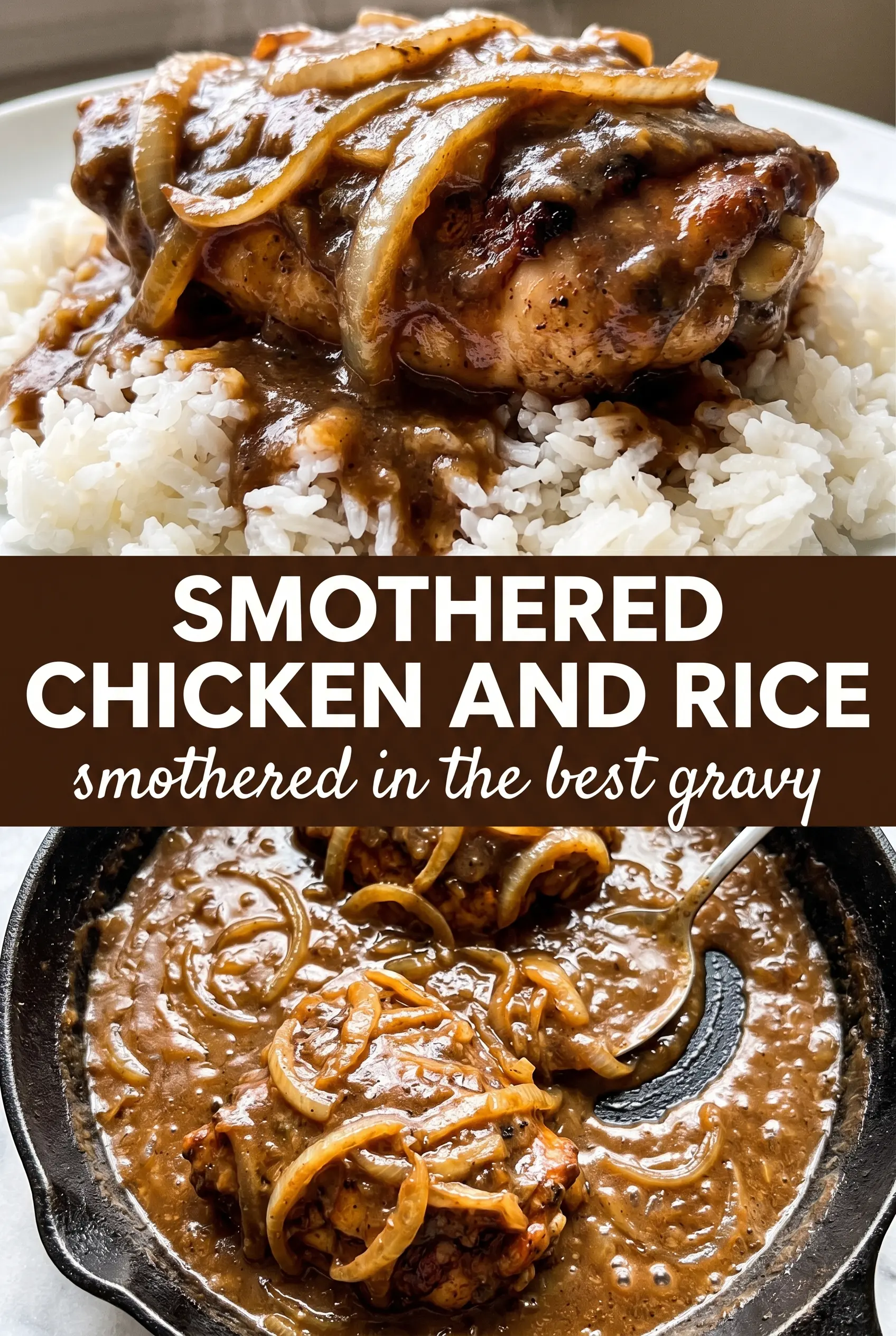
Smothered Chicken and Rice
Ingredients
Equipment
Method
- Season the chicken thighs with garlic powder, onion powder, smoked paprika, salt, and pepper. Heat the vegetable oil in a large Dutch oven and sear the chicken skin-side down over medium-high heat for 6-7 minutes until golden.
- Flip the chicken and sear for 4 minutes, leaving browned bits in the pot. Remove the chicken to a plate.
- Cook the thinly sliced onion in the same Dutch oven over medium heat for 8-10 minutes until caramelized. Add the minced garlic and cook for 1 minute.
- Sprinkle the all-purpose flour over the onions and stir for 1 minute. Gradually add the chicken broth, scraping up the browned bits from the bottom of the pot.
- Stir in the heavy cream and Worcestershire sauce until combined. Keep the mixture simmer-ready.
- Stir in the uncooked long-grain white rice until evenly distributed in the broth. Nestle the chicken skin-side up into the liquid.
- Bring the pot to a simmer, then cover tightly and cook over low heat for 20-22 minutes until the rice is cooked and the chicken reaches 165°F. Check that the rice is tender and the broth has absorbed.
- Garnish with fresh parsley and serve immediately while the gravy is dark and luscious. Spoon the sauce over the rice so it absorbs the drippings.