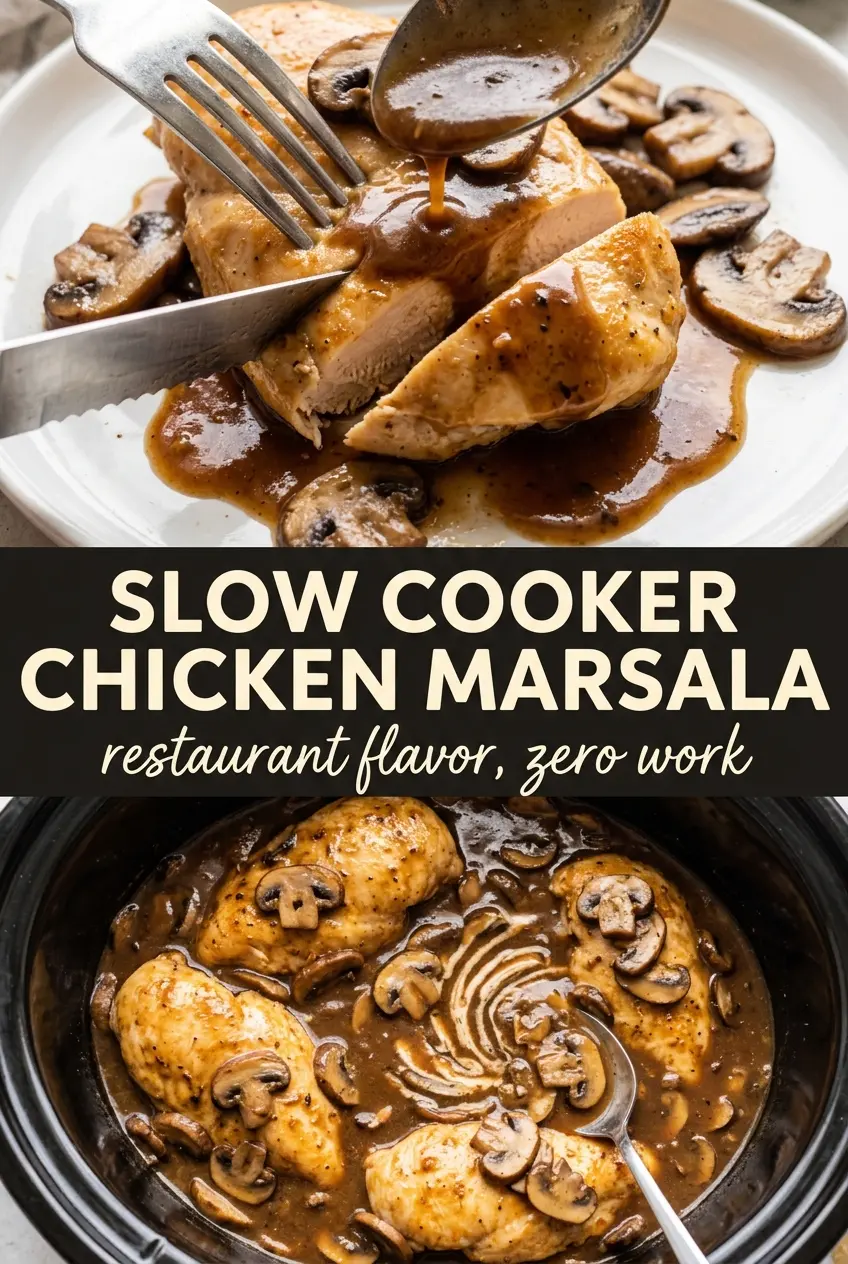
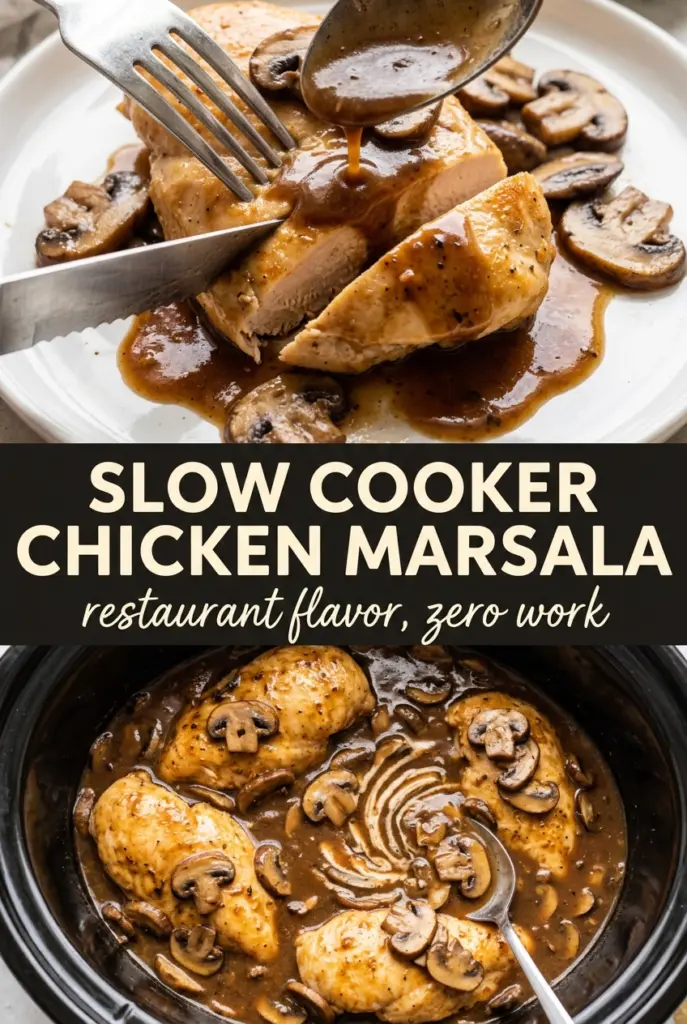
Slow Cooker Chicken Marsala turns out with tender chicken, a dark mushroom sauce, and that mellow wine-scented finish that makes the whole dish taste like it simmered carefully on the stove all afternoon. The slow cooker does the heavy lifting here, but the real payoff is the sauce: earthy mushrooms, sweet shallot, and Marsala reduced just enough to taste rounded instead of sharp.
The trick is keeping the chicken nestled in the liquid long enough to stay juicy without letting the sauce turn watery. Cornstarch goes in at the end, after the chicken comes out, so it can thicken cleanly instead of turning gummy. A final stir of butter gives the sauce a glossy finish that clings to every slice of chicken.
Below, I’ve included the small details that make this version work, plus the swaps that still give you a proper Marsala-style dinner when you need to adjust for what’s in the kitchen.
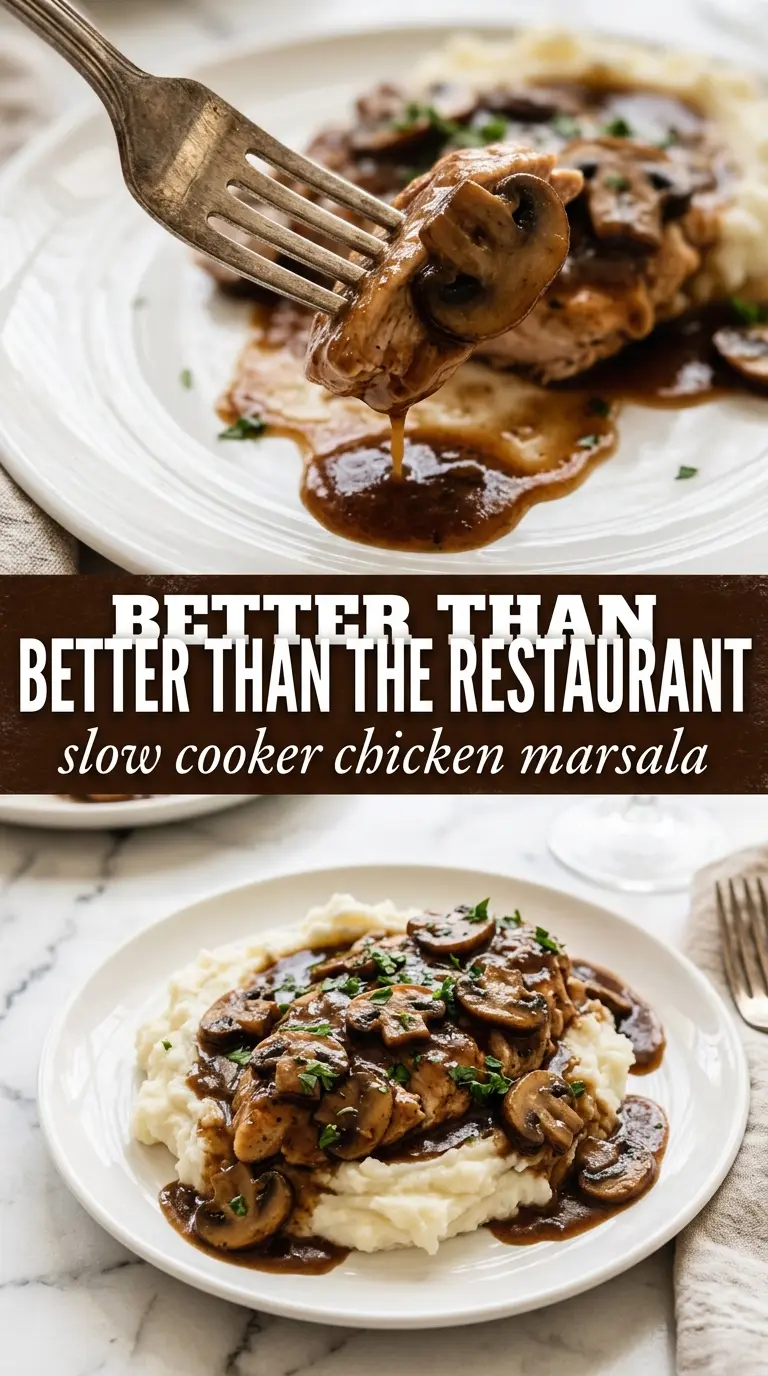
The sauce thickened up beautifully at the end, and the mushrooms stayed meaty instead of getting mushy. I served it over mashed potatoes, and my husband asked if I could put it on the menu again next week.
Save this Slow Cooker Chicken Marsala for a hands-off dinner with tender chicken and glossy mushroom sauce.
The Part That Keeps the Marsala Sauce from Turning Thin and Flat
Slow cooker chicken marsala can go wrong in one predictable way: the chicken releases moisture, the mushrooms soften, and the sauce tastes diluted by the time dinner is done. The fix is built into the order of operations. Season the chicken first, then let it cook in the wine and broth so the liquid picks up flavor from the meat and aromatics instead of sitting on its own as broth with mushrooms floating in it.
The other detail that matters is the finish. Cornstarch thickens only when it gets a few minutes of heat, so stirring it in and walking away leaves you with a loose sauce. Let it cook on high until it turns glossy and lightly coats a spoon. Then butter goes in at the end, off to the side of the heat if possible, so the sauce stays smooth instead of looking broken or greasy.
What Each Ingredient Is Actually Doing in This Dish
- Chicken breasts — Boneless, skinless breasts stay neat for serving and slice cleanly once they’re tender. If you want even juicier results, pound the thicker ends slightly so they cook at the same pace as the thinner parts.
- Marsala wine — This is the backbone of the dish, so use a Marsala you’d actually want to taste. Dry Marsala gives you the most classic savory result; sweet Marsala works, but it makes the sauce richer and a little rounder.
- Cremini mushrooms — Cremini bring more depth than white button mushrooms and hold their texture better during the long cook. Slice them thick enough that they don’t disappear into the sauce.
- Shallot and garlic — These build a softer, more elegant base than onion alone. Mince the garlic and dice the shallot small so they melt into the sauce instead of staying in sharp little pieces.
- Cornstarch slurry — This is what turns the cooking liquid into a true sauce at the end. Mix it with cold water first; if you dump dry cornstarch straight in, you’ll get lumps that never fully disappear.
- Butter — Butter finishes the sauce with sheen and a fuller mouthfeel. It’s worth using real butter here, because margarine won’t give you the same gloss or richness.
Getting the Sauce to Thicken Without Breaking
Building the Slow Cooker Base
Lay the seasoned chicken in the slow cooker first, then scatter the mushrooms, shallot, and garlic around it. Pour the Marsala and broth over the top so the liquid moves through the aromatics and starts building flavor as it heats. The chicken should sit mostly submerged but not drowned. If the liquid looks excessive before cooking, don’t add more broth; the mushrooms will give off moisture as they cook.
Cooking Until the Chicken Stays Tender
Cook on low for 4 to 5 hours or high for 2 to 3 hours, just until the chicken is cooked through and easy to slice. If it goes much longer than that, the breasts can start to feel dry even in sauce. You’re looking for chicken that pulls apart with a fork but still holds its shape. If your slow cooker runs hot, check early.
Thickening the Sauce at the End
Lift the chicken out before you thicken anything. Stir the cornstarch slurry into the hot liquid and leave the lid on for about 15 minutes on high so the sauce has time to tighten. If it still looks thin, give it a few more minutes uncovered. A good Marsala sauce should drip slowly from a spoon, not pour like broth.
Finishing With Butter and Bringing It Back Together
Stir in the butter after the sauce has thickened and the heat is still on low or off. That last step smooths the texture and gives the sauce a restaurant-style sheen. Return the chicken to the pot and coat it in the sauce before serving. Garnish with parsley right at the end so it stays bright against the dark sauce.
How to Adapt This for a Different Pantry or a Different Plate
Make It Gluten-Free Without Losing the Texture
This recipe is already naturally gluten-free if you serve it over rice, potatoes, or gluten-free pasta. Cornstarch handles the thickening, so you don’t need flour at any point. Just check that your broth and Marsala are labeled gluten-free if you’re cooking for someone with a sensitivity.
Swap in Chicken Thighs for a Richer Finish
Boneless skinless thighs work well here and stay extra tender in the slow cooker. They bring a deeper, slightly richer taste, though the sauce will feel a little more luxurious and less lean. Use the same timing, but start checking a bit early since thighs can go soft if they cook too long.
Use Cream at the End for a Silkier Sauce
If you want a softer, creamier Marsala, stir in a splash of heavy cream after the cornstarch has thickened the sauce. Don’t add it early or it can separate during the long cook. This version loses a little of the sharp wine edge and gains a rounder, smoother finish.
Storage and Reheating
- Refrigerator: Store leftovers in an airtight container for up to 4 days. The sauce thickens as it chills, so it may look more set the next day.
- Freezer: It freezes well for up to 2 months, though the sauce may lose a little sheen after thawing. Freeze it with the sauce fully cooled, and thaw overnight in the refrigerator.
- Reheating: Reheat gently on the stovetop or in the microwave at medium power with a splash of broth to loosen the sauce. High heat can make the chicken dry and can cause the sauce to separate.