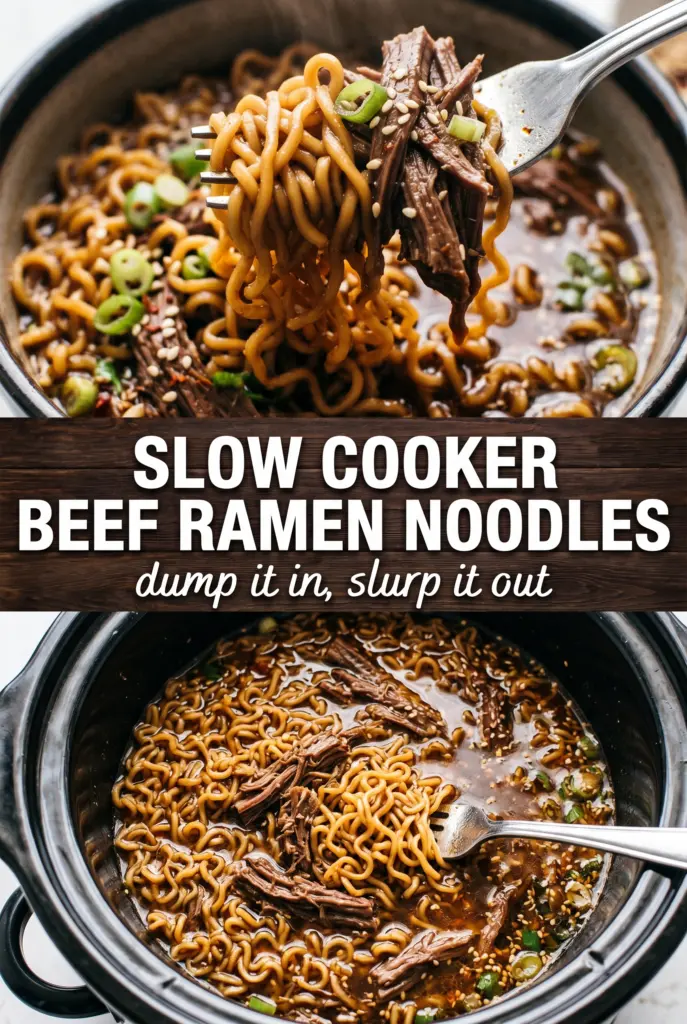
Tender beef, springy noodles, and a dark savory broth come together in one bowl of slow cooker beef ramen noodles that eats like something you’d order at a noodle shop, only with less fuss at the end of the day. The beef turns spoon-tender in the slow cooker, then the noodles finish right in the broth so they soak up all that flavor instead of tasting separately cooked. It’s the kind of dinner that feels a little special without asking for much hands-on time.
The key here is building a broth that tastes complete before the noodles go in. Soy sauce brings salt and depth, oyster sauce gives the broth body, sesame oil rounds it out, and a little brown sugar keeps the savory flavors from tasting flat. The beef chuck roast does the heavy lifting because it has enough fat and connective tissue to braise into something rich and silky over a long cook.
Below, I’ll walk through the timing that keeps the noodles from turning mushy, plus a few smart swaps if you want to adjust the heat, add more greens, or stretch the recipe a little further.
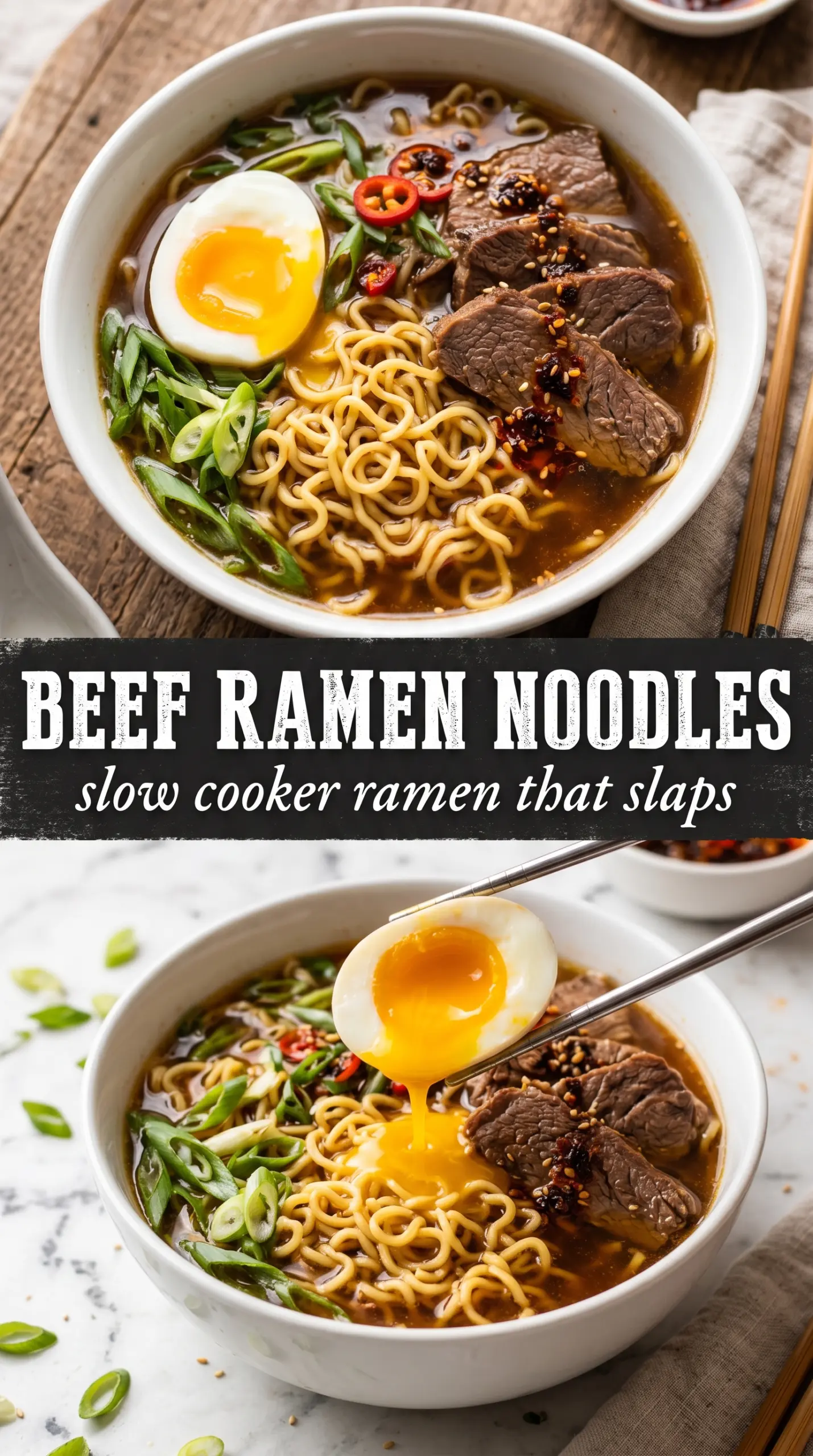
The beef shredded beautifully after the full 7 hours, and the noodles were perfect when I added them at the end instead of cooking them the whole time. The broth tasted rich and balanced, not just salty, and the soft-boiled egg made it feel like takeout.
Pin these slow cooker beef ramen noodles for a rich, beefy bowl dinner with tender noodles and soft-boiled eggs.
The Secret to Beef That Turns Silky Instead of Stringy
Slow cooker beef ramen lives or dies on the cut of beef and the cook time. Chuck roast is the right choice because it has enough fat and connective tissue to break down into tender strands without drying out. If you use a leaner cut, the broth may still taste good, but the beef itself can come out dry and tight instead of rich and spoonable.
The other mistake is pulling it too early. You want the beef to be completely fork-tender before you slice or shred it, which usually means it should separate with almost no resistance. If there’s still a chewy center, give it more time; ramen broth is forgiving, but undercooked beef will stand out in a bad way.
- Beef chuck roast — This is the cut that turns luxurious with a long, gentle cook. Brisket can work in a pinch, but chuck is easier to find and more reliable.
- Oyster sauce — It adds roundness and a subtle savory depth that soy sauce alone can’t match. Don’t skip it unless you have to.
- Instant ramen noodles — Use the noodles, not the seasoning packets. The packets would push the broth into overly salty, one-note territory.
- Baby bok choy or spinach — Bok choy stays a little crisp and gives you more texture; spinach disappears into the broth if that’s what you prefer. Add both only at the end so they stay fresh.
What Each Ingredient Is Actually Doing in This Slow Cooker Beef
- Beef (chuck roast, short ribs, or ground beef) — Tougher cuts break down beautifully in slow cooking. The connective tissue becomes gelatin, enriching the broth.
- Liquid (beef broth, wine, or sauce) — This becomes both the cooking medium and the final sauce. Choose quality broth for better flavor.
- Onions (the aromatic base) — Slice thick so they stay distinct while melting into the sauce. They become sweet and mellow during cooking.
- Garlic (the depth flavor) — Minced garlic cooks into the broth; sliced stays more distinct. Use generously for deep flavor.
- Vegetables (carrots, potatoes, peppers) — Layer them by cooking time. Hard vegetables first, softer ones later so everything finishes together.
- Seasonings (salt, pepper, Worcestershire, spices) — Build flavor as you layer. Taste midway and adjust because flavors concentrate during cooking.
- Tomato paste or sauce (optional richness) — This adds body and depth. Cook for hours so it becomes part of the sauce rather than a separate element.
- Low heat for 8 hours (the transformation) — Long, slow cooking turns tough cuts into fork-tender meat. This is what makes cheap cuts taste expensive.
What Happens in the Final 10 Minutes Matters Most
Building the Broth Base
Whisk the broth, soy sauce, oyster sauce, sesame oil, brown sugar, garlic, ginger, chili garlic sauce, and onion powder before it goes over the beef. That quick mix matters because it keeps the sugar and thicker sauce from settling at the bottom of the slow cooker. If you dump everything in separately, the seasoning can clump and the first bite tastes different from the last.
Letting the Beef Braise
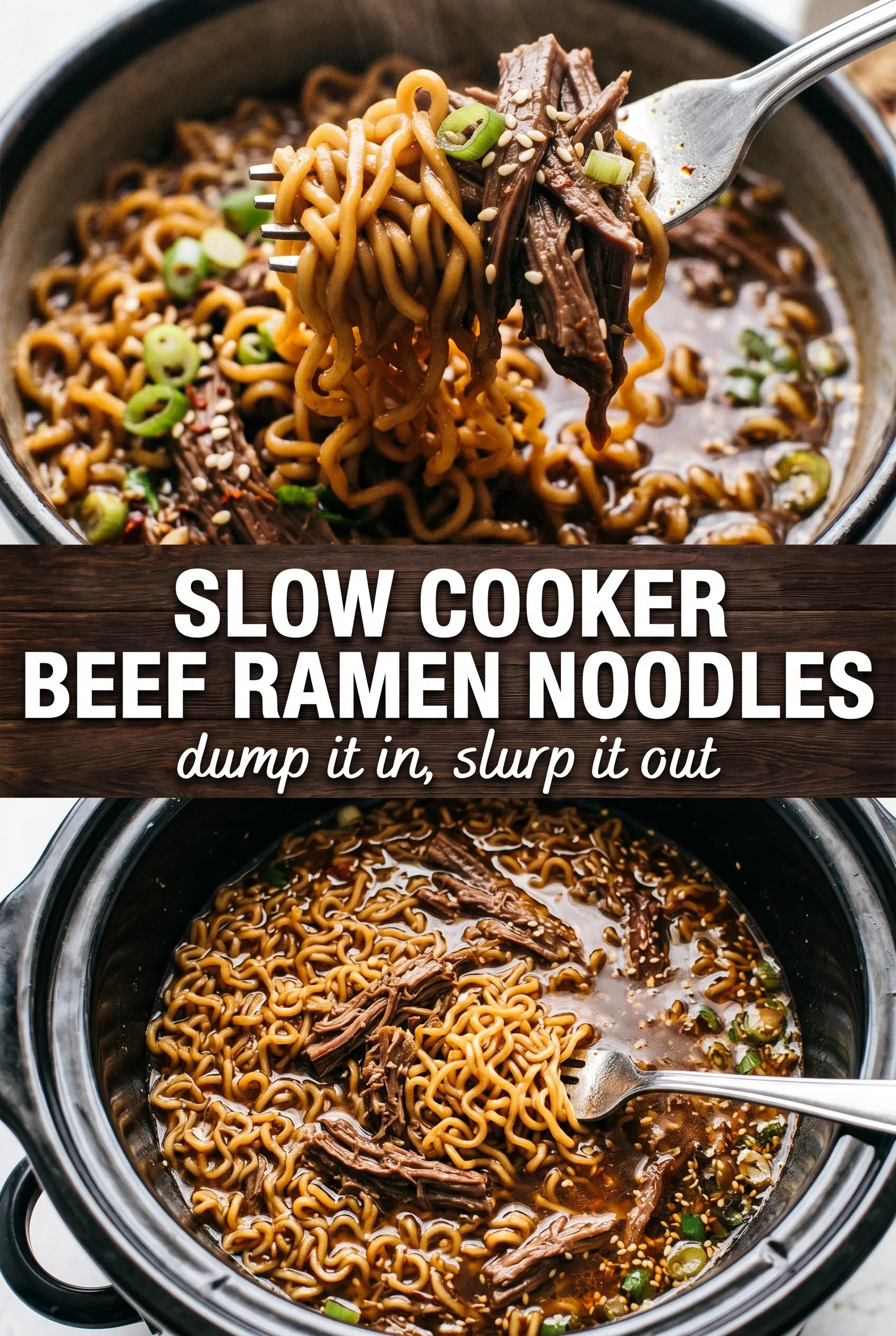
Cook the roast on low for 7 to 8 hours for the best texture. High heat will work in a pinch, but low heat gives the connective tissue time to soften without squeezing the meat dry. When it’s ready, a fork should slide in and the meat should pull apart in thick, tender pieces.
Finishing the Noodles Without Overcooking Them
Add the ramen noodles and bok choy only after the beef is done. They need just 5 to 8 minutes on high, and they go from springy to bloated fast, especially in hot broth that keeps cooking after you turn the slow cooker off. Pull them when the noodles are just tender in the center and still have a little bite.
Bringing It to the Bowl
Return the beef to the pot and serve immediately in deep bowls with the egg, green onions, sesame seeds, and nori. The garnish isn’t decoration here; it cuts through the richness and gives each bite contrast. If the broth tastes a little shy, add a splash more soy sauce at the table instead of salting the whole pot too aggressively.
How to Adjust This Bowl Without Losing What Makes It Work
Make it dairy-free and gluten-free
This recipe is already dairy-free, and it can be made gluten-free with one smart swap: use gluten-free tamari instead of soy sauce and check that your oyster sauce is labeled gluten-free. The noodles are the one place where you need to pay attention, since standard ramen contains wheat. Rice noodles or certified gluten-free ramen noodles will keep the bowl in the same lane without changing the broth.
Turn up the heat without overwhelming the broth
Add an extra half teaspoon of chili garlic sauce, or finish each bowl with chili crisp. That keeps the heat at the surface instead of cooking the whole pot into something sharp. The broth should still taste savory first and spicy second.
Use spinach when bok choy isn’t available
Spinach softens much faster than bok choy, so stir it in during the last minute or two. It will wilt into the broth instead of holding crisp edges, which changes the texture but still gives the bowl a fresh green finish.
Storage and Reheating
- Refrigerator: Store the broth, beef, and noodles separately for up to 4 days. If they sit together, the noodles keep soaking up liquid and turn soft.
- Freezer: Freeze the beef and broth for up to 3 months, but skip freezing the noodles and greens. They don’t hold their texture well after thawing.
- Reheating: Reheat the broth and beef gently on the stove, then add fresh noodles for the last few minutes. Microwaving everything together usually gives you mushy noodles and unevenly hot broth.
Questions I Get Asked About This Recipe
Slow Cooker Beef Ramen Noodles
Ingredients
Equipment
Method
- Place beef chuck roast in the slow cooker. Make sure it sits in a single layer for even braising.
- Whisk together beef broth, soy sauce, oyster sauce, sesame oil, brown sugar, garlic, ginger, chili garlic sauce or sriracha, and onion powder until smooth. You should see the sugar dissolve and the sauce look evenly tinted.
- Pour the broth mixture over the beef in the slow cooker. Ensure the roast is mostly submerged so it becomes tender throughout.
- Cook on low for 7–8 hours or high for 4 hours until beef is completely fall-apart tender. Keep an eye on the broth—when the beef pulls easily with a fork, it’s ready.
- Remove beef and slice or shred into large pieces. Let it rest briefly so juices settle back into the meat before returning it to the broth.
- Add ramen noodles and baby bok choy or spinach to the slow cooker and cook on high for 5–8 minutes until noodles are tender. Watch for noodles to soften and bok choy to turn bright green.
- Return the sliced or shredded beef to the broth and stir gently. Let everything warm together for 1–2 minutes so the broth tastes cohesive.
- Serve in deep bowls topped with soft-boiled eggs, sliced green onions, sesame seeds, and nori sheets. The eggs should sit on top so the yolk stays intact and thick.