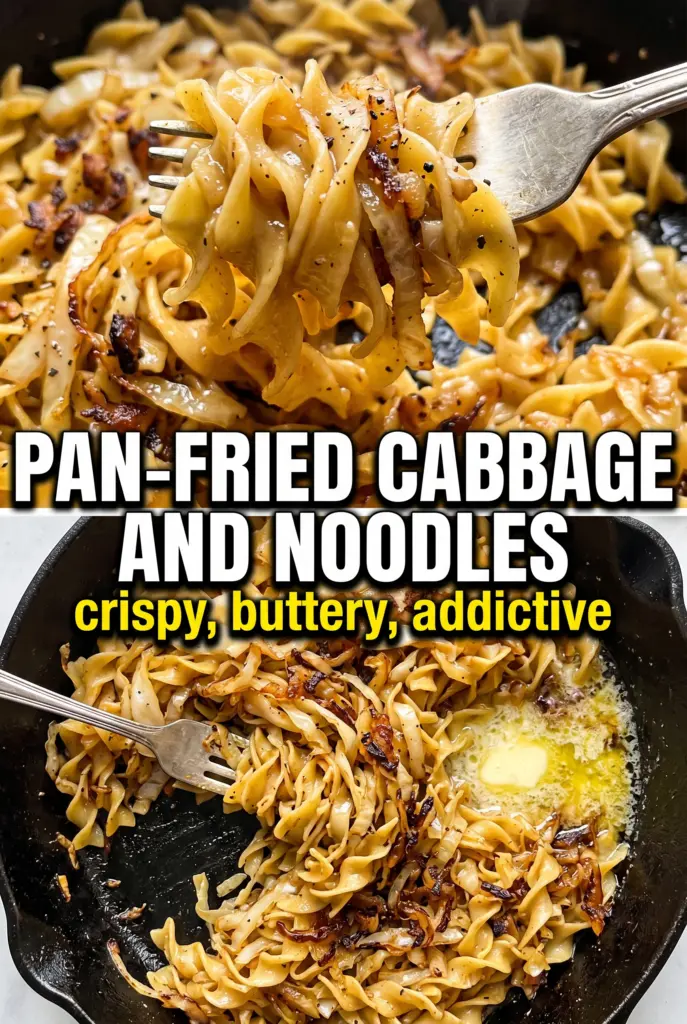
Wide egg noodles, caramelized cabbage, and sweet onions come together in this pan-fried cabbage and noodles recipe with the kind of deep, buttery savoriness that keeps a humble skillet dinner on repeat. The noodles get coated in browned butter and cling to the cabbage instead of sliding around in a greasy pan, so every bite tastes concentrated and finished.
What makes this version worth cooking is patience in the pan. The onions start first so they can soften and pick up color before the cabbage goes in, and that head start builds sweetness you can’t get from tossing everything together at once. By the time the noodles join the skillet, the cabbage should be deeply golden at the edges and tender through the center, not limp or watery.
Below, I’ll walk through the part that matters most: how to get real color on the cabbage without burning the butter, plus a few smart swaps if you need to make this work with what’s already in the kitchen.
The cabbage got beautifully sweet and the noodles picked up all that browned butter from the skillet. I added the caraway seeds and it tasted like something my grandmother would have made for Sunday supper.
Save these pan-fried cabbage and noodles for a skillet dinner with caramelized edges, browned butter, and the kind of simple comfort that tastes like more work than it is.
The Part Where the Cabbage Actually Gets Golden
The mistake most people make with cabbage and noodles is rushing the cabbage until it softens before it ever colors. That gives you a pale, steamy skillet instead of the sweet, savory edges this dish needs. The goal here is not just tender cabbage; it’s cabbage that has spent enough time in contact with the pan to lose its raw bite and pick up real browning.
Let the onions go first with a pinch of salt so they can start releasing moisture and turn translucent before the cabbage hits the skillet. Once the cabbage goes in, stir only occasionally. If you keep moving it constantly, it steams. If the pan looks dry before the cabbage is done, add a small knob of butter instead of turning up the heat too aggressively, which can scorch the onions before the cabbage sweetens.
What Each Ingredient Is Actually Doing in This Skillet
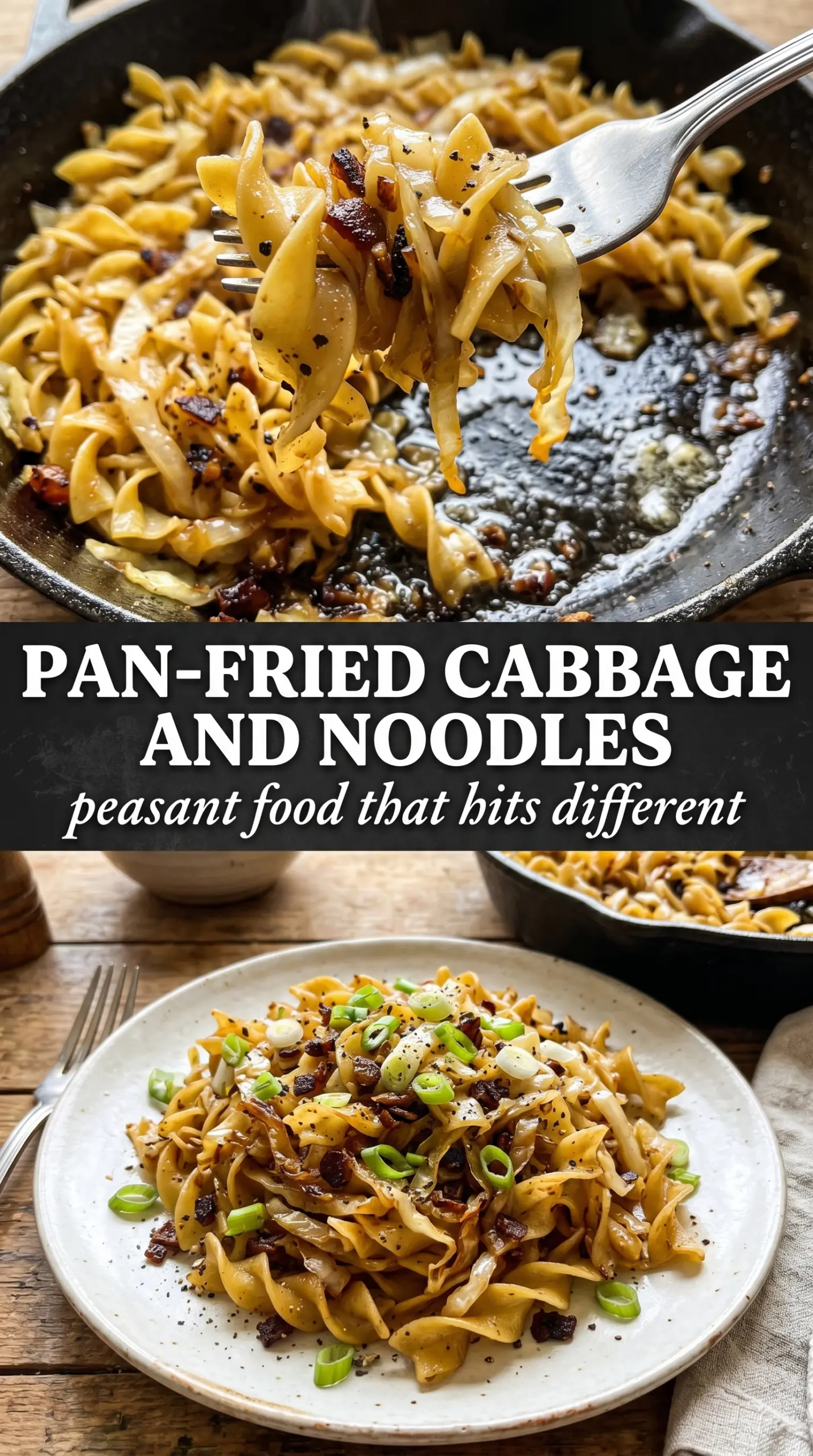
- Wide egg noodles — These hold up better than thin noodles and give the dish that soft, chewy bite that matches the cabbage. Cook them just to al dente, because they’re going back into the pan and will absorb some butter as they warm.
- Green cabbage — This is the backbone of the dish, and fresh cabbage matters more than a fancy brand. Look for a firm head with tight leaves; it should taste sweet once cooked, not cabbage-y and sharp.
- Butter — Butter is doing more than adding richness here. It helps the onions brown, gives the cabbage a glossy finish, and coats the noodles so they don’t taste dry. If you need a substitute, use half butter and half neutral oil so the pan doesn’t burn before the vegetables are cooked.
- Caraway seeds — Optional, but they bring a classic Eastern European note that works beautifully with cabbage. Crush them lightly in your fingers before adding them so their aroma wakes up in the pan.
- Sour cream and dill — These are the finishing touch, not decoration. The sour cream adds a cool tang that cuts through the butter, and the dill gives the whole dish a fresh, grassy lift right at the end.
Building the Skillet So It Stays Savory, Not Soggy
Start with the onions
Melt four tablespoons of butter in a large skillet over medium heat, then add the onions with a pinch of salt. Let them cook for about 10 minutes until they start to turn soft and lightly golden around the edges. If the heat is too high, they’ll brown on the outside before they sweeten, and that harsher flavor carries through the whole dish.
Cook the cabbage until it gives you color
Add the sliced cabbage and keep it moving occasionally, not constantly, for another 10 to 12 minutes. You’re looking for deep gold in spots and a tender bite, with the volume reduced by about half. If liquid pools in the pan, keep cooking until it evaporates; that moisture has to leave before browning can happen.
Finish with garlic, butter, and noodles
Stir in the garlic and caraway seeds, if using, for just 1 minute so the garlic smells fragrant but doesn’t burn. Add the remaining butter and the drained noodles, then toss until everything is coated and heated through. If the noodles clump, loosen them with a splash of hot water or a little more butter rather than over-stirring and breaking them.
Season at the end and serve right away
Taste and add salt and cracked black pepper generously. The dish should taste buttery, sweet, and savory all at once, with enough pepper to keep it from feeling flat. Spoon it into bowls and top with sour cream and dill while the noodles are still hot so the sour cream softens into the skillet juices instead of sitting on top in a cold dollop.
Three Ways to Work With What You Have
Make It Dairy-Free
Use olive oil or a plant-based butter in place of the dairy butter, then finish with a dairy-free sour cream or skip the topping entirely. You’ll lose a little of the browned-butter depth, so lean harder on the onions and black pepper for flavor.
Turn It Vegetarian-Plus
This dish already lands as a vegetarian main, but you can add sautéed mushrooms for a deeper, meatier skillet feel. Cook the mushrooms before the cabbage so they can release and reabsorb their moisture, which keeps the pan from turning watery.
Swap the Noodles If You’re Out
Short egg noodles work in a pinch, and even wide ribbon pasta can step in if that’s what’s on hand. The texture will be slightly less old-fashioned and a little more pasta-like, but the buttered cabbage still carries the dish.
Storage and Reheating
- Refrigerator: Store leftovers in an airtight container for up to 4 days. The noodles will firm up a bit as they sit, and the cabbage will soften more.
- Freezer: It freezes, but the noodles can turn a little soft after thawing. For the best texture, freeze only if you don’t mind a more tender result and thaw overnight in the fridge.
- Reheating: Warm it in a skillet over medium-low heat with a small splash of water or a dab of butter. Microwaving works, but it can dry the noodles out and make the cabbage chewy around the edges.
Answers to the Questions Worth Asking
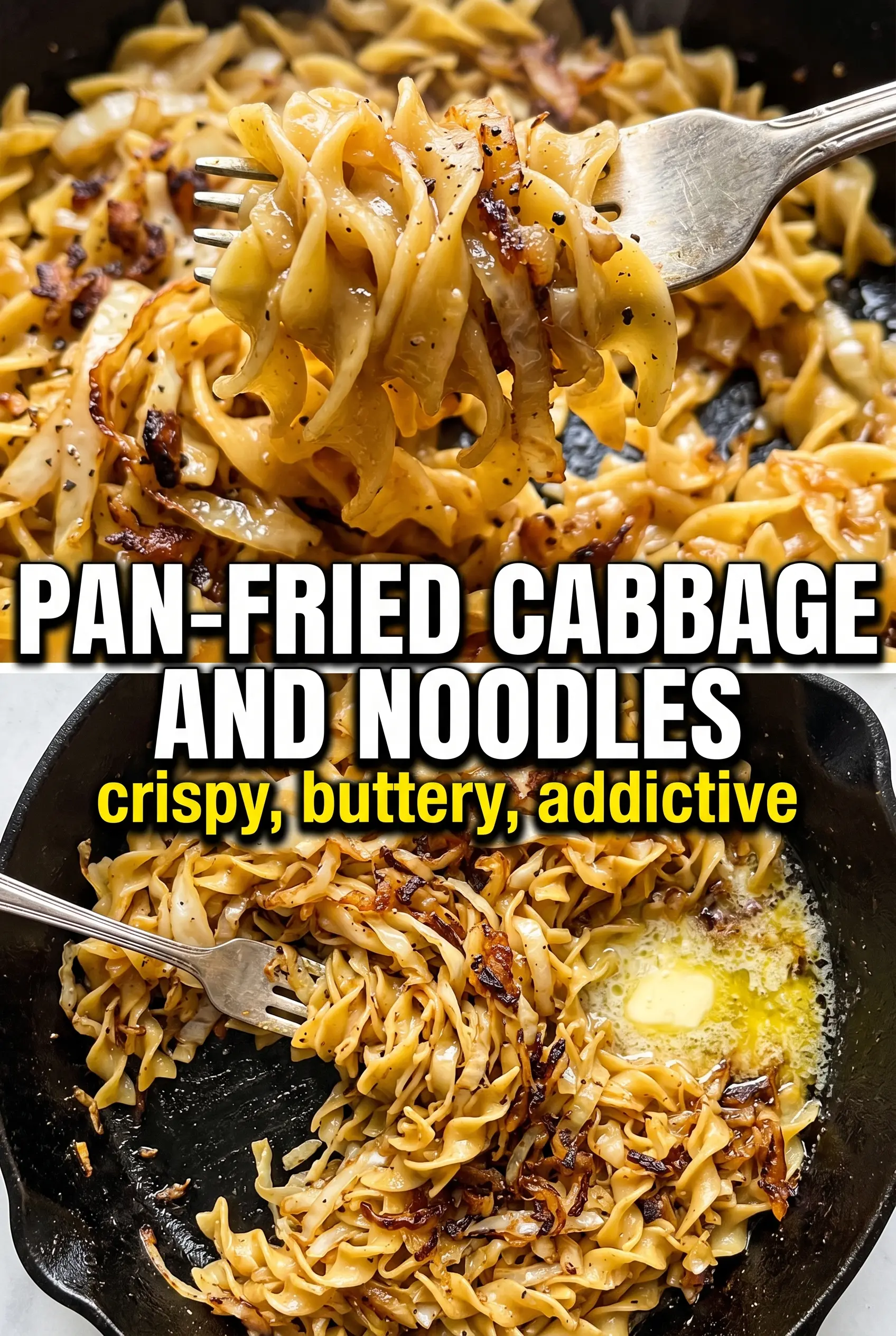
Pan-Fried Cabbage and Noodles (Haluski)
Ingredients
Equipment
Method
- Melt 4 tablespoons butter in a large skillet over medium heat, then add the onion with a pinch of salt and cook for 10 minutes, stirring occasionally, until it starts to caramelize and turn golden at the edges.
- Add the sliced cabbage and cook for another 10–12 minutes over medium heat, stirring occasionally, until the cabbage is deeply golden and tender, with some browned spots visible in the pan.
- Add the minced garlic and caraway seeds if using, then cook for 1 minute over medium heat, stirring, until fragrant with no raw garlic smell.
- Add the remaining butter and the cooked egg noodles, then toss over medium heat until everything is coated and the noodles are heated through, with glossy butter and browned bits sticking to the noodles.
- Season generously with salt and cracked black pepper, tossing once more, and serve immediately while deeply golden.
- Serve with a dollop of sour cream and a scatter of fresh dill on top, using the dill as the final visual cue of freshness.