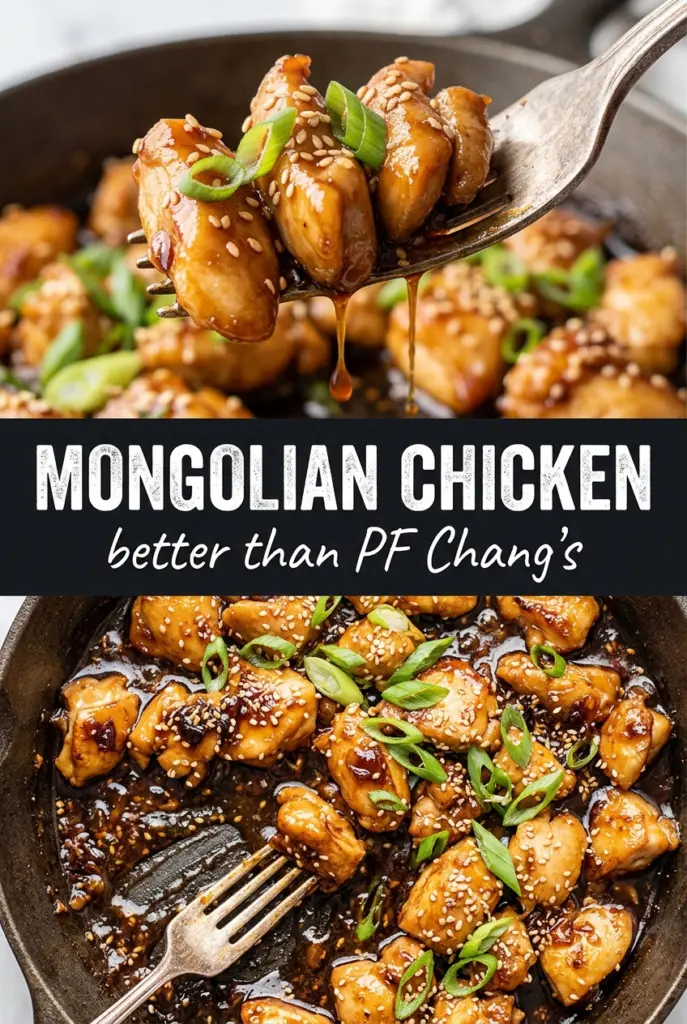
Crispy-edged chicken coated in a glossy, dark sauce earns its place fast, especially when it lands on the table in under 30 minutes. The best part of Mongolian chicken is the contrast: tender chicken inside, a lightly lacquered crust outside, and a sticky-salty-sweet glaze that clings instead of pooling at the bottom of the pan.
What makes this version work is the way the chicken gets a cornstarch coating before it hits the skillet. That thin layer helps the pieces brown quickly and gives the sauce something to grab onto later. The sauce also cooks down in the pan until it turns shiny and thick, which keeps it from tasting watery or flat. A little hoisin deepens the color and adds roundness, while fresh ginger, garlic, and green onion keep the sweetness in check.
Below, I’ll walk through the part that matters most: getting the chicken browned before the sauce goes in, plus the small timing details that keep the glaze sticky instead of clumpy. I’ve also included the swaps that still taste like takeout, even if you need to work with what’s in the pantry.
The sauce thickened up exactly the way I wanted and the chicken stayed crisp around the edges instead of turning soggy. I served it over rice and my husband went back for seconds before I even sat down.
Save this Mongolian chicken for the nights when you want crispy chicken, a sticky soy-ginger glaze, and dinner on the table in 30 minutes.
The Cornstarch Coating Is What Keeps the Chicken Crisp
Mongolian chicken falls apart when the chicken goes into the pan wet or the sauce gets added too soon. The cornstarch coating does two jobs at once: it helps the chicken brown fast, and it gives the sauce a surface to cling to once everything gets tossed together. Without it, the sauce slides off and the chicken tastes more steamed than stir-fried.
The other mistake is crowding the skillet. If the pieces are packed in too tightly, they release moisture and stop browning, which leaves you with pale chicken and a thin sauce. Work in a single layer and let the pieces sit long enough to develop a deep golden crust before turning them. That edge is what gives the finished dish its takeout-style texture.
What the Sauce Ingredients Are Doing in the Pan
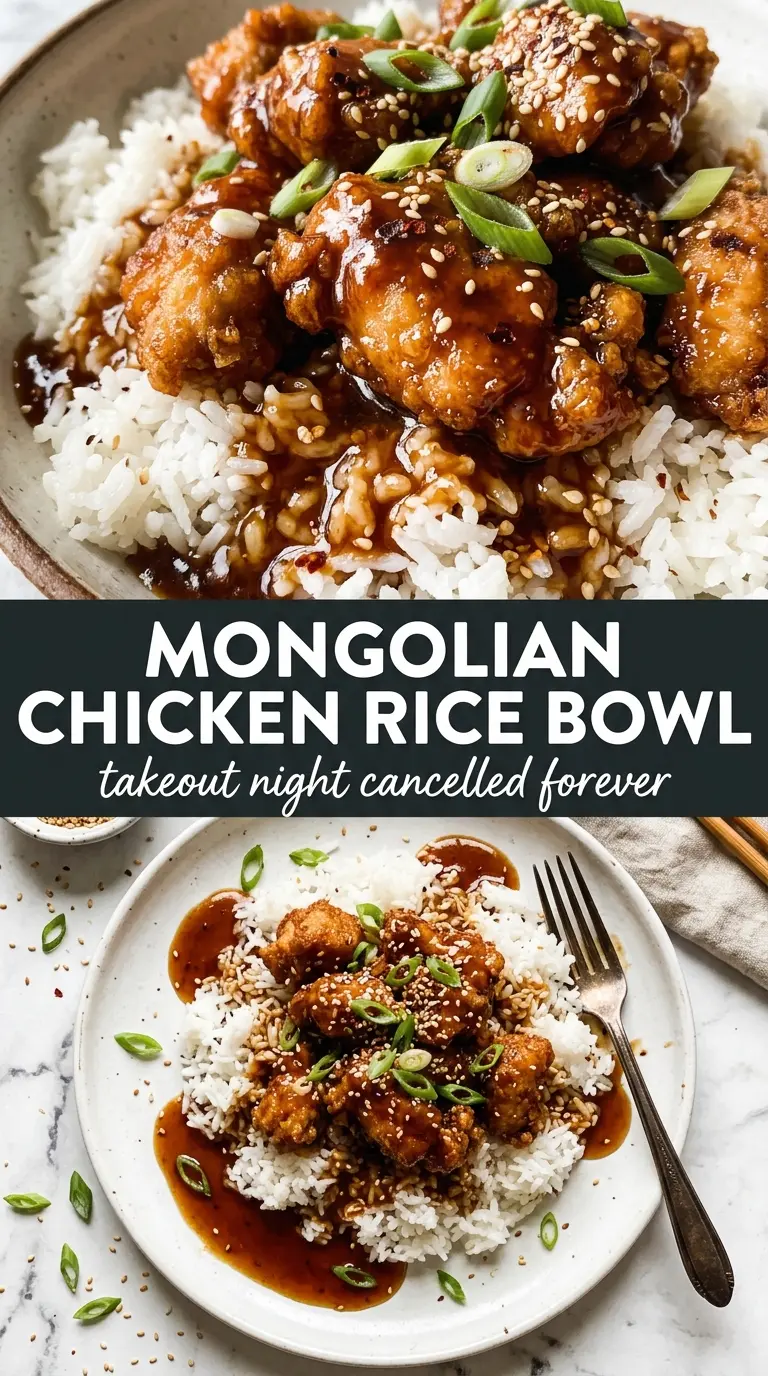
- Chicken breasts — Thin slices cook fast and stay tender if you don’t overcook them. You can use chicken thighs for a juicier result, but they’ll need a minute or two longer to brown.
- Cornstarch — This is the secret to the light crust and the glossy finish. Arrowroot can work in a pinch, but cornstarch gives the most reliable coating and thickens the sauce cleanly.
- Soy sauce — This brings the salt and the deep savory base. Use regular soy sauce here unless you specifically want a lower-sodium dish, because the sauce needs that strength to balance the brown sugar.
- Brown sugar and hoisin — These give the sauce its sticky body and the dark color people expect from Mongolian chicken. You can cut the sugar slightly, but don’t skip it entirely or the sauce tastes sharp instead of rounded.
- Fresh garlic and ginger — These wake up the sauce and keep it from tasting one-note sweet. Fresh ginger matters more than powdered here; it gives a clean bite that holds up against the sugar.
- Green onions — Add them at the end so they stay snappy and a little charred around the edges. If they go in too early, they melt into the sauce and lose the fresh finish that makes the dish taste finished.
Getting the Glaze to Coat Instead of Pool
Brown the Chicken First
Toss the sliced chicken with cornstarch, salt, and pepper until every piece looks lightly dusted, not pasty. Heat the oil until it shimmers, then lay the chicken in without stirring right away. Let it sit long enough to form a crust before flipping, and cook in batches if your pan looks crowded. If the pan steams, the coating softens and you lose the crisp edges that make this dish worth making.
Build the Sauce in the Same Pan
After the chicken comes out, add the garlic and ginger to the hot pan and stir for about 30 seconds, just until fragrant. Pour in the sauce mixture and let it come to a full boil so the sugar dissolves and the flavors meld. Scrape up the browned bits stuck to the pan; they give the sauce its deeper, darker taste. If you add the slurry before the sauce is hot, it can turn gummy instead of glossy.
Finish With the Thickener and Green Onions
Stir in the cornstarch slurry and cook just until the sauce turns shiny and lightly thickened. You’re looking for a texture that coats a spoon and clings to the chicken, not a paste. Return the chicken to the pan along with the green onions and toss quickly so every piece gets glazed. Once the sauce tightens, pull it off the heat; if it cooks too long, it turns sticky in the wrong way and loses that smooth sheen.
How to Adapt This Without Losing the Takeout Feel
Chicken thighs for a richer bite
Swap the chicken breasts for boneless skinless thighs if you want a juicier, more forgiving result. Thighs brown beautifully and stay tender a little longer, but they bring a slightly richer flavor and may need a touch more time in the pan before the sauce goes in.
Gluten-free Mongolian chicken
Use a gluten-free soy sauce or tamari and check that your hoisin is gluten-free as well. The texture stays the same because the cornstarch is doing the heavy lifting, so you won’t lose the glossy finish.
Less sweet, more savory sauce
Cut the brown sugar back by a tablespoon if you want a less sugary glaze, but keep enough to help the sauce thicken and cling. The dish will taste sharper and a little more soy-forward, which works well if you’re serving it with plain rice and extra green onion.
Make it milder for kids
Leave out the red pepper flakes and finish with a little extra sesame oil instead. You’ll keep the same sticky-salty base, just without the heat that can take over the dish.
Storage and Reheating
- Refrigerator: Store leftovers in an airtight container for up to 4 days. The sauce thickens as it chills, and the chicken softens a little, but the flavor holds up well.
- Freezer: It freezes decently for up to 2 months, though the chicken won’t be as crisp after thawing. Freeze it with the sauce, not separately, and expect a softer texture once reheated.
- Reheating: Warm it in a skillet over medium-low heat with a splash of water to loosen the sauce. The common mistake is blasting it over high heat, which can make the chicken tough and reduce the sauce until it turns sticky and salty.
Questions I Get Asked About This Recipe
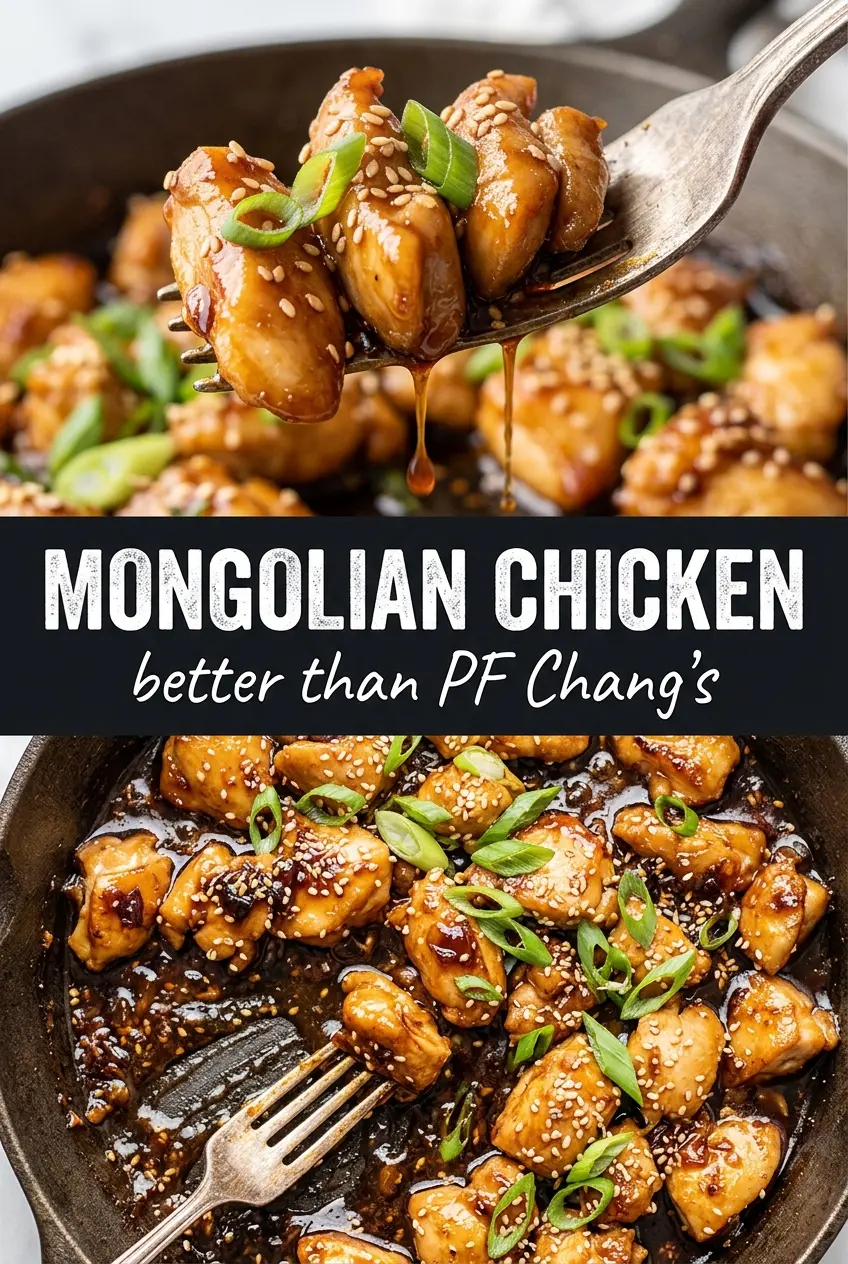
Mongolian Chicken
Ingredients
Equipment
Method
- Toss the thinly sliced chicken with cornstarch, salt, and pepper until evenly coated.
- Whisk the soy sauce, brown sugar, water, hoisin sauce, sesame oil, and red pepper flakes until the sugar dissolves.
- Heat vegetable oil in a large skillet or wok over high heat; add chicken and cook 3-4 minutes per side until deeply golden and cooked through, then remove to a plate.
- Add garlic and ginger to the same pan and stir-fry for 30 seconds until fragrant.
- Pour in the sauce mixture and bring it to a boil over high heat.
- Stir in the cornstarch slurry (1 tsp cornstarch mixed with 1 tbsp water) and cook 1-2 minutes until thickened and glossy.
- Return the chicken to the pan, add the green onions, and toss until the chicken is well glazed and the green onions are coated.
- Serve the Mongolian chicken over steamed rice and top with sesame seeds.