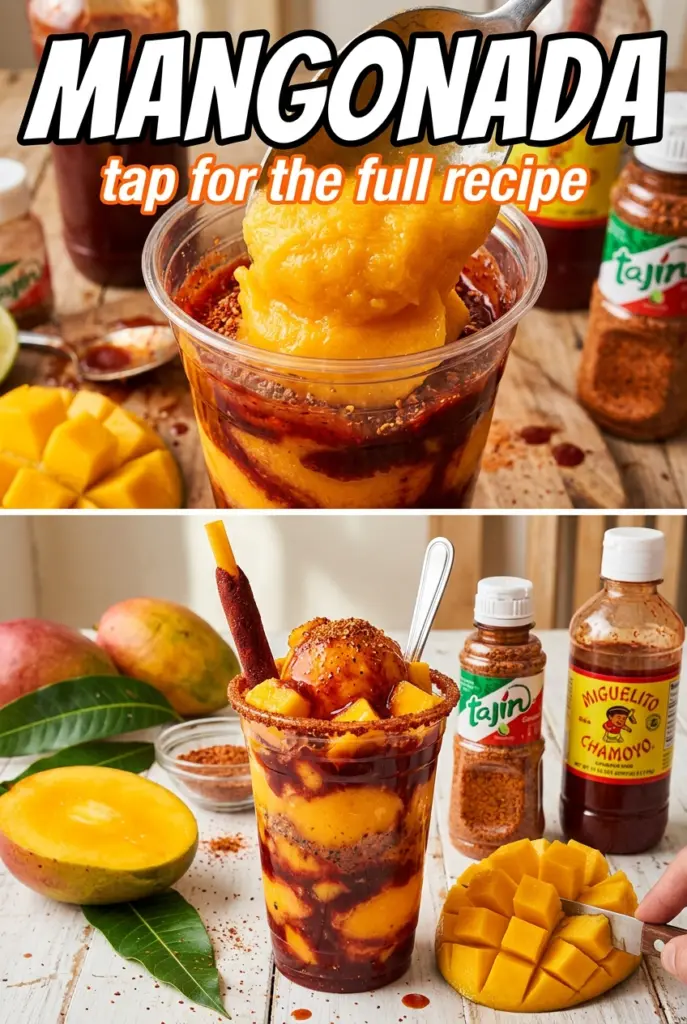
Mangonada hits the glass with that bright, slushy mango body first, then the tang of lime and the salty chili bite of tajín finish the sip. The best versions don’t taste like a plain mango smoothie with toppings added at the end. They taste layered from the first gulp, with chamoy streaking the glass and the rim giving you a little heat before the cold mango settles in.
The key is balance. Frozen mango gives the drink its thick, spoonable texture, while mango juice keeps the blender moving without turning it watery. Lime juice sharpens the sweetness, honey rounds out the edges, and the ice helps the drink stay frosty long enough to serve both glasses without it collapsing into a thin slush.
Below, I’ll show you the small details that matter most: how to keep the rim bold instead of muddy, how to get the right consistency in the blender, and how to adjust the sweetness if your mangoes are extra ripe or your juice is already sweetened.
The mango flavor came through even with the chamoy and tajín, and the texture stayed thick instead of turning into juice right away. I used the full amount of lime and it tasted like the kind of mangonada you get from a good street cart.
Tajín-rimmed mangonada with chamoy streaks and thick frozen mango for the brightest cold-and-tangy sip.
The Part That Keeps Mangonada Thick Instead of Melting Fast
The most common mistake with mangonada is treating it like a blender drink that can sit around while you finish the garnish. It can’t. Once the frozen mango is blended with juice, it starts softening fast, and every extra second in a warm kitchen makes it thinner. The fix is to get the glasses ready first, then blend, then pour right away.
Chamoy and tajín also change the experience more than most people expect. If the rim is too heavy, it overwhelms the mango. If there’s no lime in the base, the drink tastes flat and sweet instead of sharp and refreshing. You want the fruit to stay in front, with the spice and salt backing it up.
- Frozen mango chunks — These create the thick, almost soft-serve texture. Fresh mango won’t give you the same slush unless you add a lot more ice, and that waters the flavor down.
- Mango juice or nectar — This helps the blender catch and keeps the drink smooth. Nectar makes a fuller, sweeter mangonada; regular juice gives a lighter finish.
- Lime juice — Fresh lime is worth using here. Bottled lime juice tastes dull in a drink this simple, and you need that sharp acidity to cut through the sweetness.
- Chamoy sauce — It’s what gives the drink those tangy, fruity, salty streaks inside the glass. Thick chamoy clings better than thin sauce, so if yours is runny, chill it before using.
- Tajín seasoning — This is for the rim, not just garnish. The chili-lime salt wakes up the mango, and the rim should be generous enough that you taste it on the first sip without turning bitter.
Building the Slush Before the Garnish Goes on
Blend the base until it moves like a spoonable slush
Add the frozen mango, mango juice, lime juice, honey, and ice to the blender and start on low, then move up only as needed. If the blender stalls, stop and scrape the sides instead of dumping in more liquid right away. Too much liquid is the easiest way to lose the thick mangonada texture. You’re looking for a smooth blend that still has enough body to mound slightly when poured.
Rim the glasses before the drink goes in
Run a lime wedge around the edge of each glass, then dip the rim in tajín. Do this before blending if you can, because the frozen drink waits for no one. If the tajín looks patchy, press the rim lightly into the seasoning instead of twisting hard, which can make it clump. The rim should look bright and even, not sandy and faded.
Layer the chamoy so it streaks, not sinks
Drizzle chamoy down the inside of each glass before adding the smoothie. A thick drizzle gives you those dramatic red swirls and a better hit of tang in each sip. If you pour the chamoy after the drink is in, it mostly sits on top and doesn’t weave through the mango the same way. Fill the glasses soon after, while the sauce is still clinging to the sides.
Finish fast and serve cold
Divide the mangonada between the two glasses, top with fresh mango chunks, and add the lime wedge and cilantro right before serving. The fresh mango gives a little bite against the slush, and the cilantro adds a clean herbal note that keeps the drink from feeling one-dimensional. Serve immediately. The texture is best in the first few minutes, before the ice fully loosens the blend.
What to Change When You Want It Sweeter, Spicier, or Dairy-Free
Make it less tart
If your mango is on the sharp side, reduce the lime juice by 1 tablespoon and add a little more honey. That keeps the drink bright without making it mouth-puckering. Don’t cut the lime completely, or the mangonada loses the contrast that makes it work.
Turn up the chile heat
Use a heavier hand with tajín on the rim and add an extra drizzle of chamoy inside the glass. You can also dust a pinch of tajín over the mango topping. The heat stays balanced because the frozen fruit softens it, but the drink will read spicier from the first sip.
Make it vegan
Swap the honey for agave or simple syrup. Both blend cleanly and keep the drink smooth, while honey adds a deeper note that some people like and others taste immediately. Agave is the closest swap if you want a clean fruit-forward finish.
Make it thicker for a spoonable version
Cut back the mango juice by 2 to 4 tablespoons and add a few more frozen mango chunks. That gives you a denser, almost sherbet-like texture. If the blender struggles, pulse instead of running it nonstop so you don’t overheat the mixture.
Batched garnishes for a crowd
Rim the glasses and prep the mango chunks ahead, but keep the blended base in the freezer only briefly before serving. Mangonada doesn’t hold like a smoothie in a pitcher; it firms up and then turns icy around the edges. For a party, blend one batch at a time so every glass lands thick and cold.
Storage and Reheating
- Refrigerator: Not a good make-ahead drink in the fridge. It loses the frozen texture fast and turns thin within minutes.
- Freezer: You can freeze the blended base in a shallow container for a short time, but it will need re-blending with a splash of mango juice to recover the texture.
- Reheating: No reheating here. If the drink firms up too much, let it sit at room temperature for a minute or two, then stir or pulse it briefly in the blender. Adding heat ruins the slushy texture.
Answers to the Questions Worth Asking
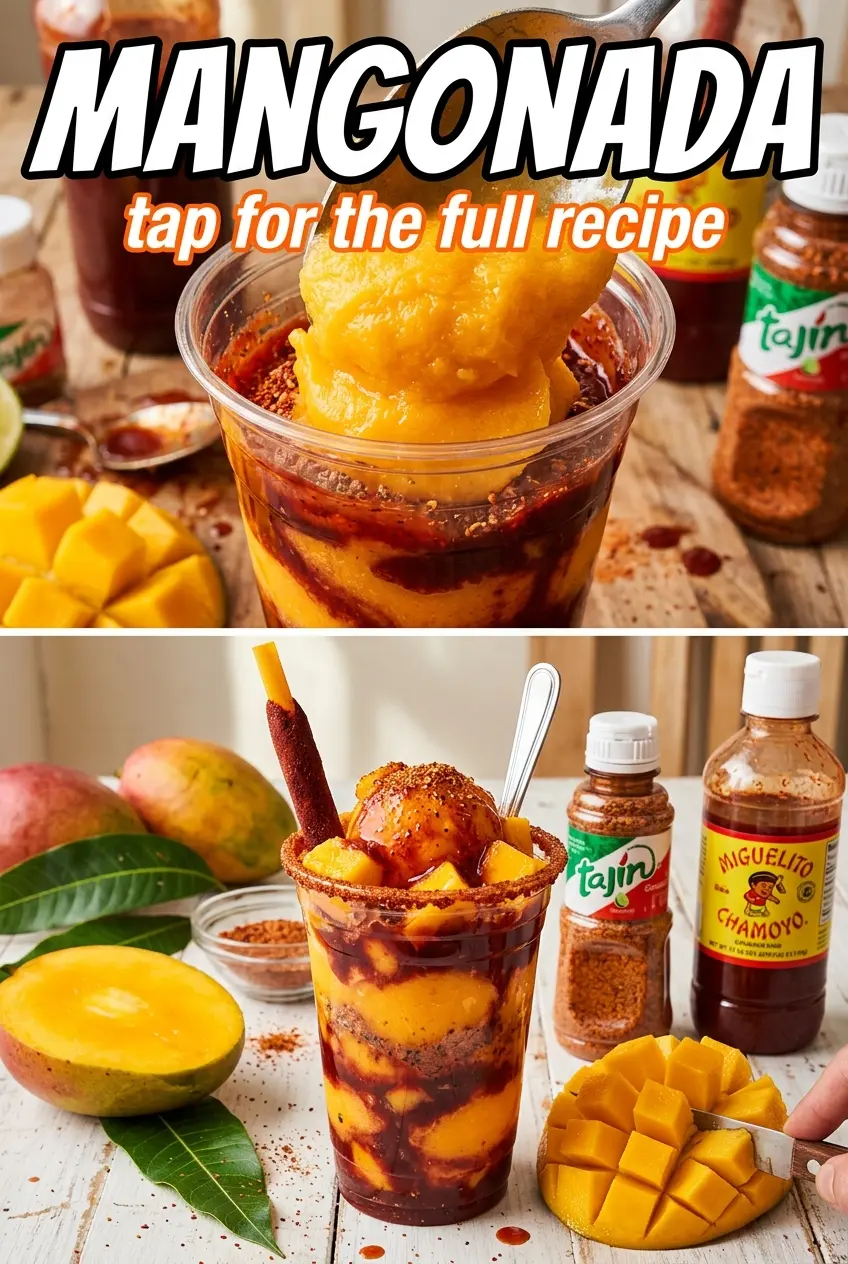
Mangonada
Ingredients
Equipment
Method
- Combine frozen mango chunks, mango juice or nectar, lime juice, honey, and ice cubes in a blender, then blend until smooth and slushy (no heat, about 30–60 seconds).
- Rim two glasses with tajín seasoning, using a light pressure so the coating sticks to the rim (no cooking).
- Drizzle chamoy sauce down the inside of each glass so it leaves streaks for a tangy, sweet finish.
- Divide the smoothie between the two glasses and top each with fresh mango chunks.
- Insert a straw into each glass and garnish with a lime wedge and fresh cilantro.
- Serve immediately so the smoothie stays icy and slushy with condensation on the glass.