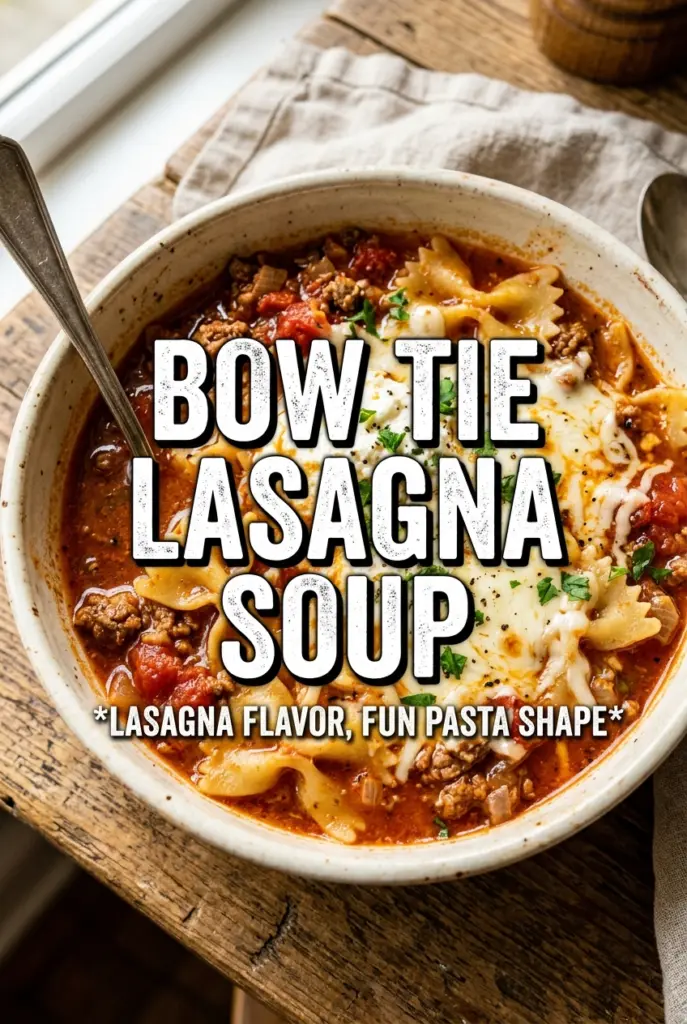
Lasagna soup with bow tie pasta gives you the full comfort of a baked lasagna without the layering, waiting, or cleanup. The broth turns rich and tomato-forward, the sausage brings enough savoriness to stand up to the pasta, and the cheese dollop melts into the bowl in a way that feels halfway between soup and dinner casserole. It’s the kind of pot you put on the stove and keep circling back to for “just one more spoonful.”
The trick is building enough body before the pasta goes in. Tomato paste needs a minute in the pot so it loses that raw edge, and the broth has to simmer hard enough to pull the sausage flavor into the whole soup. Farfalle works well here because it catches bits of sausage and cheese, but it also drinks up liquid fast, so the broth-to-pasta balance matters more than it would with a noodle that stays flat.
Below, I’ll show you how to keep the broth from disappearing into the pasta, plus the easiest way to make the ricotta topping taste like the best part of the bowl.
The broth had that full lasagna flavor, and the bow ties held onto the sausage and cheese in every bite. I added a splash more broth before serving and it stayed perfect.
Save this lasagna soup with bow tie pasta for the nights when you want all the comfort of lasagna in one fast, spoonable pot.
The Pasta Swaps That Change This Soup More Than the Broth Does
The biggest mistake people make with this style of soup is treating the pasta like a background ingredient. Bow ties don’t just sit in the broth; they thicken it as they cook, and they keep doing it after the heat is off. That’s why the soup can go from nicely brothy to stodgy in a short window if you let it sit too long before serving.
Cook the pasta until it’s just al dente, then get the bowls on the table. If you’re making it ahead, keep a little extra broth nearby and add it when you reheat. The goal is a spoonable soup with enough body to cling to the cheese, not a pot of tomato-coated noodles.
- Italian sausage — This is the main source of richness, salt, and spice. Hot sausage gives the broth more edge; mild sausage keeps the soup softer and more kid-friendly. If you use turkey sausage, you’ll get a lighter result, but you may need a little extra salt.
- Tomato paste — This isn’t just there for color. Cooking it for a minute or two deepens the tomato flavor and keeps the soup from tasting flat. Don’t skip that short sautéing step.
- Farfalle — Bow tie pasta holds sauce in the folds and makes each bite feel substantial. It also absorbs broth faster than lasagna noodles, so it’s the ingredient most likely to make the soup thick over time. Small shells or rotini work too, but the texture will feel different.
- Ricotta, mozzarella, and parmesan — The cheese topping is what makes the bowl taste like lasagna instead of plain tomato soup. Whole-milk ricotta gives the creamiest result, but part-skim works if that’s what you have. Fresh basil on top wakes everything up at the end.
What Each Ingredient Is Actually Doing In This Bowl
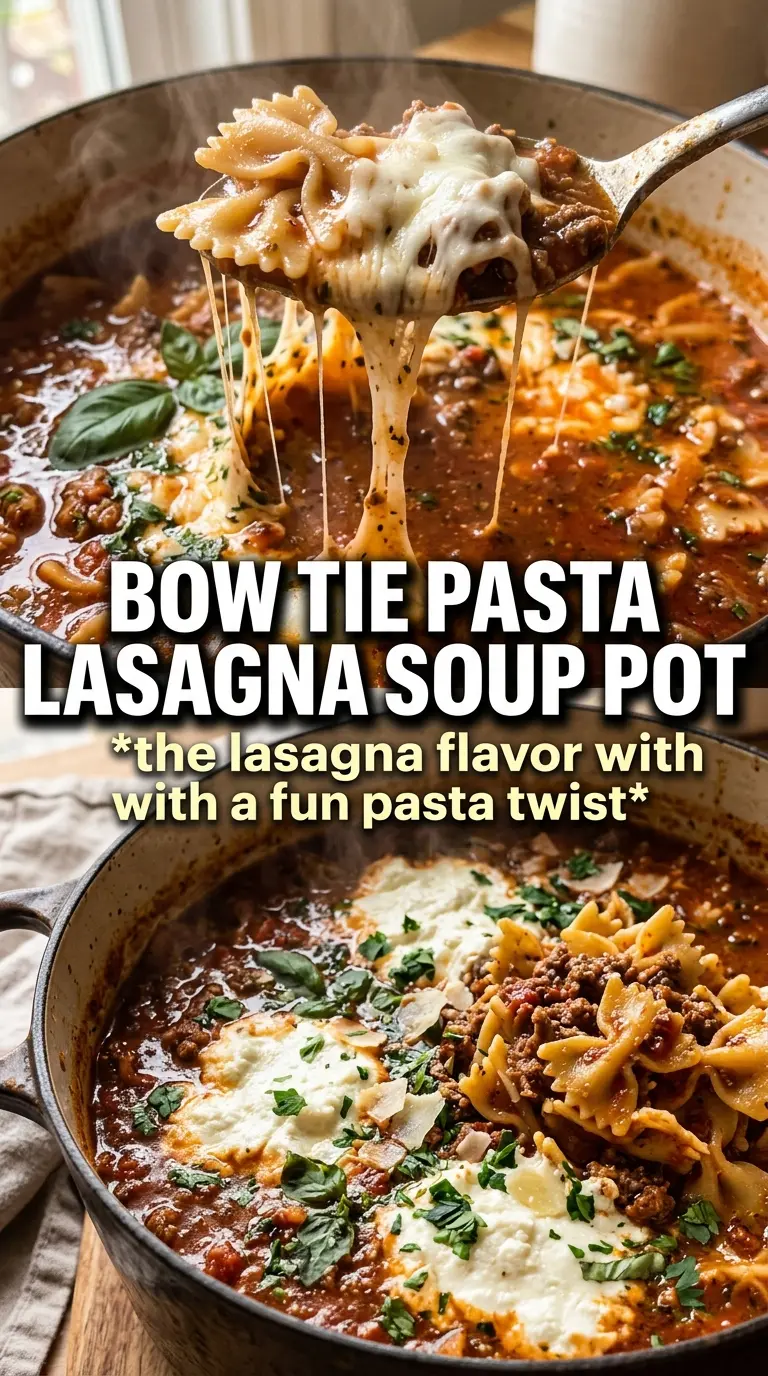
- Chicken broth — It stretches the tomato base into a true soup and gives the pasta room to cook. Use a good broth if you can, because a thin one will taste thin after the tomatoes go in.
- Crushed tomatoes plus diced tomatoes — The crushed tomatoes make the soup cohesive, while the diced tomatoes leave little bursts of texture. That mix keeps the broth from feeling one-note.
- Onion and garlic — They build the savory base under the sausage. Cook the onion until it softens before the garlic goes in, because garlic burns fast and turns bitter in a hot pot.
- Red pepper flakes and dried basil — These are the background notes that make the soup taste seasoned, not just tomatoey. If you want a softer flavor, cut the red pepper flakes in half instead of dropping them entirely.
Building the Broth Before the Bow Ties Go In
Brown the Sausage Fully
Start by browning the sausage in a large pot until you see deep caramelized bits at the bottom and the meat has lost its pink color. Those browned pieces are the foundation of the soup, so don’t rush this stage. If there’s a lot of excess fat after the sausage cooks, drain some of it off, but leave a little behind for flavor.
Cook the Onion and Tomato Paste Together
Add the diced onion and cook until it softens and turns translucent, then stir in the garlic and tomato paste. The paste should darken slightly and smell sweeter after about two minutes. If you stop too early, the soup can taste sharp and underdeveloped instead of rich and round.
Simmer the Tomatoes Into a Real Soup
Pour in the crushed tomatoes, diced tomatoes, broth, Italian seasoning, basil, and red pepper flakes, then bring the pot to a boil before lowering it to a steady simmer. You want the surface to ripple, not hammer violently, so the flavors meld without reducing too fast. Taste the broth before the pasta goes in, because this is the easiest point to adjust salt and pepper.
Cook the Pasta at the End
Add the farfalle and cook until just al dente, usually 8 to 10 minutes depending on the brand. Stir a few times while it cooks so the pasta doesn’t clump or stick to the bottom. If the soup looks thicker than you want, add a splash of broth before serving; bow ties absorb liquid quickly and keep doing it in the bowl.
How to Adapt This for a Lighter Bowl or a Bigger Crowd
Make It Gluten-Free
Use a sturdy gluten-free short pasta and cook it just until tender. Gluten-free pasta can break down faster than regular bow ties, so check it early and serve the soup right away. If it sits too long, the texture turns soft and the broth thickens more than you expect.
Swap In Turkey Sausage
Turkey sausage works well if you want something lighter, but it gives the soup less built-in richness. Add a little extra olive oil when browning it and season the broth carefully so the finished bowl doesn’t taste lean. The texture stays great; the flavor just comes out cleaner.
Make It Creamier
Stir a spoonful of ricotta directly into each bowl before ladling in the soup, or finish the pot with a splash of cream if you want a richer base. The cheese topping already gives plenty of body, so cream is optional, not required. Use it only if you want the broth to lean silkier than brothy.
Storage and Reheating
- Refrigerator: Store for up to 4 days. The pasta will keep soaking up broth, so expect a thicker soup the next day.
- Freezer: It freezes, but the pasta turns softer after thawing. For best texture, freeze the soup base without the pasta and cook fresh bow ties when you reheat.
- Reheating: Warm it slowly on the stove over medium-low heat with a splash of broth or water. The common mistake is blasting it in a pot until the pasta turns mushy and the broth reduces too far.
Answers to the Questions Worth Asking
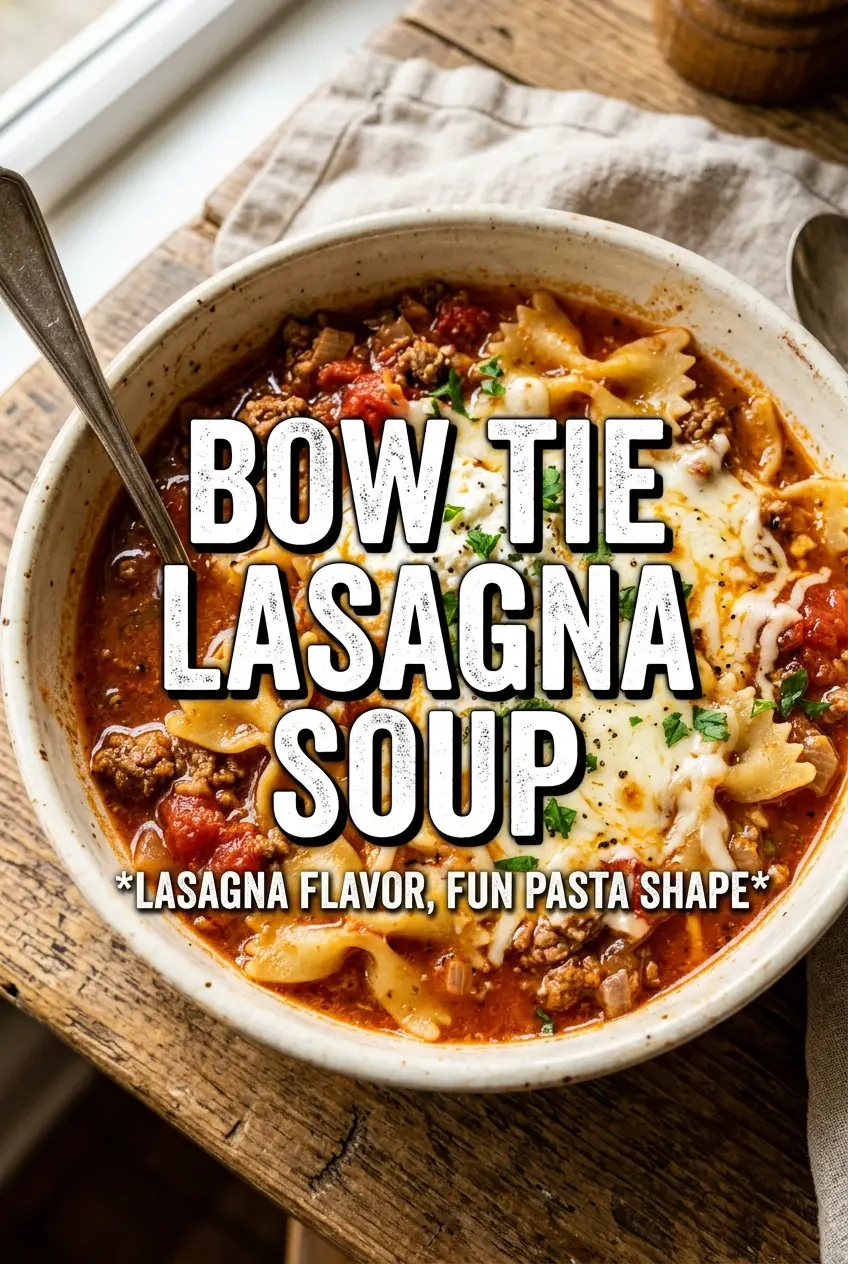
Lasagna Soup With Bow Tie Pasta
Ingredients
Equipment
Method
- Brown Italian sausage in a large pot over medium-high heat, stirring often, until cooked through, about 6 to 8 minutes, then drain excess fat. The meat should look evenly browned with no pink remaining.
- Sauté diced onion for 3 minutes until softened, then add minced garlic and tomato paste and cook for 2 minutes. The mixture should smell fragrant and turn slightly darker.
- Add crushed tomatoes, diced tomatoes, chicken broth, Italian seasoning, dried basil, and red pepper flakes, then bring the soup to a boil. Watch for rapid bubbling across the surface before moving on.
- Add bow tie pasta and cook 8 to 10 minutes until al dente. Stir occasionally and look for tender pasta with a firm center.
- Season with salt and pepper to taste, then stir to combine. Taste and adjust until the broth reads balanced and savory.
- Mix ricotta, shredded mozzarella, parmesan, and fresh basil until evenly combined into a thick, scoopable mixture. Stop mixing when the cheese is uniform in color and texture.
- Serve the soup hot and place a generous spoonful of the cheese dollop into each bowl. Let it sit 1 to 2 minutes so it softens slightly into the hot soup.
- If the soup thickens too much, add extra broth a splash at a time and simmer 2 to 3 minutes. The soup should loosen to a ladleable, soupy consistency.