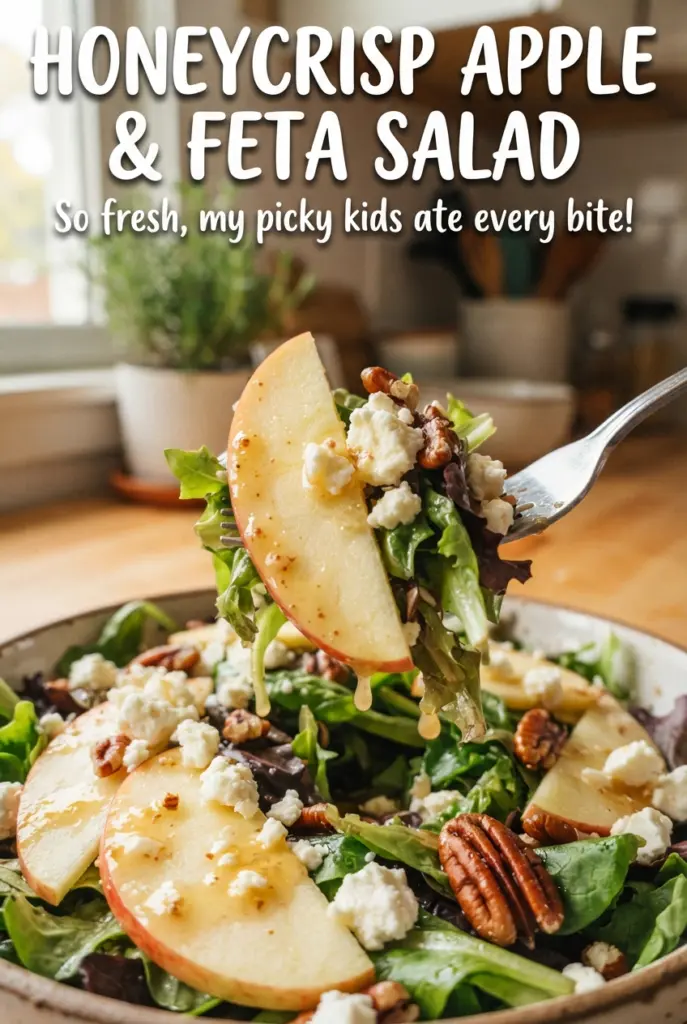
Honeycrisp apple and feta salad hits that sweet-salty-crisp balance that keeps people going back for another forkful. The apples stay snappy, the feta brings a sharp creamy bite, and the candied walnuts add just enough crunch to make every mouthful feel built on purpose. It’s the kind of salad that disappears fast because it doesn’t eat like an afterthought.
The real trick is keeping the greens dry and the vinaigrette light. Honeycrisp apples bring plenty of sweetness on their own, so the dressing just needs to sharpen everything with cider vinegar and Dijon instead of weighing the bowl down. A few pomegranate arils make the whole salad taste brighter and keep the flavors from leaning too soft.
Below, you’ll find the small details that matter here: how to keep the apples from looking tired, when to add the dressing, and which swap works if you want to turn this into a full meal instead of a side.
The apples stayed crisp even after tossing, and the vinaigrette was just sharp enough to balance the feta and candied walnuts. I made it for lunch and ended up making it again the next day.
Love the crisp apples, salty feta, and pomegranate crunch? Save this Honeycrisp Apple and Feta Salad for the next time you need a fast, fresh side with a bright cider vinaigrette.
The Trick to Keeping the Apples Crisp After the Dressing Goes On
Most apple salads go soft because they’re dressed too early or tossed too aggressively. Honeycrisp apples hold their shape better than most, but even they lose their snap if they sit in acid for long. The fix is simple: build the salad first, then drizzle the vinaigrette right before serving and toss only once, lightly, at the table.
That same gentle approach keeps the feta from dissolving into the greens and stops the walnuts from getting buried under juice. You want distinct textures here. Each bite should still taste like a salad, not a mixed bowl of damp toppings.
What Each Ingredient Is Actually Doing in the Bowl
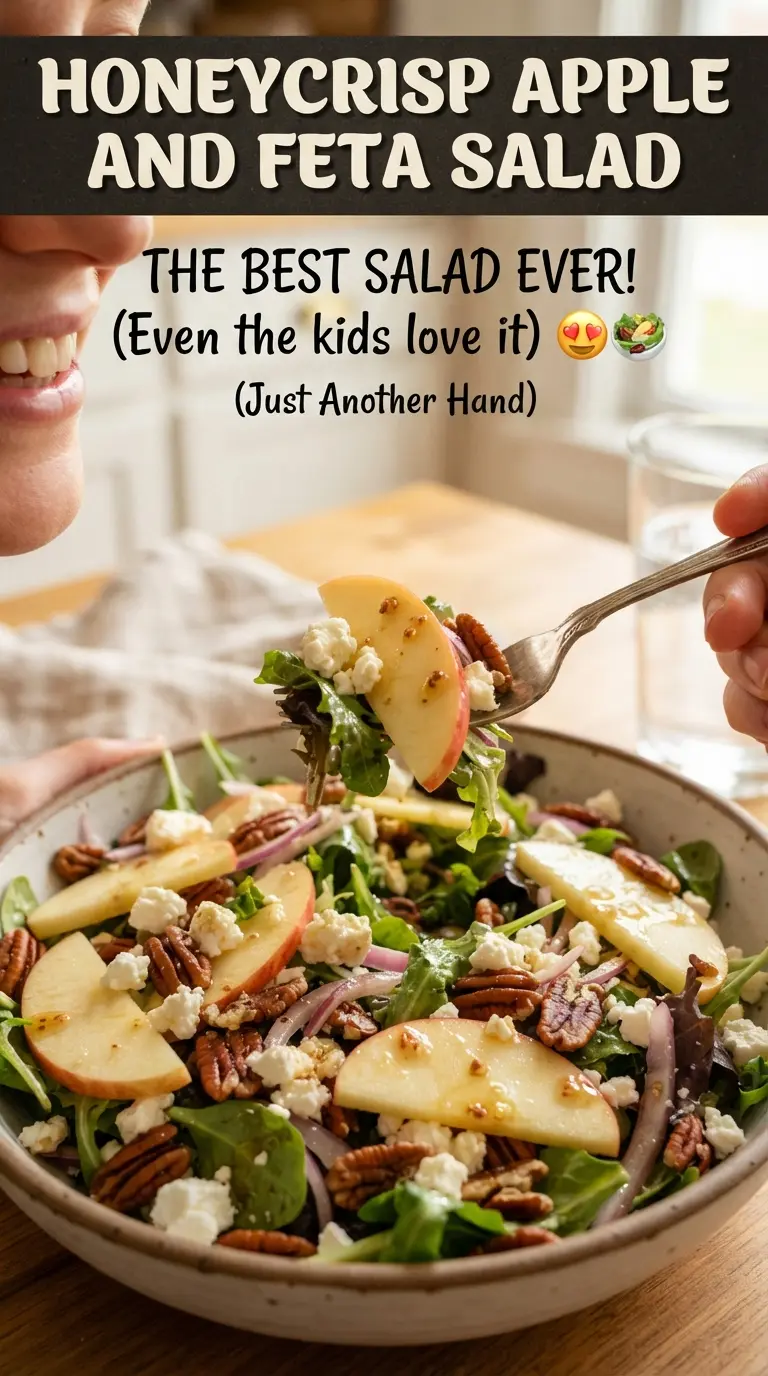
- Honeycrisp apples — These are the backbone of the salad. Their sweet-tart flavor and firm bite hold up better than softer apples, and that crunch is what makes the salad feel fresh. If you need a swap, use Pink Lady or Fuji, but don’t use a mealy apple or the salad turns flat fast.
- Feta — The salty tang cuts through the sweetness of the apples and honey. Buy block feta if you can and crumble it yourself; it tastes cleaner and stays creamier than some pre-crumbled versions.
- Candied walnuts — They add sweetness and texture in one move. If you only have plain walnuts, toast them and toss them with a pinch of sugar and salt in a skillet for a quick stand-in.
- Pomegranate arils — These give little bursts of tart juice and make the salad taste brighter. They’re worth keeping if you have them, since they wake up the whole bowl without adding heaviness.
- Dijon and apple cider vinegar — Dijon helps the dressing emulsify, so it clings lightly instead of sliding off the greens. Apple cider vinegar matches the apples and keeps the dressing from tasting harsh.
Building the Salad So Every Bite Stays Sharp
Whisking the Vinaigrette
Start with the dressing so it has time to come together while you prep the fruit and greens. Whisk the vinegar, honey, Dijon, salt, and pepper first, then stream in the olive oil until the dressing looks glossy and slightly thickened. If it looks separated, keep whisking for a few more seconds instead of adding more honey; the Dijon is doing the emulsifying work here.
Arranging the Greens and Toppings
Spread the greens in a wide bowl or platter instead of crowding them into a deep one. That gives you better control when you add the apples, feta, walnuts, pomegranate, and onion, and it keeps the salad from becoming a compressed pile. Slice the apples thin so they drape over the greens instead of clumping.
Finishing at the Table
Drizzle on just enough vinaigrette to coat the leaves, not drown them. Toss once with clean hands or tongs, then stop while the ingredients still look distinct. If the salad sits dressed for more than a few minutes, the apples start to soften and the greens lose their lift.
Three Ways to Make This Salad Fit the Meal
Make it vegetarian and gluten-free as written
This salad already fits both diets without any changes, which is part of why it works so well for a mixed table. Just check that your candied walnuts don’t include any flour-based coating, since some store-bought versions do.
Turn it into a fuller lunch
Add grilled chicken, rotisserie chicken, or roasted chickpeas on top. Chicken makes it feel like a complete meal without changing the flavor balance, while chickpeas add a hearty bite and keep the salad meatless.
Swap the cheese if feta is too sharp
Goats cheese gives a creamier, tangier result, while blue cheese makes the salad punchier and more savory. If you want something milder, use shaved Manchego or a little fresh mozzarella, but the salad will lose some of the salty contrast that makes it memorable.
Storage and Reheating
- Refrigerator: Store the components separately for up to 2 days. Once dressed, the greens soften and the apples lose their edge.
- Freezer: This salad does not freeze well. The apples, greens, and feta all change texture in the freezer and won’t recover.
- Reheating: No reheating needed. If you’ve chilled the dressing, let it sit at room temperature for a few minutes and whisk again before using so the oil loosens up.
Answers to the Questions Worth Asking
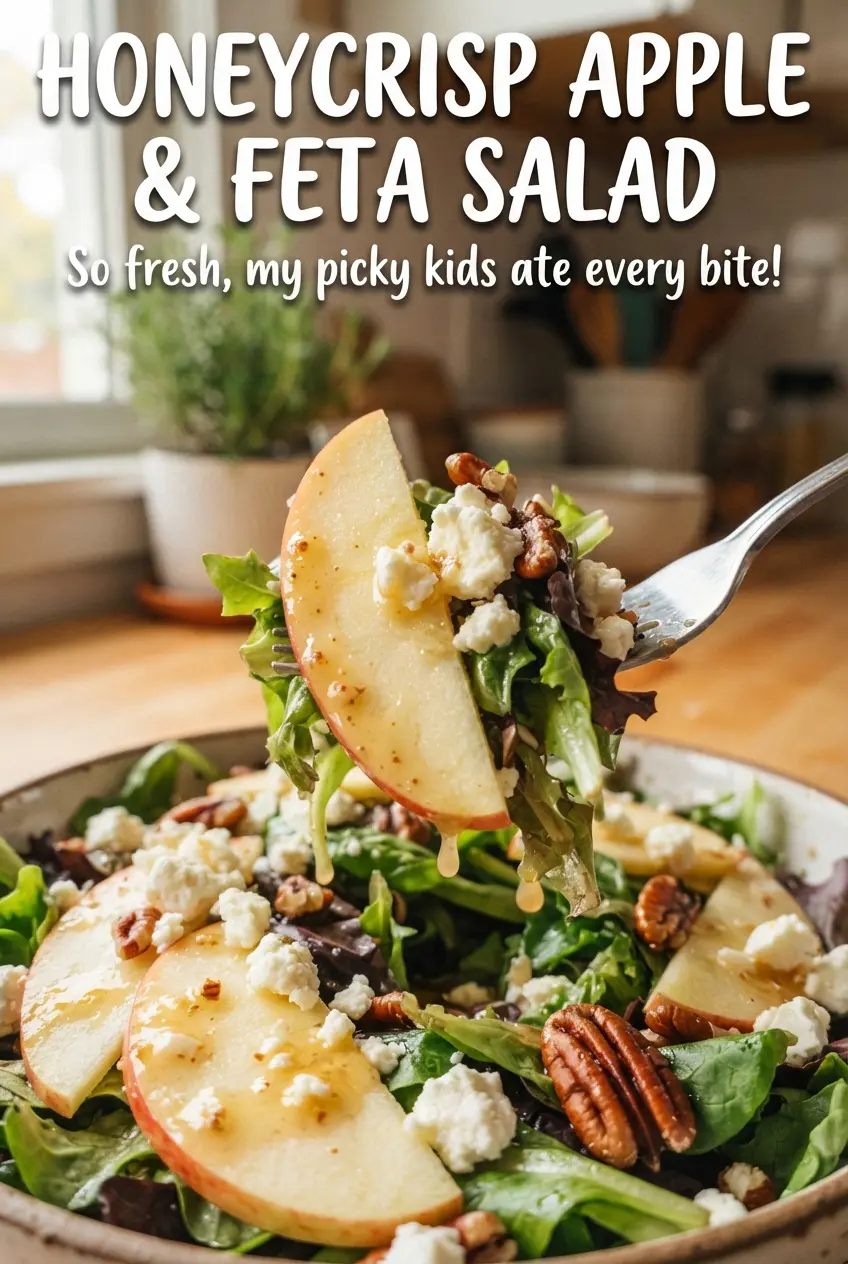
Honeycrisp Apple and Feta Salad
Ingredients
Method
- Whisk olive oil, apple cider vinegar, honey, Dijon mustard, salt, and pepper until the dressing looks smooth and evenly combined.
- Arrange the mixed greens in a large bowl or on a platter so they form a single, even layer.
- Top with thinly sliced Honeycrisp apple slices, then scatter crumbled feta, candied walnuts, and pomegranate arils over the greens.
- Add the thinly sliced red onion last so it stays bright and crisp on top.
- Drizzle the vinaigrette across the salad just before serving for the best crunch.
- Toss gently at the table to lightly coat the greens without breaking up the apples and feta.


