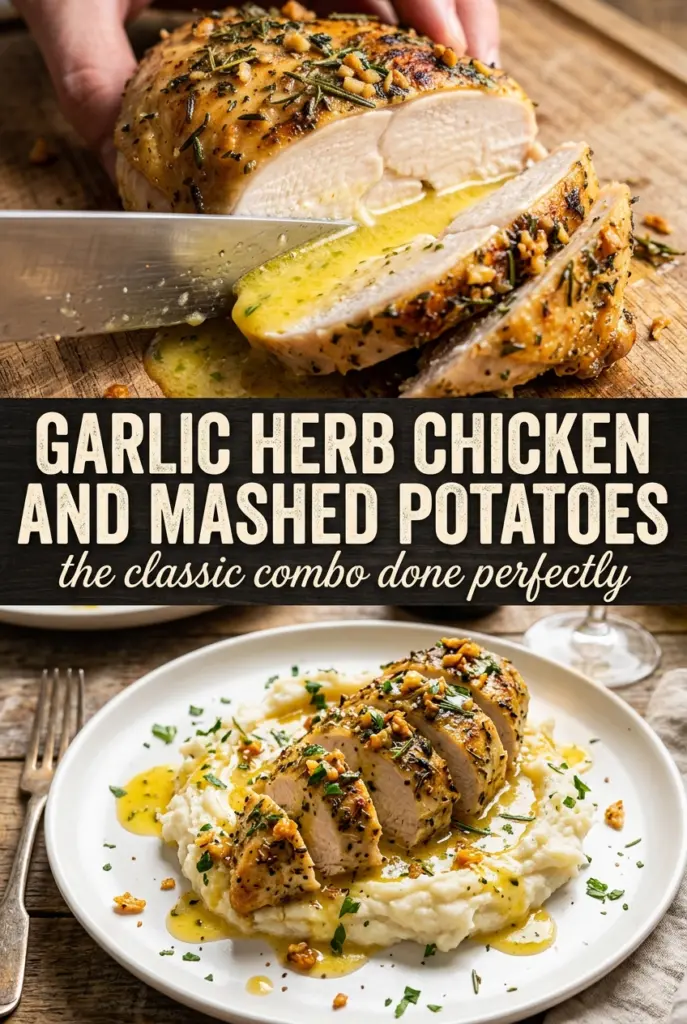
Golden seared chicken breast over a mound of buttery mashed potatoes is the kind of dinner that feels finished and comforting without needing a long ingredient list. The chicken stays juicy because it’s cooked hard and fast after a dry spice rub, then rested while the pan sauce comes together in the same skillet. That sauce matters. It catches the browned bits from the chicken and turns them into something savory enough to tie the whole plate together.
The mashed potatoes here are built to be plush, not gluey. Yukon Golds give you a naturally creamy texture, and warming the cream or milk before mixing keeps the potatoes light instead of stiff. I also like using a little garlic powder in the potatoes so the whole dish tastes connected from the first bite of chicken to the last forkful of potatoes.
Below, I’ve broken down the part that keeps the chicken from drying out and the one pan-sauce trick that makes this dinner taste like you spent a lot longer on it than you did.
The chicken came out juicy and the pan sauce picked up every bit of flavor from the skillet. Even the mashed potatoes tasted extra rich with that garlic butter on top.
Save this garlic herb chicken and mashed potatoes dinner for the night you want a skillet sauce and a full comfort-food plate with hardly any fuss.
The Mistake That Makes Herb-Crusted Chicken Taste Dry
Most dry chicken breast comes from two things: overcooking and a weak surface seasoning. This recipe fixes both by using a fast, hot sear and a seasoning blend that clings to the chicken instead of disappearing into the pan. The goal is a deep golden crust before the inside has a chance to toughen.
Boneless skinless breasts cook quickly, but they still need even thickness. If one end is much thicker than the other, pound it lightly so the whole piece finishes at the same time. That one step keeps you from burning the outside while waiting on the center.
- Garlic powder, smoked paprika, thyme, and rosemary — This is the backbone of the crust. Fresh garlic burns too quickly in the sear, so garlic powder gives you steady flavor without bitter edges.
- Olive oil — Use it for the initial sear because it handles the heat better than butter alone. The butter comes later, when you want flavor more than browning.
- Chicken broth — A little broth loosens the browned bits left in the pan and turns them into sauce. Water works in a pinch, but it tastes thinner and needs more seasoning to come alive.
What Each Part of the Plate Is Doing
- Yukon Gold potatoes — These mash into a naturally creamy texture without becoming gummy. Russets will work, but they’re drier and usually need more butter and cream to feel as plush.
- Butter and warmed cream or milk — The warm dairy blends in smoothly and helps the potatoes stay fluffy. Cold liquid cools the potatoes down too fast and makes them feel dense.
- Fresh garlic in the pan sauce — This is where the dish gets its final lift. Cook it for just a minute so it softens and smells sweet; if it browns, the sauce picks up a sharp, bitter note.
- Fresh parsley — It isn’t there for decoration alone. The parsley cuts through the butter and broth so the plate tastes brighter at the end.
From Sear to Sauce Without Losing the Juices
Boiling the Potatoes Until They Collapse Easily
Start the potatoes in well-salted water and cook them until a fork slides through with no resistance. If they still have a hard center, you’ll end up with little lumps that never smooth out completely. Drain them well, then let them sit for a minute so excess steam escapes before you mash. That keeps the texture light instead of watery.
Getting a Real Sear on the Chicken
Pat the chicken dry before the seasoning goes on. Moisture is the enemy of browning, and wet chicken steams before it sears. Cook over medium-high heat until the first side releases cleanly and the crust is deep gold, then flip only once. If the pan is overcrowded, the chicken will pale instead of crusting, so leave space between the pieces.
Building the Garlic Herb Pan Sauce
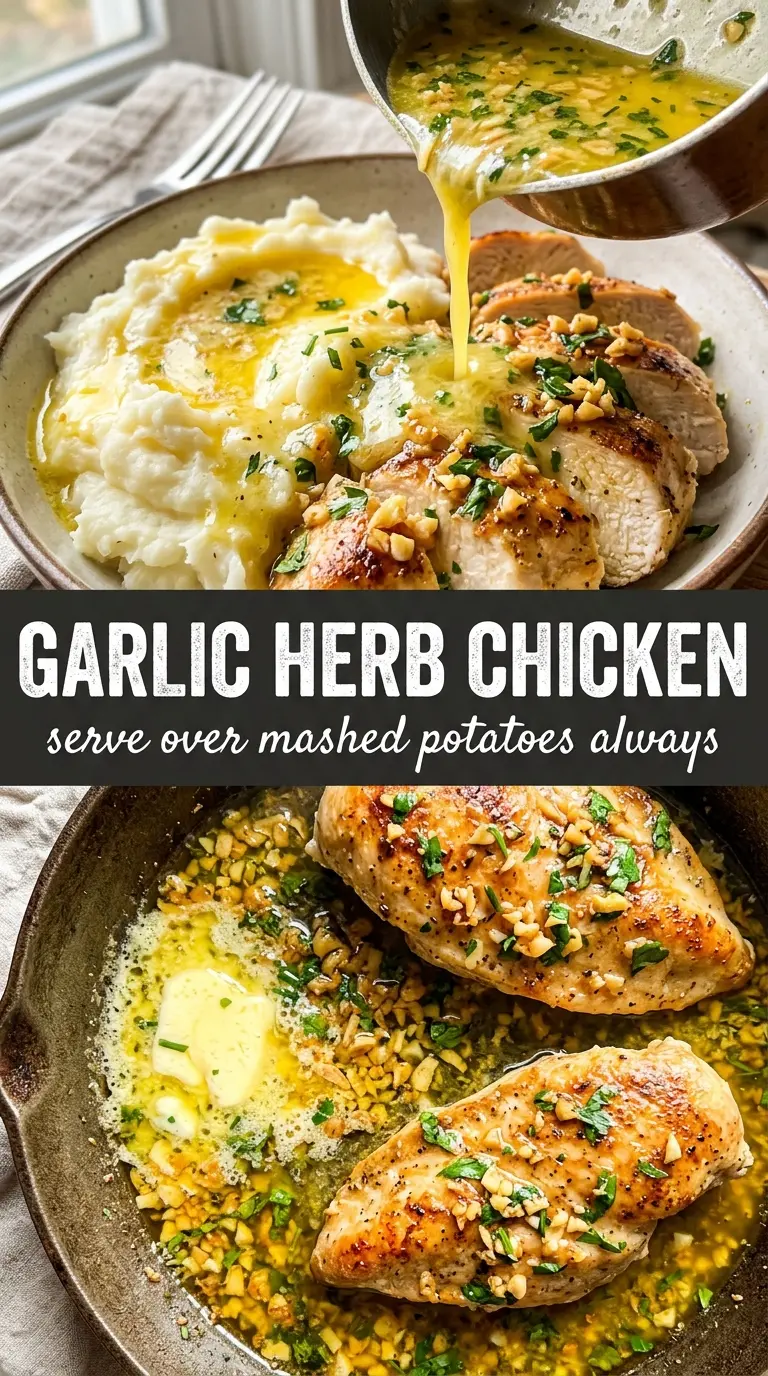
Take the chicken out before you start the sauce. That stops carryover heat from pushing it past juicy, and it gives you room to work in the same skillet. Melt the butter, cook the garlic just until fragrant, then add the broth and scrape the pan hard to release the browned bits. Let it simmer until it looks lightly glossy and slightly reduced, not thin and watery.
Plating So the Sauce Stays Front and Center
Spoon the mashed potatoes onto warm plates first, then place the chicken on top so the sauce can run down into the potatoes. That order matters because the sauce should coat both, not pool underneath and disappear. Drizzle it while it’s hot and finish with parsley right before serving for the cleanest flavor and the best look.
How to Change the Recipe Without Losing the Balance
Dairy-Free Dinner Plate
Swap the butter for a dairy-free butter that browns well and use unsweetened oat milk or another neutral plant milk in the potatoes. You’ll lose a little richness, but the garlic, herbs, and pan sauce still carry the dish.
Lower-Carb Plate
Replace the mashed potatoes with mashed cauliflower for a lighter base. Drain the cauliflower extremely well after cooking, or the plate turns watery and the sauce won’t cling the same way.
Thighs Instead of Breasts
Boneless skinless thighs work beautifully if you want a richer, more forgiving cut. They need a few extra minutes in the pan, but they stay juicy even if you take them a touch past the exact target.
Make It Ahead for a Busy Night
You can boil and mash the potatoes a day ahead, then rewarm them gently with a splash of milk. Cook the chicken fresh if you can, because reheated breast meat tightens up faster than thighs.
Storage and Reheating
- Refrigerator: Store chicken and potatoes in separate airtight containers for up to 3 days. The potatoes will firm up as they chill.
- Freezer: The chicken freezes well for up to 2 months. The mashed potatoes can freeze, but they may turn a little grainy after thawing unless they were very well mashed and enriched.
- Reheating: Reheat the chicken gently in a covered skillet with a spoonful of broth, or it can go dry fast in the microwave. Warm the potatoes with a splash of milk and stir often until smooth again.
Answers to the Questions Worth Asking
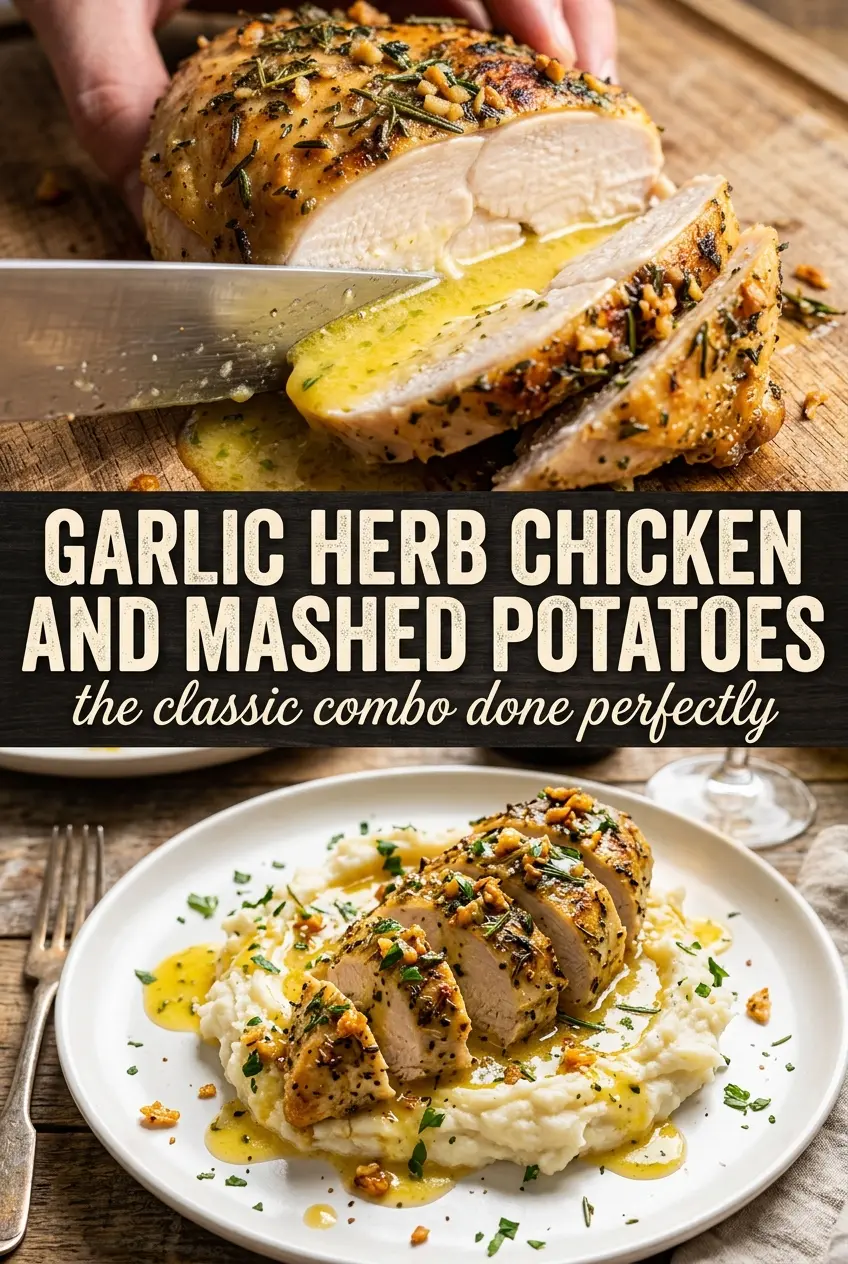
Garlic Herb Chicken Breast with Mashed Potatoes
Ingredients
Equipment
Method
- Boil the Yukon Gold potatoes in salted water for 15-18 minutes until fork-tender, keeping the pot at a steady simmer. Visual cue: the cubes should slide off a fork easily.
- Drain the potatoes and mash with butter and warmed heavy cream or whole milk until smooth and fluffy. Visual cue: the mash should look creamy with no large lumps.
- Season the mashed potatoes with salt, pepper, and garlic powder to taste, then cover and keep warm until plating. Visual cue: a gentle steam should remain, indicating it’s still hot.
- Season the chicken breasts with garlic powder, smoked paprika, dried thyme, dried rosemary, salt, and pepper until evenly coated. Visual cue: spices should cling in a dry, speckled layer.
- Heat olive oil in a cast iron skillet over medium-high heat and sear the chicken for 5-6 minutes per side until golden and cooked through to 165°F. Visual cue: juices should run clear and the crust should be browned.
- Remove the chicken to a plate while you make the pan sauce. Visual cue: the browned bits should remain in the skillet for flavor.
- Melt 2 tablespoons butter in the same skillet, scraping up browned bits from the bottom. Visual cue: the fond should loosen and turn glossy.
- Cook the minced garlic for 1 minute, stirring, until fragrant. Visual cue: you should smell garlic strongly without browning too far.
- Add chicken broth and simmer for 2-3 minutes until a simple pan sauce forms. Visual cue: the liquid should lightly thicken and coat the back of a spoon.
- Plate the mashed potatoes and place the chicken on top. Visual cue: aim for a neat mound of mash with chicken centered.
- Drizzle the pan sauce over the chicken. Visual cue: sauce should streak across the chicken and lightly pool on the potatoes.
- Garnish with fresh parsley before serving. Visual cue: bright green flecks over the top make the dish stand out.