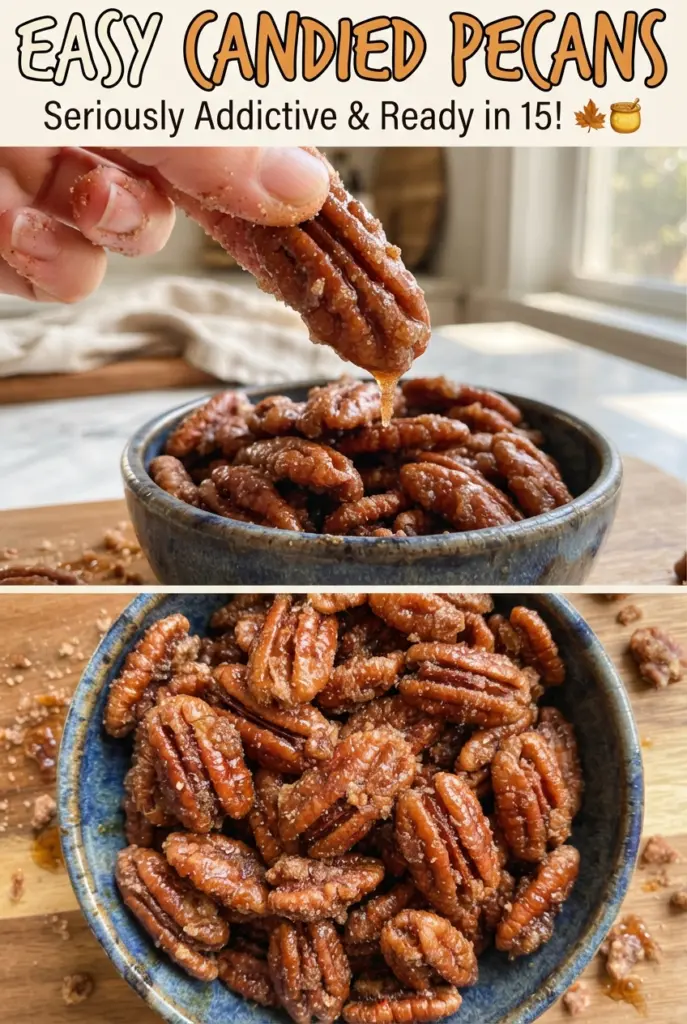
Crunchy candied pecans earn their keep fast: glossy, cinnamon-kissed, and shatteringly crisp once they cool. The coating bakes into a thin shell that clings to every ridge of the nuts, so you get sweetness in the first bite and toasted pecan flavor underneath. They disappear on snack boards, over salads, and straight from the jar.
The trick here is the slow oven. Low heat dries the egg-white coating before the sugar has a chance to scorch, which is what gives these pecans that crackly shell instead of a sticky mess. Stirring every 15 minutes keeps the nuts from clumping and helps the sugar redistribute as it melts and sets. Don’t rush the cooling step, either — they crisp up as they sit on the pan.
Below, you’ll find the small details that keep the coating even, plus a few practical swaps if you want to change the spice level or make a bigger batch for gifting.
The coating came out perfectly crackly, and the cinnamon sugar stayed on the nuts instead of pooling on the pan. I made a double batch for holiday gifts and they cooled into that glossy crunch everyone kept grabbing by the handful.
Love these crackly cinnamon-sugar candied pecans? Save this batch for snack jars, salad toppers, and last-minute gifting.
The Secret to Crunchy Candied Pecans Instead of Sticky Ones
The biggest mistake with candied nuts is baking them hot enough to brown before the sugar has time to dry and set. That leaves you with a shiny coating that stays tacky after cooling. A 250F oven gives the egg white time to lightly foam and hold the sugar in place while the moisture slowly cooks off.
The other thing that matters is the pan. Line it with parchment and keep the pecans in a single layer so steam can escape. If they’re piled up, the nuts trap moisture and the coating turns soft in the middle. Stirring every 15 minutes breaks up the clumps before they harden into one big sheet.
What the Egg White, Cinnamon, and Vanilla Are Doing Here
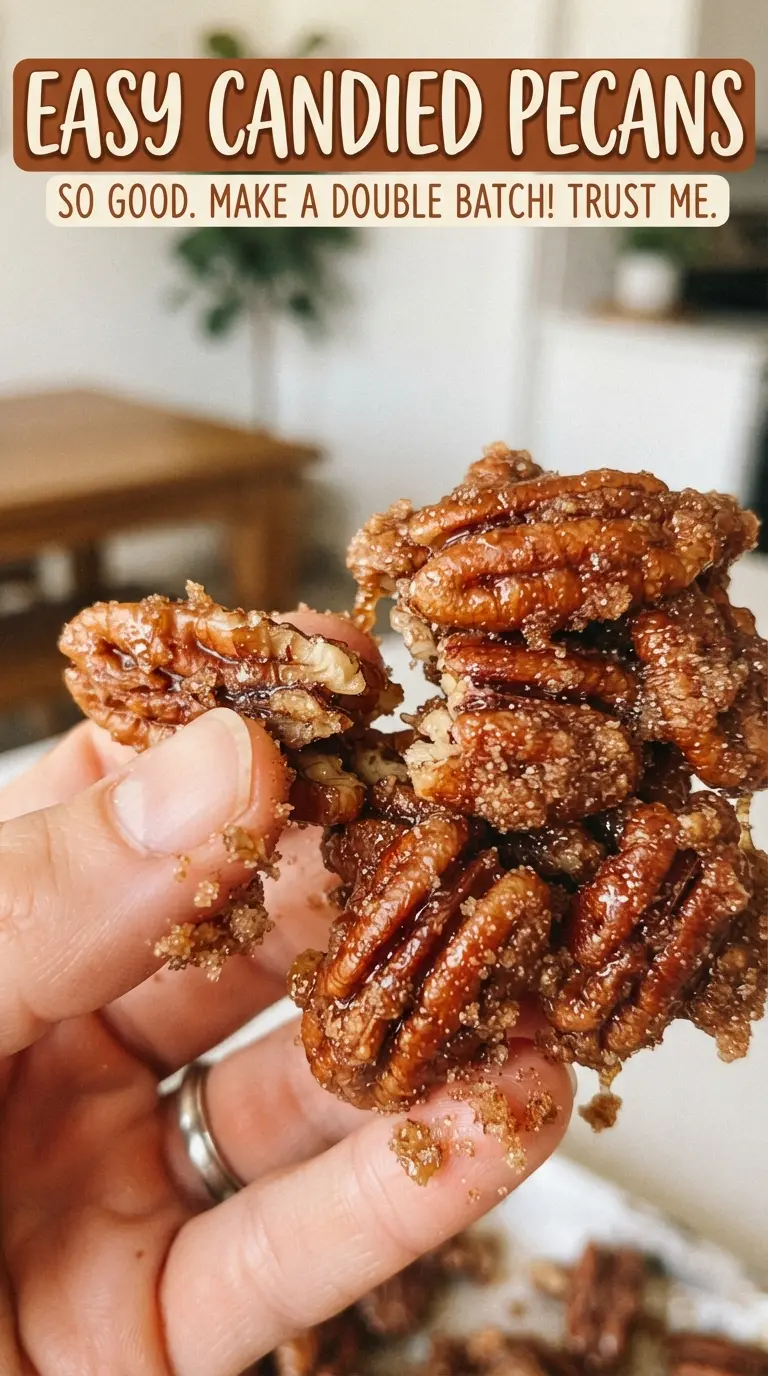
- Pecan halves — Halves give you more surface area for the coating than pieces do, and they hold their shape better during the long bake. Use fresh pecans here; older nuts can taste flat, and the candy shell won’t hide that.
- Egg white — This is the binder that turns sugar and cinnamon into a clinging coating instead of a dry dusting. Don’t skip it unless you want a different recipe entirely. Whisk it until frothy, not stiff, so it coats the nuts evenly without making scrambled bits.
- Vanilla extract — Vanilla softens the sharp edge of the sugar and gives the coating a warmer, bakery-style finish. Pure extract is best, but this is one place where a standard bottle works fine because it’s mixed into the coating and baked.
- Cinnamon and sugar — The sugar creates the shell; the cinnamon gives it that familiar candied pecan flavor. If you want a deeper spice note, add a pinch of nutmeg, but keep the cinnamon as the main seasoning or the flavor gets muddy.
- Salt — Just enough salt keeps the pecans from tasting one-note sweet. If you use salted pecans, reduce the added salt or the coating can come out harsh.
Building the Coating So It Bakes Crisp
Whisking the Wet Ingredients
Start by whisking the egg white, water, and vanilla until the mixture looks foamy and loose. You’re not looking for peaks; you just want air in the white so it can coat the nuts in a thin, even layer. If the egg white is still slippery and clear, it won’t hold the sugar well. A few seconds more of whisking makes the difference here.
Coating the Pecans Evenly
Add the pecans and toss until every surface looks lightly slick. The nuts should glisten, not swim. If you dump in the sugar before the pecans are fully coated, you’ll end up with bare spots and clumps of dry sugar on the tray. That uneven layer is what causes patchy burning later.
Drying in the Oven
Spread the nuts out and bake for an hour, stirring every 15 minutes. The color should deepen a shade or two, but the real cue is texture: the coating goes from wet and granular to dry, glassy, and a little rough around the edges. If the pecans still feel sticky when you stir them, they need more time, not more heat. Pull them too early and they’ll harden chewy instead of crisp.
Cooling Until the Shell Sets
When the pecans come out, they’ll still seem a little soft. Leave them on the parchment until fully cool and they’ll snap into that brittle candy shell. Try to break them apart while they’re warm and you’ll just smear the coating. Once they’re cool, they separate cleanly and are ready for the jar.
How to Change These Candied Pecans Without Losing the Crunch
Maple-Spice Candied Pecans
Replace 2 tablespoons of the sugar with pure maple sugar if you have it, or add 1 teaspoon maple extract to the wet mixture. You’ll get a deeper, woodsy sweetness that works well on salads and cheese boards, but don’t swap in syrup or the coating will stay wet and lose its snap.
Gluten-Free and Dairy-Free by Default
These pecans are naturally gluten-free and dairy-free as written, which makes them an easy snack for a mixed crowd. Just check your vanilla and cinnamon if you’re cooking for someone with strict allergies, since some spice blends and extracts can be processed in facilities with cross-contact.
A Sweeter, More Snackable Batch
Use 3/4 teaspoon cinnamon instead of a full teaspoon if you want the sugar to lead and the spice to stay in the background. That gives you a softer candy flavor that kids tend to reach for faster, though you lose a little of the warm finish that makes this version stand out.
Storage and Reheating
- Refrigerator: Store in an airtight container at room temperature for up to 2 weeks. The fridge isn’t necessary and can actually introduce moisture that softens the coating.
- Freezer: They freeze well for up to 2 months if packed airtight with parchment between layers. Let them come back to room temperature before opening the container so condensation doesn’t make them sticky.
- Reheating: Don’t reheat these like a baked snack; just spread them on a tray and let them sit in a 250F oven for 5 to 8 minutes if they’ve softened. The goal is to dry them out, not toast them further, or the sugar can darken and turn bitter.
Questions I Get Asked About This Recipe
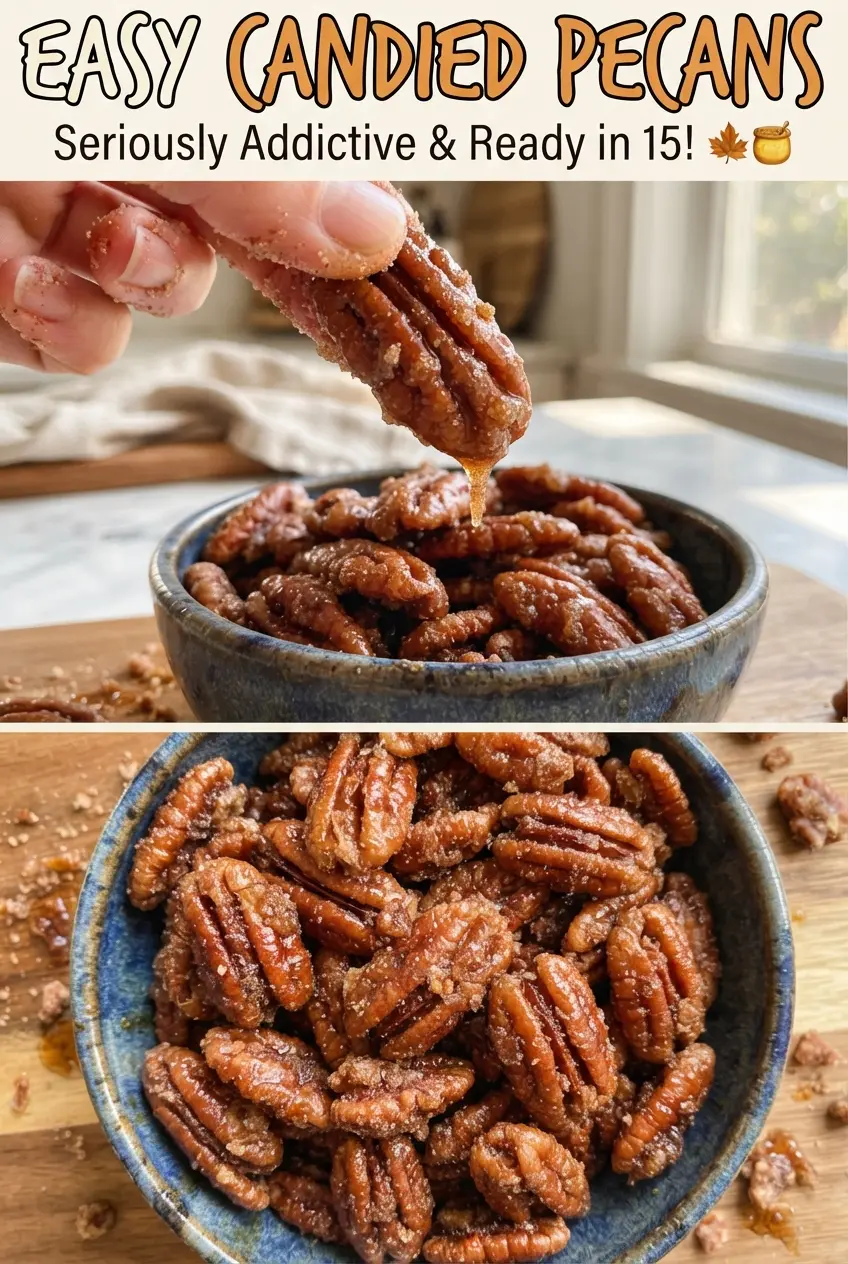
Easy Candied Pecans
Ingredients
Equipment
Method
- Preheat oven to 250F and line a sheet pan with parchment, keeping the surface ready for a single-layer bake.
- Whisk egg white, water, and vanilla extract until frothy so the coating looks light and foamy.
- Toss pecan halves in the egg-white mixture until evenly coated and glossy.
- Mix sugar, ground cinnamon, and salt, then toss with the pecans until the surface looks evenly dusted.
- Spread the coated pecans in a single layer on the sheet pan so they bake evenly without clumping.
- Bake at 250F for 15 minutes, then stir and scrape them back into an even layer to encourage a crackly coating.
- Bake at 250F for another 15 minutes, then stir again until the cinnamon sugar looks darker and more set.
- Bake at 250F for another 15 minutes, then stir so the pecans toast uniformly around the edges.
- Bake at 250F for the final 15 minutes, stirring once more until the coating looks glossy and dry at the surface.
- Cool completely on the pan until the coating is crunchy, then break apart the pecans as they harden.
- Store airtight at room temperature once fully cool to keep the cinnamon-sugar crunch intact.


