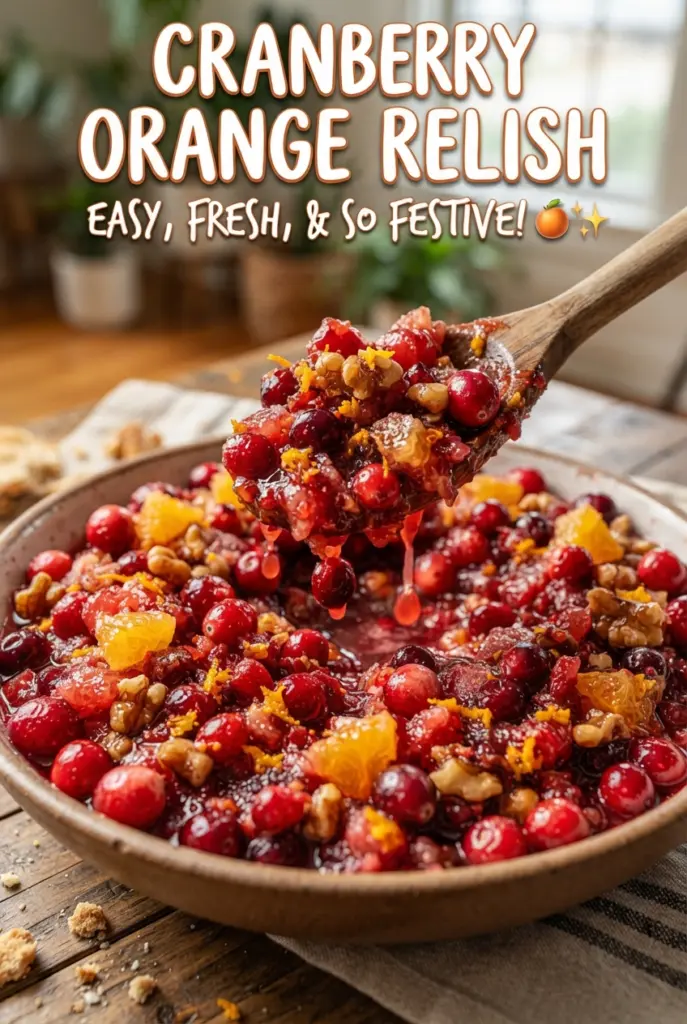
Cranberry orange relish hits that bright, sharp, sweet-tart note that cuts through rich food better than almost anything else on the table. The cranberries keep their clean bite, the orange brings juice and perfume, and the sugar pulls everything into a glossy spoonable relish instead of a harsh, puckery mix. It’s one of those make-ahead sides that feels simple but lands with real impact the second it hits the plate.
The trick is in the texture and the resting time. Pulse the cranberries and orange just until finely chopped; if you keep going, you’ll end up with a watery puree instead of a relish with some body. Then let the sugar do its work in the fridge. That chill time softens the cranberries, mellows the orange peel, and gives the whole bowl a cleaner, more blended flavor.
Below, I’ve included the one detail that keeps this from turning bitter, plus a few practical variations for making it with orange juice instead of liqueur or adjusting it for a lighter hand with sugar.
I was skeptical about leaving the orange peel on, but after chilling overnight the relish was perfect — bright, not bitter, and the texture stayed chunky instead of turning mushy.
Save this cranberry orange relish for the holiday table when you want something bright, chunky, and make-ahead friendly.
The Part That Keeps Cranberry Relish From Turning Bitter
Most cranberry relish goes wrong in one of two ways: it gets pulverized into juice, or the orange peel stays too aggressive and throws off the balance. The food processor should do less than you think. You want tiny pieces that still look distinct in the bowl, because that gives the relish its fresh, almost salad-like texture after chilling.
The unpeeled orange is the secret here, but only if it’s seeded and processed briefly. The pith adds a little structure and bitterness, and that bitterness needs sugar and time to settle down. If you rush the chill, the flavor tastes disjointed. After a few hours in the fridge, the sharp edges round off and the cranberries take on a jammy snap without losing their freshness.
- Cranberries — Fresh berries give the cleanest tart flavor and the best texture. Frozen cranberries can work straight from the freezer, but don’t thaw them first or the relish turns softer and wetter.
- Navel orange — The peel is part of the flavor, not just the fruit. Seed it well and cut away any thick white pith if the peel looks especially heavy, since that’s where most of the bitterness lives.
- Sugar — This doesn’t just sweeten; it draws out juice and softens the cranberry bite. If you cut the sugar too far, the relish tastes harsh and the cranberries stay stubbornly sharp.
- Orange liqueur or orange juice — Liqueur gives a rounder citrus note and a little extra aroma, while juice keeps it family-friendly and lighter. Use the liqueur when you want a fuller finish; use juice when you want the cranberry to stay front and center.
What Each Ingredient Is Actually Doing in This Recipe
- Primary ingredient (the star) — Quality matters most. Choose the best you can find.
- Cooking medium (oil, butter, or broth) — This carries flavors and prevents dryness.
- Seasonings (salt, pepper, spices, herbs) — Layer flavors so nothing overpowers. Build depth gradually.
- Aromatics (garlic, onion, herbs) — Cook with fat to bloom flavors. Become the foundation.
- Supporting ingredients — Complement the main ingredient without overpowering it.
- Sauce or liquid (if applicable) — Brings flavors together. Balance richness with acid.
- Acid (lemon, vinegar, wine, or other) — Brightens and prevents flat-tasting results.
- Final finish (garnish, glaze, or sauce) — Prevents one-dimensional taste and adds visual appeal.
Pulse, Chill, and Let Time Finish the Job
Breaking Down the Fruit Without Pureeing It
Pulse the cranberries and orange chunks in short bursts, stopping often to scrape the bowl if needed. The mixture should look finely chopped and a little uneven, with no big chunks left but plenty of texture still visible. If you run the processor continuously, the citrus releases too much liquid and the relish turns pasty instead of bright and spoonable.
Mixing in the Sweetener While the Fruit Is Raw
Stir the sugar, orange liqueur or juice, and salt into the chopped fruit right away. The sugar starts pulling juice from the cranberries almost immediately, which is exactly what you want. It may look dry at first, but give it a minute and you’ll see the bowl loosen as the fruit begins to macerate.
Chilling for the Right Texture
Cover the bowl and chill it for at least 4 hours, though overnight gives the best balance. The cranberries soften just enough to lose their raw edge, and the orange peel mellows into the background instead of dominating the whole bite. Stir it well before serving, because the juices collect at the bottom and need to be redistributed.
Finishing With Mint
Add the mint right before serving so it stays fresh and fragrant. A few torn leaves are enough; too much mint can fight the orange instead of supporting it. If you want a cleaner look, tuck the leaves on top rather than mixing them all the way through.
How to Adjust Cranberry Orange Relish Without Losing the Fresh Bite
Use orange juice instead of orange liqueur
Orange juice keeps the relish bright and family-friendly, but the finish will be a little lighter and less layered. If you use juice, stick with the full sugar amount so the relish still balances the cranberry tartness after chilling.
Make it less sweet
You can reduce the sugar a little, but don’t slash it hard or the relish will read sharp and thin. Start by cutting it back by 2 to 3 tablespoons, then taste after chilling; cold relishes always taste less sweet than they do at room temperature.
Make it vegan and gluten-free without changing a thing
This relish already fits both diets as written, which is one reason it earns a spot on so many tables. Just check that your orange liqueur is one you’re happy to serve, or use orange juice if you want the simplest option.
Store it for later in the week
Cranberry orange relish keeps well in the refrigerator for up to 5 days. The flavor actually gets a little smoother by day two. Stir before serving, and expect a bit of extra juice to collect at the bottom of the bowl.
Answers to the Questions Worth Asking
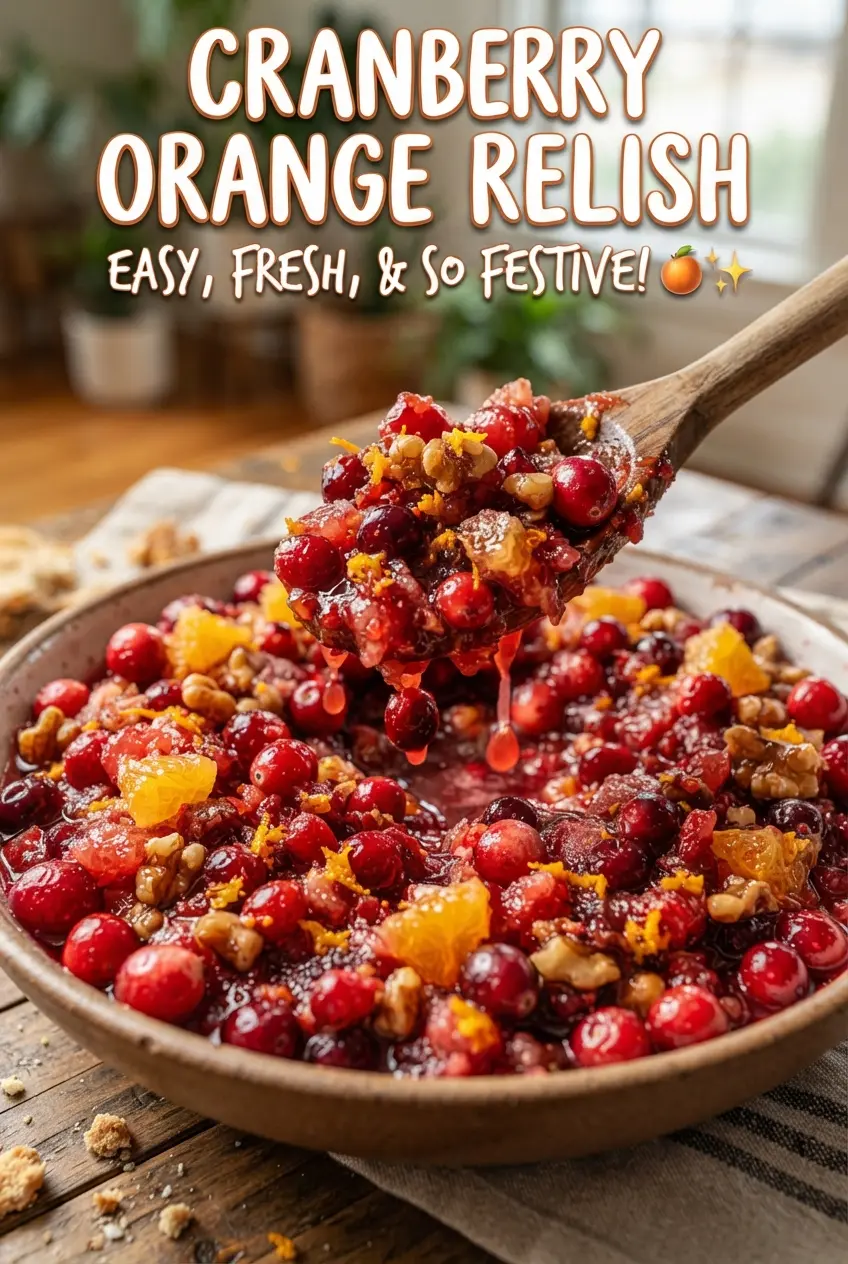
Cranberry Orange Relish
Ingredients
Equipment
Method
- Pulse the fresh cranberries and large navel orange chunks in a food processor until finely chopped but not pureed.
- Transfer to a bowl, then stir in sugar, orange liqueur or orange juice, and salt until evenly combined.
- Cover and chill at least 4 hours or overnight to let the flavors meld and the mixture set.
- Stir well before serving so the relish stays evenly textured.
- Garnish with fresh mint just before serving for a fresh, aromatic finish.


