
Cowboy stew lands in that sweet spot between hearty chili and a chunky beef soup: smoky, spoonable, and packed with enough meat and potatoes to stand on its own. The broth picks up body from the tomatoes, ranch seasoning, and beef drippings, while the sausage adds a second layer of smoke that keeps every bite interesting. It’s the kind of pot that gets heavier and better-looking as it simmers, with the potatoes turning tender without falling apart and the beans helping everything feel full and satisfying.
What makes this version work is the order. The beef and sausage both get a quick browning first, which builds flavor before any liquid goes in. The spices bloom in the hot pot for a minute, then the potatoes simmer just long enough to soften without turning mealy. Corn goes in near the end so it stays sweet, and the final toppings bring the whole bowl into focus with sharp cheddar, fresh jalapeños, and green onions.
If you’ve made similar skillet stews before and had them taste flat, the fix is usually right here: brown the meat properly, don’t rush the simmer, and season at the end after the broth reduces a bit. A small adjustment in timing makes a big difference in a pot like this.
The potatoes were tender in exactly 18 minutes and the broth thickened up just enough to cling to the beef and beans. I added jalapeños on top and my husband went back for a second bowl before I even sat down.
Love the smoky beef, sausage, and potato combo? Save this cowboy stew for nights when you want one big, hearty pot with almost no fuss.
The Trick to Keeping the Potatoes Tender Instead of Mushy
Cowboy stew can go wrong if the potatoes get too much time in the pot before the beans and corn join in. Baby potatoes need enough simmering to turn creamy inside, but once they start breaking down, they cloud the broth and lose that clean, chunky texture that makes this dish so good. The timing here keeps them intact: simmer until a fork slides in with just a little resistance, then add the corn and sausage for the last few minutes.
The other thing that matters is heat control after the tomatoes go in. A hard boil can rough up the potatoes and make the broth reduce too fast before the vegetables are ready. A steady simmer gives you a thicker, richer stew without tearing the ingredients apart.
What Each Ingredient Is Actually Doing in This Stew
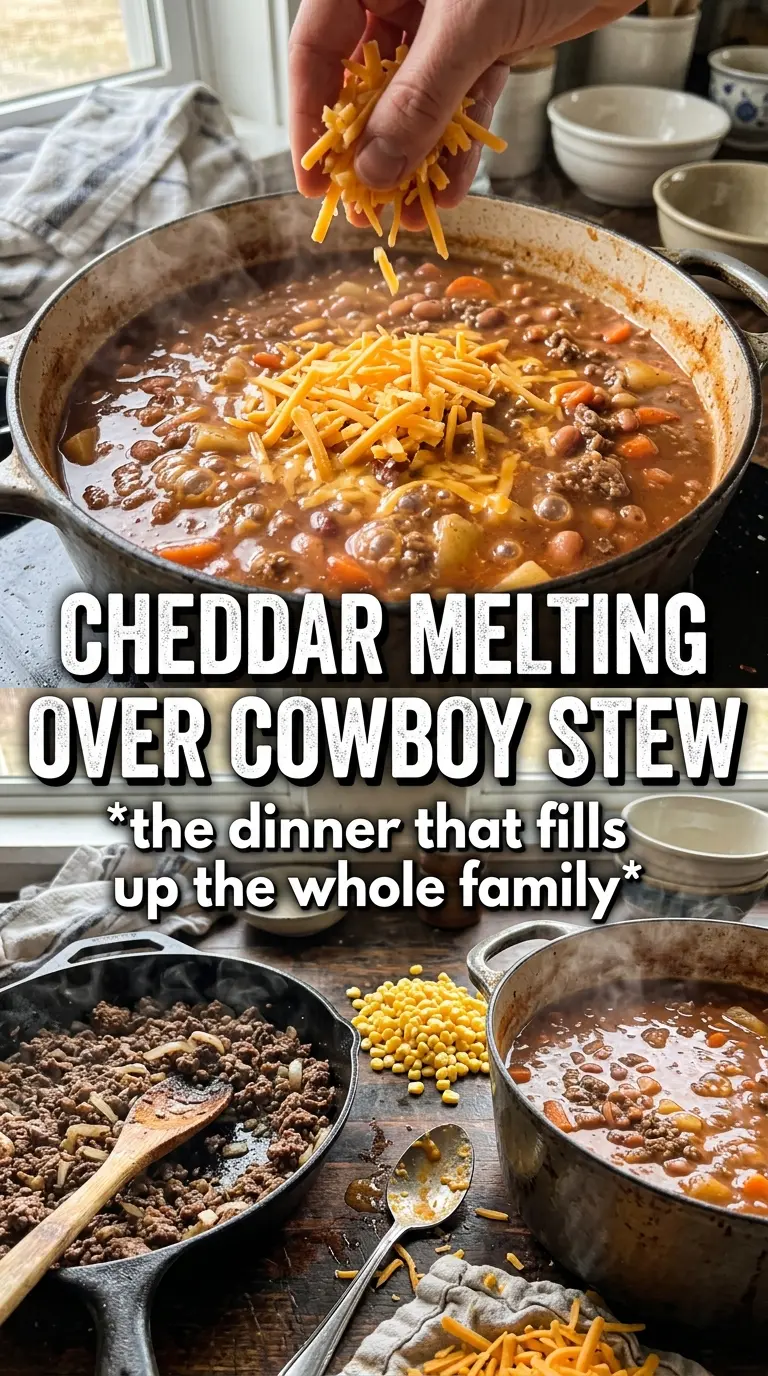
- Ground beef — This gives the stew its base flavor and helps the broth taste meaty instead of just tomato-forward. Use 80/20 if you can; a little fat means more flavor. If you only have lean beef, keep the browned bits in the pot and don’t skip the seasoning.
- Smoked sausage — This is the ingredient that makes the stew taste like it simmered all afternoon. Slice it before browning so the edges caramelize. If you swap in kielbasa or another fully cooked sausage, the dish still works, but choose one with a good smoke level.
- Ranch seasoning — It’s not there to make the stew taste like salad dressing. It adds salt, herbs, and a little tang that ties the beef, tomatoes, and potatoes together. A homemade blend can work in a pinch, but the packet is consistent and easy.
- Rotel and diced tomatoes — Using both gives you heat, acid, and body. Rotel brings the little kick; plain diced tomatoes keep the stew from leaning too spicy. If you’re sensitive to heat, use mild Rotel or replace it with plain diced tomatoes plus a pinch of cayenne only if needed.
- Baby potatoes — Their waxy texture helps them hold their shape through the simmer. Halving them is the right move because it shortens the cook time and lets the broth get inside. If you use russets, expect a softer, more starchy stew.
- Pinto beans and corn — The beans make the stew feel complete, while the corn adds sweetness that balances the smoky sausage. Drain both well so the broth doesn’t turn cloudy or thin. Frozen corn works too; add it straight from the freezer near the end.
How to Build the Pot So the Flavor Stays Deep
Brown the Meat First
Start with the ground beef in a large pot and let it sit long enough to develop real browning before stirring too much. You want caramelized bits on the bottom, not gray crumbles steaming in their own moisture. Drain off excess fat if needed, but leave the browned fond in the pot because that’s where the stew starts tasting like something.
Wake Up the Spices in the Hot Pan
After the onion softens and the garlic smells fragrant, stir in the chili powder and smoked paprika for a full minute. This step wakes up the spice oils and keeps them from tasting dusty in the finished broth. If the pot is scorching hot, pull it off the burner for a few seconds so the garlic and spices don’t turn bitter.
Simmer Until the Potatoes Are Just Tender
Add the broth, tomatoes, ranch seasoning, potatoes, and beans, then bring everything to a boil before reducing to a steady simmer. The potatoes should be nearly done before the corn and sausage go in. If the stew boils too hard, the potatoes can split and the broth will reduce unevenly, so keep it at a lively but controlled simmer.
Finish With the Last Layer of Texture
Stir in the corn and browned sausage near the end and cook just long enough to heat the sausage through and keep the corn sweet. Taste before serving and add salt and pepper only after the stew has had a chance to reduce a bit. The broth should taste balanced on its own, then the toppings bring in freshness and sharpness.
Three Ways to Make Cowboy Stew Fit Your Table
Make It Dairy-Free Without Losing the Comfort
The stew itself is naturally dairy-free; just skip the cheddar on top or use a dairy-free shredded cheese if you like a finishing melt. The bowl still feels complete because the broth, sausage, and potatoes carry the comfort on their own.
Use Ground Turkey for a Lighter Pot
Ground turkey works, but it needs help. Brown it well and add a little extra smoked paprika because turkey doesn’t bring the same depth as beef. The stew will taste cleaner and a little leaner, though not quite as rich.
Make It Gluten-Free With a Quick Label Check
This stew is easy to keep gluten-free if your ranch seasoning and sausage are certified gluten-free. The rest of the ingredients are already in good shape, so the main job is checking the labels before they hit the pot.
Stretch It for a Bigger Crowd
Add another can of beans, another pound of potatoes, and an extra cup or two of broth if you need to feed more people. The trick is to keep the ratio of meat to broth close enough that the stew still tastes hearty, not thin.
Storage and Reheating
- Refrigerator: Keeps for up to 4 days. The potatoes absorb more broth as it sits, so the stew thickens a bit overnight.
- Freezer: Freezes well for up to 3 months. Cool it completely, portion it into airtight containers, and leave a little space for expansion.
- Reheating: Warm it gently on the stovetop over medium-low heat with a splash of broth or water if needed. Microwaving on high can make the potatoes grainy and the sausage tough.
Answers to the Questions Worth Asking

Cowboy Stew
Ingredients
Equipment
Method
- Brown the ground beef in a large pot over medium-high heat, then drain the fat. Brown it until no pink remains and the surface looks lightly browned.
- Brown the sausage slices briefly in the same pot, then remove them. Cook just until warmed through and lightly browned.
- Sauté the onion for 3 minutes in the pot. Cook until softened but not browned.
- Add the garlic and cook for 1 minute. Stir constantly until fragrant.
- Add the chili powder and smoked paprika, then cook for 1 minute. Stir to coat the onion-garlic mixture and wake up the spices.
- Add the Rotel tomatoes, diced tomatoes, beef broth, ranch seasoning, baby potatoes, and pinto beans, then bring to a boil. Stir well to dissolve the seasoning and distribute the potatoes.
- Simmer for 15-18 minutes until the potatoes are tender. You should be able to pierce them easily with a fork.
- Add the corn and the browned sausage, then simmer for 5 more minutes. Let everything heat through and the broth thicken slightly.
- Season with salt and pepper to taste. Taste and adjust so the flavors are balanced.
- Serve the cowboy stew hot, topped with shredded cheddar, jalapeños, and green onions. Add the toppings right before eating so they stay vibrant.