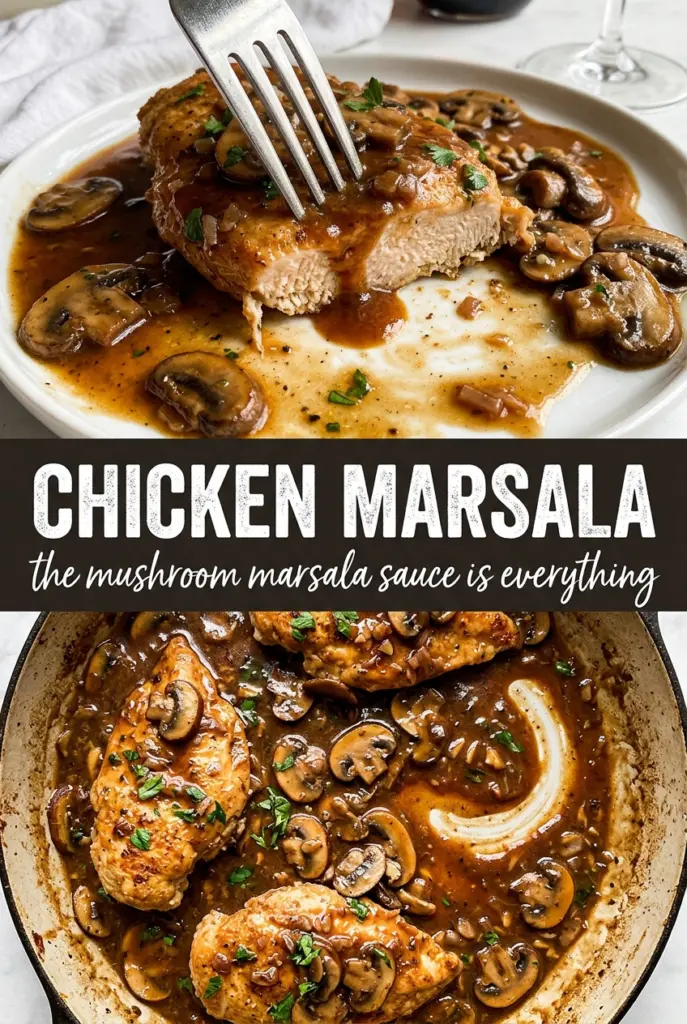
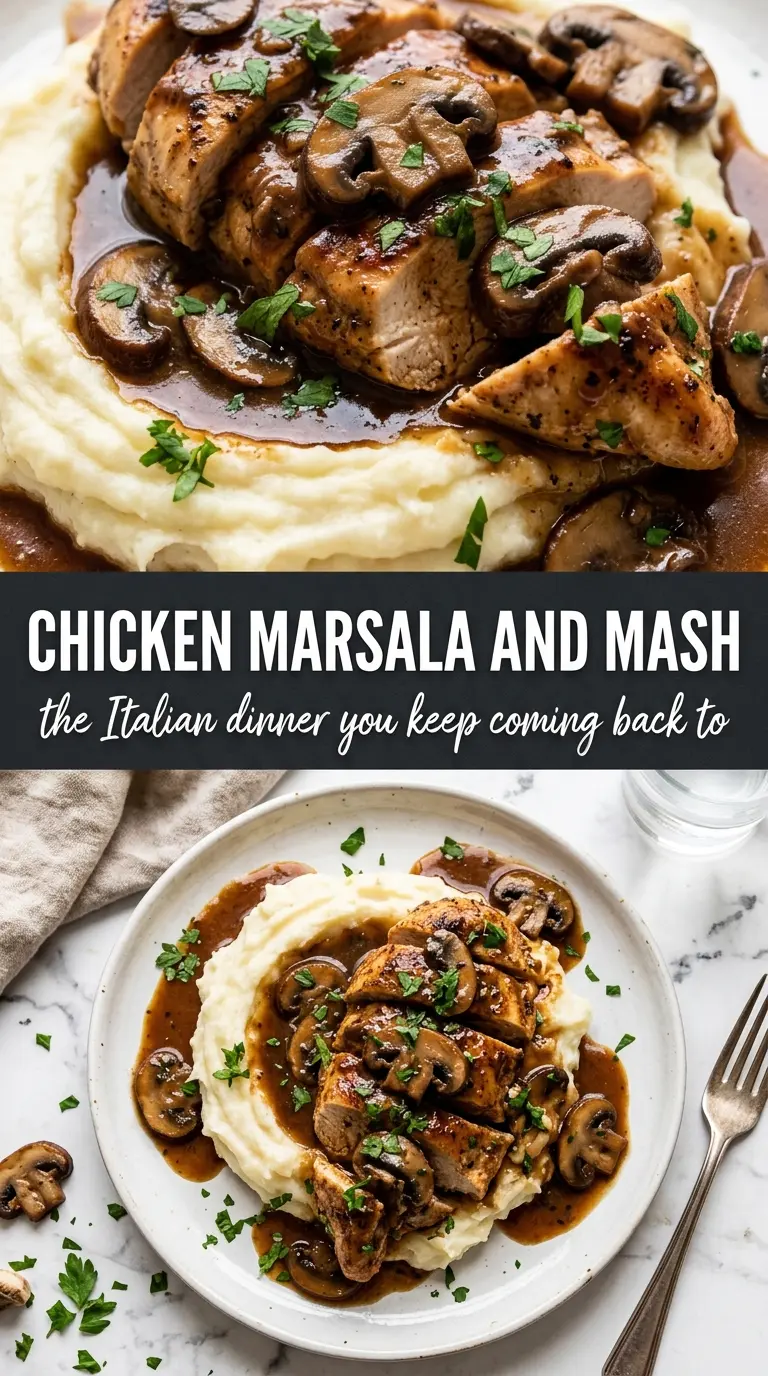
Golden chicken cutlets under a glossy Marsala mushroom sauce never last long at the table. The cutlets stay thin and tender, the mushrooms turn savory and dark at the edges, and the sauce comes together with enough body to coat the chicken without burying it. It tastes like the kind of dinner that should have taken more effort than it did.
The trick is building the sauce in the same pan you used for the chicken. Those browned bits left behind after the cutlets cook are the backbone of the dish, and Marsala wine lifts them cleanly into the sauce while the broth keeps the flavor balanced instead of overly sweet. A small splash of cream smooths everything out, but the finish comes from cold butter stirred in at the end, which gives the sauce that restaurant-style shine.
Below, I’ve laid out the few spots where Chicken Marsala usually goes wrong — mostly heat control and sauce texture — plus the swaps that still give you a rich, satisfying pan sauce when you’re missing an ingredient.
The sauce thickened up beautifully and stayed silky when I added the butter at the end. My husband kept going back for more mushrooms and asked if I could make it again next week.
Save this Chicken Marsala for the nights when you want thin cutlets and a glossy mushroom sauce that tastes like it simmered all afternoon.
The Pan-Frying Mistake That Makes Chicken Marsala Tough
Chicken Marsala goes sideways when the cutlets spend too long in the pan. Thin chicken cooks fast, and once it’s past golden and just cooked through, it starts drying out before the sauce even has a chance to bring it back to life. The goal here is a deep, even crust on the outside and juicy meat inside, which is exactly why the chicken gets removed before the sauce starts.
Using cutlets instead of thick breasts matters more than most people think. They cook at the same pace, which keeps the pan from having a mix of underdone and overdone pieces, and the flour coating helps the chicken brown while giving the sauce a little body later on. If the flour looks pasty in the pan, the heat is too low; if it burns before the chicken cooks through, it was too high.
What Each Ingredient Is Actually Doing In This Dish
- Chicken breasts — Halving them into thin cutlets is what keeps this recipe quick and tender. Thick breasts need longer heat, which would dry them out before the sauce is ready.
- All-purpose flour — This light dredge helps the chicken brown and gives the sauce just enough structure. Shake off the excess so you don’t end up with gummy bits in the pan.
- Marsala wine — This is the signature flavor, and dry Marsala keeps the sauce savory instead of overly sweet. If you only have sweet Marsala, use a little less and add an extra splash of broth to keep the balance in check.
- Cremini mushrooms — They bring the earthy backbone that makes the sauce taste deep and layered. White button mushrooms work in a pinch, but they won’t give you the same richness.
- Cold butter at the end — This is what makes the sauce glossy and smooth. Stir it in off the heat or over very low heat so it emulsifies instead of separating.
- Fresh thyme — It cuts through the richness and sharpens the whole dish. Dried thyme works, but use less because it can take over quickly.
Building The Sauce So It Stays Silky And Dark
Getting the Chicken Golden First
Season the cutlets, dredge them in flour, and lay them into the hot pan without crowding. They need room to brown instead of steam. Three to four minutes per side is usually enough for thin cutlets, and the color you want is a deep golden edge, not pale beige. Pull them out as soon as they’re done; they’ll finish later in the sauce.
Letting the Mushrooms Take Their Time
When the mushrooms and shallots go in, resist the urge to stir constantly. Let them sit long enough to pick up real color, because that browning is what gives the sauce depth. If the pan looks dry, the mushrooms will release moisture first before they start to caramelize, and that’s normal. Garlic only needs a minute; any longer and it turns bitter.
Reducing the Wine Without Making It Harsh
Pour in the Marsala and let it bubble for a couple of minutes before the broth goes in. That step cooks off the sharp alcohol bite and concentrates the flavor. After the broth and cream are added, the sauce should simmer gently, not boil hard. Aggressive boiling can make it split or turn greasy.
Finishing With Butter and Chicken
Once the sauce has thickened enough to coat a spoon, swirl in the cold butter. That final move gives the sauce its sheen and smooth texture. Return the chicken to the pan only long enough to warm through and soak up the sauce. If you leave it simmering too long, the coating softens and the chicken loses its crisp edge.
How To Adapt Chicken Marsala Without Losing The Point
Dairy-Free Version
Use all olive oil for the chicken and finish the sauce with a dairy-free butter alternative or a little extra olive oil. You’ll lose a bit of the rounded richness that real butter brings, but the Marsala, mushrooms, and shallots still carry the dish.
Gluten-Free Version
Swap the all-purpose flour for a 1:1 gluten-free flour blend and dredge the chicken the same way. The coating won’t brown quite as evenly as wheat flour, but it still gives the sauce enough body and keeps the cutlets crisp at the start.
No Marsala Wine On Hand
A mix of dry sherry and a splash of broth is the closest backup, though it will taste a little less caramel-like than true Marsala. Avoid sweet cooking wine here; it turns the sauce muddled instead of savory.
Make It Ahead For Dinner Later
Cook the chicken and sauce separately, then combine them only when reheating. That keeps the coating from turning soggy and gives you a fresher texture at the table. The sauce may tighten up in the fridge, but it loosens again with a splash of broth.
Storage and Reheating
- Refrigerator: Store leftovers in an airtight container for up to 3 days. The sauce thickens as it chills, and the chicken softens a little, but the flavor holds well.
- Freezer: It freezes, but the cream sauce can separate a bit after thawing. If you want the best texture, freeze the chicken and sauce separately and plan to whisk the sauce back together when reheating.
- Reheating: Warm gently in a skillet over low heat with a splash of broth. High heat is the mistake here; it tightens the chicken and can break the sauce before it gets hot.
Answers to the Questions Worth Asking
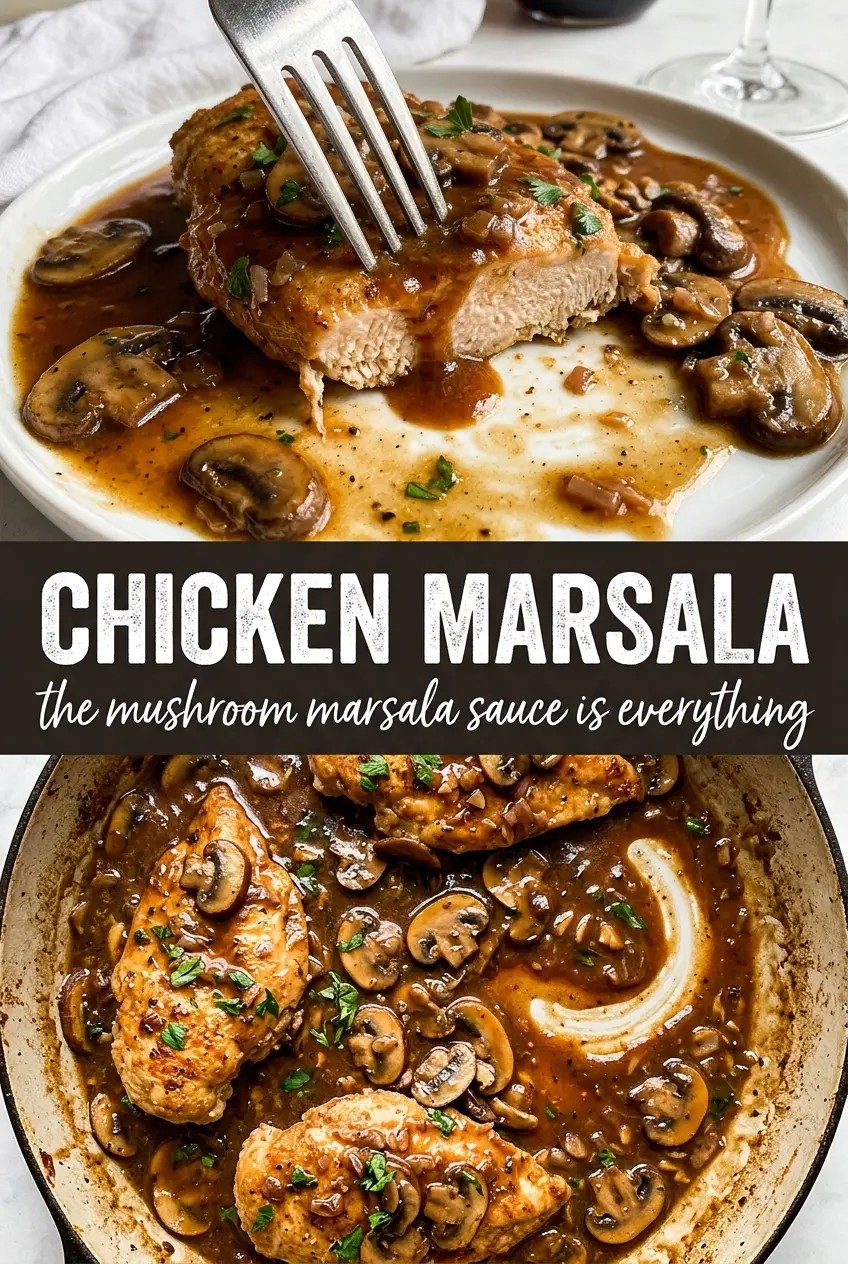
Chicken Marsala
Ingredients
Equipment
Method
- Season the chicken cutlets with salt and pepper to taste.
- Dredge the cutlets in all-purpose flour, shaking off excess flour.
- Heat olive oil and 2 tablespoons butter in a cast iron skillet over medium-high heat, then pan-fry the cutlets for 3-4 minutes per side until golden.
- Remove the cutlets to a plate and leave the browned bits in the skillet.
- Cook the mushrooms and shallots in the same skillet for 5-6 minutes until golden.
- Add the garlic and cook for 1 minute, stirring to prevent browning.
- Pour in the dry Marsala wine and let it bubble for 2-3 minutes to reduce slightly.
- Add the chicken broth and heavy cream, then simmer for 5 minutes until the sauce is cohesive.
- Swirl in the remaining 2 tablespoons cold butter until the sauce is glossy.
- Stir in the fresh thyme leaves.
- Return the cutlets to the skillet and spoon the sauce over them.
- Garnish with fresh parsley and serve.