Thin slices of beef, crisp-tender vegetables, and a glossy soy-ginger sauce make this beef stir fry with vegetables the kind of dinner that disappears fast once it hits the table. The beef stays tender because it’s seared hard and fast instead of crowded in the pan, and the vegetables keep their bite instead of turning limp and gray. That balance is what turns a basic stir fry into something you’d happily make on a weeknight again and again.
The trick is in the order. The beef goes in first so it can brown before the vegetables release their moisture, and the sauce gets mixed ahead of time so the final toss is quick. Cornstarch thickens the sauce right at the end, which gives you that takeout-style sheen without overcooking the vegetables or the steak.
Below, I’ll walk you through the part that matters most: getting the beef seared properly, keeping the vegetables crisp, and finishing with a sauce that clings instead of pooling at the bottom of the bowl.
The beef browned fast and stayed tender, and the sauce thickened up just enough to coat everything without turning the vegetables soft. My husband kept saying it tasted better than takeout.
Love the glossy soy-ginger sauce and crisp-tender vegetables? Save this beef stir fry with vegetables for the next night you want a fast skillet dinner that tastes like takeout.
The Sear Is Doing More Work Than the Sauce
The biggest mistake in stir fry is treating the pan like a stew pot. If the beef goes in crowded or the heat is too low, it steams, turns gray, and never develops the browned edges that carry the dish. High heat and a single layer give you that quick crust before the meat overcooks.
That same rule applies to the vegetables. Broccoli, peppers, snap peas, and mushrooms all release moisture, so they need enough heat to move fast from raw to crisp-tender. If the pan looks wet, the vegetables start softening before they ever pick up color, and the whole dish tastes flat instead of lively.
- Flank or sirloin — either cut works, but it needs to be sliced very thin against the grain. That shortens the muscle fibers and keeps the beef tender after a fast sear.
- High smoke-point oil — vegetable oil handles the heat better than olive oil here. Save the sesame oil for the sauce, where its flavor can stay front and center without burning.
- Cornstarch slurry — this is what turns the sauce glossy and clingy at the end. Stir it in only after the beef and vegetables are back in the pan, or it can tighten too early and go gluey.
What Each Ingredient Is Actually Doing in This Stir Fry
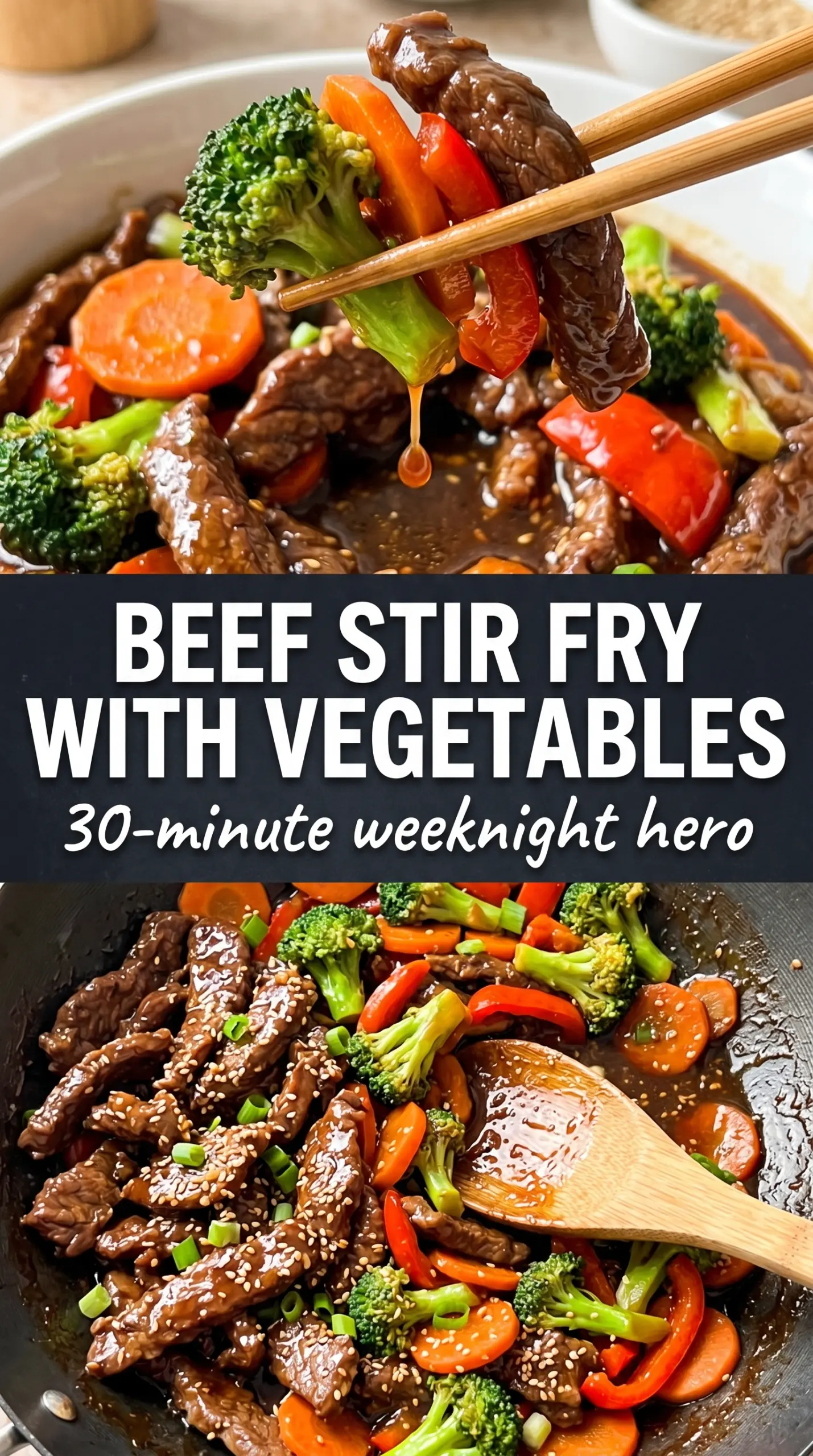
- Flank or sirloin steak — flank gives you a meatier chew, while sirloin is a little more forgiving if you slice it thin. Either one works, but don’t skip cutting against the grain or the beef will eat stringy.
- Broccoli, bell pepper, snap peas, and mushrooms — this mix gives you crunch, sweetness, and a little earthiness. Broccoli and snap peas hold their shape well; mushrooms add savory depth and help the pan pick up flavor.
- Garlic and ginger — these should hit the pan after the vegetables have mostly cooked. They burn fast, so 30 seconds is enough to wake them up without turning them bitter.
- Soy sauce, oyster sauce, brown sugar, and sesame oil — soy brings salt and body, oyster sauce adds that deep savory note, brown sugar rounds out the edges, and sesame oil gives the sauce its nutty finish. You can use low-sodium soy sauce if needed; the oyster sauce keeps the flavor from feeling thin.
- Cornstarch mixed with water — this is the quickest way to thicken the sauce without overcooking everything. Whisk it smooth before it goes in, or you’ll get little starchy lumps in the pan.
Getting the Beef Browned Before the Vegetables Take Over
Whisk the sauce first
Mix the soy sauce, oyster sauce, brown sugar, sesame oil, and cornstarch slurry before you turn on the heat. Stirring it together later slows the whole pan down, and stir fry rewards speed. The sauce should look smooth and a little murky from the cornstarch, with no dry pockets at the bottom of the bowl.
Sear the beef in a hot pan
Heat 2 tablespoons of oil until it’s shimmering and just starting to smoke, then add the beef in one layer. Leave it alone for 1 to 2 minutes so the surface browns; if you stir too soon, you break the contact that creates the crust. Pull it out as soon as it’s browned on the outside, even if the center still looks slightly underdone, because it finishes later in the sauce.
Cook the vegetables fast and hot
Add the remaining oil, then throw in the broccoli, bell pepper, snap peas, and mushrooms. Stir-fry them for 3 to 4 minutes until the broccoli turns bright green and the mushrooms lose their raw look but still hold their shape. If the pan seems crowded, cook the vegetables in two batches; overcrowding traps steam and robs them of color.
Finish with garlic, ginger, and sauce
Once the vegetables are tender-crisp, add the garlic and ginger and stir for about 30 seconds. Return the beef to the pan, pour in the sauce, and keep tossing until it turns thick and glossy, about a minute. The second the sauce looks shiny and coats the back of a spoon, get it off the heat so the vegetables stay crisp and the beef stays tender.
How to Adapt This When You Need to Work With What You Have
Make It Gluten-Free
Use tamari or a certified gluten-free soy sauce and check your oyster sauce label, since some brands include wheat. The rest of the recipe stays the same, and the sauce still thickens and clings the way it should.
Swap the Vegetables to Match What’s in the Fridge
Use asparagus, sliced carrots, snow peas, or baby corn if that’s what you’ve got. Keep the pieces cut small and even so they cook in the same short window, and use one firmer vegetable plus one softer one to keep the stir fry balanced.
Make It Spicier
Add a pinch of red pepper flakes to the sauce or stir in a little chili garlic sauce at the end. Put the heat in the sauce, not the pan, so the garlic and ginger don’t burn while you’re trying to build the heat level.
Storage and Reheating
- Refrigerator: Store leftovers in an airtight container for up to 3 days. The vegetables soften a bit, but the flavor holds well.
- Freezer: Freezing isn’t ideal because the vegetables lose their crisp texture. The beef and sauce will still be fine, but the vegetables turn softer after thawing.
- Reheating: Warm it in a skillet over medium heat with a splash of water to loosen the sauce. The common mistake is blasting it in the microwave until the beef turns chewy and the vegetables go limp.
Answers to the Questions Worth Asking
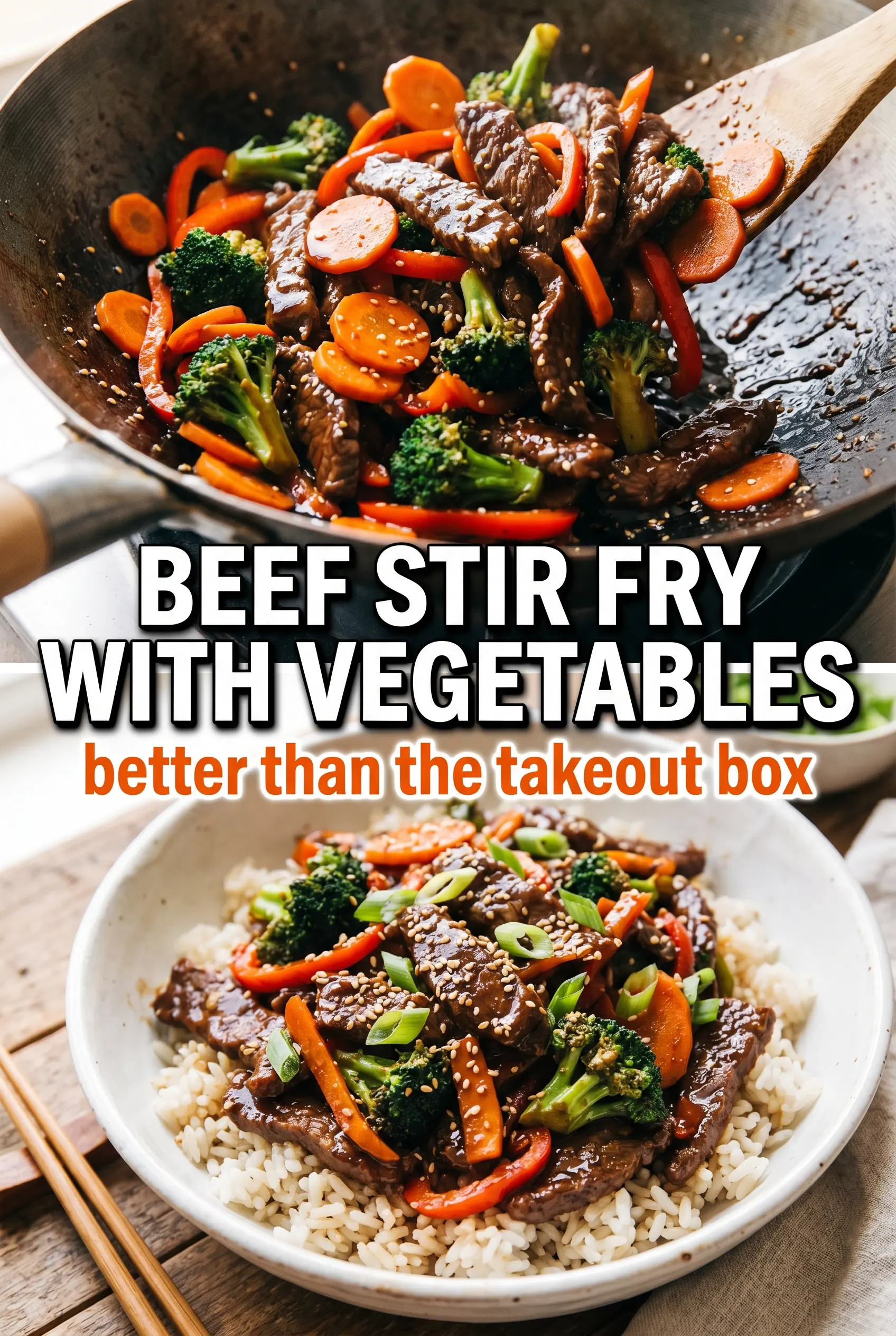
Beef Stir Fry with Vegetables
Ingredients
Equipment
Method
- Whisk soy sauce, oyster sauce, brown sugar, sesame oil, and cornstarch mixed with water together until smooth, then set aside.
- Heat 2 tablespoons vegetable oil in a wok or cast iron skillet over high heat until smoking, then add the sliced beef in a single layer.
- Sear the beef for 1–2 minutes without stirring until browned, then toss briefly and remove to a plate.
- Add the remaining 1 tablespoon vegetable oil to the wok, then stir-fry broccoli, bell pepper, snap peas, and mushrooms for 3–4 minutes until tender-crisp.
- Add the minced garlic and grated ginger and cook for 30 seconds, then return the beef to the wok.
- Pour the sauce over the beef and vegetables, then toss until the cornstarch activates and the sauce is thick and glossy, about 1 minute.
- Serve immediately over cooked rice and top with sesame seeds.