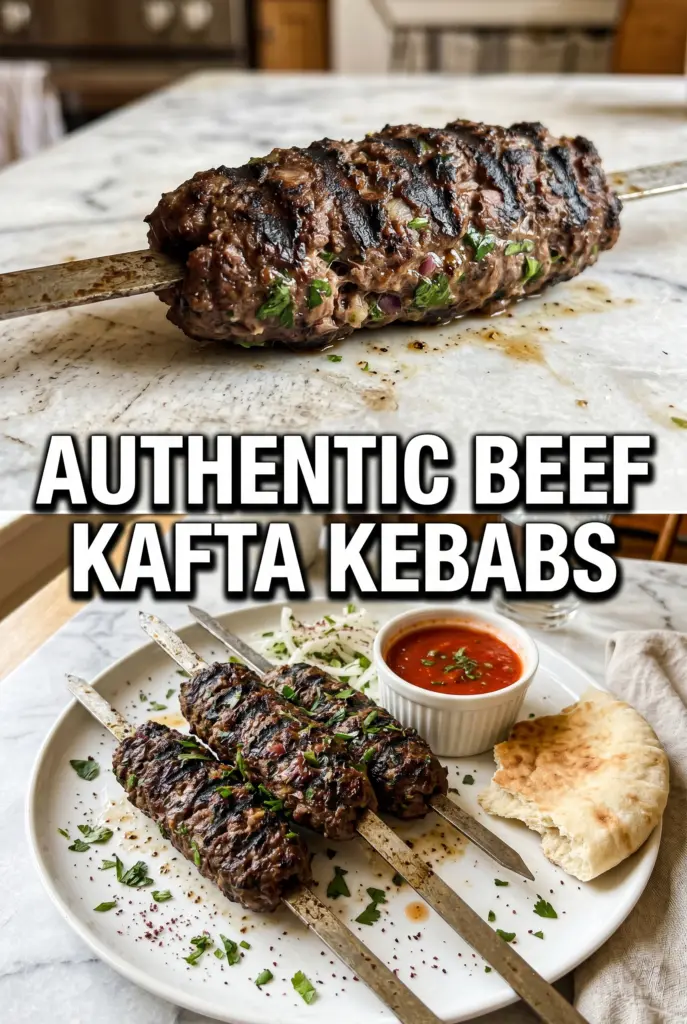
Beef kafta kebabs hit the grill with a deep savory aroma, a crisp char on the outside, and a tender, juicy center that stays together instead of crumbling onto the grates. The mix of cumin, paprika, allspice, and cinnamon gives the meat that unmistakable Middle Eastern warmth without tasting heavy, and the grated onion keeps every bite moist.
The trick is in the texture of the meat mixture. Grated onion adds flavor and moisture, but it has to be squeezed dry or the kafta turns soft and hard to shape. A short chill in the refrigerator firms everything up, which makes the skewering step much easier and helps the kebabs hold their shape over high heat. I also like using 80/20 beef here because it renders enough fat to keep the kebabs succulent while still giving you those crisp, browned edges.
Below, you’ll find the small details that matter most: how to keep the mixture from slipping off the skewers, what to watch for on the grill, and a few variations if you want to serve these with different sauces or make them work for a gluten-free table.
The onion was squeezed dry and the kebabs stayed on the skewers perfectly. I grilled them for about 10 minutes total and they came out juicy with those nice charred edges.
Save these grilled beef kafta kebabs for the nights when you want charred edges, warm spices, and a fast main dish that goes straight from grill to pita.
The Grated Onion Is What Keeps These Kafta Juicy, Not Watery
Kafta falls apart for one of two reasons: the mixture is too wet, or it never gets firm enough before it hits the grill. Grating the onion gives you better distribution than chopping, but the juice has to be squeezed out well or the meat turns loose and slippery. That extra minute with a towel or your hands is the difference between kebabs that stay on the skewer and kebabs that sag.
The second piece is the chill. Thirty minutes in the refrigerator gives the fat a chance to firm up, which makes shaping much easier and helps the meat cling to the skewer. If you skip that rest, the outside starts to slump before the center sets, and the log shape becomes impossible to keep.
- 80/20 ground beef — This fat level keeps the kebabs juicy over medium-high heat. Leaner beef can work, but the result is drier and a little crumbly.
- Grated onion — Grating spreads the flavor through the meat better than diced onion. Squeeze it dry after grating; that step matters more than the brand of beef.
- Parsley — Fresh parsley keeps the flavor bright and stops the spices from tasting flat. Dried parsley won’t give you the same lift or texture.
- Metal skewers or soaked wooden skewers — Metal skewers conduct heat and help the interior cook evenly. Wooden skewers need a good soak so they don’t scorch before the kebabs are done.
What Each Ingredient Is Actually Doing in These Kafta Kebabs
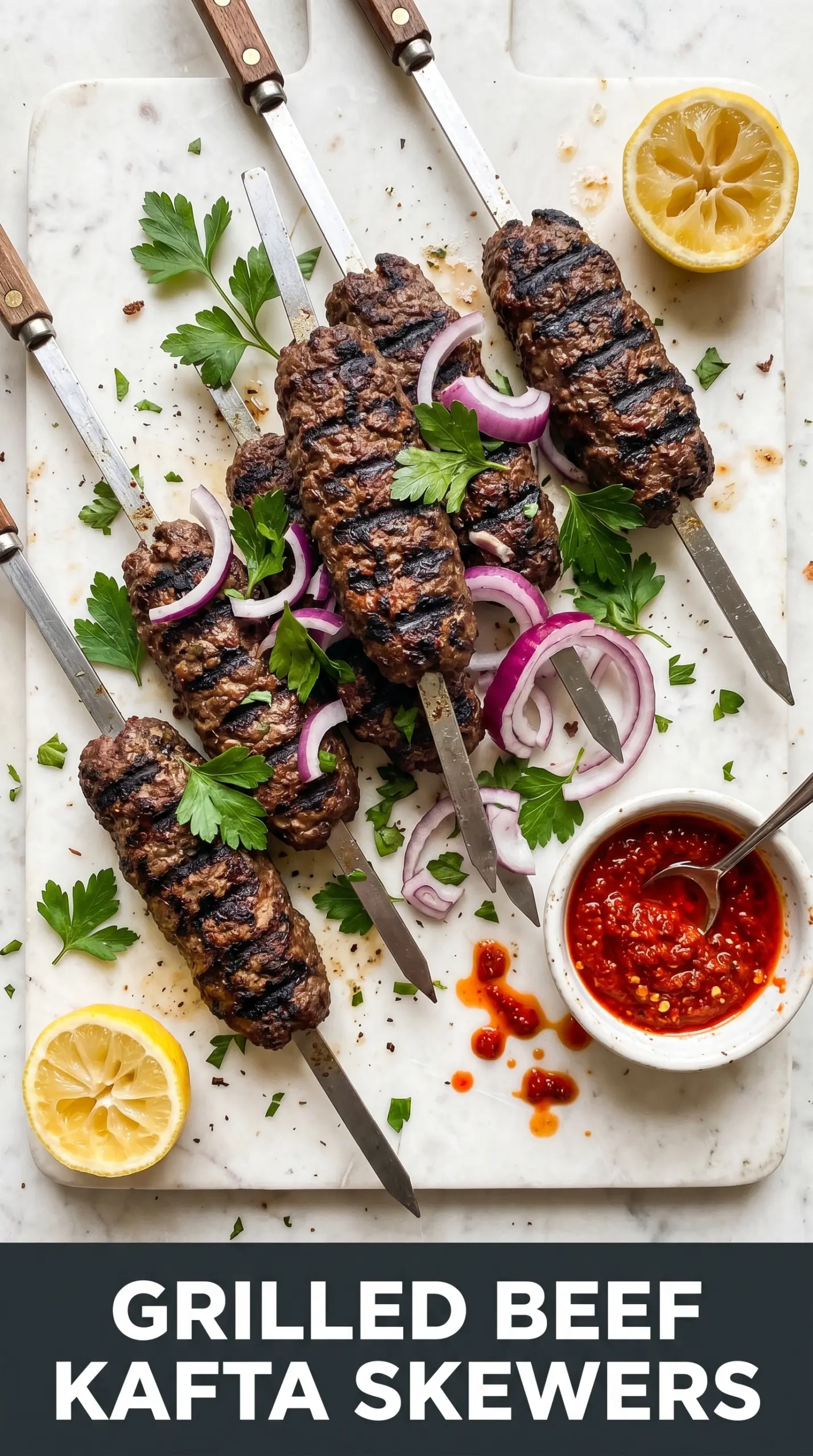
- Ground beef 80/20 — The fat ratio matters more than the exact cut. Eighty percent lean gives you enough richness to stay juicy over high heat, while still delivering that crisp, browned exterior that makes kafta special. Leaner beef dries out fast and tastes thin. Fattier beef can turn greasy and soft instead of crispy.
- Onion, grated and squeezed dry — Grating instead of dicing distributes the onion flavor evenly through the meat. The moisture has to be squeezed out well, or the mixture stays loose and slips off the skewer. Use a clean towel or your hands to press out the liquid; that one step is as important as chilling the mixture.
- Fresh parsley — Flat-leaf parsley is traditional, and it brings a bright, herbal lift that stops the spices from tasting heavy or one-dimensional. Dried parsley tastes stale in comparison and won’t give you the same green flavor or texture in each bite.
- Garlic, minced — Fresh minced garlic works best; jarred garlic loses sharpness and can taste a little stale. You only need a small amount to season the whole mixture, so a few cloves are plenty.
- Cumin — This is the earthy foundation of kafta. Ground cumin’s flavor fades fast, so check that yours still smells warm and toasty; old cumin tastes like dust and won’t give the kebabs their characteristic depth.
- Paprika — Use regular paprika, not smoked. It adds color and a subtle sweetness that balances the warm spices. Smoked paprika tastes good, but it shifts the whole flavor profile toward barbecue instead of Mediterranean.
- Allspice and cinnamon — Together they build the warm, layered flavor kafta is known for. The cinnamon should stay in the background; if it tastes sweet, the spice jar is probably too heavy-handed or too old. These two spices are what separate kafta from regular ground beef.
- Salt and pepper — Season generously; the salt needs to season the whole mixture, not just coat the outside. Taste a tiny piece of raw meat before chilling to adjust the seasoning.
- Metal or well-soaked wooden skewers — Metal skewers conduct heat and help the interior cook evenly without the exterior burning. Wooden skewers must be soaked for at least 30 minutes so they don’t scorch while the meat is still cooking.
Building the Skewers So the Meat Stays Put on the Grill
Mixing the Meat Just Enough
Combine the beef, onion, parsley, garlic, spices, salt, and pepper until everything is evenly distributed, but stop before the mixture turns paste-like. Overmixing makes the meat dense and springy instead of tender. The texture should hold together when you press it, but still look loose enough that you can shape it without fighting it.
Chilling for Shape
Refrigerate the mixture for 30 minutes before you form the kebabs. It should feel firmer and less sticky when it comes out, which is exactly what you want for clean shaping. If the mixture still feels slack, give it another 10 to 15 minutes rather than forcing it onto the skewers too early.
Forming the Kafta Logs
Divide the meat into 6 to 8 portions and press each one around a skewer into a long, even log. Keep the thickness consistent so the kebabs cook at the same rate from end to end. Thin ends dry out fast, while bulky middles stay underdone, so smooth the shape with your hands as you go.
Grilling to a Deep Char
Cook over medium-high heat for 4 to 5 minutes per side until the outside has browned edges and the center is cooked through. If the grill is too hot, the outside will darken before the inside has time to finish, so watch for steady sizzling rather than aggressive flare-ups. Let the kebabs release naturally before turning them; if they stick hard, they need another moment.
How to Change These Kebabs for Different Proteins and Serving Styles
Make It with Ground Lamb for a Richer, More Traditional Bite
Swap some or all of the beef for ground lamb if you want a deeper, more aromatic flavor. Lamb brings more richness and a little more natural sweetness, but it also benefits from the same chilled rest and tight shaping so it doesn’t loosen on the grill.
Dairy-Free and Gluten-Free Serving Style
The kebabs themselves are naturally dairy-free and gluten-free, so the main thing to watch is the serving set-up. Use gluten-free pita if needed, or skip the bread and serve the kafta over rice, chopped salad, or cucumber and tomato with tahini.
No Grill, Just a Broiler or Grill Pan
If you don’t have an outdoor grill, cook the skewers under a hot broiler or on a ridged grill pan. You won’t get the same smoke, but you will get good browning if the surface is preheated first and you leave enough space between the kebabs for air to move.
Storage and Reheating
- Refrigerator: Store cooked kafta in an airtight container for up to 4 days. The exterior softens a bit after chilling, but the flavor stays strong.
- Freezer: Freeze the shaped raw kebabs on a tray, then wrap and store for up to 2 months. You can also freeze cooked kebabs, but the texture is best when frozen before grilling.
- Reheating: Reheat gently in a covered skillet over low heat or in a 325°F oven until warmed through. High heat dries out the meat fast, especially if the kebabs were already fully cooked the first time.
Questions I Get Asked About This Recipe
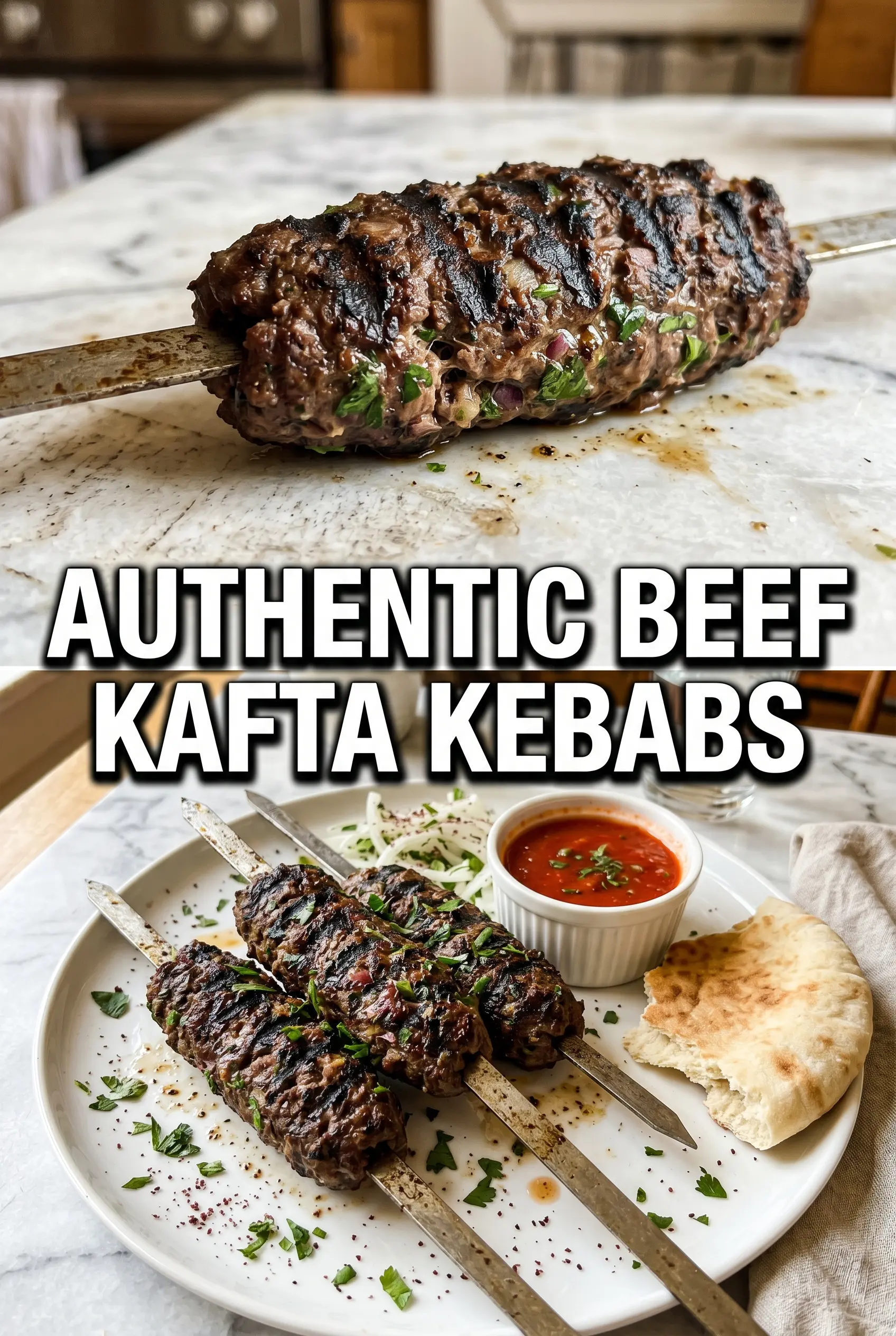
Beef Kafta Kebabs
Ingredients
Equipment
Method
- In a mixing bowl, combine ground beef, grated onion (squeezed dry), chopped parsley, minced garlic, cumin, paprika, allspice, cinnamon, salt, and pepper, and mix until evenly combined.
- Refrigerate the mixture for 30 minutes to firm up, then you’ll be able to shape it around the skewers cleanly.
- Divide the chilled mixture into 6-8 portions and shape each portion around a skewer into a log shape with even thickness.
- Grill over medium-high heat for 4-5 minutes per side, until the kebabs are charred on the outside and cooked through (look for dark grill marks and no pink in the center).
- Serve the beef kafta kebabs with tahini sauce, pita bread, and fresh vegetables.