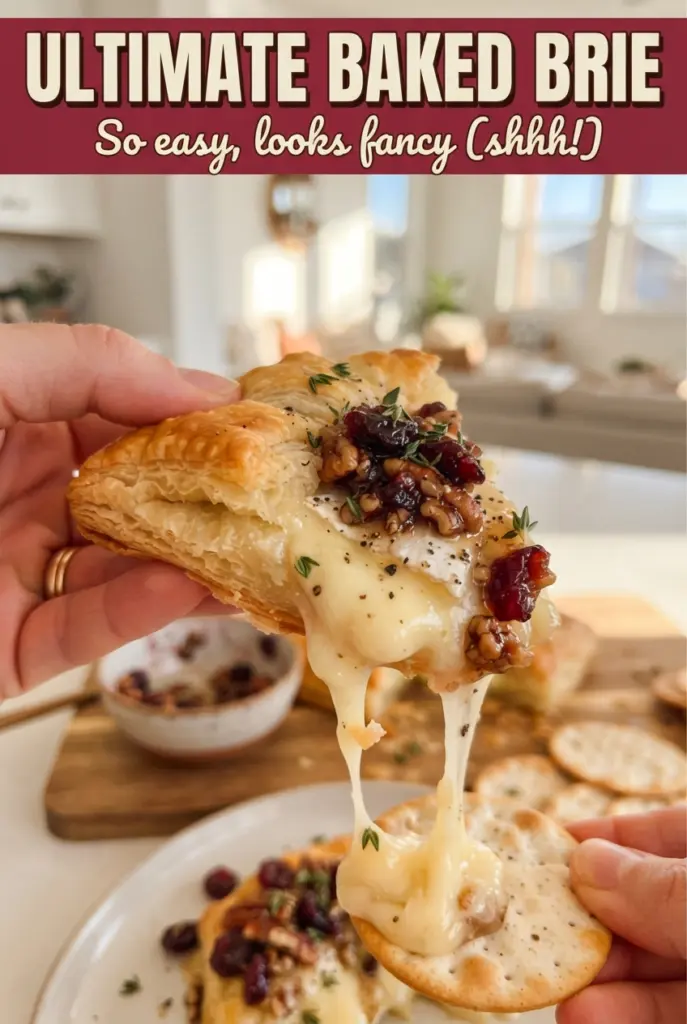
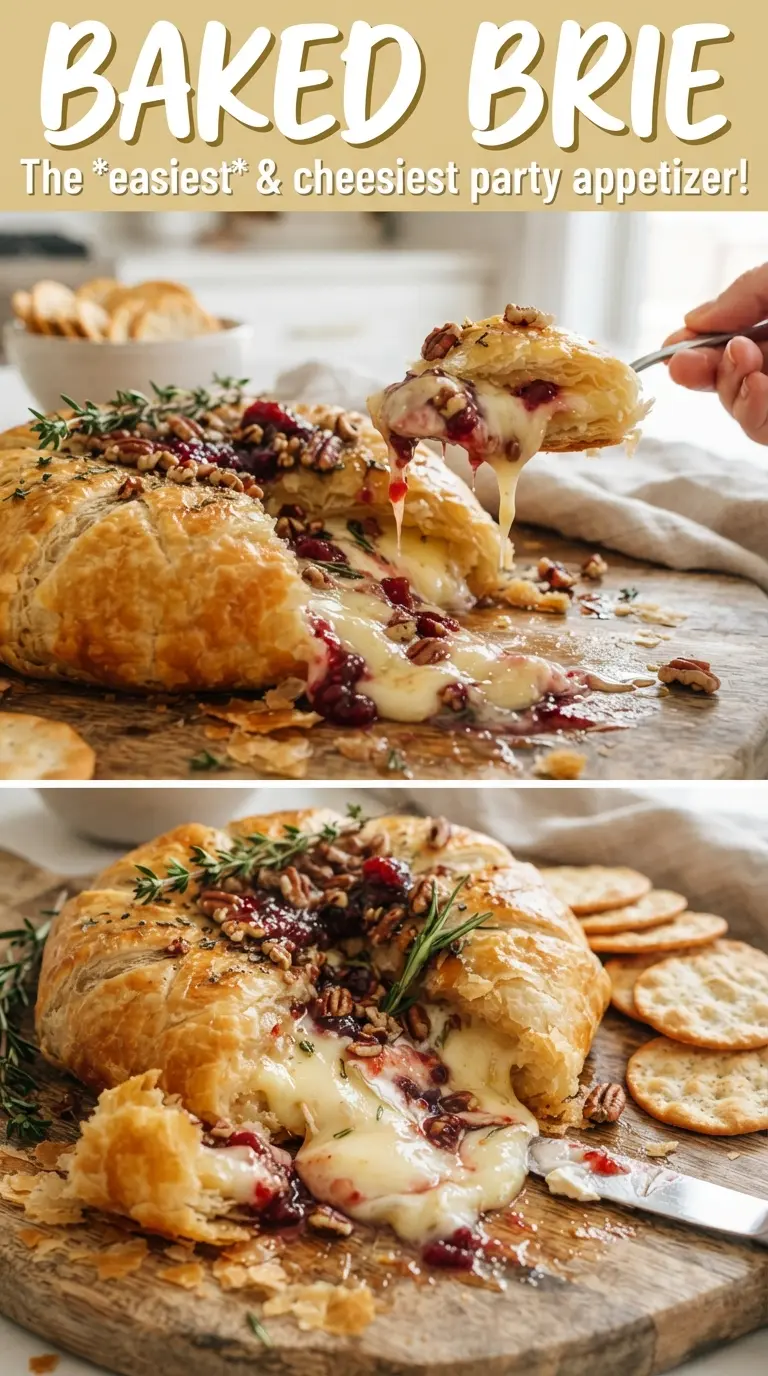
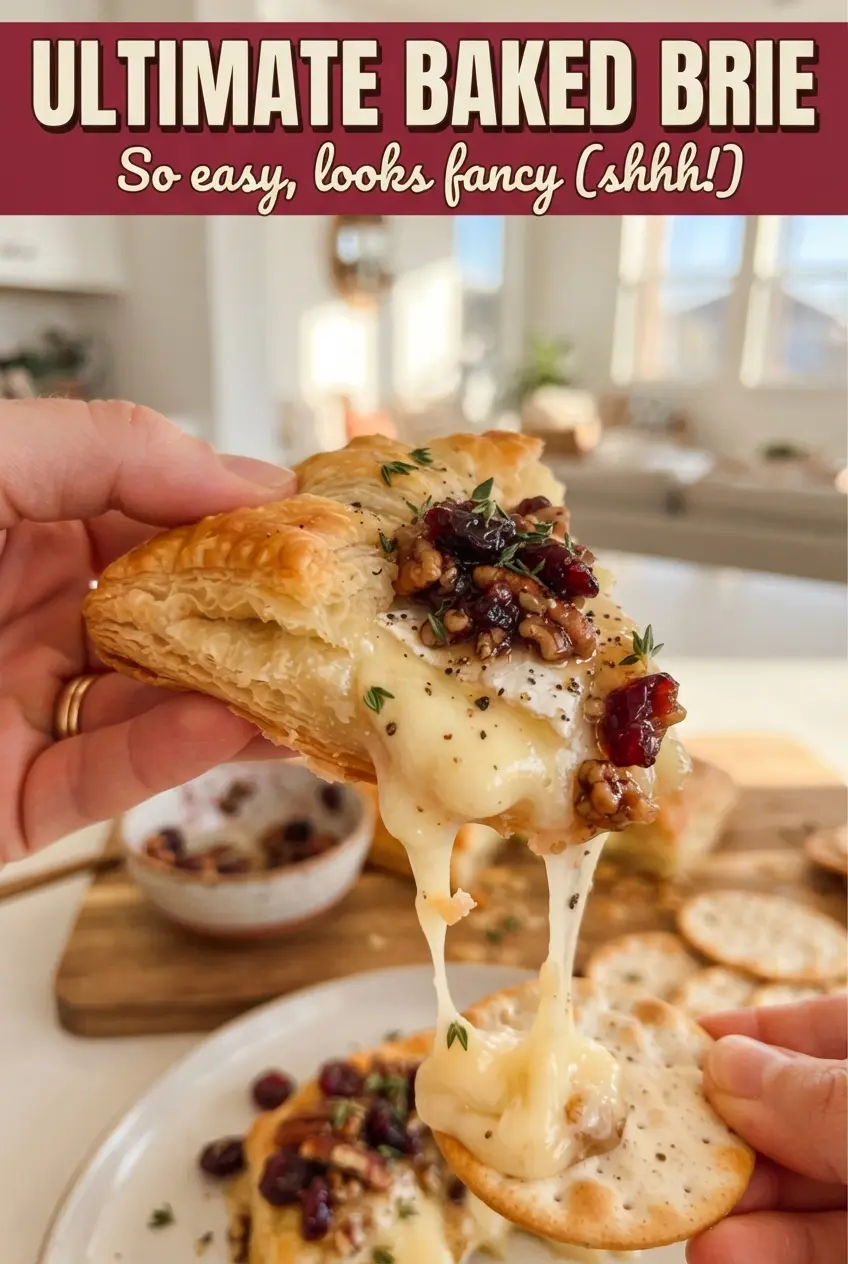
Golden puff pastry, warm brie, and a little fruit sweetness turn into the kind of appetizer people hover over before it even hits the table. The outside bakes into a crisp, flaky shell, while the center softens into a molten layer that spreads cleanly onto crackers and apple slices. The contrast is the whole point: buttery pastry, creamy cheese, a sticky jam layer, and just enough crunch from pecans to keep each bite interesting.
This version works because the brie is wrapped tightly and baked seam-side down, which helps the pastry stay sealed as the cheese melts. A light egg wash gives the crust its shine and deep color without making it heavy, and the short rest after baking keeps the filling from running everywhere the moment you cut into it. Raspberry jam brings brightness; fig jam makes it a little deeper and more savory. Either one gives the cheese a sweet edge that keeps this from tasting flat.
Below, I’ve included the little timing detail that keeps the brie from turning into a lava spill, plus a few smart swaps if you want to change the jam, nuts, or pastry with confidence.
The puff pastry came out crisp all the way around and the brie stayed perfectly gooey after a 10-minute rest. I used fig jam and it tasted like something from a fancy cocktail party, but it was easy enough to make on a Tuesday.
Love the crisp puff pastry and molten brie center? Save this baked brie with raspberry jam and pecans for your next easy appetizer spread.
The Part That Keeps Baked Brie from Bursting Out of the Pastry
The filling looks simple, but the order matters. Jam goes directly on the cheese before the nuts and sugar, because the sticky layer helps hold the toppings in place while the pastry wraps and bakes. If you pile on too much filling or leave a seam gap, the cheese finds the weakest spot and leaks before the crust has time to set.
The other mistake is baking until the pastry is pale and calling it done. Puff pastry needs a deep golden color to taste finished; otherwise it reads doughy instead of crisp. A brie wheel in the 8-ounce range gives you enough filling for eight people without creating a center so large it collapses the pastry from the inside.
- Puff pastry — Thawed pastry rolls a little more easily and seals better than frozen pastry. If your sheet cracks at the folds, let it sit 5 to 10 minutes longer; fighting cold pastry is how seams split.
- Brie — A ripe wheel softens into a smooth, spoonable center. Don’t remove the rind; it helps the cheese hold together while it melts.
- Jam — Raspberry keeps the flavor bright, while fig leans deeper and more savory. Either one works, but a thick jam is better than a loose preserve because it stays put inside the pastry.
- Pecans and brown sugar — The nuts add crunch and the sugar helps the top caramelize under the pastry. Chop the pecans fine so they don’t tear through the dough when you fold it.
What Each Ingredient Is Actually Doing in This Recipe
- Primary ingredient (the star) — Quality matters most. Choose the best you can find.
- Cooking medium (oil, butter, or broth) — This carries flavors and prevents dryness.
- Seasonings (salt, pepper, spices, herbs) — Layer flavors so nothing overpowers. Build depth gradually.
- Aromatics (garlic, onion, herbs) — Cook with fat to bloom flavors. Become the foundation.
- Supporting ingredients — Complement the main ingredient without overpowering it.
- Sauce or liquid (if applicable) — Brings flavors together. Balance richness with acid.
- Acid (lemon, vinegar, wine, or other) — Brightens and prevents flat-tasting results.
- Final finish (garnish, glaze, or sauce) — Prevents one-dimensional taste and adds visual appeal.
Wrapping, Sealing, and Baking the Brie So the Center Stays Put
Setting Up a Clean, Sealed Package
Roll the pastry just enough to smooth the seams, then place the brie in the center and add the jam right on top. Fold the dough up and over the wheel, pressing every seam tightly so no gaps remain. Trim excess pastry if it starts to bunch in thick folds, because thick spots bake slower and can stay gummy while the rest turns golden.
Flipping for the Best Bottom Crust
Turn the wrapped brie seam-side down onto the parchment-lined baking sheet before brushing on the egg wash. That small move keeps the folded edges from popping open in the oven and gives you a flatter, neater base. Brush lightly but fully; too much egg wash can pool in the creases and make the pastry patchy instead of evenly browned.
Knowing When to Pull It from the Oven
Bake until the pastry is deeply golden and visibly crisp, not just lightly colored. Around the 22-minute mark, the cheese should be soft and the shell should feel firm when nudged with a spatula. If the pastry looks right but the top is still blonde, give it another couple of minutes; underbaked puff pastry goes limp fast once it cools.
Letting It Rest Before You Cut
Give the baked brie about 10 minutes before serving. That rest lets the cheese settle from a full melt into something that still oozes but doesn’t immediately flood the board. Cut too soon and the filling runs everywhere; wait a few minutes and it stays creamy while holding enough shape to scoop onto crackers and apples.
Three Ways to Change the Filling Without Losing the Melt
Fig Jam and Walnuts
Swap the raspberry jam for fig jam and the pecans for chopped walnuts. The result is a deeper, earthier brie that tastes a little more savory and a little less bright, which works especially well if you’re serving it with wine or cured meats.
Dairy-Free Puff Pastry Appetizer
This one only works if you use a dairy-free brie-style cheese that melts well and a puff pastry made without butter. The texture won’t be identical, but you’ll still get a crisp shell and a soft center if you chill the wrapped cheese before baking so it holds its shape longer in the oven.
No-Nut Version
Leave out the pecans and add a little extra brown sugar or a pinch of flaky salt on top of the jam. You lose the crunch, but the pastry still bakes beautifully, and the sweet-salty contrast keeps the filling from tasting one-note.
Storage and Reheating
- Refrigerator: Store leftovers tightly wrapped for up to 3 days. The pastry softens a bit, but the flavor stays good.
- Freezer: Freeze the unbaked, wrapped brie before brushing with egg wash for up to 1 month. Bake from frozen and add a few extra minutes; the baked version doesn’t thaw back with the same flaky texture.
- Reheating: Warm slices in a 325F oven until the pastry crisps again and the center loosens. The mistake is using the microwave, which turns the pastry soggy and the cheese greasy.
Questions I Get Asked About This Recipe
Baked Brie
Ingredients
Equipment
Method
- Preheat the oven to 400F and line a baking sheet with parchment. Roll the puff pastry slightly and place the brie in the center.
- Spread the raspberry or fig jam over the brie, then sprinkle with the chopped pecans and brown sugar. Fold the pastry up over the brie, trimming excess and pressing the seams to seal.
- Flip the pastry seam-side down onto the baking sheet. Brush the top with the beaten egg wash so it will brown evenly.
- Bake at 400F for 22-25 minutes, until the pastry is deep golden brown. Remove from the oven and let it rest for 10 minutes so the cheese sets slightly.
- Garnish with fresh rosemary. Serve warm with crackers and apple slices for dipping.