Golden chicken breast tucked into a garlicky butter sauce earns its place on the dinner table fast. The chicken stays juicy because it’s seared first and finished in the sauce, not simmered from the start. The pan picks up all those browned bits from the skillet, so the sauce tastes like it had a lot more effort behind it than it actually did.
The trick here is keeping the garlic in the butter long enough to turn fragrant, not long enough to brown hard and go bitter. Chicken broth loosens the pan drippings into a sauce that clings to the meat instead of turning greasy, and a squeeze of lemon at the end keeps the butter from feeling flat. Fresh parsley isn’t just garnish here; it cuts through the richness and makes the whole dish taste brighter.
Below, I’m walking through the sear, the sauce, and the small timing details that keep the garlic from scorching and the chicken from drying out. There’s also a few smart swaps for when you need to work with what’s in the fridge.
The sauce thickened just enough to coat the chicken, and the garlic stayed sweet instead of burnt. I served it with bread to soak up the pan sauce and my husband went back for seconds immediately.
Save this garlic butter chicken for the nights when you want a pan sauce that tastes like it took all evening.
The Part That Stops the Garlic From Turning Bitter
The biggest mistake with garlic butter chicken is treating the garlic like it can handle the same heat as the chicken. It can’t. The chicken needs a hard, confident sear to build flavor, but the garlic only needs a minute or two in the butter before it turns fragrant and soft. If you let it brown deeply, the sauce picks up a harsh edge that can’t be fixed with parsley or lemon.
Pulling the chicken out before you build the sauce matters too. That gives you a cooler pan and enough room to scrape up the browned bits with the broth instead of scorching the butter. The broth keeps the sauce from tasting heavy, and the lemon at the end wakes everything up without making it taste like lemon chicken.
What the Butter, Broth, and Lemon Are Each Doing Here
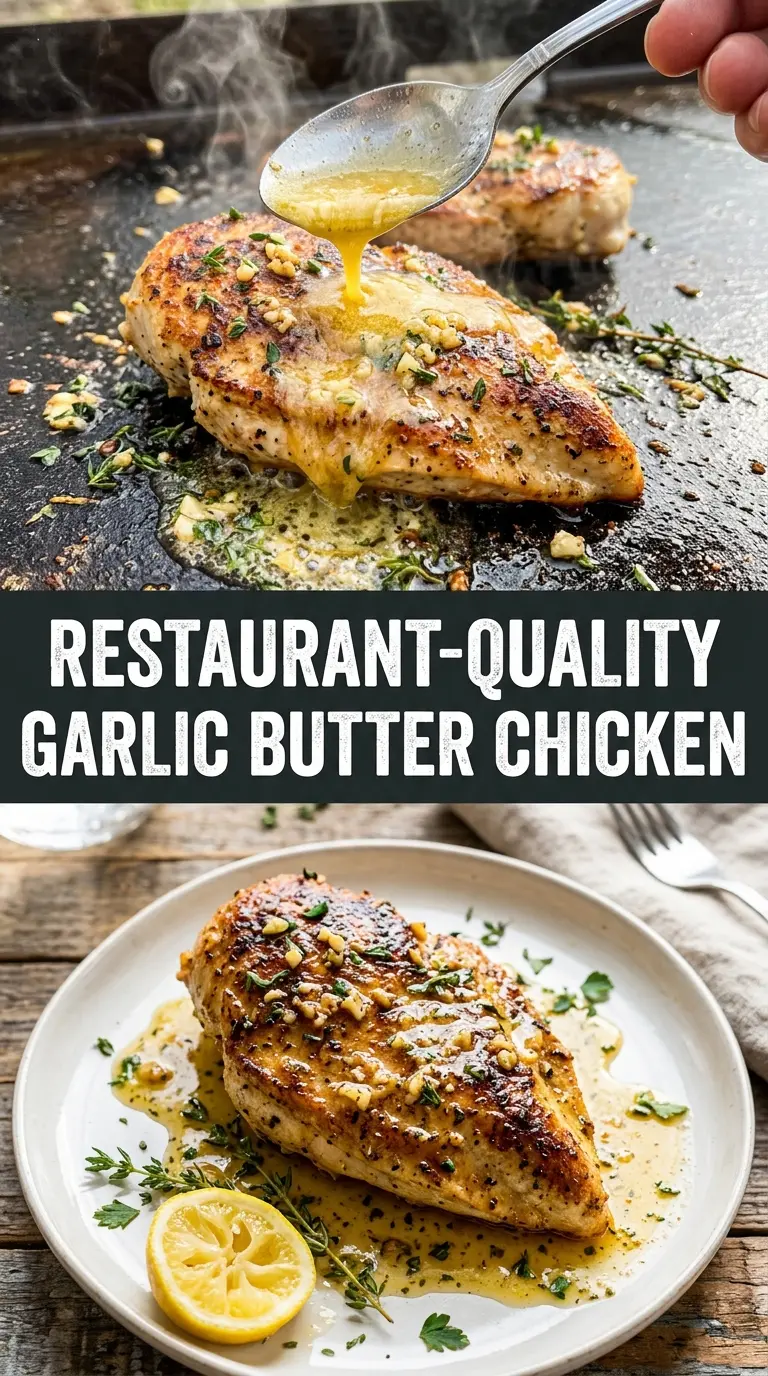
- Chicken breasts — Boneless breasts work because they sear quickly and slice neatly for serving. If yours are very thick, pound them to an even thickness so the outside doesn’t overcook before the center reaches 165°F.
- Olive oil — This helps the chicken brown before the butter goes in. Butter alone can scorch too early at searing heat, which is why the oil is doing the first round of the work.
- Butter — Use the real stuff here. It carries the garlic and turns the skillet drippings into a glossy sauce; margarine won’t give you the same body or richness.
- Garlic — Fresh minced garlic is worth it. Jarred garlic can taste dull and a little harsh once it cooks, while fresh garlic turns sweet and aromatic in the butter.
- Chicken broth — This loosens the pan and keeps the sauce from feeling greasy. If you only have stock, that works too; just use a low-sodium version if possible so the sauce doesn’t get too salty as it reduces.
- Lemon juice and parsley — Add both at the end. The lemon sharpens the butter sauce, and the parsley brings freshness that keeps the dish from tasting flat.
How to Keep the Chicken Juicy While the Sauce Comes Together
Seasoning and Searing the Chicken
Season the chicken generously before it hits the pan. A thin, even coat of salt and pepper gives the meat flavor all the way through, not just on the surface. Heat the oil until it shimmers, then lay the chicken in without crowding the skillet. If the pan is too packed, the chicken steams instead of browns, and that crust is a big part of what makes the final dish taste full-bodied.
Building the Garlic Butter Base
Once the chicken comes out, drop the heat to medium before the butter goes in. That drop matters because the skillet is still hot enough to carry flavor, but not so hot that the garlic burns the second it lands. Stir the garlic constantly and watch for the smell to turn sweet and nutty, which usually takes just a minute or two. If it starts to brown too fast, add the broth immediately.
Finishing the Sauce and Bringing the Chicken Back
Pour in the broth and scrape the bottom of the pan with a wooden spoon so every browned bit dissolves into the sauce. Let it simmer for a few minutes until it looks slightly reduced and glossy, then slide the chicken back in. Spoon sauce over the top as it finishes heating through so the meat gets coated without overcooking. The last splash of lemon juice should taste bright, not sour.
Ways to Bend This Recipe Without Losing What Makes It Good
Use Chicken Thighs Instead of Breasts
Boneless thighs stay juicier and give you a little more forgiveness if your timing runs long. They take a few extra minutes to cook through, but the sauce and garlic work the same way, and the finished dish tastes a little richer.
Make It Dairy-Free
Use a good dairy-free butter alternative with a clean flavor, not a heavily salted spread. You’ll lose a little of the classic buttery finish, but the garlic-broth sauce still comes together and stays satisfying.
Add Mushrooms or Spinach
Sauté sliced mushrooms after the chicken comes out, before the butter and garlic go in, so they can release their moisture and brown a little. Stir in spinach at the very end and let the residual heat wilt it without making the sauce watery.
For Gluten-Free Serving
The chicken itself is naturally gluten-free, so the only thing to watch is the broth. Use a broth you trust, then serve it with rice, potatoes, or gluten-free bread to catch every bit of sauce.
Storage and Reheating
- Refrigerator: Store leftovers in an airtight container for up to 3 days. The sauce will thicken as it chills, and the chicken will hold up better than most pan-seared recipes.
- Freezer: You can freeze it, but the butter sauce may separate a little when thawed. If you do freeze it, cool it completely first and reheat gently so the sauce has a chance to come back together.
- Reheating: Warm it slowly in a skillet over low heat with a splash of broth or water. The mistake people make is blasting it in the microwave, which dries out the chicken and makes the garlic taste dull.
Answers to the Questions Worth Asking
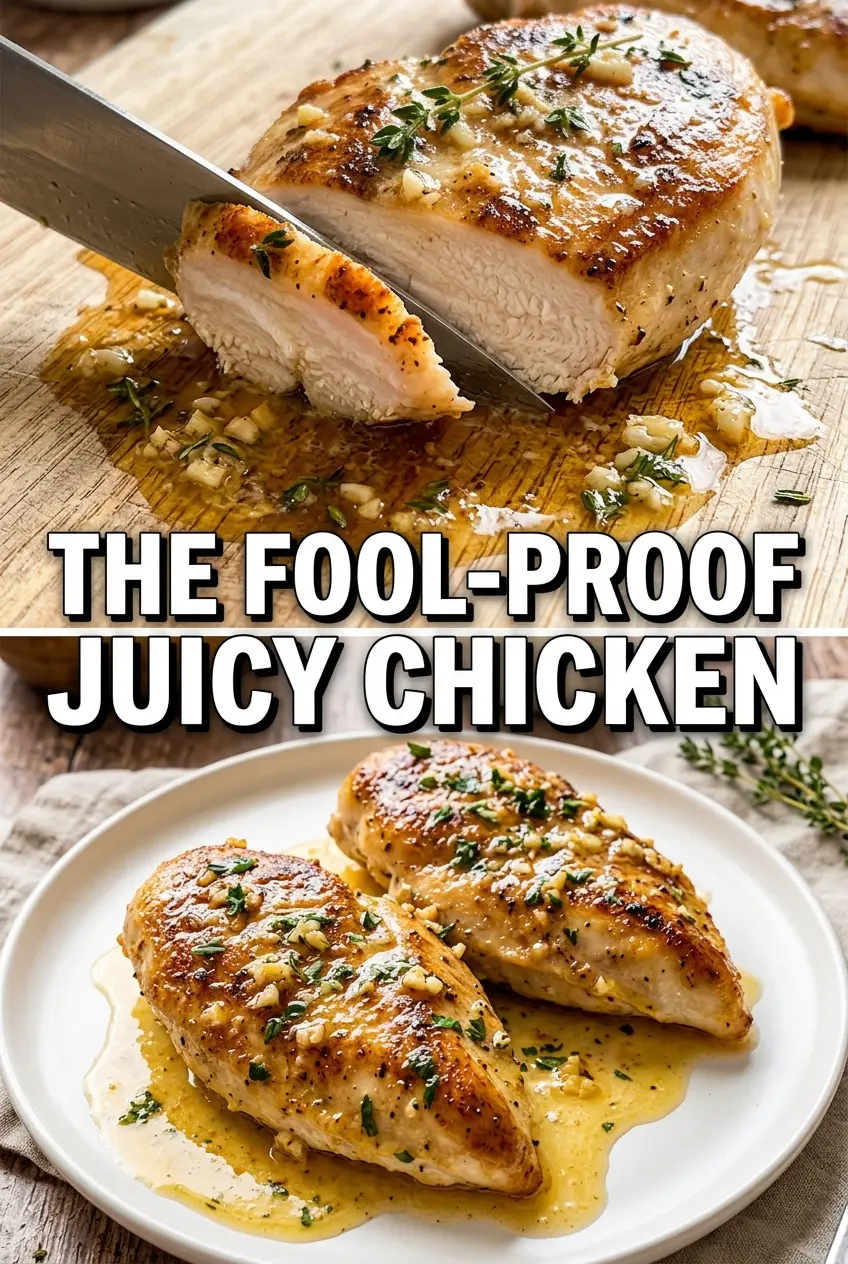
Garlic Butter Chicken
Ingredients
Equipment
Method
- Season the boneless chicken breasts generously with salt and pepper. Pat lightly so the seasoning adheres.
- Heat the olive oil in a large skillet over medium-high heat. When it shimmers, add chicken breasts and spread them out.
- Sear the chicken for 6-7 minutes per side until golden and cooked through to 165°F. The surface should be deeply browned with visible caramelization.
- Remove the chicken and set aside. Tent loosely to keep it warm.
- Reduce heat to medium and add the butter to the skillet. Let it melt and coat the pan.
- Add the garlic to the skillet and cook for 1-2 minutes until fragrant. Stir until you can smell garlic clearly without browning it too much.
- Add the chicken broth and dried thyme, scraping up any browned bits. Bring to a simmer and cook for 2-3 minutes until slightly reduced.
- Return the chicken to the pan and spoon the sauce over top. Ensure each breast is coated and the sauce lightly pools around it.
- Add lemon juice and fresh parsley, then serve immediately. Finish with bright flecks of parsley visible over the glossy garlic butter sauce.