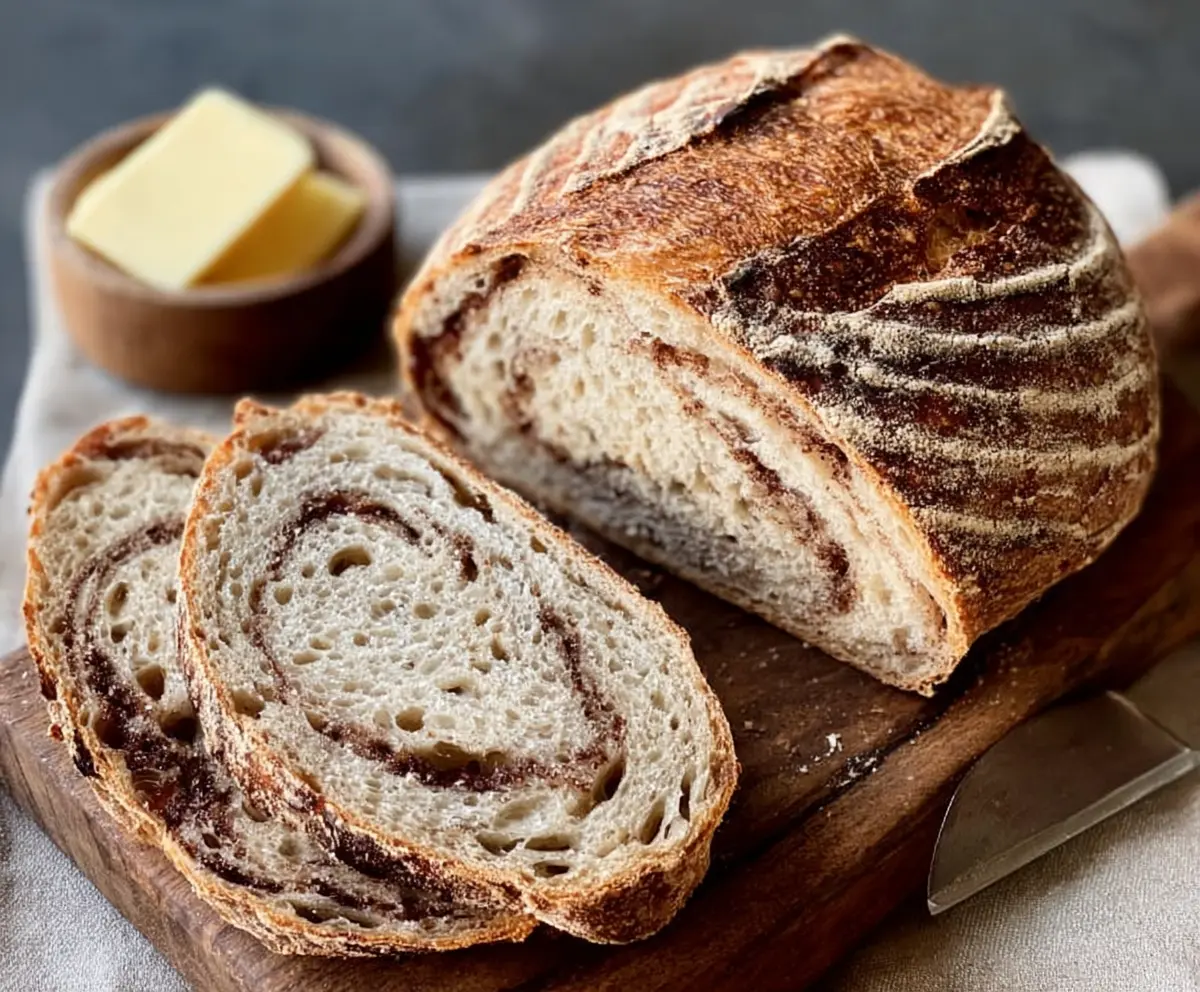
This Cinnamon Sugar Swirl Sourdough Bread is a delightful treat that combines the warmth of cinnamon with sweet sugar in every slice. It’s soft, fluffy, and perfect for breakfast or a snack!
I love to enjoy it toasted with a little butter on top—heavenly! Plus, the smell of it baking makes the whole house feel cozy. Who can resist a slice of warm goodness? 😊
Key Ingredients & Substitutions
Bread Flour: This is the backbone of your sourdough. It’s high in protein, which gives structure. If you don’t have it, you can substitute with all-purpose flour, but the texture might be slightly less chewy. I love using King Arthur or Bob’s Red Mill for consistent results.
Sourdough Starter: Using an active starter is key for good rise and flavor. If you’re unable to maintain one, you can use store-bought sourdough starter or even substitute with instant yeast—just adjust the quantity to about 1-2 teaspoons.
Cinnamon & Sugar Mixture: The combo of cinnamon and sugar is what makes this bread smell heavenly. For a healthier option, you might experiment with coconut sugar or a sugar alternative like erythritol. You can also swap the cinnamon for a mix of nutmeg and allspice for a different flavor profile.
Unsalted Butter: While this is optional, it helps the cinnamon sugar stick better and adds richness. If dairy-free, try using coconut oil or a vegan butter substitute—I find that coconut oil gives a lovely flavor.
How Do I Properly Prepare the Dough?
Preparing the dough for sourdough bread involves a few essential techniques. The initial step is an autolyse, which hydrates the flour and begins gluten development. This makes your dough stronger and easier to work with.
- Combine flour and water, mix until no dry flour remains, then let it rest for about 30 minutes.
- After resting, add in the salt for flavor and to strengthen the dough, and mix thoroughly—this means folding and stretching the dough until everything is well incorporated.
This method not only enhances gluten structure but also improves the overall texture of your bread. Be patient during bulk fermentation and the stretch and folds, as they help develop that beautiful crumb you’re looking for!
Why Is Bulk Fermentation Important?
Bulk fermentation is crucial for developing flavor and texture in sourdough. During this time, the dough ferments and expands, producing air bubbles and enhancing the sour profile.
- Keep your dough covered to prevent it from drying out.
- Stretching and folding every 30 minutes for the first 2 hours helps strengthen the gluten without heavy kneading.
Look for the dough to double in size, feel airy, and still be a touch tacky when you are ready to shape it. This will give you a light and fluffy result once baked!
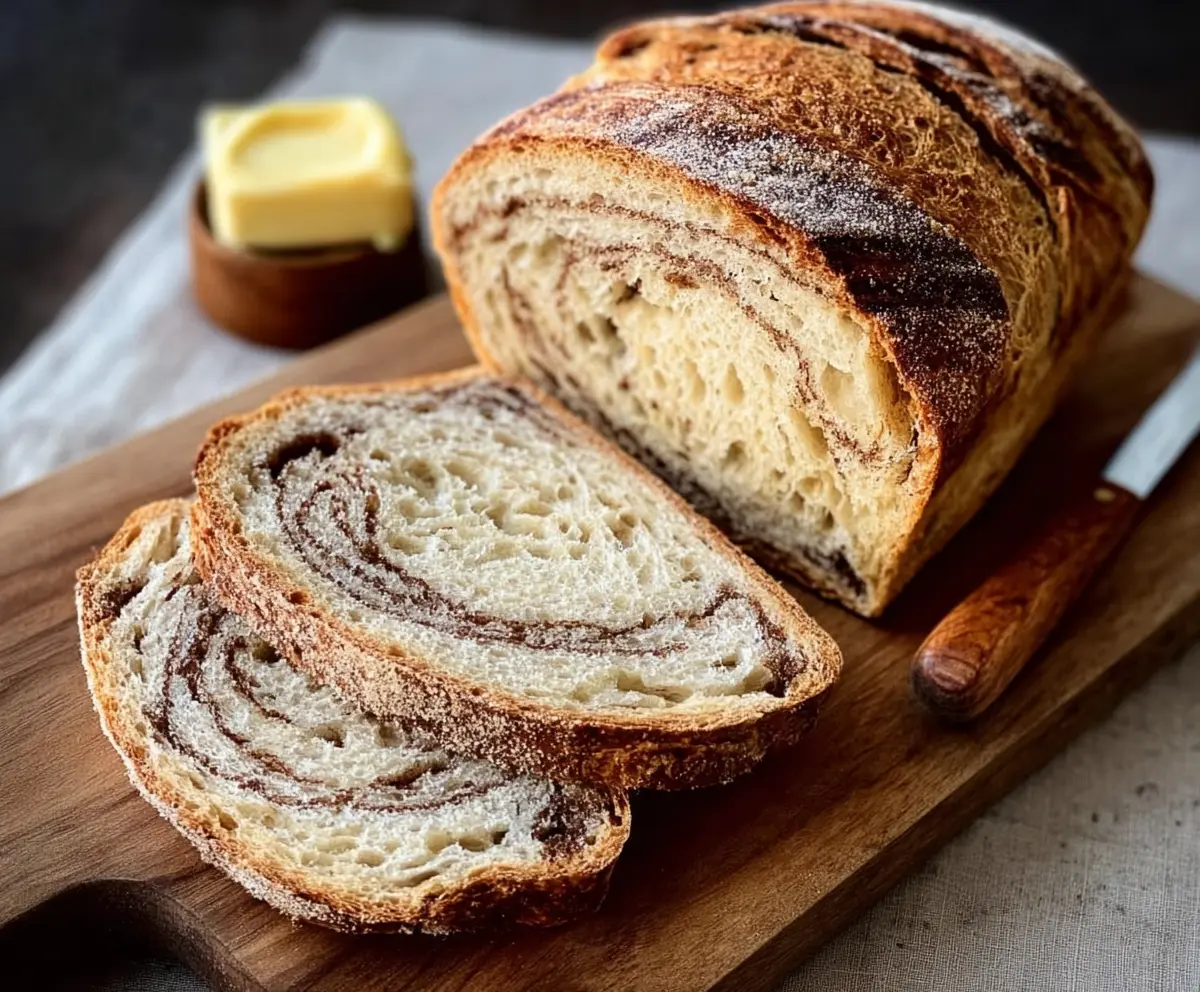
How to Make Cinnamon Sugar Swirl Sourdough Bread
Ingredients You’ll Need:
For The Bread Dough:
- 500g (about 4 cups) bread flour
- 350ml (1 1/2 cups) water, room temperature
- 150g (about 2/3 cup) active sourdough starter (100% hydration)
- 10g (2 tsp) salt
For The Cinnamon Sugar Swirl:
- 100g (1/2 cup) granulated sugar
- 2 tbsp ground cinnamon
- 2 tbsp unsalted butter, melted (optional for spreading)
How Much Time Will You Need?
This recipe will take about 5-6 hours in total. You’ll spend around 30 minutes for mixing and shaping the dough, plus 4-6 hours for fermentation (including the time to perform stretch and folds), and an additional 40-50 minutes for baking and cooling. Allow yourself some time to enjoy the wonderful smell in your kitchen as the bread bakes!
Step-by-Step Instructions:
1. Prepare the Dough:
In a large mixing bowl, combine the bread flour, water, and sourdough starter. Use your hands or a spatula to mix everything together until all the flour is hydrated and a rough dough forms. Now, cover the bowl with a kitchen towel and let it rest for 30 minutes. This is called the autolyse and helps improve the dough’s texture.
2. Mix in the Salt:
After the dough has rested, sprinkle the salt over the top and mix it into the dough. Fold and stretch the dough for about 5 minutes. This helps to incorporate the salt and develop the dough’s gluten structure.
3. Bulk Fermentation:
Cover the bowl again and let the dough ferment at room temperature for 4-6 hours. During the first 2 hours, perform stretch and folds every 30 minutes. To do this, grab one side of the dough, stretch it up, and fold it over itself. Turn the bowl a quarter turn, and repeat until you’ve come full circle. This strengthens the dough.
4. Prepare The Surface:
Once the dough has nearly doubled in size and feels airy but still tacky, transfer it to a lightly floured surface. This part is where the magic happens!
5. Make the Cinnamon Sugar Mixture:
In a small bowl, combine the granulated sugar and ground cinnamon. This will be the delightful swirl that adds flavor to your bread.
6. Shape the Bread:
Roll the dough into a rectangle about 12×16 inches. If you want, brush a light layer of melted butter over the surface to help the cinnamon sugar stick. Then, generously sprinkle the cinnamon sugar mixture evenly over the rectangle.
7. Roll It Up:
Starting from one of the long edges, tightly roll the dough into a log. Ensure you seal the seam well by pinching the edges together as you go.
8. Proof the Bread:
Place the rolled dough seam-side down into a well-floured banneton or a bowl lined with a floured kitchen towel. Cover it and let it proof at room temperature for 2-3 hours or until it puffs up and nearly doubles in size.
9. Preheat the Oven:
During the last 30 minutes of proofing, preheat your oven to 230°C (450°F) with a Dutch oven or baking stone inside. This will ensure your bread cooks evenly and develops a beautiful crust.
10. Bake the Bread:
Carefully invert the dough onto a piece of parchment paper so the seam side is up (or down if you prefer). Use a blade to score the top, allowing it to expand while baking. Now, transfer it to the hot Dutch oven or baking stone.
11. Finishing Touches:
Cover the bread and bake for about 20 minutes. Then, remove the lid and bake for an additional 20-25 minutes until the crust is a deep golden brown and crispy.
12. Cool and Enjoy:
Once done, carefully remove the bread and let it cool completely on a wire rack before slicing. This step is important to allow the swirl structure to set. Serve it warm with butter or enjoy it plain for a delicious cinnamon-scented treat!
Can I Use Active Dry Yeast Instead of Sourdough Starter?
Yes, you can substitute active dry yeast for the sourdough starter! Use about 1-2 teaspoons of yeast. Mix it with water before adding to the flour, but keep in mind that the flavor and texture will differ from traditional sourdough.
What If My Dough Is Too Sticky?
It’s normal for sourdough to be slightly sticky, but if it’s unmanageable, you can lightly flour your hands and the work surface. Avoid adding too much flour, as this can alter the bread’s texture. Just flour enough to shape it comfortably.
Can I Make This Bread in a Loaf Pan?
Absolutely! After shaping the dough, place it seam-side down in a greased loaf pan instead of a banneton. Proof it as directed, then bake as instructed. This will give you a classic sandwich loaf shape!
How Should I Store Leftover Bread?
To store leftovers, wrap the bread in cloth or plastic and keep it at room temperature for up to 3 days. For longer storage, slice and freeze it. Just make sure to cool the bread completely before freezing to maintain its texture!