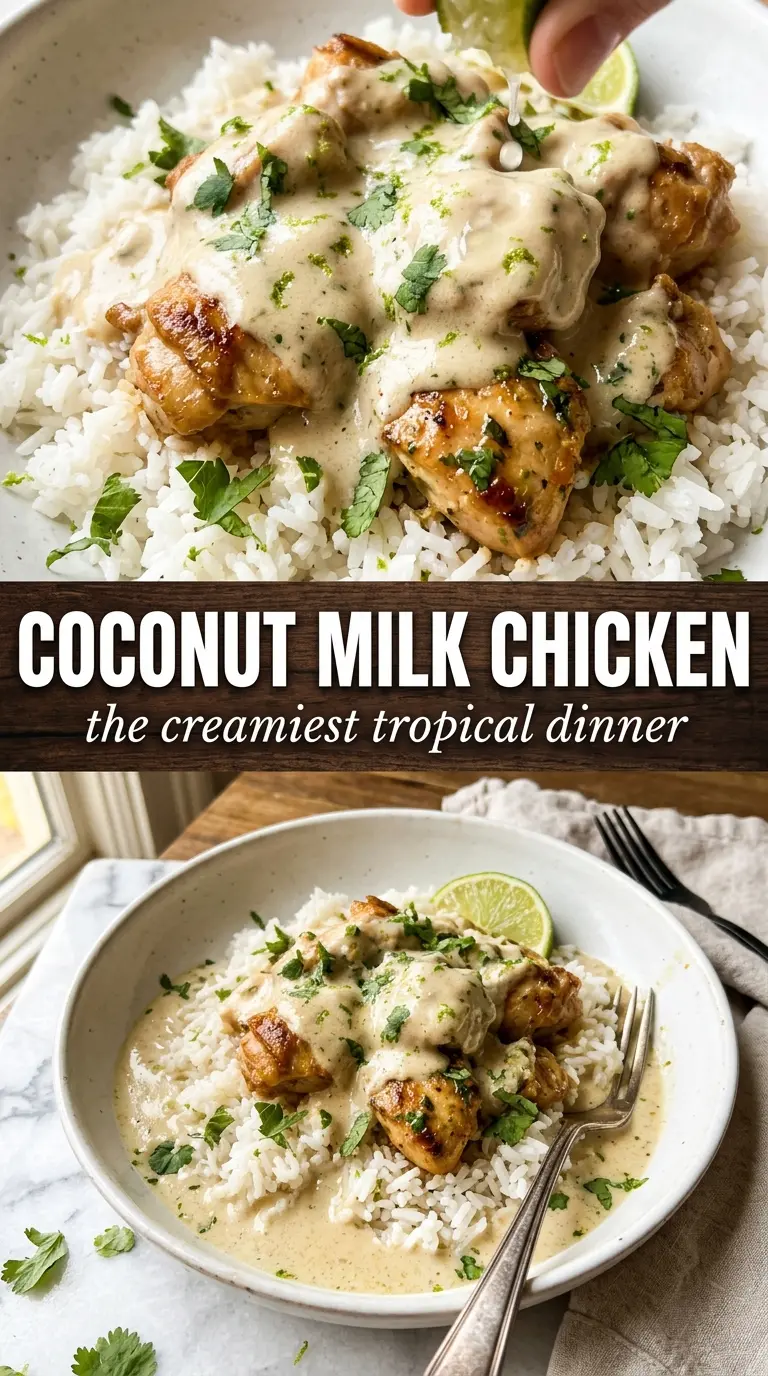
Golden seared chicken thighs in a silky coconut milk sauce are the kind of dinner that disappears fast. The skin stays crisp for just long enough to matter, then the chicken finishes gently in a fragrant sauce that tastes rich without feeling heavy. Ginger, garlic, lime, and a little soy sauce keep the coconut milk from turning flat, so every bite lands with warmth, brightness, and real depth.
What makes this version work is the way the sauce is built. The chicken is seared first to render the skin and leave behind browned bits in the pan, then onion, garlic, and ginger go in to pick up all that flavor before the coconut milk is added. Full-fat coconut milk matters here because it gives the sauce body and a smooth finish; lighter versions tend to look thin and taste washed out. A final hit of lime juice and zest wakes everything up at the end, which is what keeps the dish from tasting one-note.
Below, you’ll find the small details that make this skillet chicken dependable: how to keep the sauce from breaking, what to do if you only have boneless thighs, and the best way to reheat leftovers without drying out the meat.
The sauce turned silky and coated the chicken beautifully, and the lime at the end kept the coconut milk from feeling heavy. I served it with rice and there wasn’t a spoonful left.
Save this creamy coconut milk chicken for the nights when you want a silky skillet sauce with ginger, garlic, and lime over hot rice.
The Reason the Sauce Stays Silky Instead of Splitting
The mistake that breaks coconut milk chicken is rushing the simmer. Coconut milk likes gentle heat, especially after you’ve added acid and broth. If the sauce boils hard, it can look oily or separate around the edges before the chicken is done. A low simmer keeps the fat and liquid together long enough for the sauce to thicken naturally in the pan.
The other thing that matters is leaving the browned bits where they are. That sear on the chicken is the backbone of the whole dish, and the onion, garlic, and ginger need to cook in the same skillet so they can pull that flavor into the sauce. If the pan looks dry after searing, a tablespoon of coconut oil is enough. You don’t need more fat than that.
- Bone-in, skin-on chicken thighs — These hold up to the simmer better than breasts and give you richer pan juices. The skin also bastes the meat as it cooks, which keeps the final texture juicier.
- Full-fat coconut milk — This is what gives the sauce its body. Shake the can well before opening, and don’t swap in the thin carton version if you want a sauce that actually coats the spoon.
- Ginger and garlic — Fresh is worth it here. Powdered versions won’t give the same aromatic lift, and the sauce depends on that sharp, clean background flavor.
What Each Ingredient Is Doing in the Pan
- Coconut oil — It reinforces the coconut flavor without tasting heavy. Neutral oil works in a pinch, but you lose a little of the dish’s character.
- Soy sauce — This adds salt and a deep savory note that makes the sauce taste fuller. If you need a gluten-free version, use tamari in the same amount.
- Lime juice and zest — The juice brightens the sauce, and the zest adds perfume without more acidity. Add both at the end so they stay fresh instead of turning dull.
- Cilantro and lime wedges — These are finishing ingredients, not decoration. They cut through the richness and make the whole skillet taste cleaner and more balanced.
Building the Skillet in the Right Order
Seasoning and Searing the Chicken
Coat the thighs evenly with salt, pepper, garlic powder, and turmeric, then lay them skin-side down in the hot coconut oil. Leave them alone until the skin is deep golden and releases easily from the pan. If you move them too soon, the skin sticks and tears instead of crisping. Flip just long enough to color the second side, then pull them out while they finish building the sauce.
Softening the Onion and Aromatics
Cook the onion in the same skillet until it turns translucent and starts to pick up the browned bits underneath. Add the garlic, ginger, and red pepper flakes after the onion softens, not before, or the garlic can scorch before the onion is ready. You want the pan to smell warm and fragrant, not sharp or bitter. That short minute of cooking wakes up the aromatics without losing their freshness.
Finishing the Sauce and Chicken Together
Pour in the coconut milk and broth, then stir in the soy sauce and bring everything to a gentle simmer. Nestle the chicken back in skin-side up so the top stays crisp while the meat finishes cooking in the sauce. Cover and cook over medium-low heat until the chicken reaches 165°F and the sauce lightly coats a spoon. Stir in the lime juice and zest only after the heat comes down, or the citrus will taste cooked instead of bright.
Swap in Boneless Thighs for a Faster Dinner
Boneless thighs cook faster and make the dish easier to serve, but they won’t give you quite the same rich pan flavor. Sear them for a minute or two less on the first side, then simmer until just cooked through so they stay tender. The sauce still works the same way.
Make It Dairy-Free Without Changing a Thing
This recipe is already dairy-free as written, which is part of why it’s such a reliable weeknight skillet. Keep the full-fat coconut milk and don’t dilute it with extra broth unless you want a thinner sauce. That creaminess is the whole point.
Make It Milder for Kids or Heat-Sensitive Eaters
Skip the red pepper flakes and the dish turns fragrant instead of spicy. The ginger, garlic, lime, and soy sauce still keep it lively, so you don’t lose interest just because you remove the heat.
Storage and Reheating
- Refrigerator: Store in an airtight container for up to 4 days. The sauce thickens as it chills, which is normal.
- Freezer: Freezes well for up to 2 months, though the coconut sauce may look a little less glossy after thawing. Reheat gently and stir well to bring it back together.
- Reheating: Warm it over low heat on the stove with a splash of broth or water. Don’t boil it hard, or the chicken can dry out and the sauce can separate.
Answers to the Questions Worth Asking

Creamy Coconut Milk Chicken
Ingredients
Equipment
Method
- Season the chicken thighs with salt, pepper, garlic powder, and turmeric (to taste).
- Heat coconut oil in a large skillet over medium-high heat and sear chicken skin-side down for 6-7 minutes until golden.
- Flip the chicken and sear for 3 more minutes until golden, then remove to a plate.
- In the same skillet, cook diced onion over medium heat for 3 minutes.
- Add garlic, grated ginger, and red pepper flakes and cook for 1 minute, stirring until fragrant.
- Pour in coconut milk and chicken broth, then stir in soy sauce and bring the mixture to a simmer.
- Return chicken skin-side up to the skillet, cover, and simmer over medium-low for 18-20 minutes until the internal temperature reaches 165°F.
- Stir in lime juice and lime zest, then garnish with fresh cilantro and serve over jasmine rice.