Garlic Parmesan Chicken Pasta lands in that perfect middle ground between comfort food and a weeknight dinner that still feels pulled together. The sauce clings to every strand of pasta, the chicken stays juicy and browned, and the whole bowl tastes rich without turning heavy. It’s the kind of dish that disappears fast because every bite gives you pasta, Parmesan, garlic, and a little bit of those golden chicken edges.
What makes this version work is the way the sauce is built gently. Garlic gets a minute in butter just long enough to turn fragrant, not brown, then cream and broth simmer together before the Parmesan goes in. That order matters. If the cheese goes into a sauce that’s boiling hard, it can turn grainy instead of silky, and the pasta water gives you a safety valve for loosening everything back up without thinning the flavor.
Below you’ll find the small details that make this pasta come out creamy instead of clumpy, plus a few smart swaps for changing it up without losing the texture that makes it worth making.
The sauce stayed silky all the way to the end, and the pasta water made it coat the noodles instead of pooling at the bottom. I also liked that the chicken browned nicely without drying out.
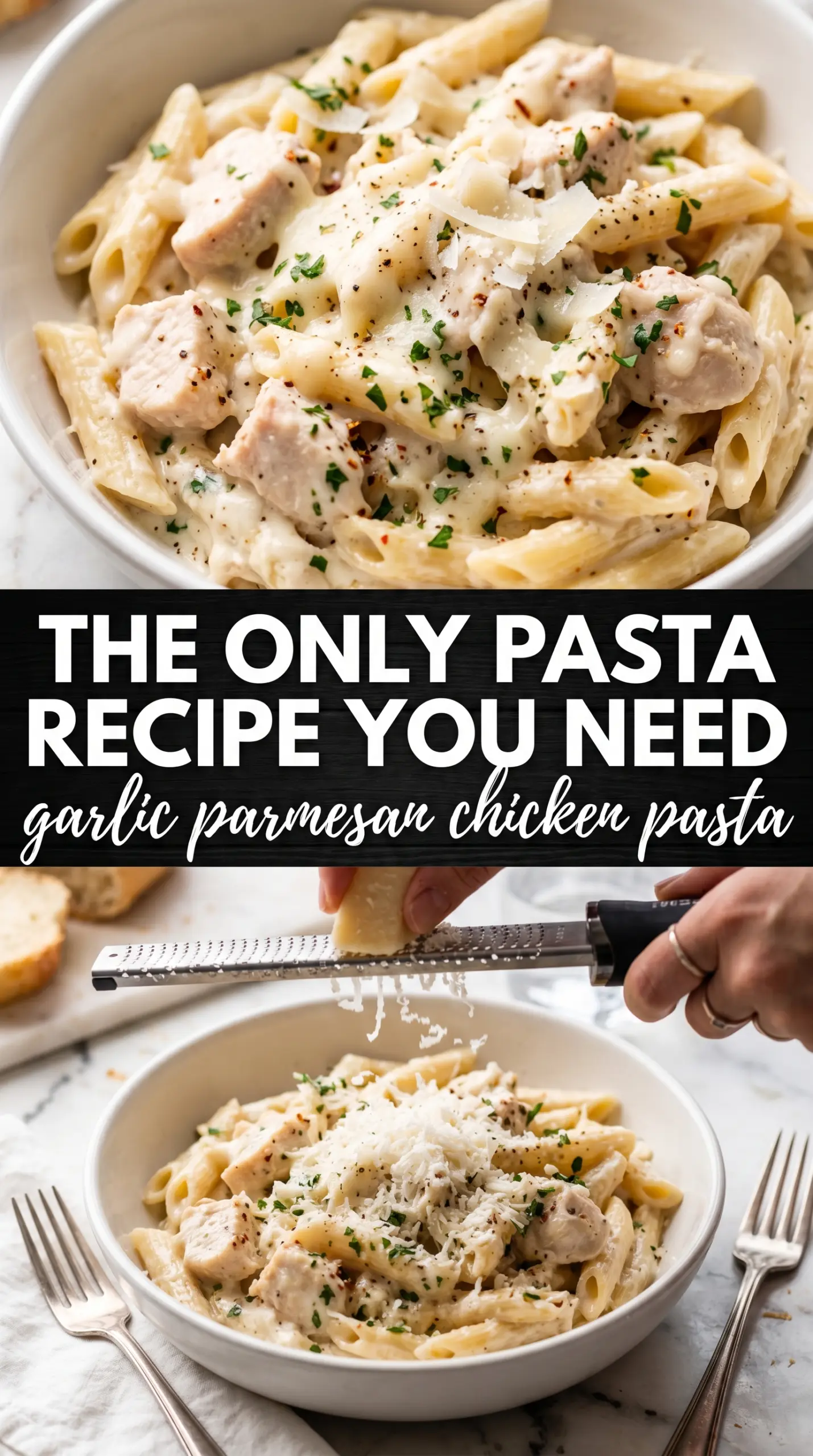
Creamy Garlic Parmesan Chicken Pasta with silky sauce, golden chicken, and basil
The Trick to Keeping Parmesan Sauce Silky Instead of Grainy
Parmesan can turn temperamental fast, especially when it hits heat that’s too high. The sauce here stays smooth because the garlic cooks first, the cream and broth simmer just long enough to thicken slightly, and the cheese goes in after the pan has come down from a hard boil. That sequence matters more than any single ingredient.
The other thing that keeps this pasta from feeling heavy is the pasta water. It doesn’t just thin the sauce; it helps the starch and fat cling to the noodles in a way plain water can’t. If your sauce ever looks tight or a little broken after the cheese goes in, a splash of pasta water usually brings it back together.
- Freshly grated Parmesan — This is the ingredient worth paying attention to. Pre-shredded cheese often has anti-caking agents that make it melt less smoothly, which is how you end up with a sauce that feels sandy.
- Heavy cream — It gives the sauce enough body to coat the pasta without curdling easily. Half-and-half can work in a pinch, but the sauce will be thinner and needs a gentler simmer.
- Chicken broth — It cuts the richness just enough so the sauce tastes like dinner, not just cream. Use a decent broth here; it doesn’t have to be fancy, but bland broth makes a flat sauce.
- Pasta water — Save a full cup before draining. It’s the easiest way to adjust the sauce at the end without washing away flavor.
What Each Ingredient Is Actually Doing in This Creamy Pasta
- Pasta (the foundation) — Cook to al dente so it doesn’t turn mushy in the sauce. Reserve pasta water for sauce adjustment.
- Garlic (the aromatic base) — Cook until fragrant but not brown. Minced garlic dissolves into the sauce; sliced stays distinct.
- Butter (the richness and emulsifier) — This carries the garlic flavor and helps the cream sauce coat the pasta. Start with plenty.
- Cream (the sauce base) — Heavy cream creates a luxurious sauce. Don’t let it boil hard or it can break and separate.
- Cheese (the binding and salt) — Parmesan melts into the sauce and adds umami. Add it off heat so it doesn’t get grainy.
- Pasta water (the secret ingredient) — Starchy water helps the sauce cling to the noodles. Start with a little and add more if needed.
- Salt and pepper (proper seasoning) — Season boldly in the sauce; the pasta will dilute it slightly. Taste and adjust before serving.
- Final toss (the emulsification) — Toss gently so the pasta stays al dente and every noodle gets coated. If too thick, loosen with more pasta water.
Building the Chicken and Sauce in the Right Order
Browning the Chicken First
Season the chicken well before it hits the pan, then cook it in olive oil over medium-high heat until the outside is deeply golden and the center reaches 165°F. If the pan is crowded, the chicken will steam instead of brown, and you’ll miss out on the flavor that carries through the whole dish. Let it rest before slicing so the juices stay in the meat instead of running onto the cutting board.
Letting the Garlic Cook Without Burning
Use the same skillet and drop the heat to medium before the butter and garlic go in. Garlic only needs about a minute; once it turns pale golden and smells sweet, move on. If it browns too fast, the sauce will taste bitter and there’s no fixing that later.
Finishing the Cream Sauce
Pour in the cream and chicken broth, then let them simmer until the mixture looks slightly thicker and coats the back of a spoon. Stir in the Parmesan off the boil, along with the Italian seasoning and red pepper flakes. If the sauce starts looking stringy or clumpy, it usually means the heat is too high, so pull the pan off the burner and stir until it smooths out.
Tossing the Pasta and Bringing It Together
Add the cooked pasta straight into the sauce and toss until every strand is coated. If it looks tight, loosen it with a splash of the reserved pasta water rather than more cream. That keeps the sauce balanced and glossy instead of overly rich or diluted.
How to Adapt This Pasta Without Losing the Creamy Texture
Make It Gluten-Free
Use your favorite gluten-free spaghetti or fettuccine and cook it just until tender. Gluten-free pasta can go soft quickly, so it’s best to pull it a minute early and finish it in the sauce, where it can soak up flavor without falling apart.
Use Chicken Thighs for More Richness
Boneless skinless thighs stay juicy and bring a little more flavor than breasts. They take a touch longer to cook, but they’re more forgiving if you’re worried about dry chicken.
Make It Lighter Without Losing the Sauce
You can swap part of the heavy cream for whole milk, but don’t use only milk or the sauce will feel thin. Keep the Parmesan, keep the pasta water, and simmer a little longer so the sauce still clings instead of running off the noodles.
Add Vegetables That Fit the Sauce
Spinach, peas, or sautéed mushrooms all work here. Add tender vegetables at the end so they warm through without overcooking, and cook mushrooms first so they release their moisture before the cream goes in.
Storage and Reheating
- Refrigerator: Store leftovers in an airtight container for up to 3 days. The sauce will thicken as it chills.
- Freezer: It can be frozen, but cream sauces often separate a little after thawing. If you do freeze it, cool it completely first and reheat gently.
- Reheating: Warm it over low heat on the stove with a splash of broth or milk, stirring often. High heat is the mistake that makes the sauce break and the pasta turn stiff.
Questions I Get Asked About This Recipe
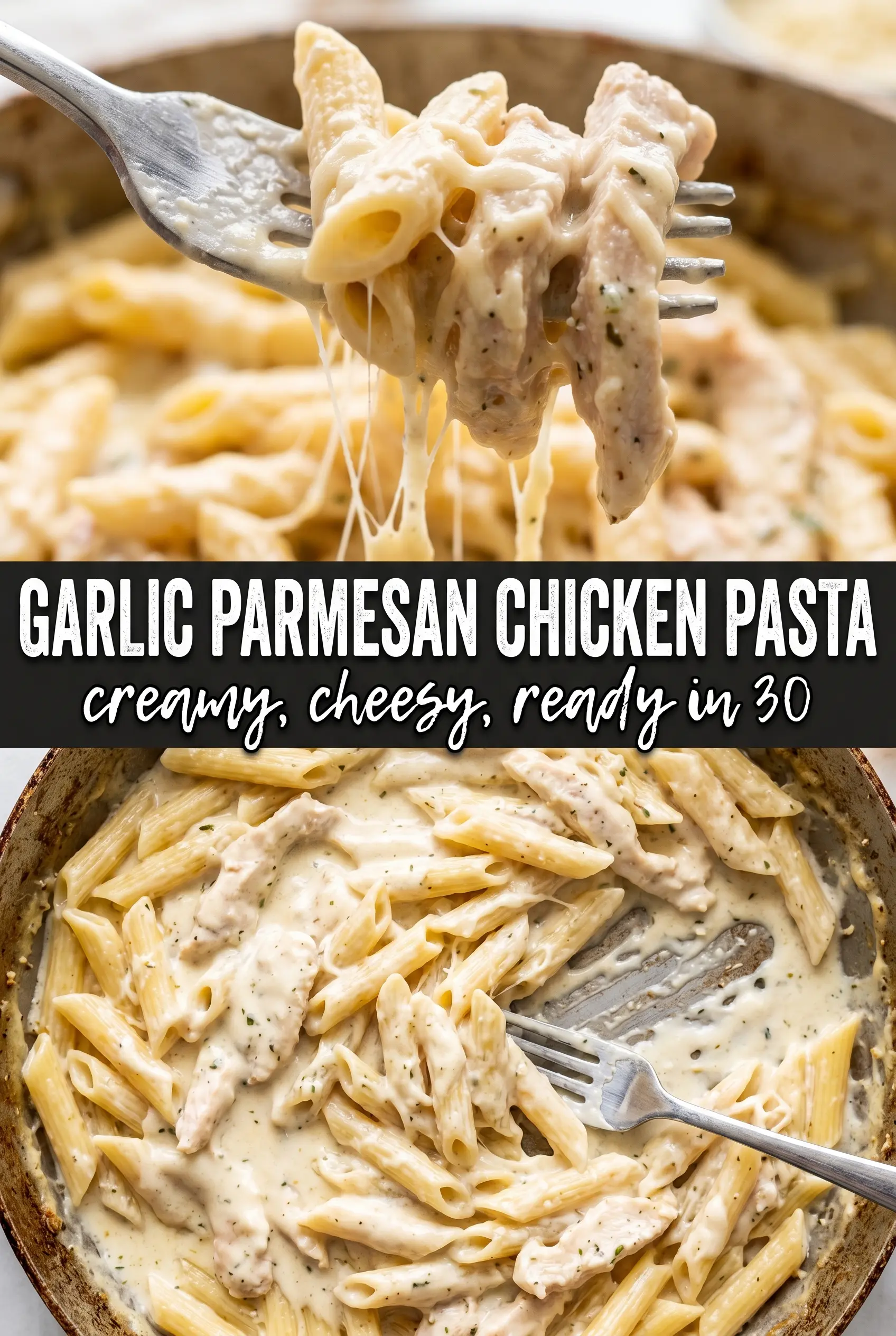
Garlic Parmesan Chicken Pasta
Ingredients
Equipment
Method
- Season the chicken breasts with salt, pepper, garlic powder, and Italian seasoning, then cook in olive oil in a large skillet over medium-high heat for 5-6 minutes per side until golden and cooked through to 165°F.
- Rest the chicken briefly, then slice it thin so it’s ready to top the pasta.
- In the same skillet, cook the minced garlic in butter over medium heat for 1 minute until fragrant.
- Pour in the heavy cream and chicken broth, then simmer for 4-5 minutes until slightly thickened, stirring occasionally.
- Stir in the Parmesan cheese, Italian seasoning, and red pepper flakes until the sauce is smooth.
- Add the reserved pasta water a splash at a time as needed to make the sauce silky and cling to the pasta.
- Toss the cooked spaghetti or fettuccine in the garlic Parmesan sauce until every strand is coated.
- Divide the pasta among plates and top each serving with sliced chicken.
- Garnish with fresh basil and extra Parmesan right before serving.