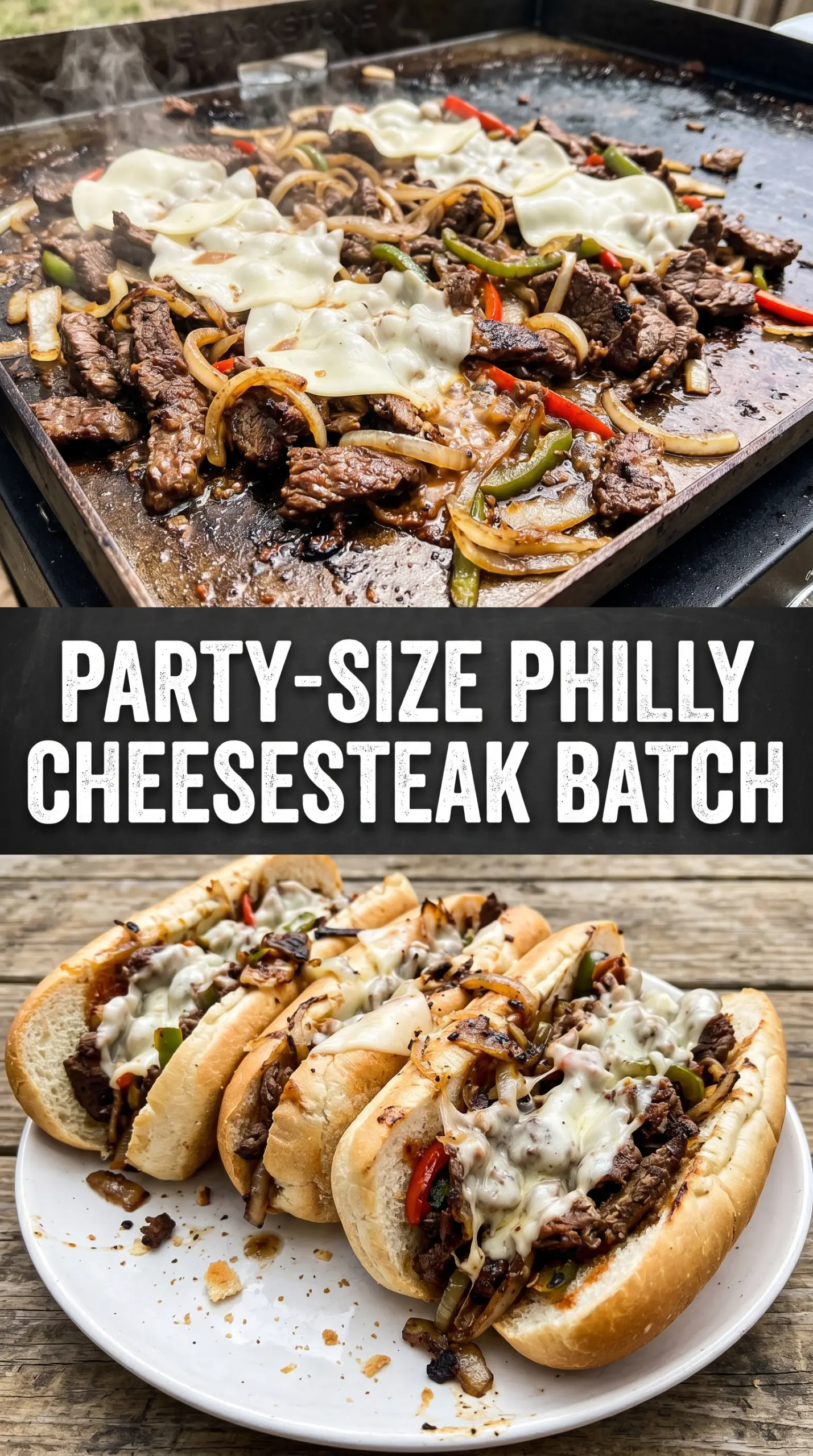
Thin slices of ribeye, sweet peppers and onions, and a blanket of melted provolone turn these Blackstone Philly cheesesteak sandwiches into the kind of griddle meal people hover around waiting for. The steak stays juicy because it cooks fast over high heat, and the vegetables get enough time to soften and caramelize before everything is piled into a toasted hoagie roll. That contrast of crisp bread, tender beef, and gooey cheese is what makes this version worth repeating.
The Blackstone does the heavy lifting here. You get enough space to cook the onions and peppers until they’re deeply browned, then move straight into the steak without losing heat or dirtying a pile of pans. Ribeye is the right cut because it brings enough fat to stay tender, but it still cooks quickly and slices cleanly once it’s chilled and cut thin. The cheese melts best when it goes on top of the hot steak right after cooking, not after the sandwich is assembled.
Below, I’ve laid out the small details that keep the steak from overcooking, the rolls from turning soggy, and the cheese from missing its window. There’s also a few useful swaps if you want to change up the vegetables or make these work with what’s already in your fridge.
The steak stayed tender, the onions and peppers were sweet and caramelized, and the provolone melted right over everything without turning greasy. My husband ate two sandwiches before I even sat down.
Love these Blackstone Philly cheesesteak sandwiches? Save them to Pinterest for the nights when you want a hot, cheesy hoagie with a proper steak-and-onion griddle sear.
The Part That Stops the Sandwich From Going Watery
The biggest mistake with a griddle cheesesteak is rushing the vegetables and the bread at the same time. If the onions and peppers are still pale, they’ll leak moisture into the roll later and flatten the whole sandwich. Give them enough time to soften and pick up real color; that sweetness balances the salty steak and keeps the filling from tasting one-note.
Ribeye is worth using here because it has enough marbling to stay tender even when cooked hard and fast. The key is thin slicing and a short cook. If the steak stays on the griddle too long, it turns chewy before the cheese even has a chance to melt. Build the sandwich in the right order and the heat from the meat will do the rest.
- Ribeye steak — This is the cut that gives you tender, rich cheesesteak filling. Freeze it for 20 to 30 minutes before slicing and you’ll get much thinner pieces, which cook faster and stay juicier. Sirloin works in a pinch, but it won’t have the same buttery bite.
- Onions and green bell peppers — They bring sweetness, moisture, and the classic Philly-style balance. Slice them evenly so they cook at the same pace; uneven pieces leave you with crunchy bits next to mushy ones. If you want a stronger onion flavor, use yellow onions instead of swapping in more peppers.
- Provolone — It melts smoothly and gives you that familiar mild, salty finish without fighting the beef. Use real slices rather than shredded cheese if you want the cleanest melt. American cheese will melt faster and richer, but it changes the flavor toward a diner-style cheesesteak.
- Hoagie rolls — A sturdy roll matters because this filling is juicy. A soft roll tears; an overbaked crust fights the bite. Toasting the cut sides in butter gives you a little protection against sogginess and a better texture contrast.
What Each Ingredient Is Actually Doing in This Cheesesteak
- Thin sliced beef (the protein foundation) — Ribeye stays tender on high heat because of the fat. Freezing for 20-30 minutes before slicing makes the job much easier.
- Onions and peppers (the sweetness layer) — Cook them long enough to caramelize and turn sweet. Pale vegetables release moisture and make the sandwich soggy.
- Cheese (the binding richness) — American melts fastest and smoothest; provolone is more classic. Apply while the meat is still hot so it adheres instead of sliding.
- Hoagie roll (the vessel that matters) — Sturdy bread doesn’t collapse under the wet filling. Toast the cut sides in butter to create a moisture barrier.
- Oil or fat for cooking (the cook and flavor) — Good fat helps everything brown and brown bits build the pan flavor.
- Salt and pepper (proper seasoning) — Don’t underseason the meat or vegetables. The bread and cheese are mild, so the filling needs bold seasoning.
- Timing (the technique that matters most) — Vegetables first, then beef, then cheese. Each step matters for the final texture and melt.
- Speed of assembly (keeping heat alive) — Everything must stay hot from pan to mouth or the sandwich flops and the cheese firms up instead of staying creamy.
Building the Steak, Vegetables, and Cheese in the Right Order
Caramelizing the Peppers and Onions First
Start with the vegetables while the griddle is hot and open. Add the oil, then spread the onions and peppers out in a single layer so they brown instead of steam. You’re looking for softened edges, browned spots, and a sweet smell that means the moisture has cooked off. If they’re crowded, they’ll turn watery and pale instead of developing flavor.
Cooking the Ribeye Fast
Move the vegetables aside and get the steak on the hot surface. It should sizzle right away, then begin to brown in patches as you chop and turn it with spatulas. The goal is cooked through but still tender, which usually takes just a few minutes because the meat is sliced thin. If you leave it in one pile too long, the center steams and the edges get tough.
Melting the Cheese Over the Steak
Divide the steak into portions right on the griddle, then lay two slices of provolone over each mound while it’s still hot. The cheese should soften and go glossy within a minute or two. If the steak has cooled off, the cheese will sit there in floppy sheets instead of melting into the meat, so work quickly once the beef is done.
Toasting the Rolls and Assembling
Butter the hoagie rolls and toast them cut-side down until the edges are golden. That little bit of crunch matters because it keeps the sandwich from collapsing under the filling. Scoop the steak, vegetables, and melted cheese into the rolls while everything is still hot, then serve right away. If you wait, the cheese firms up and the roll starts to absorb the juices.
What to Change When You Want a Different Cheesesteak
Mushroom Cheesesteak Version
Add sliced mushrooms with the onions and peppers and cook until they give up their moisture and begin to brown. They bring an earthier, meatier feel to the sandwich, but they also add more liquid, so let them cook off fully before the steak goes on the griddle.
Dairy-Free Cheesesteak
Skip the provolone and use a dairy-free melting cheese that comes in slices, not shreds, so it softens over the hot steak. The sandwich will still have the same savory base, but you’ll lose some of the classic creamy stretch, so keep the filling hot and assemble immediately.
Spicy Cheesesteak
Cook sliced jalapeños with the peppers or finish the steak with a few shakes of crushed red pepper. The heat plays well against the sweet onions and rich ribeye, but add it with restraint so it doesn’t drown out the cheese.
Storage and Reheating
- Refrigerator: Store the steak and vegetables separately from the rolls for up to 3 days. The filling holds up well, but the bread turns soft if it sits assembled.
- Freezer: The cooked steak and vegetables can be frozen for up to 2 months, though the peppers will be softer after thawing. Freeze in a flat bag or container so it reheats quickly and evenly.
- Reheating: Warm the filling in a skillet over medium heat until hot, then toast fresh rolls and assemble. Microwaving the sandwich whole makes the bread soggy and the steak rubbery, so reheat the components separately.
Answers to the Questions Worth Asking

Blackstone Philly Cheesesteak Sandwiches
Ingredients
Equipment
Method
- Heat the Blackstone griddle to medium-high and add the oil. The surface should shimmer slightly before you add the vegetables.
- Cook the onions and bell peppers until caramelized, about 8-10 minutes, then set aside. Look for deep golden-brown edges and reduced volume before removing.
- Season the steak with salt and pepper, then cook for 3-4 minutes, chopping with spatulas. The pieces should brown and separate as they cook.
- Divide the steak into 4 portions, top each with the caramelized vegetables and 2 slices of provolone. Continue cooking just until the provolone melts and begins to pull away in strands.
- Butter and toast the hoagie rolls on the griddle until golden. Toasted sides should feel crisp and look lightly browned.
- Scoop the steak mixture into the rolls, add mayo if desired, and serve immediately. Aim for overflowing melted cheese over the filling for the classic cheesesteak pull.