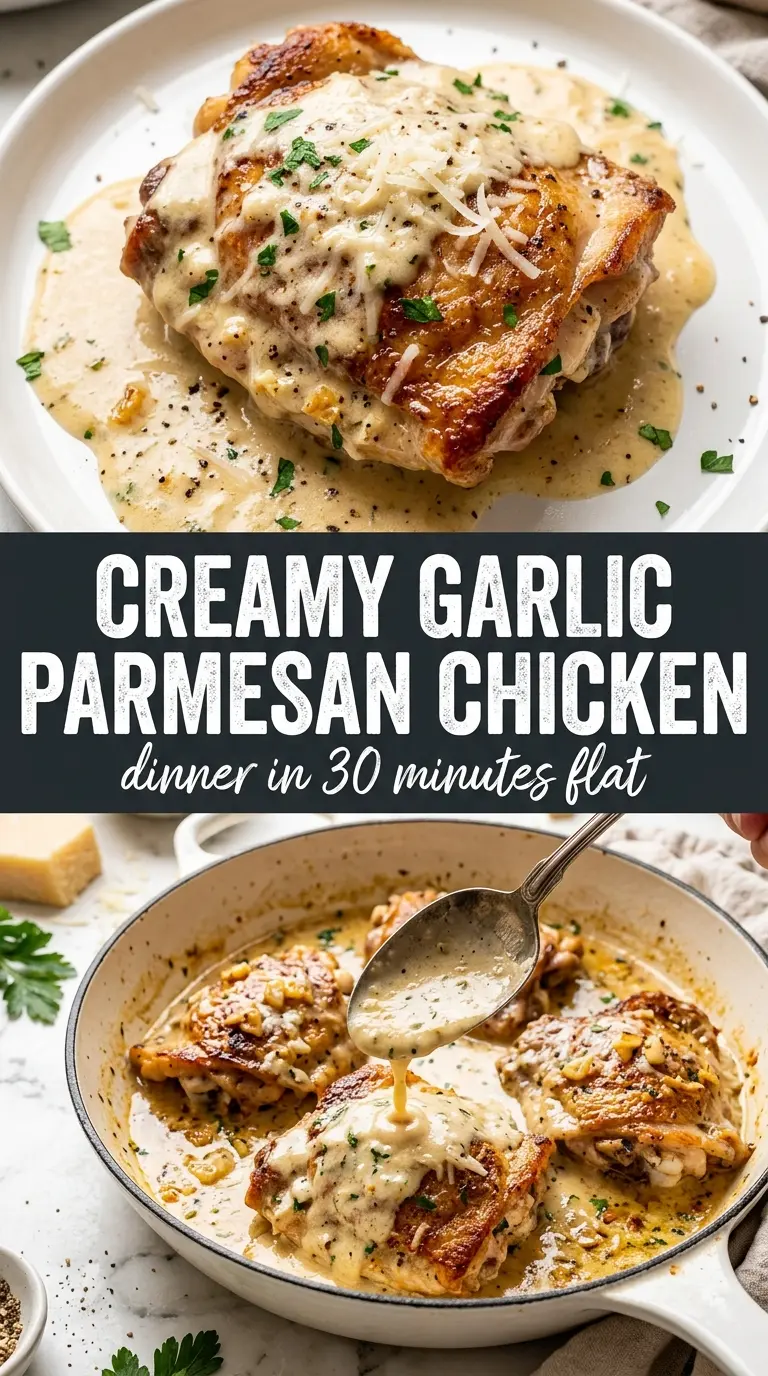
Golden-seared chicken breasts tucked into a glossy garlic Parmesan sauce earn their place in the dinner rotation fast. The chicken stays juicy because it’s cooked first and finished gently in the sauce, and the sauce itself turns rich without becoming heavy or grainy. What you get on the plate is a skillet dinner that looks restaurant-style but still comes together on a weeknight.
The difference here is in the order of operations. Searing the chicken before the sauce builds flavor in the pan, and adding the cream after the garlic and wine have cooked down keeps the sauce smooth. Freshly grated Parmesan matters too; pre-shredded cheese can leave you with a sandy sauce that never fully melts.
Below, I’ve included the small details that keep the sauce glossy, plus the substitutions that still hold up if you need to work with what’s in the fridge.
The sauce thickened up perfectly and coated the chicken instead of running all over the plate. I used chicken broth instead of wine and it still tasted rich, and the garlic stayed mellow, not burnt.
Save this creamy garlic Parmesan chicken for the nights when you want a silky skillet sauce and juicy seared chicken without a lot of cleanup.
The Step That Keeps the Sauce Silky Instead of Grainy
The biggest mistake with a Parmesan cream sauce is rushing the cheese into a pan that’s too hot. If the sauce is bubbling hard when the Parmesan goes in, it can turn stringy or sandy instead of melting into that smooth, glossy finish you want. Pull the heat down before the cheese goes in and let the sauce thicken from gentle simmering, not from aggressive boiling.
Another detail that matters is leaving the browned bits in the pan after searing the chicken. That fond carries the savory base of the sauce, and when you deglaze with wine or broth, it lifts right into the cream instead of getting scrubbed away. That’s where the deep, savory flavor comes from.
- Searing the chicken first — This builds color and flavor before the sauce starts. If you add the chicken later without a good sear, the dish tastes flatter.
- Deglazing liquid — White wine gives the sauce a little brightness that keeps all the cream and cheese from tasting heavy. Chicken broth works when you want to skip alcohol, but it’s a little softer in the final sauce.
- Freshly grated Parmesan — It melts more smoothly than pre-shredded cheese, which often contains anti-caking agents. If you only have shredded Parmesan, add it off the heat and stir patiently.
- Heavy cream — This is what gives the sauce its body and prevents it from splitting during the final simmer. Half-and-half will work in a pinch, but the sauce will be thinner and less stable.
What Each Ingredient Is Actually Doing in This Chicken Dish
- Chicken (bone-in or boneless, skin-on or skinless) — Each cut has different cooking times and flavor profiles. Let thighs reach 165°F; breasts dry out if overcooked past that.
- Sauce or braising liquid (the moisture keeper) — This prevents the chicken from drying out and adds flavor. Don’t skip it even if the recipe seems moist.
- Aromatics (garlic, onion, herbs) — These add depth and complexity. Cook them with fat so they soften and sweeten instead of staying sharp.
- Cream or butter (optional richness) — These make the dish luxurious. Add to the sauce off the boil so it stays smooth instead of breaking.
- Cheese (if using) — This adds umami and richness. Mix into the sauce or sprinkle on top; either works depending on the dish.
- Acid (lemon, vinegar, wine, or tomato) — This prevents heavy sauces from tasting flat. Add at the end so the brightness doesn’t cook off.
- Proper temperature (165°F is perfect) — Use a thermometer to avoid guessing. Pull slightly early if the chicken will rest or finish in residual heat.
- Resting time (at least 5 minutes) — This lets juices redistribute so the meat stays moist when you cut into it instead of running dry.
What the Pan Is Doing at Each Stage
Seasoning and Searing the Chicken
Coat the chicken breasts generously with salt, pepper, garlic powder, and smoked paprika, then sear them in hot olive oil until they pick up a deep golden crust. The pan should sound lively the moment the chicken hits it; if it just sits there quietly, the heat is too low and you’ll miss the crust. Cook until the chicken releases easily from the pan and reaches 165°F in the center, then move it out before it overcooks.
Building the Garlic Base
Add the butter to the same skillet and let the garlic cook just until fragrant, about a minute. The garlic should smell sweet and sharp, not brown; once it darkens, the sauce takes on a bitter edge that no amount of cream will hide. The butter loosens the browned bits left behind, which is what makes the sauce taste like it came from the chicken itself.
Reducing the Liquid Into Sauce
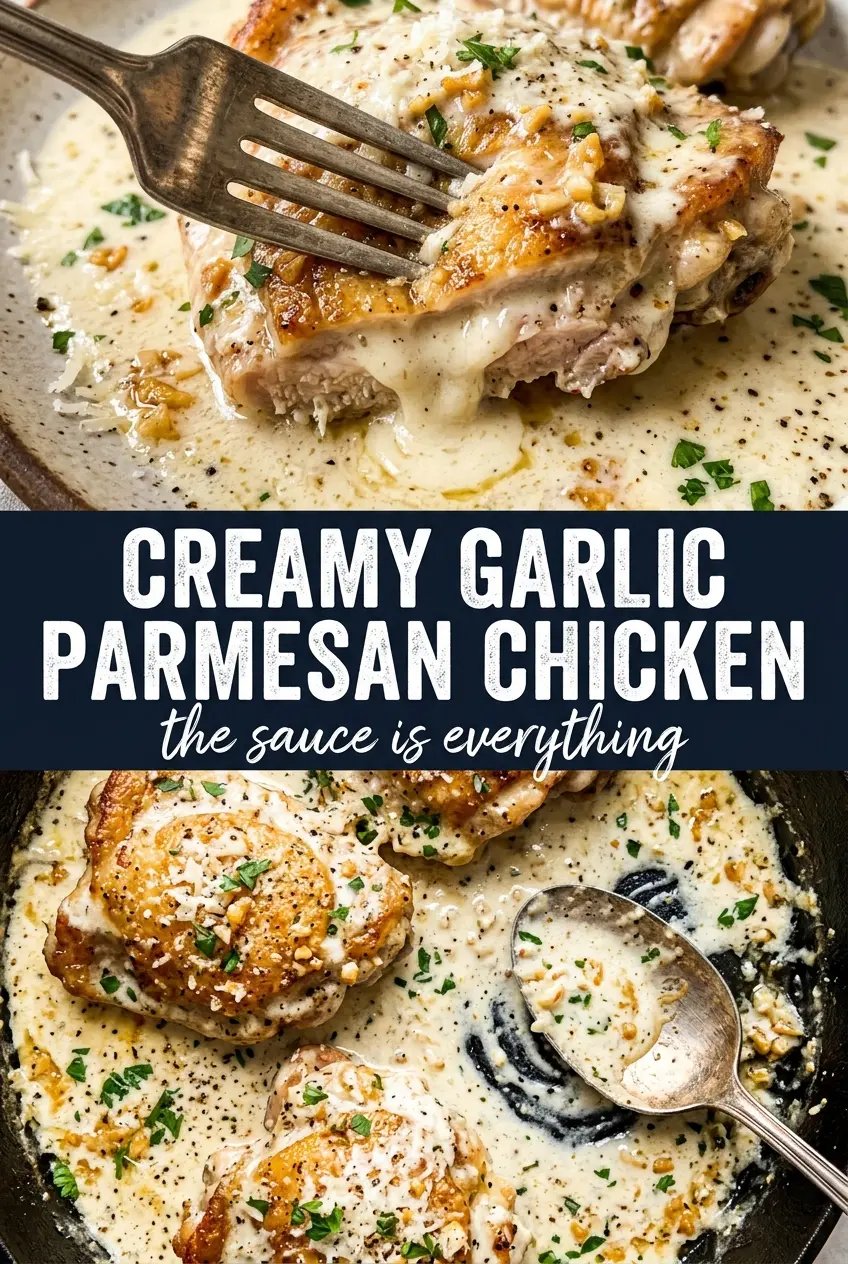
Pour in the wine or broth and let it simmer long enough to lose the raw edge, then stir in the cream, chicken broth, Parmesan, and Italian seasoning. Keep the heat at a gentle simmer; a hard boil can separate the dairy and make the sauce look broken. It’s ready when it clings to the spoon and leaves a visible trail when you drag a spatula through it.
Finishing the Chicken in the Sauce
Return the chicken to the skillet and spoon the sauce over the top so every breast picks up some of the garlic and cheese. Let it warm through in the sauce rather than cooking aggressively again, because the goal now is tenderness, not more browning. Fresh thyme and parsley at the end brighten the whole pan and keep the richness from feeling heavy.
How to Adapt This Skillet Dinner Without Losing the Creamy Finish
Make It Gluten-Free Without Changing the Method
This recipe is naturally gluten-free as written as long as your broth is certified gluten-free. The sauce doesn’t need flour to thicken, so you don’t lose anything by keeping it the way it is.
Dairy-Free Version With a Different Kind of Richness
Use a full-fat unsweetened coconut cream or a dairy-free cooking cream, then add nutritional yeast in place of Parmesan for a savory note. The sauce won’t taste exactly the same, but it will still coat the chicken well if you keep the heat low and don’t boil it hard.
Swap the Chicken Breasts for Thighs
Boneless skinless thighs give you a juicier, more forgiving result, and they stay tender even if they sit in the sauce a little longer. They do need a few extra minutes in the pan, so cook by temperature, not just by color.
Use Broth Instead of Wine
Chicken broth gives you a milder sauce with less acidity, which works well if you want a rounder, kid-friendly flavor. Since you lose the brightness from the wine, a small squeeze of lemon at the end can wake the sauce back up.
Storage and Reheating
- Refrigerator: Store leftovers in an airtight container for up to 3 days. The sauce will thicken as it chills.
- Freezer: I don’t recommend freezing it, since cream sauces can separate and turn grainy after thawing.
- Reheating: Warm it slowly over low heat on the stove with a splash of broth or cream. High heat is the fastest way to break the sauce.
Answers to the Questions Worth Asking
Creamy Garlic Parmesan Chicken
Ingredients
Equipment
Method
- Season the chicken breasts generously on both sides with salt, pepper, garlic powder, and smoked paprika to taste. Ensure an even coating so the surface browns well.
- Heat olive oil in a large cast iron skillet over medium-high heat until shimmering. Sear chicken for 5-6 minutes per side until golden.
- Check doneness and cook until the internal temperature reaches 165°F, then remove the chicken to a plate. The browned surface should look set and caramelized.
- Add butter and minced garlic to the same pan and cook for 1 minute until fragrant. Stir just until the garlic is aromatic, not browned.
- Deglaze with the white wine (or chicken broth) and cook for 2 minutes. Scrape up the browned bits from the pan for maximum flavor.
- Stir in heavy cream, chicken broth, Parmesan cheese, and Italian seasoning, then simmer for 4-5 minutes. Keep it at a gentle simmer until the sauce is thick and glossy.
- Return the chicken to the pan and spoon the sauce over each breast. Cover the top surfaces so the sauce clings visibly.
- Garnish with fresh thyme and parsley and serve immediately. The herbs should float over the glossy sauce around the chicken.