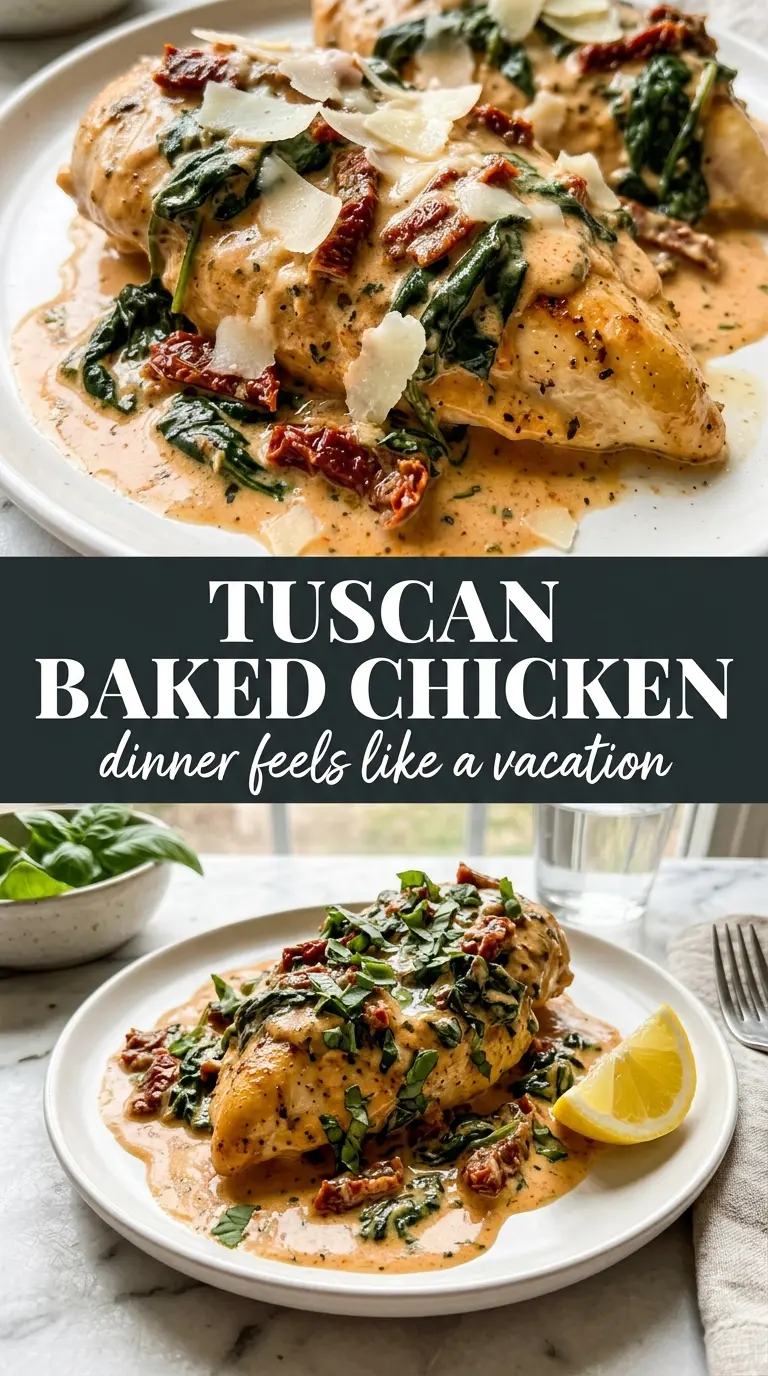
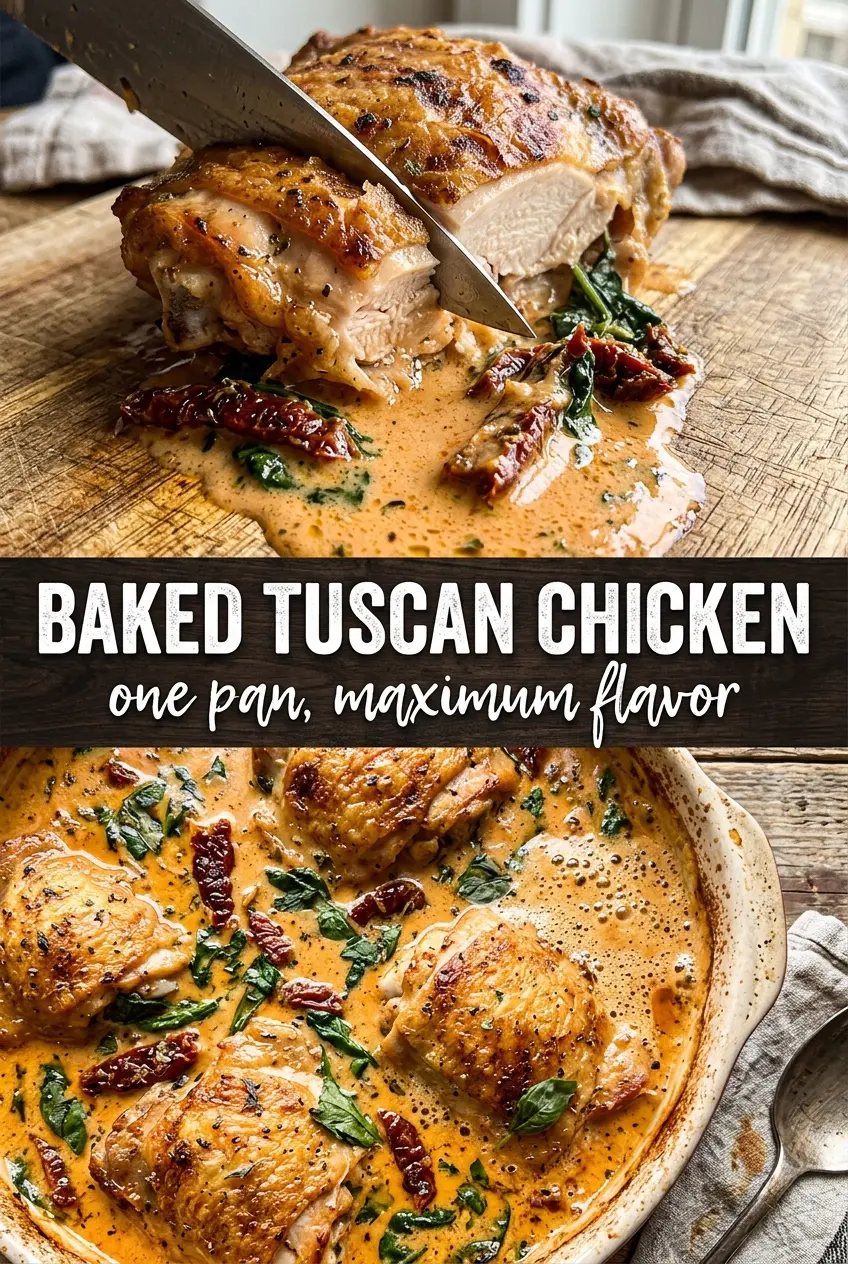
Golden-skinned chicken thighs tucked into a creamy Parmesan sauce with sun-dried tomatoes and spinach are the kind of dinner that looks like you worked harder than you did. The chicken stays juicy under the oven heat, the skin keeps some of its sear, and the sauce picks up everything good from the pan: browned chicken drippings, garlic, and the tangy sweetness from the tomatoes. It’s rich without feeling heavy, and it lands on the table with enough color and contrast to make it look special straight out of the skillet.
What makes this version work is the order. The thighs get a hard sear first so the skin has a chance to crisp before the creamy sauce goes in. Then the sauce is built in the same pan, which means nothing gets wasted and the flavor starts deep, not flat. The sun-dried tomatoes bring brightness, the Parmesan thickens the cream, and the spinach goes in at the very end so it softens without disappearing.
Below, I’m walking through the parts that matter most: how to keep the sauce from turning grainy, what kind of chicken gives you the best result, and a few swaps that still keep the dish grounded and satisfying.
The chicken skin stayed crisp under that creamy sauce, and the Parmesan thickened up beautifully without turning clumpy. I served it with crusty bread and my husband went back for seconds before I even sat down.
Save this baked Tuscan chicken for the nights when you want crispy chicken thighs, a creamy Parmesan sauce, and barely any cleanup.
The Secret to Keeping the Sauce Creamy After the Chicken Goes in
The biggest mistake in a baked Tuscan chicken dish is rushing the sauce while the pan is still scorching hot. Parmesan can go grainy when it hits high heat too fast, and cream can separate if it boils hard. Here, the sauce gets built after the garlic and tomatoes have had a minute to work, then it simmers gently before the chicken goes back in. That keeps the texture smooth and gives the sauce enough body to coat the back of a spoon instead of sliding off the plate.
The other piece that matters is the chicken skin. If you put the thighs straight into the sauce without searing, you lose the contrast that makes this dish worth making. A good sear first gives you a crisp top that holds up under baking, while the oven finishes the chicken through without drying it out.
- Bone-in, skin-on chicken thighs — These stay juicy and flavorful through the bake. Boneless thighs work in a pinch, but they cook faster and you’ll lose that crisp-skin payoff.
- Sun-dried tomatoes in oil — They bring concentrated sweetness and a little tang. The oil-packed kind are softer and more flavorful than the dry jars, and draining them before slicing keeps the sauce from getting greasy.
- Heavy cream — This is what gives the sauce its body. Half-and-half can work, but it’s thinner and more likely to split if you boil it.
- Parmesan cheese — Grate it fresh if you can. Pre-shredded Parmesan often has anti-caking agents that can make the sauce a little sandy instead of silky.
What Each Ingredient Is Actually Doing in This Chicken Dish
- Chicken (bone-in or boneless, skin-on or skinless) — Each cut has different cooking times and flavor profiles. Let thighs reach 165°F; breasts dry out if overcooked past that.
- Sauce or braising liquid (the moisture keeper) — This prevents the chicken from drying out and adds flavor. Don’t skip it even if the recipe seems moist.
- Aromatics (garlic, onion, herbs) — These add depth and complexity. Cook them with fat so they soften and sweeten instead of staying sharp.
- Cream or butter (optional richness) — These make the dish luxurious. Add to the sauce off the boil so it stays smooth instead of breaking.
- Cheese (if using) — This adds umami and richness. Mix into the sauce or sprinkle on top; either works depending on the dish.
- Acid (lemon, vinegar, wine, or tomato) — This prevents heavy sauces from tasting flat. Add at the end so the brightness doesn’t cook off.
- Proper temperature (165°F is perfect) — Use a thermometer to avoid guessing. Pull slightly early if the chicken will rest or finish in residual heat.
- Resting time (at least 5 minutes) — This lets juices redistribute so the meat stays moist when you cut into it instead of running dry.
Getting the Sear, the Sauce, and the Bake in the Right Order
Seasoning the Chicken Properly
Pat the thighs dry before they hit the pan, then season them generously on both sides. Moist skin steams before it sears, and that’s the easiest way to end up with pale chicken instead of the deep golden crust you want. The garlic powder, Italian seasoning, and smoked paprika build a savory base right on the chicken, so every bite tastes seasoned all the way through, not just on the surface.
Building Color in the Skillet
Put the thighs skin-side down in olive oil and leave them alone until the skin releases on its own and turns deeply golden. If you try to flip too soon, the skin tears and sticks. You’re looking for rendered fat in the pan, crisp edges, and a chicken piece that no longer fights the skillet when you lift it.
Making the Cream Sauce Without Breaking It
After the chicken comes out, cook the garlic just until fragrant, then add the sun-dried tomatoes and broth to loosen the browned bits from the pan. Stir in the cream and Parmesan over medium-low heat, not a hard boil. If the sauce looks thin at first, keep it moving for a minute or two; it thickens as the cheese melts and the steam does its work. Add the spinach last and stir just until it wilts so it stays bright instead of turning muddy.
Finishing in the Oven
Set the chicken skin-side up in the sauce so the top stays exposed and doesn’t go soggy. Bake uncovered until the thighs hit 165°F in the thickest part, and the sauce is bubbling around the edges. If you pull them too early, the center will still be undercooked; if you leave them too long, the thighs stay safe but the sauce tightens too much.
How to Adapt This for a Smaller Dinner or a Dairy-Free Table
Use boneless chicken thighs for faster cooking
Boneless thighs work well if you want a quicker dinner, but they won’t bring the same deep roasted flavor or crisp skin. Cut the bake time down and start checking early so they stay tender. The sauce will still carry the dish, but the finished pan will be softer and a little less dramatic.
Make it dairy-free with coconut cream and a Parmesan-style substitute
Coconut cream gives you the same richness, but the sauce will taste less sharp and a little sweeter. Use a dairy-free Parmesan alternative that melts well, and keep the heat low so the sauce stays smooth. The result is still creamy and satisfying, just with a different finish.
Turn it into a gluten-free skillet dinner
This recipe is naturally gluten-free as written as long as your chicken broth and Parmesan are certified gluten-free. That makes it an easy one to serve without changing a thing. The texture and the sauce stay exactly where they should be.
Add pasta or rice underneath for a fuller meal
Spoon the chicken and sauce over pasta, rice, or mashed potatoes if you want this to stretch further. The starch catches the cream sauce and balances the richness, which is handy because this dish is built to be bold. Add a splash of broth when reheating so the sauce loosens again.
Storage and Reheating
- Refrigerator: Store leftovers in an airtight container for up to 3 days. The sauce thickens as it chills, but the flavor holds up well.
- Freezer: You can freeze it, but the cream sauce may separate a bit when thawed. Freeze in portions if you plan to use it later, and expect a slightly looser texture after reheating.
- Reheating: Warm it gently in a covered skillet over low heat with a splash of broth or cream. High heat is the mistake here; it can break the sauce and dry out the chicken before the center is hot.
Answers to the Questions Worth Asking
Baked Tuscan Chicken
Ingredients
Equipment
Method
- Preheat the oven to 400°F, then season the chicken thighs generously with salt, pepper, garlic powder, Italian seasoning, and smoked paprika.
- Heat the olive oil in an oven-safe skillet over medium-high heat and sear the chicken skin-side down for 6-7 minutes until deeply golden (visual cue: crisp, browned skin).
- Flip the thighs and sear for 3 more minutes, then remove the chicken to a plate.
- In the same skillet, cook the minced garlic for 30 seconds until fragrant (do not brown).
- Add the sun-dried tomatoes and cook for 1 minute, then deglaze with the chicken broth, scraping up browned bits.
- Stir in the heavy cream, Parmesan cheese, Italian seasoning, and red pepper flakes, then simmer briefly until the sauce looks smooth and thickened.
- Stir in the baby spinach until wilted, then nestle the chicken skin-side up into the sauce (visual cue: spinach should be evenly dispersed).
- Bake uncovered for 18-20 minutes at 400°F until the internal temperature reaches 165°F, then garnish with fresh basil.